


























Views
Downloads

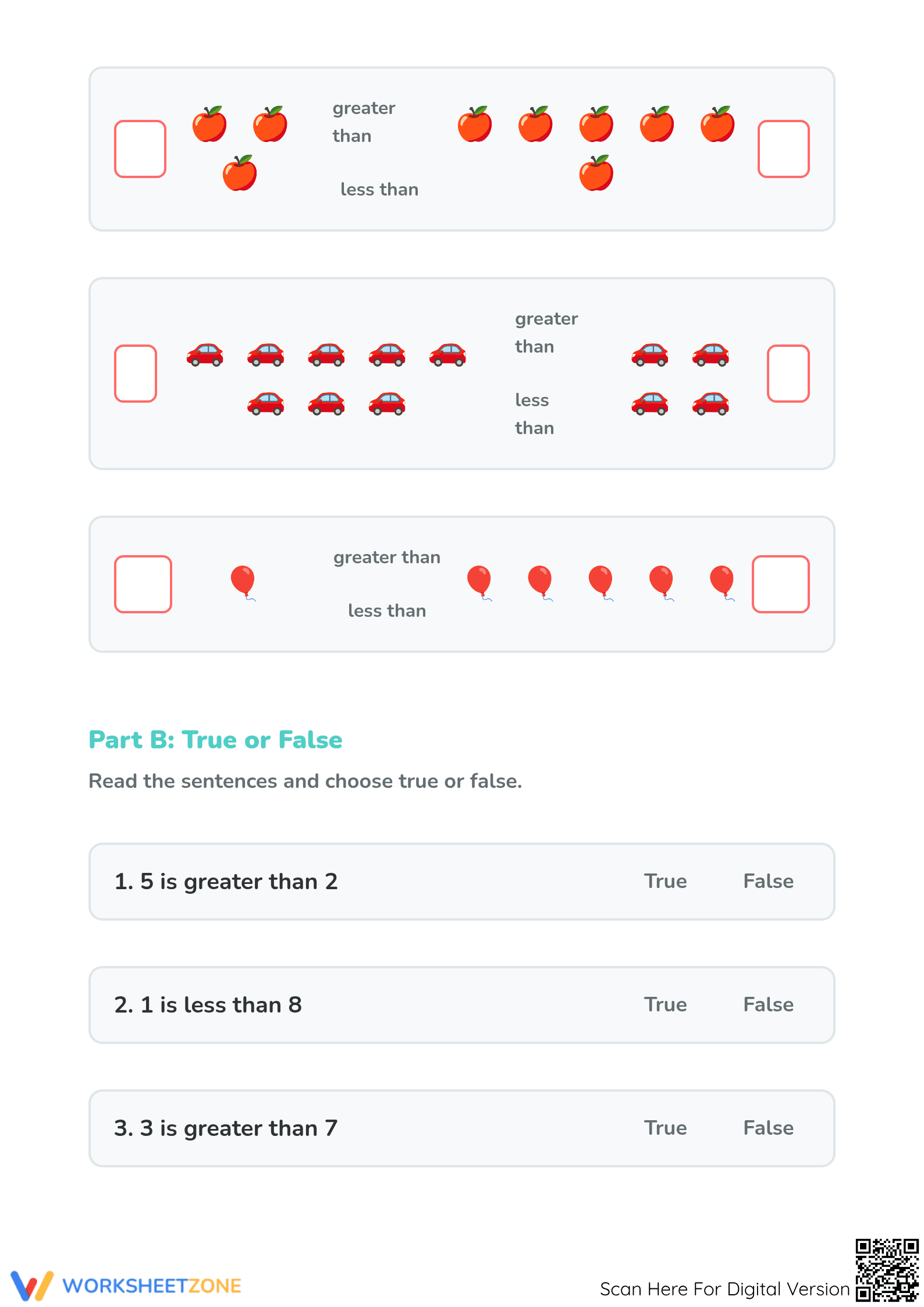
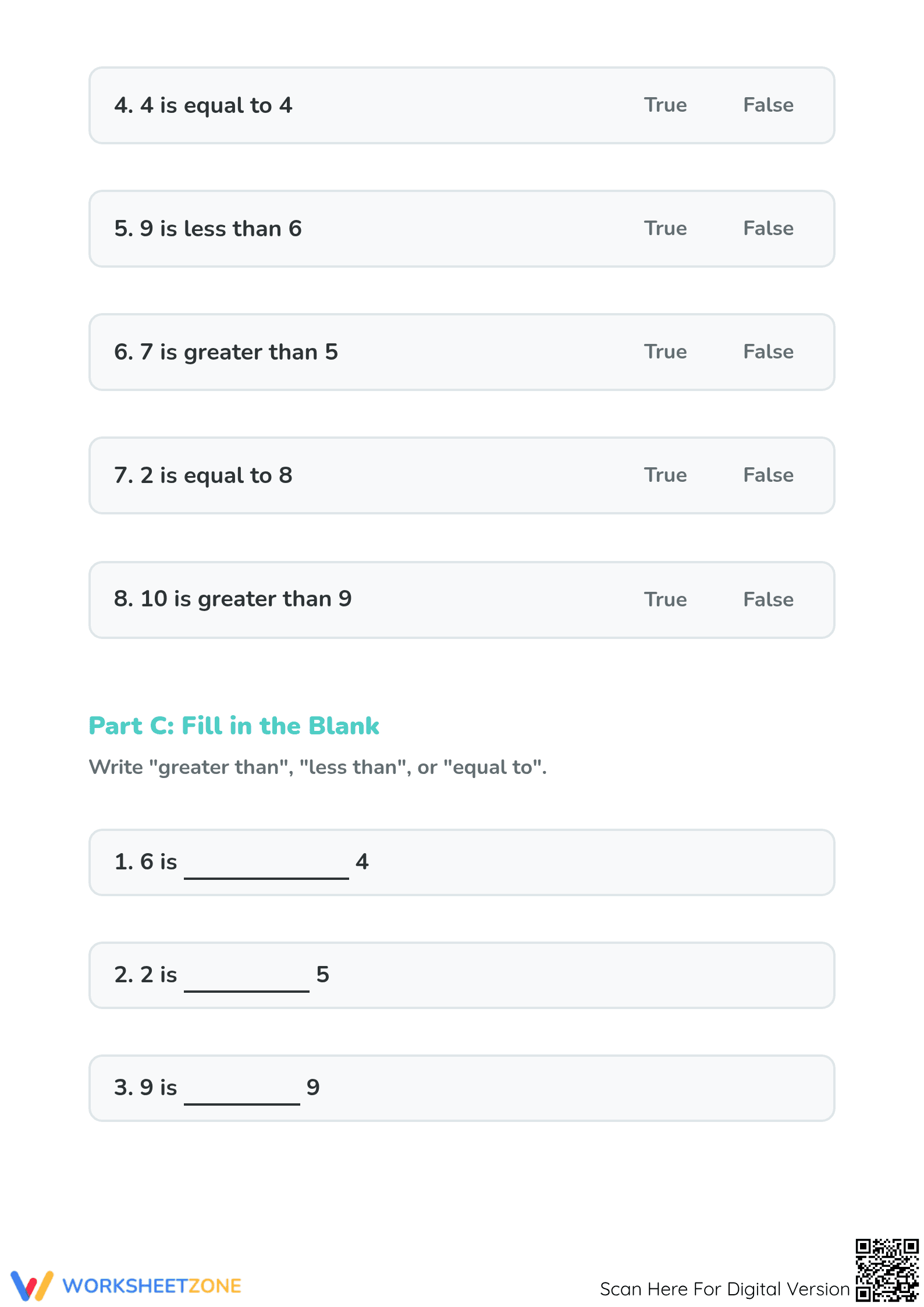
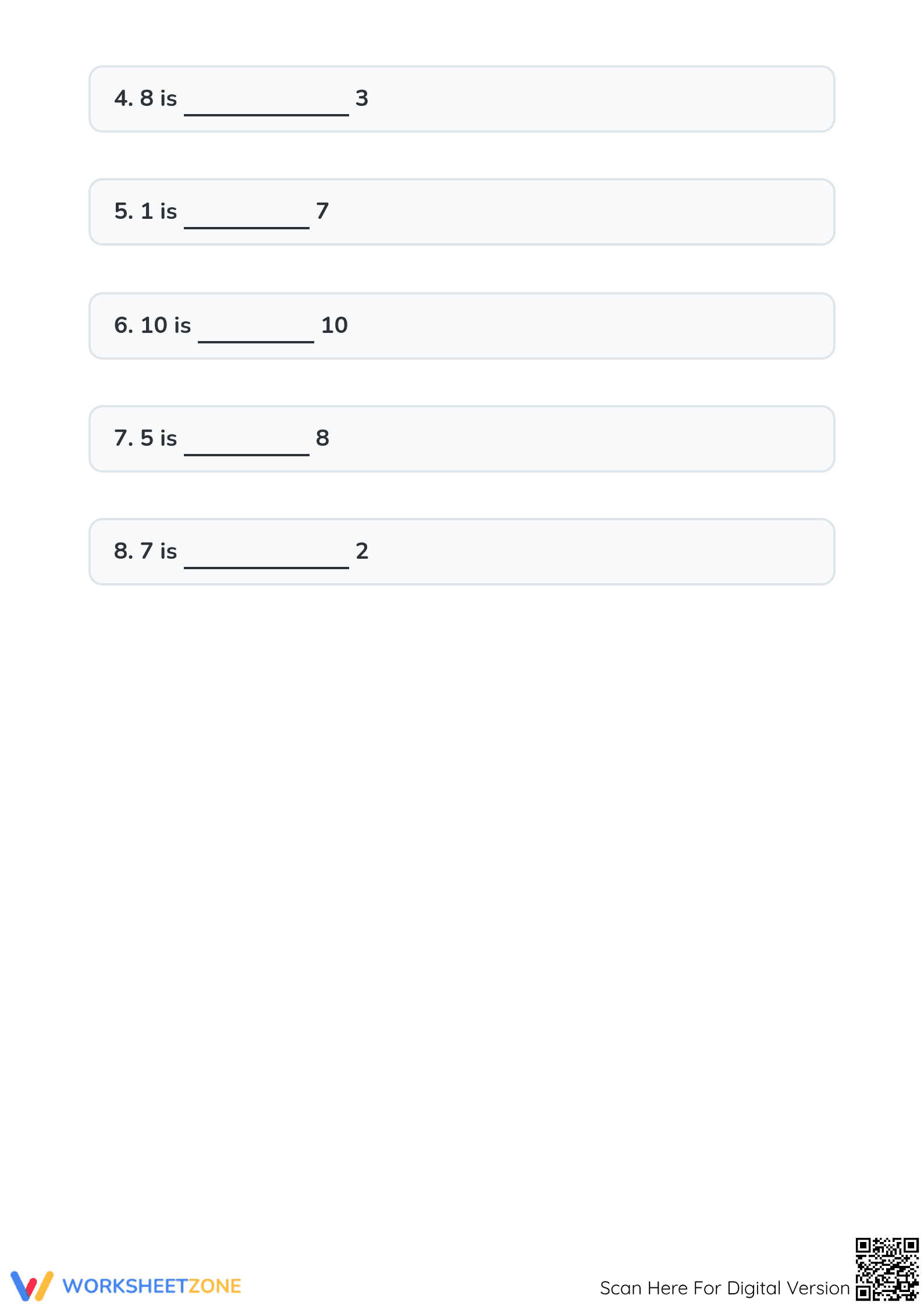

Printable Comparing Numbers Worksheet | Grade 1 Math
Paste this activity's link or code into your existing LMS (Google Classroom, Canvas, Teams, Schoology, Moodle, etc.).
Students can open and work on the activity right away, with no student login required.
You'll still be able to track student progress and results from your teacher account.
This complete worksheet provides focused practice for first graders learning to compare two-digit numbers. Through a series of clear and structured activities, students will build fluency in using the greater than, less than, and equal to symbols, a foundational skill for all future math concepts. This resource is designed to be a straightforward tool for reinforcing number sense.
At a Glance
- Grade: 1 · Subject: Math
- Standard:
CCSS.MATH.CONTENT.1.NBT.B.3— Compare two-digit numbers using the symbols >, =, and <.- Skill Focus: Comparing Numbers
- Format: 4 pages · 37 problems · Answer key included · PDF
- Best For: Independent practice, math centers, homework
- Time: 15–25 minutes
What's Inside
This four-page resource includes a comprehensive answer key for quick grading. The worksheet begins with simple comparisons and systematically introduces new formats to keep students engaged. The layout is clean and uncluttered, with large, easy-to-read numbers, making it accessible for all first-grade learners. The final page varies the task to ensure students can apply their knowledge flexibly.
Skill Progression
The worksheet follows a classic gradual-release model to build student confidence and independence. This 'I Do, We Do, You Do' structure is scaffolded across the problem sets.
- Guided Practice: The first page offers 8 problems using only < and > symbols with clear visual separation, perfect for teacher-led introduction.
- Supported Practice: The next two pages present 20 problems that add the = symbol, encouraging students to consider all three possibilities.
- Independent Practice: The final page provides 9 problems where students circle the greater number, a different format that assesses their conceptual understanding without symbolic notation.
Standards Alignment
This resource is directly aligned with a critical first-grade math standard. The primary standard is CCSS.MATH.CONTENT.1.NBT.B.3, which requires students to "Compare two two-digit numbers based on meanings of the tens and ones digits, recording the results of comparisons with the symbols >, =, and <." Both standard codes can be copied directly into lesson plans, IEP goals, or district curriculum mapping tools.
How to Use It
This worksheet is a versatile tool for any first-grade classroom. Use it as an independent practice station after a direct instruction lesson on place value and number comparison. It also serves as an effective piece of homework to reinforce the day's learning. For formative assessment, observe which students hesitate when comparing numbers with the same digit in the tens place (e.g., 45 and 49); this reveals their understanding of ones-place value.
Who It's For
This resource is designed for first-grade students who are developing their number sense and understanding of place value. It is particularly helpful for learners who benefit from clear, repetitive practice to build mastery. For differentiation, provide students who are struggling with a physical number line or a hundred chart to help them visualize the number relationships before writing the symbol.
Mastering number comparison is a key early math competency identified by the National Assessment of Educational Progress (NAEP). This worksheet directly supports CCSS.MATH.CONTENT.1.NBT.B.3 by providing the structured, repetitive practice required for fluency. Research on effective math instruction, such as that synthesized by Fisher & Frey (2014), emphasizes the importance of moving from guided to independent practice. This resource's 37 problems are designed to facilitate that transition, ensuring students can confidently compare two-digit numbers by analyzing place value. By internalizing the logic of 'greater than' and 'less than,' students build a strong foundation for more complex operations, a critical step in their mathematical development.


