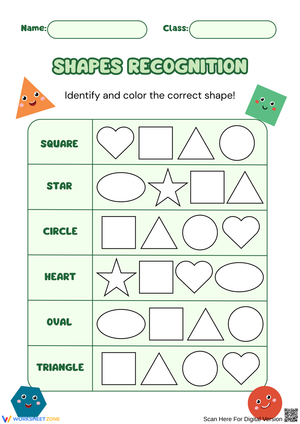
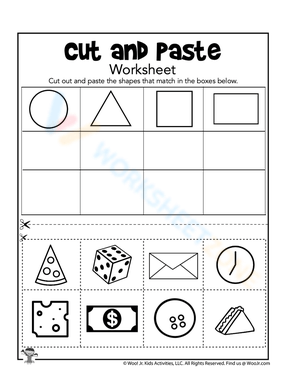
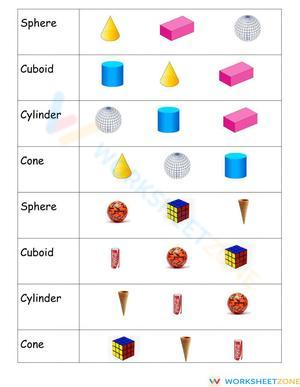
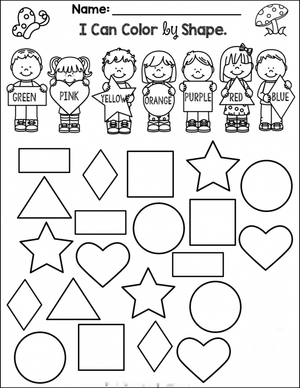
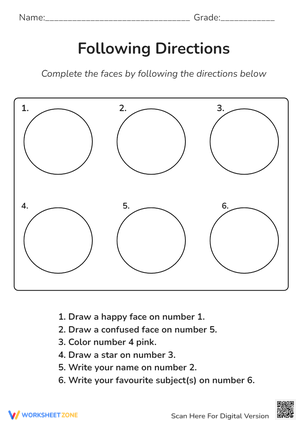
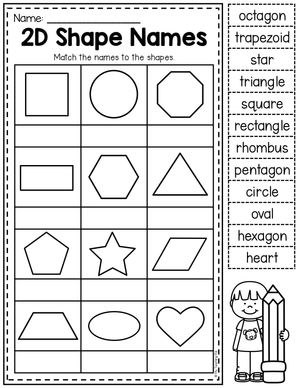
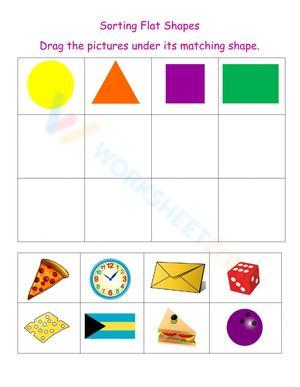
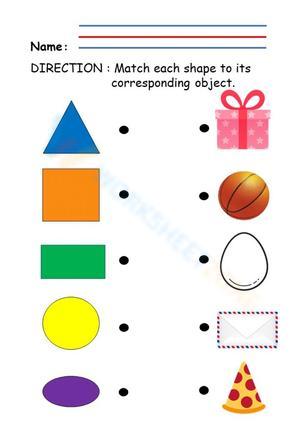
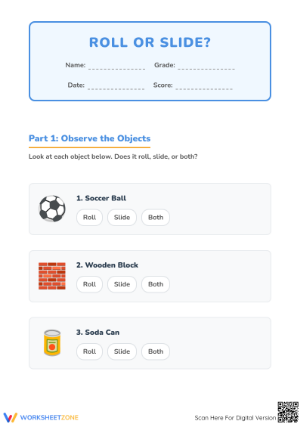
These shapes worksheets for 2nd grade target the shift that happens mid-year in most second-grade classrooms: students stop just naming shapes and start explaining what makes a shape what it is. The set spans two-dimensional polygon attributes, three-dimensional solid identification, and the partitioning work that quietly bridges geometry to the fraction lessons waiting in third grade. Teachers get resources they can drop into centers, use as morning warm-ups, or pull for a small group working through quadrilateral confusion without stopping the rest of the class.
The Specific Skills Each Worksheet Targets
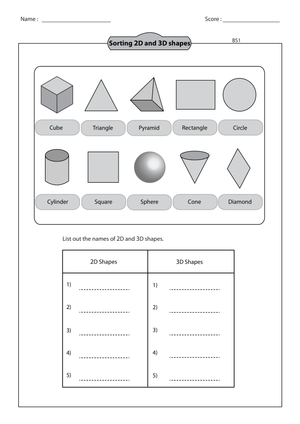
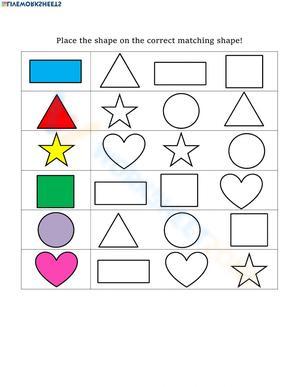
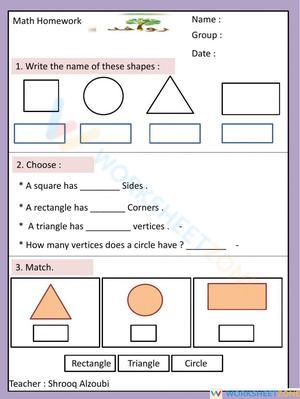
The 2D polygon work centers on counting and comparing attributes — sides and vertices — to identify and then produce specific shapes. Students mark each vertex with a dot, number each side, and write the shape name before moving on. This sequence matters: forcing students to physically annotate a figure before naming it catches the double-counting errors that routinely appear with pentagons and hexagons, where a student's eye can slide back to a vertex already marked. Drawing tasks go further. Given only a description — "draw a closed figure with exactly five sides" — students must produce the shape from the attributes alone, which reveals whether they hold the concept or are only recognizing it from a picture.
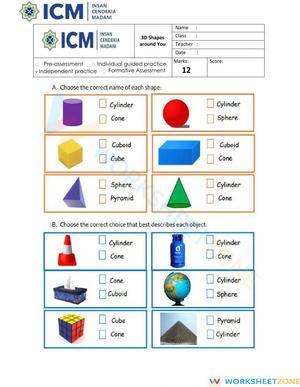
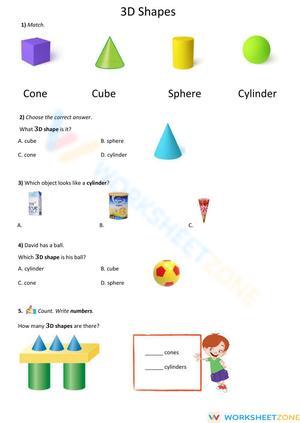
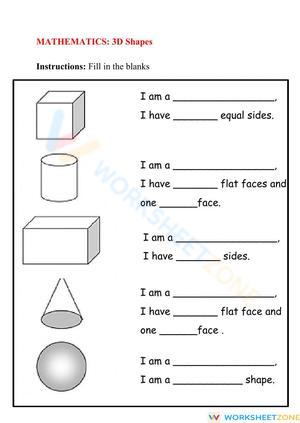
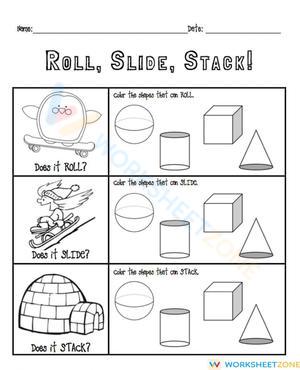
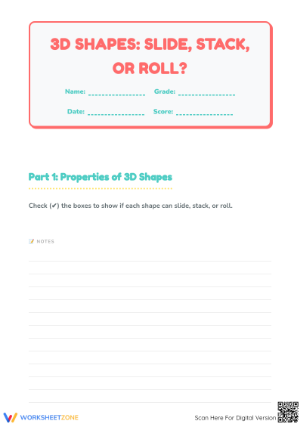
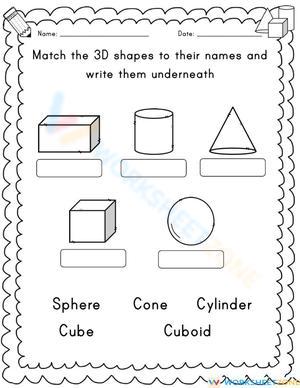
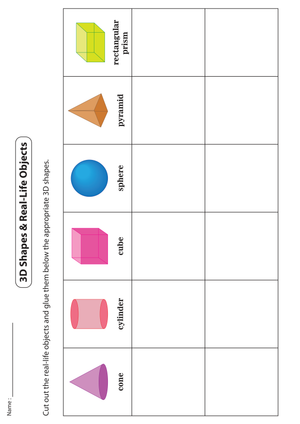
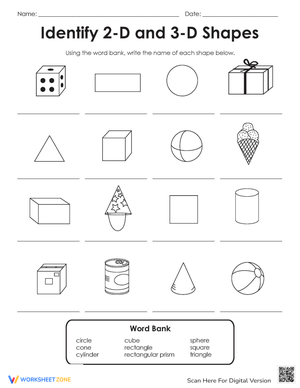
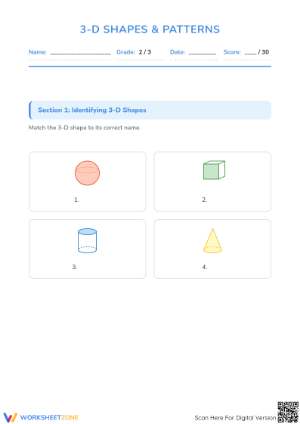
Three-dimensional solids get their own worksheets. Students count and record the faces, edges, and vertices of cubes, rectangular prisms, cones, and cylinders, and work through real-world identification tasks — matching a soup can to cylinder, or a tissue box to rectangular prism. One worksheet type asks students to shade all the faces of a solid in one color and trace its edges in a second. That color-coding step separates two terms that read as distinct on a vocabulary list but look identical to a second grader until they've had to mark them differently on paper.
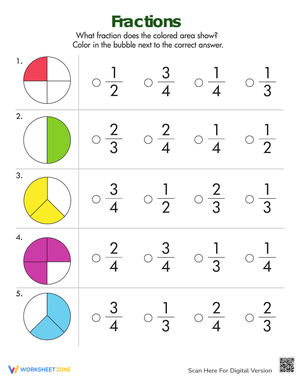
The partitioning exercises within this shapes worksheets for 2nd grade collection ask students to divide circles and rectangles into halves, thirds, and fourths and label each share using precise vocabulary. A key idea threaded through these tasks: the more equal parts a whole is divided into, the smaller each part becomes. Students who can explain that relationship — not just partition correctly — arrive at third-grade fraction instruction carrying a conceptual foundation rather than just a procedural habit.
What Student Work Reveals About Geometry Gaps
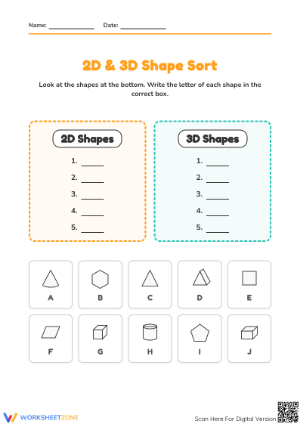
The most persistent error across this content is categorical. Students who have learned "square" as a shape name resist calling it a quadrilateral because they understand "square" as an identity rather than a category membership. A student who can draw a perfect square will sometimes leave the quadrilateral column blank on a sorting exercise, genuinely convinced there's a trick in the question. Exercises that sort shapes into overlapping groups — four-sided figures in one column, right-angle figures in another — make the classification hierarchy visible in a way direct instruction rarely achieves on its own.
Partitioning produces a different but equally reliable error: students draw a line through a rectangle, end up with two pieces, and label both "halves" without checking whether the pieces are equal. They're counting parts, not verifying equality. Mixing equally and unequally divided shapes on the same worksheet — and asking students to circle only the correctly partitioned figures — installs that verification habit before labeling begins. On 3D worksheets, the face-versus-solid confusion surfaces consistently. Asked the shape of a cube's face, a student writes "square" (correct). Asked to name the solid, they write "square" again. Separating face-identification and solid-identification into clearly distinct prompts on the same worksheet addresses this before it turns into a fixed misconception.
Fitting These Worksheets Into the Geometry Unit
Three spots in the instructional week work consistently well for this material:
- Morning work — a geometry worksheet placed on desks before morning meeting means students are marking vertices and numbering sides during the first 8–10 minutes of the day, before formal instruction begins. The geometry unit stays active even on days when the math block gets compressed by testing or read-aloud overruns.
- Center rotation — the 2D polygon worksheets run independently at a station while the teacher leads a small group at the back table. Sequencing centers by concept — 2D one week, 3D the next — lets teachers stay with one group longer and move through the material with more intentionality.
- Targeted small-group practice — for students who have polygon attribute work solid but struggle with solid figures, pulling a few 3D worksheets into a guided session alongside a physical model (a wooden block, a cereal box) addresses the specific gap without requiring whole-class reteaching.
A worksheet from this shapes worksheets for 2nd grade set also works as a formative checkpoint — particularly the drawing tasks. A student's drawn response to "produce a shape with exactly four sides and no right angles" tells far more about actual understanding than any circled-answer format does.
Standard Alignment
The polygon identification and drawing worksheets address CCSS.MATH.CONTENT.2.G.A.1, which requires students to recognize and draw shapes with specified attributes — counting angles and sides, identifying right angles — and understand that those attributes determine a shape's category. The partitioning worksheets connect to CCSS.MATH.CONTENT.2.G.A.3, where students divide circles and rectangles into equal shares and use the terms halves, thirds, and fourths accurately. In standard unit sequencing, 2.G.A.1 runs early in the geometry block, with 2.G.A.3 arriving near the end — not as a closing geometry task but as an opening move toward the fraction work that follows in third grade.
Adjusting the Set for Different Student Levels
Students who need more support benefit from having a labeled attribute reference available during independent work — a posted chart or card showing each target shape with its side count and vertex count listed. With that reference available, the cognitive load stays on the geometric reasoning rather than on memory recall. For the 3D worksheets specifically, pairing each exercise with a physical model lets students count faces and edges by touch before recording their answers, which reduces the guessing that otherwise fills in the blanks on those tasks.
Students who are ready to go further can work with irregular polygons. An irregular hexagon with unequal side lengths is still a hexagon — six sides, six vertices — and students who assume all hexagons look like a honeycomb tile need that assumption disrupted before it hardens. These shapes worksheets for 2nd grade can be extended by asking students to draw two different versions of the same polygon — identical attribute count, different side lengths — and explain in writing why both qualify. For partitioning, a straightforward extension: instead of dividing one rectangle into fourths, students partition the same rectangle two different ways and compare the resulting parts, which previews the equivalence concept central to third-grade fraction work.
Frequently Asked Questions
Do the worksheets include irregular polygons, or only standard textbook shapes?
The core worksheets focus on the polygon types specified in 2.G.A.1 — triangles, quadrilaterals, pentagons, hexagons — in their most recognizable forms. The drawing and attribute-labeling tasks are the natural extension point for irregular polygon work: ask students to produce a shape that matches a given attribute set but looks nothing like the textbook example. That's a built-in extension that requires no additional materials.
What's the 3D-shape expectation in 2nd grade compared to what students covered in 1st?
First graders name 3D solids in broad strokes and distinguish flat shapes from solid shapes. Second graders are expected to name specific solids, count their faces, edges, and vertices precisely, and recognize those solids in real-world objects. These worksheets target that 2nd-grade expectation directly — they are not review of earlier naming tasks but practice with the attribute-counting work the standard requires.
Can these worksheets serve as formative assessments, or are they strictly for practice?
The open-response tasks — drawing shapes from a description, partitioning a figure and labeling each share — give clear formative data. A student's drawn response reveals exactly where understanding stops. Many teachers collect the drawing and labeling worksheets as formative evidence, return them annotated, and have students keep them as a corrected reference through the rest of the unit.
Why don't the partitioning worksheets use fraction notation if they're building fraction skills?
The 2.G.A.3 standard intentionally stops at vocabulary — halves, thirds, fourths — rather than introducing fraction notation. The goal is the part-whole relationship itself: a student who can say with confidence that each piece is one third of the whole has the conceptual ground the notation will stand on. The symbol system arrives in third grade; these worksheets build what it needs to mean something when it does.













 Interactive Worksheet Maker
 Quiz Maker
 Word Search Maker
 Crossword Puzzle Maker
 Word Scramble Generator
 Sentence Scramble Generator
 Handwriting Worksheet Generator
 Name Tracing Generator
 Fill In The Blank Generator