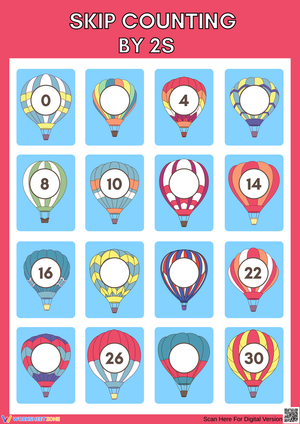
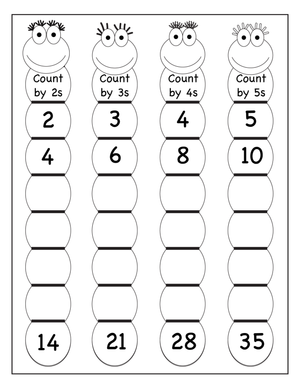
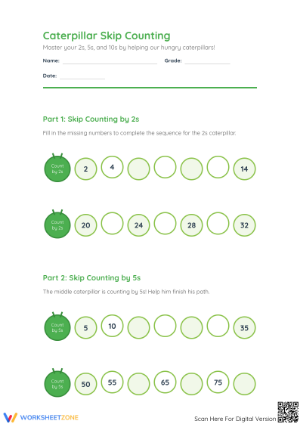
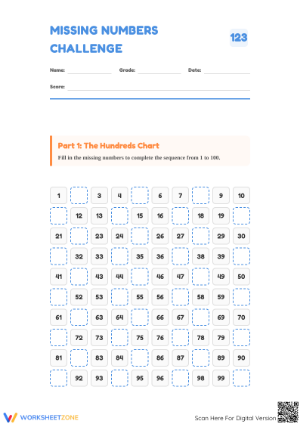
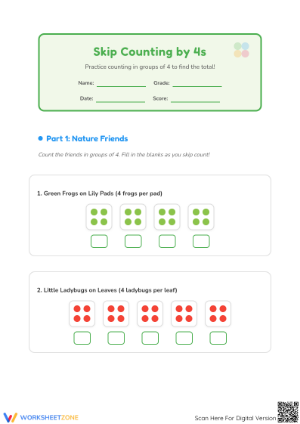
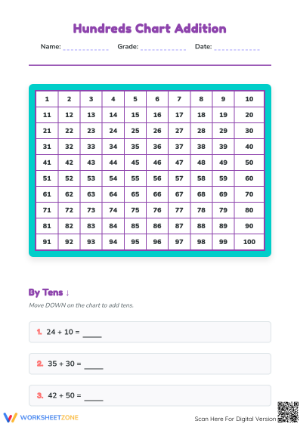
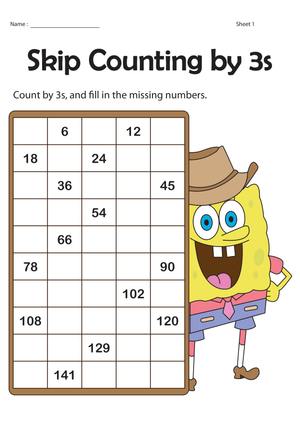
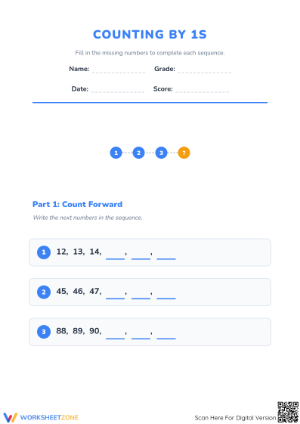
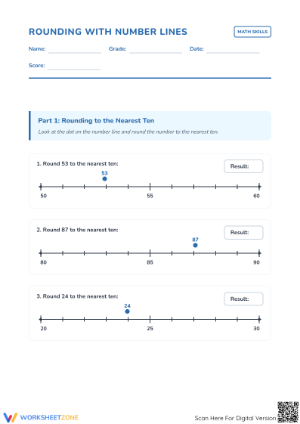
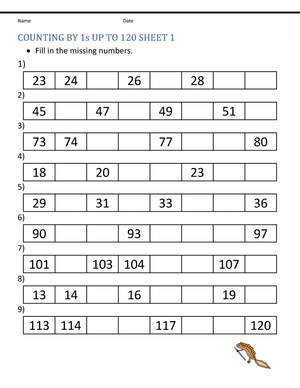
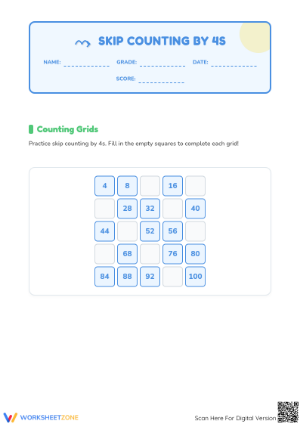
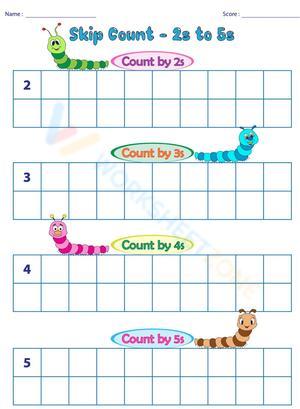
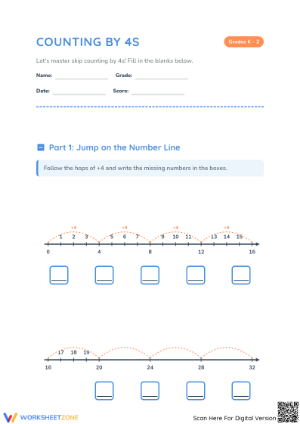
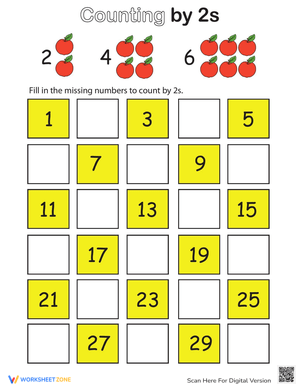
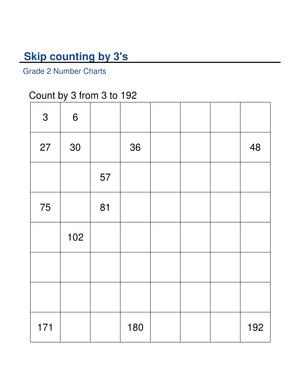
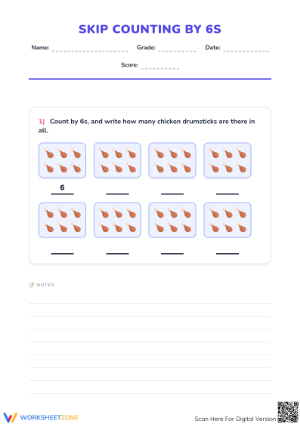
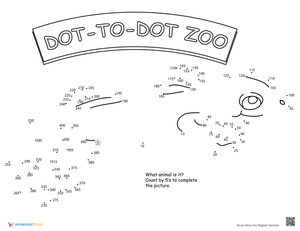
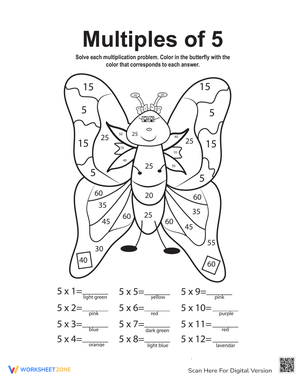
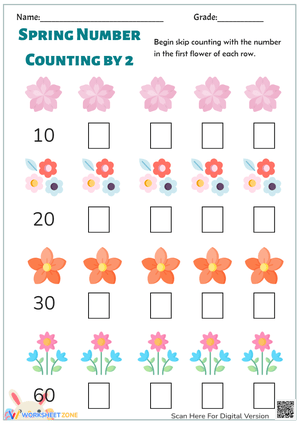
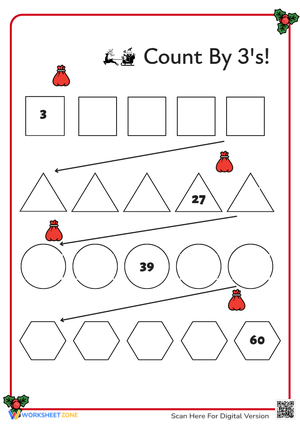
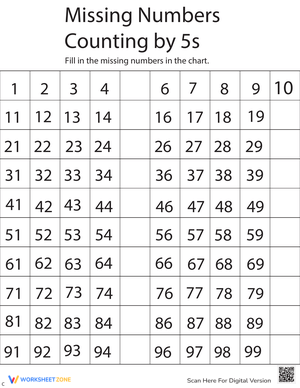
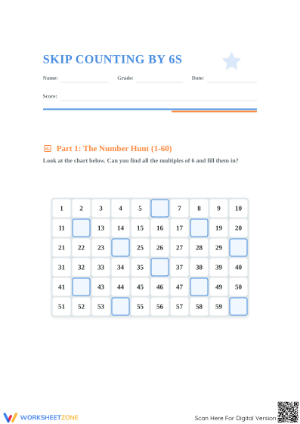
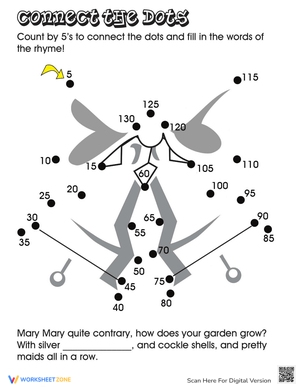
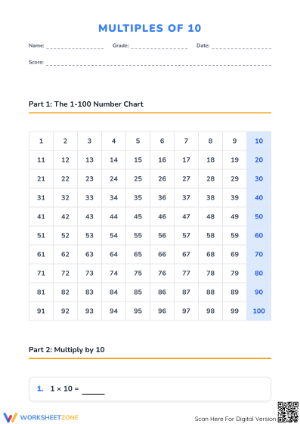
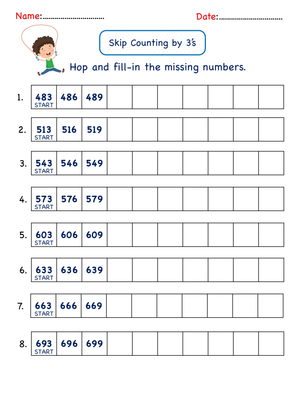
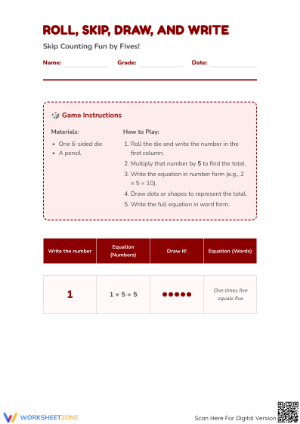
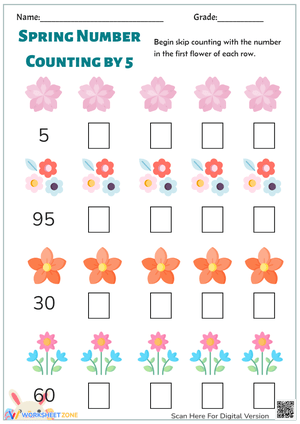
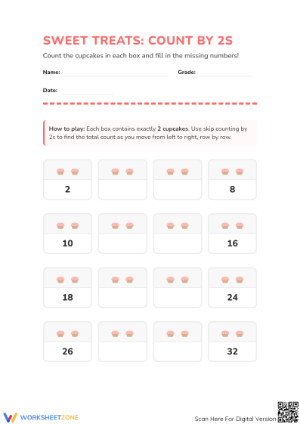
These skip counting printable worksheets for 2nd grade give teachers a ready set of targeted practice resources covering the four core intervals: 2s, 5s, 10s, and 100s. The set spans number lines, hundreds charts, fill-in sequences, and missing-number tasks — format variety that keeps students from going on autopilot after the first few problems.
The Specific Skills Each Worksheet Targets
Each worksheet focuses on one interval at a time, which keeps the cognitive demand focused and makes it easier to pinpoint exactly where a student breaks down. Students underline, color, or fill in numbers depending on the task format. Across the set, they practice:
- Counting forward and backward by 2s, including sequences that cross decade boundaries
- Identifying the 0-and-5 terminal digit rule when counting by 5s — and using it to self-check their work
- Jumping by 10s and 100s on number lines that extend into the 900s
- Completing partial sequences where the starting number is not a clean multiple of the interval
That last type is where the real learning happens. Starting a count-by-10s sequence at 43 rather than 40 requires genuine place value understanding, not pattern recitation. Both anchor-start and offset-start sequences are included so students can't coast on memorized chants.
Error Patterns to Anticipate and Address
The most persistent error in count-by-2s work appears at transition points. Students who can rattle off 72, 74, 76, 78 without hesitation will often write 80, 82, 84, 87 — dropping back into one-at-a-time guessing once they've crossed a decade. Teaching the ones-digit cycle (2, 4, 6, 8, 0, repeating) is the practical fix: once students internalize that 0 must follow 8 in every decade, they recognize 87 as wrong on sight.
Counting by 100s produces a different and more revealing error. Students who correctly understand that adding 10 changes only the tens digit will over-apply that logic to hundreds, writing 390, 400, 410 instead of 390, 490, 590 — as if each jump shifts only one digit position. This is a place value misconception surfacing inside a skip counting task. It shows up clearly in student work on these worksheets, which makes each worksheet useful as a diagnostic instrument, not just a fluency drill.
Fitting These Worksheets Into Your Weekly Lesson Plan
The most efficient slot for this practice is the five-minute warm-up at the start of the math block. A single worksheet takes most second graders between four and seven minutes, enough to build retrieval practice without eating into direct instruction time. Distributing the same interval's worksheet on Monday and again on Thursday — using a different starting number — builds spaced retrieval into the week without any elaborate planning.
During math centers, the hundreds-chart worksheets function well as independent station work because students have a built-in self-checking mechanism: if the colored squares don't form a straight or diagonal line, something went wrong. Teachers who use skip counting printable worksheets for 2nd grade this way report that students catch their own sequencing errors more reliably than they do on purely numerical fill-in tasks — the visual feedback does work that a teacher correction after the fact cannot always achieve.
One honest limitation: the fill-in-the-blank format frustrates students who freeze when handed an unfamiliar starting number and no reference anchor. For those students, allow a hundreds chart as a support tool until they demonstrate consistent fluency without it — then remove the chart and re-administer the same worksheet type to measure the shift.
Standard Alignment
CCSS 2.NBT.A.2 requires second graders to count within 1,000 and skip-count by 5s, 10s, and 100s. The standard stops short of requiring counting by 2s, but 2s is nearly universal in second-grade classrooms because it directly reinforces the even-number concept addressed in 2.OA.C.3. Each worksheet in the set targets at least one of these two standards. The offset-start sequences in particular push toward the flexible number sense 2.NBT.A.2 actually intends — students who can only count from 10, 20, 30 have memorized a chant; students who can count by 10s from 37 understand place value.
Making the Set Work for Students at Different Levels
The skip counting printable worksheets for 2nd grade in this set include both anchor-start and offset-start sequences, so differentiating is mostly a matter of controlling which type each student works with first. Students who aren't yet ready for offset sequences can work through the anchor-start versions with a marked number line available as a reference. Once they complete that format in under two minutes without checking the line, the offset-start version becomes the right next step.
For students who have already internalized all four intervals, flip the direction. Backward counting by 10s from 500 or by 100s from 1,000 demands the same place value reasoning in reverse and is genuinely more demanding. Counting by 25s — which connects naturally to a money unit and quarters — is another extension that applies the existing worksheet formats to a new interval without requiring separate materials.
Frequently Asked Questions
Do these worksheets cover counting by 2s, or only the intervals listed in 2.NBT.A.2?
The set covers all four intervals — 2s, 5s, 10s, and 100s. Counting by 2s is included because it supports 2.OA.C.3 (even and odd numbers) and because most second-grade teachers treat it as the entry point before moving to 5s and 10s. The 2s worksheets specifically address the even-number digit pattern rather than simply asking students to reproduce a memorized string.
Can these be used as a formative assessment tool, or are they strictly for practice?
The skip counting printable worksheets for 2nd grade work well as formative checkpoints. Administer one at the start of a unit to establish a baseline, then use the same interval's worksheet three weeks later as a progress measure. The offset-start items give a cleaner picture of genuine understanding than anchor-start sequences do, because pattern recitation can pass anchor-start tasks even when the underlying place value concept is shaky.
What is the difference between the hundreds-chart worksheets and the fill-in-the-blank ones?
Hundreds-chart worksheets ask students to color or mark every number they land on when counting by a given interval from a given starting point. The resulting visual — diagonal or vertical colored columns — makes the numerical pattern self-evident and gives students a concrete self-checking tool. Fill-in-the-blank worksheets strip that visual support away and require students to produce numbers through reasoning or memory alone. Both types appear in the set because they measure different things: the chart tasks build and confirm pattern recognition, while the fill-in tasks reveal whether students can generate sequences independently.













 Interactive Worksheet Maker
 Quiz Maker
 Word Search Maker
 Crossword Puzzle Maker
 Word Scramble Generator
 Sentence Scramble Generator
 Handwriting Worksheet Generator
 Name Tracing Generator
 Fill In The Blank Generator