Why Grade 2 Is the Year Sight Words Click
Second grade is the hinge point where students stop learning to read and start reading to learn. To make that shift, they need to recognize high-frequency words instantly, without sounding each one out. Every word a reader has to decode letter by letter pulls attention away from meaning, so automatic recognition is what lets a child follow a story or a short science passage instead of getting stuck on because or through.
Here is the part many teachers underestimate: the first 300 most frequent words account for roughly 65% of everything students read, and in the early elementary grades about 80% of the text in front of a child comes from these high-frequency words. That means sight word automaticity is not a side activity—it is most of the reading itself. When a second grader masters this core, the majority of any page becomes effortless, which frees working memory for comprehension and steadily builds reading confidence.
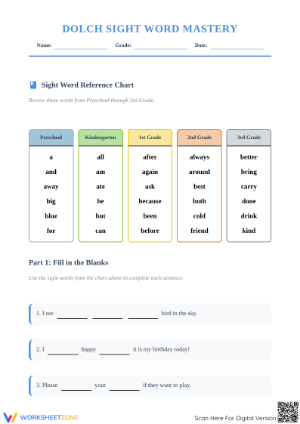
Dolch and Fry Lists: What Second Graders Need
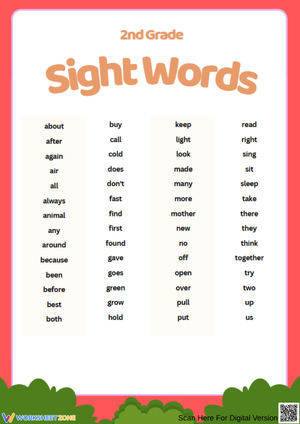
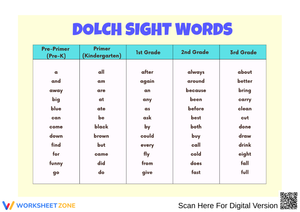
Most Grade 2 sight word instruction is built on one of two lists. The Dolch list contributes 46 words specifically pegged to second grade, while the Fry list covers 100 words targeted at Grade 2 readers. Plenty of teachers use both, treating Dolch as the foundation and Fry as the extension set. The two lists overlap heavily, so you are rarely choosing one at the expense of the other.
According to Teaching Expertise's roundup of sight words for second graders, the Dolch list contributes 46 words at this level while the Fry list adds 100 high-frequency words, giving teachers a combined bank that anchors fluency practice across the entire Grade 2 reading year.
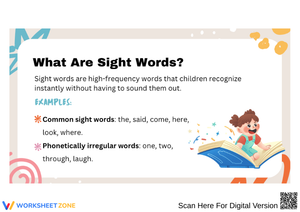
A practical detail worth flagging: many of these words are irregular and cannot be sounded out phonetically. Words like could, their, and does break the usual rules, which is exactly why repeated visual exposure beats decoding drills for this set. Worksheetzone worksheets support both lists, so you can match whichever scope and sequence your district already uses without rebuilding your plans.
Pacing Sight Words Across the School Year
A combined Dolch-and-Fry bank can feel like a lot until you spread it across roughly 36 weeks of instruction. Introducing five to seven new words a week clears the second-grade Dolch set well before winter break, which leaves the rest of the year to layer in Fry words and circle back on anything that has not stuck. Front-load the irregular words that cannot be decoded, since those need the most exposure time.
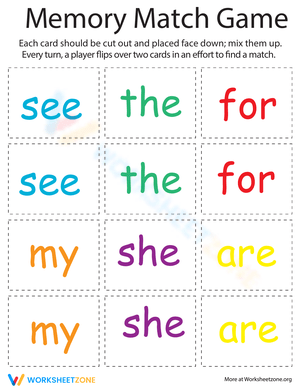
Build review into the calendar on purpose. A word introduced in September will fade by November if it never reappears, so reserve one short session each week for a mixed review of older sets. The variety of formats makes this painless: a memory match game on week-three words feels new even though the content is old, which keeps cumulative review from turning into a chore.
Worksheet Formats That Build Automatic Recognition
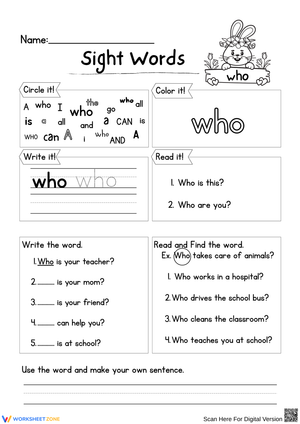
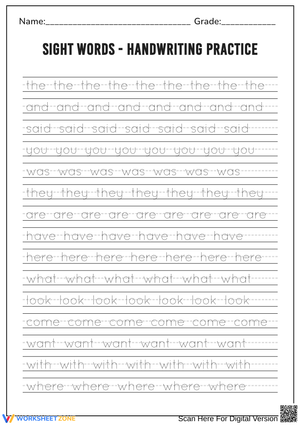
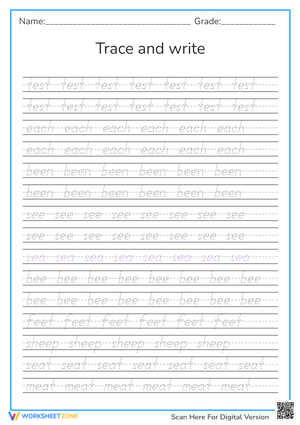
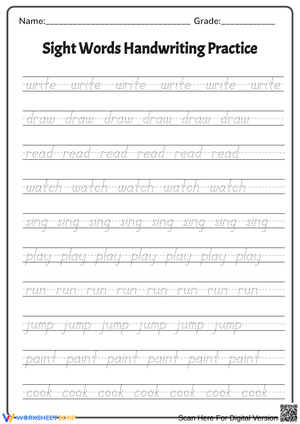
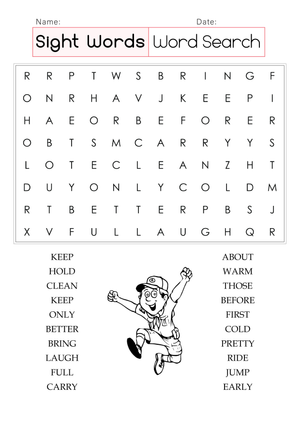
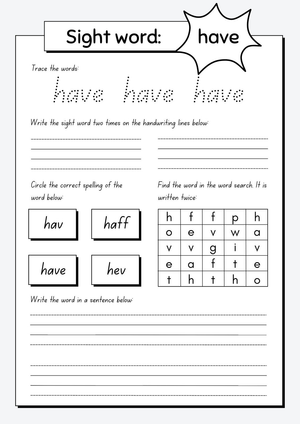
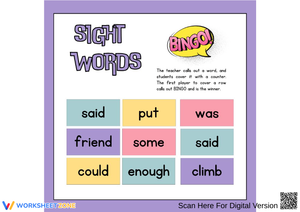
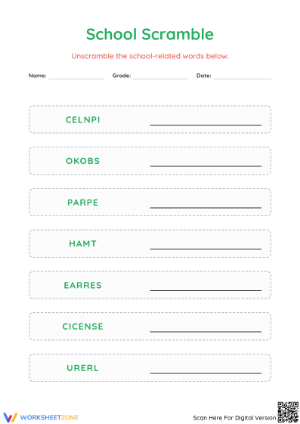
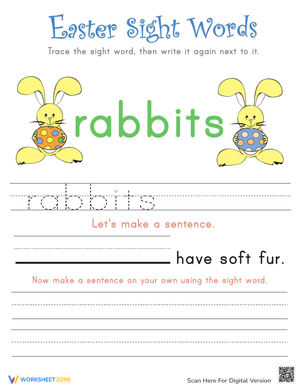
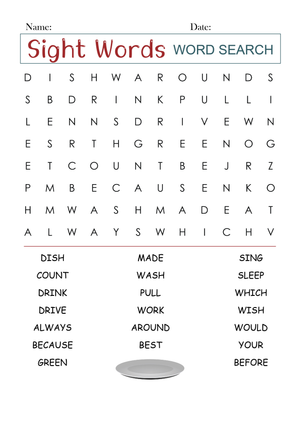
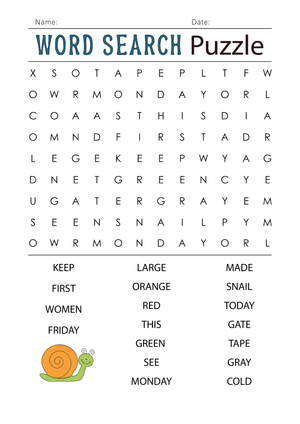
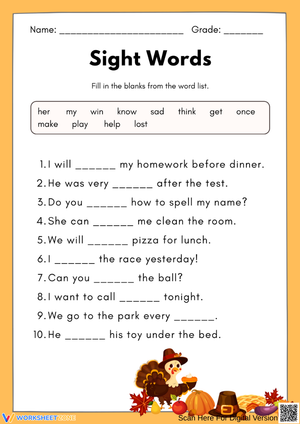
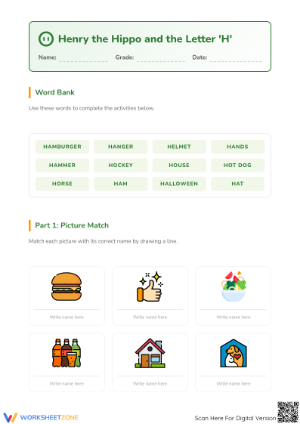
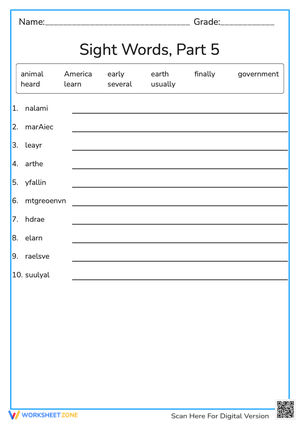
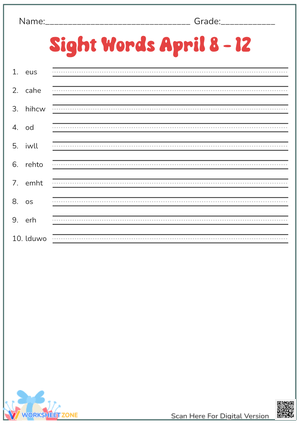
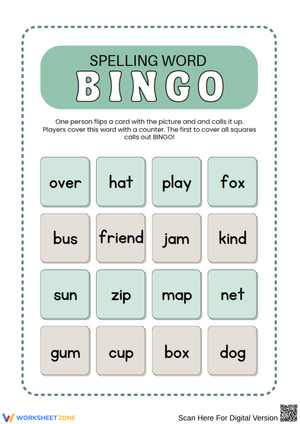
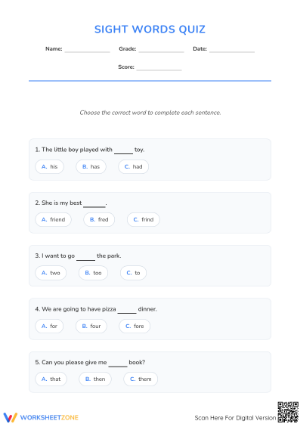
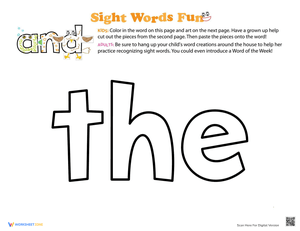
Repetition works best when it does not feel repetitive. The Grade 2 sight word collection on Worksheetzone includes tracing, matching, word scrambles, bingo, memory match, quizzes, and fill-in-the-blank pages—all available as no-prep PDFs you can print and hand out in seconds.
Each format pulls a slightly different cognitive lever. Tracing builds the motor memory that helps young writers spell the word later. Matching and memory match push fast visual recognition. Word scrambles force students to attend to letter order, which catches the kids who guess from the first letter alone. Bingo turns drill into a game the whole class will ask to play again. Rotating formats keeps the same 46 or 100 words fresh across many weeks of practice without burning students out.
Classroom Implementation
The simplest way to sequence the year is to introduce a small set of words each week—five to seven is a manageable pace for most second graders—and recycle earlier sets so nothing fades. Pair every new set with two or three different worksheet formats rather than handing out the same page twice.
- Word wall: Post each new set where students can glance up during writing, and add words the week you teach them rather than all at once.
- Timed fluency drills: A 60-second read-and-mark on a word grid gives you a quick automaticity snapshot and shows students their own growth over time.
- Center rotations: Drop tracing, bingo, and matching pages into literacy centers so practice runs without your direct supervision.
- Small-group intervention: Use no-prep printables with a focused group while the rest of the class works independently on a different format.
Because the printables need no setup, you can pivot to a different format the moment one stops working for a particular student, and you never lose instructional time to prep.
Frequently Asked Questions
1. How many sight words should a Grade 2 student know by the end of the year?
A reasonable target is the full Grade 2 Dolch set of 46 words plus the 100 Fry words pegged to this level, layered on top of the high-frequency words students mastered earlier. Most second graders can reach this with steady weekly practice and regular cumulative review.
2. What is the difference between the Dolch and Fry sight word lists for Grade 2?
The Dolch list groups words by grade and contributes 46 at second grade. The Fry list ranks the most frequent words in order and assigns 100 to Grade 2 readers. They overlap a lot, so many teachers use Dolch as the core and Fry to extend it.
3. How often should teachers practice sight words with second graders?
Short daily practice beats one long weekly session. Five to ten minutes a day—through a worksheet, a center, or a quick drill—builds the automaticity these words require far better than a single block once a week.
4. What are the best activities for students still struggling with earlier sight words?
Lean on tracing and matching pages, which pair motor memory with visual recognition, and keep the word set small. Memory match and bingo lower the pressure while still demanding fast recognition, which helps shaky readers rebuild a foundation before they fall further behind.
5. Can these worksheets be used for homework or distance learning?
Yes. The no-prep PDFs print cleanly for take-home packets and can be shared digitally for remote practice, so families can reinforce the same words students are seeing in class.












 Interactive Worksheet Maker
 Quiz Maker
 Word Search Maker
 Crossword Puzzle Maker
 Word Scramble Generator
 Sentence Scramble Generator
 Handwriting Worksheet Generator
 Name Tracing Generator
 Fill In The Blank Generator