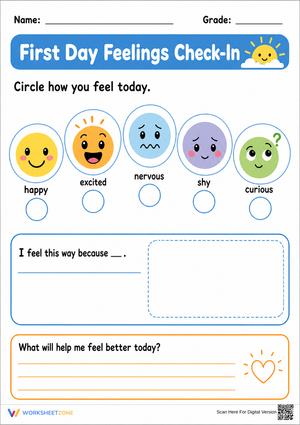
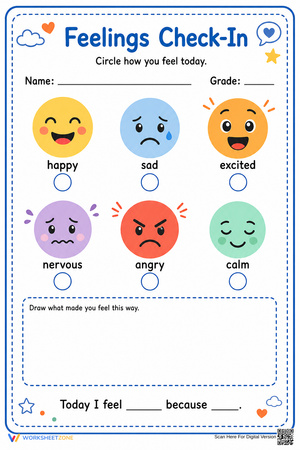
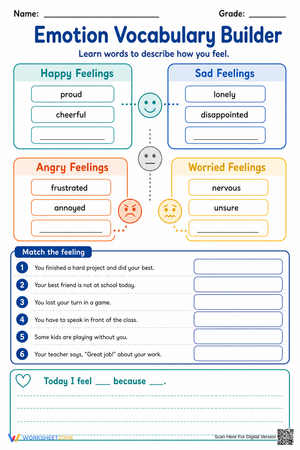
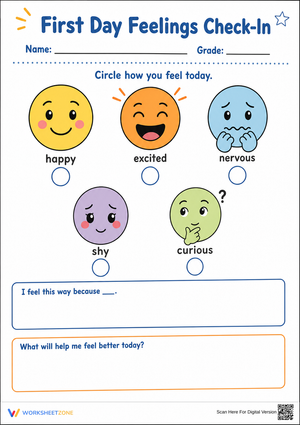
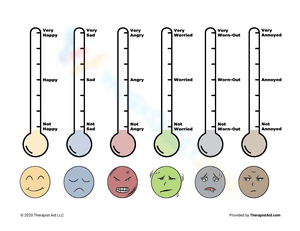
These identifying emotions worksheets printable for 2nd grade give teachers a structured way to move students past "I'm mad" and into the emotional vocabulary that seven- and eight-year-olds are developmentally ready to build. The set targets secondary emotions — embarrassment, jealousy, frustration, disappointment — that appear constantly in second-grade social life but rarely get named explicitly during the school day. When students can label what they're actually feeling, the classroom gets quieter in the best way: less acting out, more words.
What Each Worksheet Builds
Second graders who arrive knowing "happy," "sad," and "mad" are ready to add a second tier. Each worksheet targets the gap between knowing an emotion exists and being able to recognize it in real time — in a scenario, a facial expression, or their own body. The skills covered across the set include:
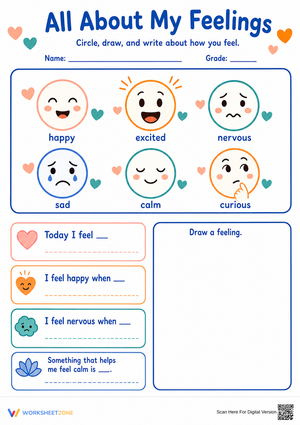
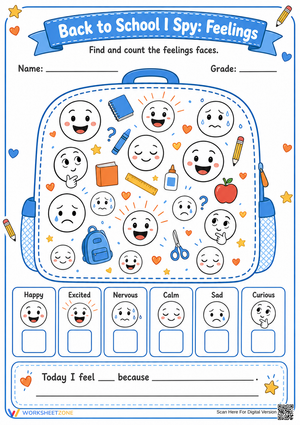
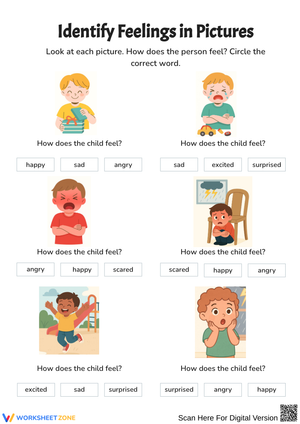
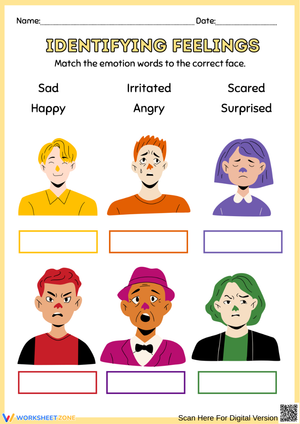
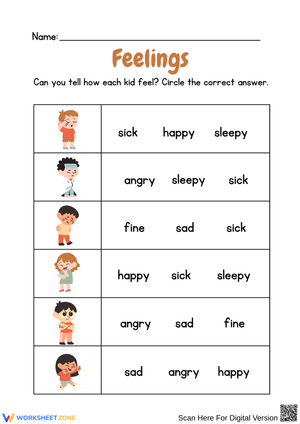
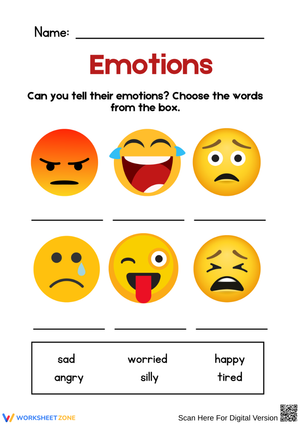
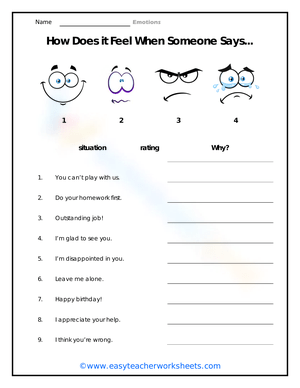
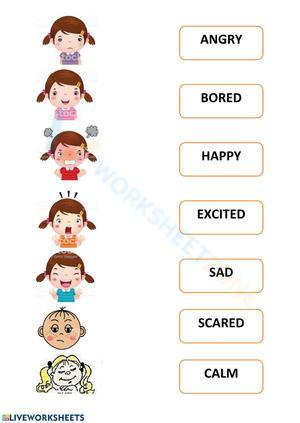
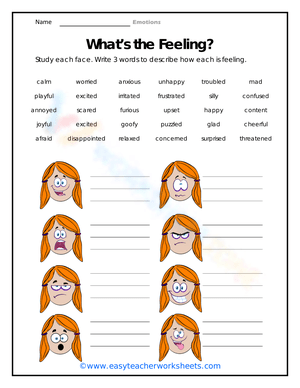
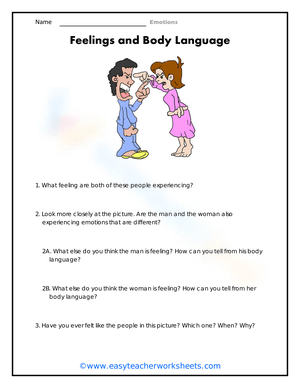
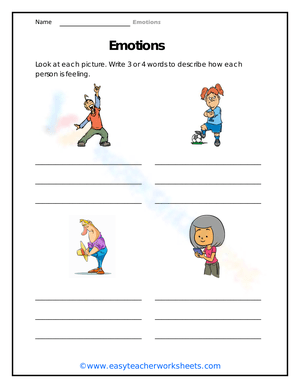
- Matching facial expressions and body language illustrations to specific emotion words
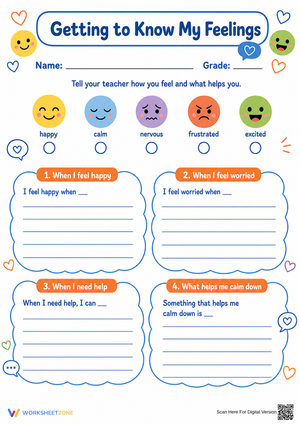
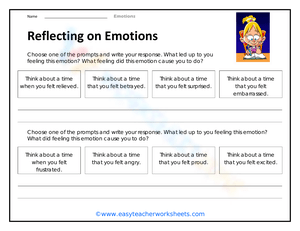
- Completing "I felt _____ when _____" sentence frames tied to realistic school-day scenarios
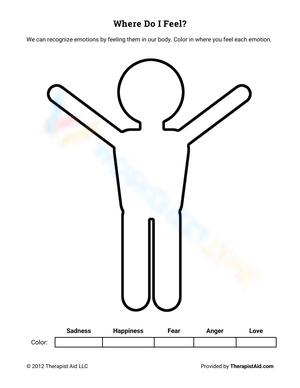
- Coloring body-outline diagrams to mark where a feeling registers physically — tight stomach, clenched fists, warm face
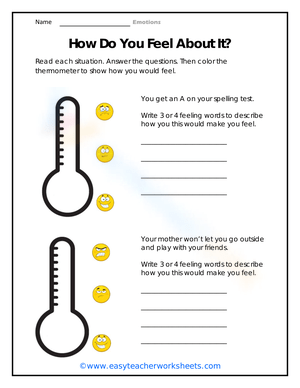
- Sorting emotion words by intensity on a feelings thermometer (calm → worried → panicked)
- Distinguishing between closely paired emotions such as excited vs. anxious or proud vs. relieved
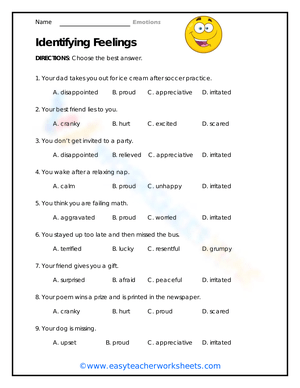
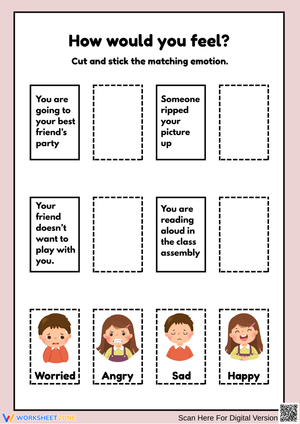
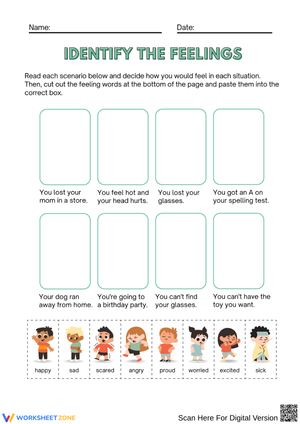
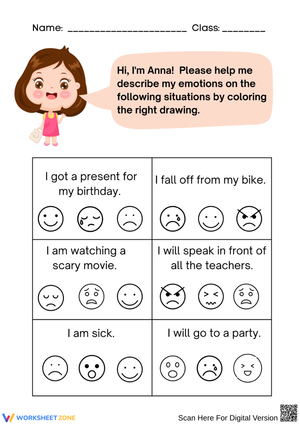
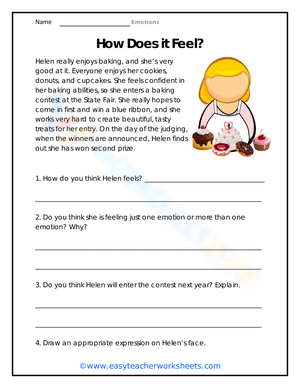
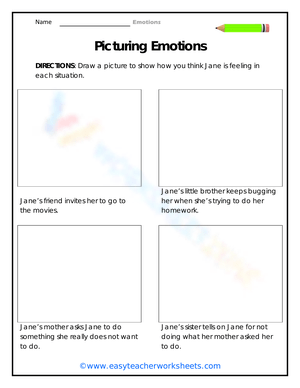
- Identifying the emotion embedded in a short classroom situation described in a few sentences
The closely-paired emotion work is where real vocabulary growth happens. Students who use "nervous" and "excited" interchangeably are not wrong — those two states share a physical fingerprint — but being able to separate them changes what a child asks for when they need support.
Teaching the Body First
Seven-year-olds often reach full behavioral meltdown before they've registered an emotional signal, which is why the body-outline activities in identifying emotions worksheets printable for 2nd grade deserve extra instructional time. When a student learns where anger lives in their body — jaw tight, shoulders up, fists closed — that physical recognition becomes an early-warning system. The worksheet turns a racing heart or clenched fist from a mystery into readable data the child can act on. Physical cue recognition gets students to pause before reacting in ways that purely cognitive exercises — "think about your feelings" — do not reliably produce at this age. It bypasses the verbal bottleneck and gives students something concrete to notice.
Student Confusions These Worksheets Surface Early
The most consistent error in closely-paired emotion work is conflating intensity with category. Students mark "nervous" and "terrified" as the same emotion rather than seeing them as different points on the same dial. On scenario-based items, students almost always identify the most visible emotion in a story — usually anger — and miss the underlying feeling driving it. A student who reads "Mia's friend took her seat at lunch and she didn't say anything" will mark "angry" and rarely consider "hurt" or "left out." Those answers are worth discussing aloud rather than simply marking incorrect.
Body-outline work surfaces a different pattern. A student who is already dysregulated when they sit down will color the entire body silhouette in a single intense color. That result is less an error than a piece of formative data — it tells you where the student is emotionally right now, which is useful information even when the worksheet doesn't go as planned.
Fitting These Worksheets Into Your Week
Identifying emotions worksheets printable for 2nd grade fit best in the first ten minutes of morning meeting, used two or three times a week rather than daily. Daily use tends to feel mechanical by mid-October; spacing the practice across the week keeps students actively re-engaging with the vocabulary rather than going through the motions. A short warm-up — one scenario item plus a physical cues check-in — runs under eight minutes and sets the emotional tone for the whole morning block. Save the body-outline worksheets for explicit SEL time rather than warm-up slots; they generate enough student conversation to need a proper discussion window.
After a classroom conflict, the scenario-based worksheet becomes a debrief tool rather than a lesson. Working through a parallel situation — not the actual incident — gives students enough cognitive distance that the conversation stays productive instead of charged. That use case rarely appears in curriculum guides but comes up consistently in real classrooms.
Standard Alignment
These worksheets address CASEL's Self-Awareness competency, specifically the strand focused on identifying and labeling emotions with increasing precision. In practical classroom terms, that competency sits at the intersection of SEL and literacy instruction — the vocabulary work students do here (distinguishing "frustrated" from "furious," or "content" from "thrilled") mirrors the precise word-choice instruction in ELA standards at this grade level. Many districts mapping to state SEL frameworks will find alignment with strands covering emotional identification and the relationship between feelings and behavior, typically introduced in kindergarten and formalized through second grade. Check your state's SEL standards document for the specific strand code, since designation varies significantly by state.
Adjusting the Set for a Range of Learners
For students still building reading fluency, the body-outline and facial-expression matching worksheets function without text support — the visual carries the concept. Word banks on sentence-frame worksheets reduce the language demand so those students stay focused on the emotional idea rather than spelling. For students who find the basic matching routine, push them to write two emotions for the same scenario — "I felt _____ and _____ when _____" — because second-grade emotional life is usually more layered than a single label captures. Students who engage with that complexity often produce the richest classroom conversations.
For students with neurodivergent profiles, particularly those who find unpredictable social situations confusing, the scenario worksheets offer something genuinely useful: a chance to analyze social moments at arm's length, without the pressure of a real-time interaction. Breaking a scene down into "what happened, what did the character feel, how do we know" turns an opaque social situation into a logical sequence students can work through at their own pace. It also reinforces the classroom principle that feelings are never wrong — only behavior can be helpful or unhelpful — which matters for this group and is worth stating directly whenever you use the resources.
Frequently Asked Questions
What emotions are appropriate to teach in second grade beyond the basics?
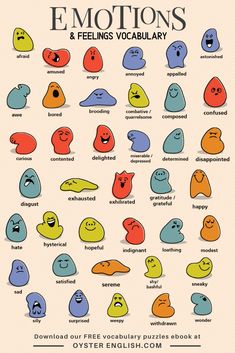
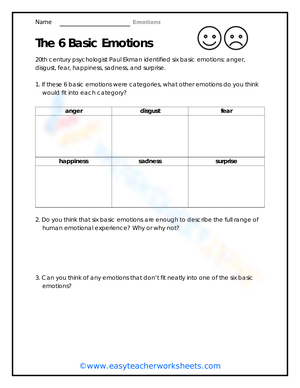
By second grade, students are ready for secondary emotions — feelings that emerge from social comparison or that layer on top of primary ones. The most teachable at this level are frustrated, disappointed, embarrassed, proud, jealous, nervous, and lonely. Each worksheet in the set also introduces the concept of intensity, so students understand that "irritated" and "furious" name the same emotion at different levels rather than two unrelated feelings. That distinction does real classroom work because it lets students calibrate their own responses more precisely instead of reaching for the biggest word they know.
What if a student refuses to participate in the emotional check-in?
Resistance usually signals one of two things: the student doesn't feel safe enough to share, or they genuinely can't name what they're feeling. Low-pressure entry points help — let a student point to an emoji rather than write, or mark a position on the thermometer without explanation. Forcing verbal performance during emotional learning defeats the purpose. The identifying emotions worksheets printable for 2nd grade work best when students understand these activities are for them rather than for a grade, and that there are no wrong feelings — only different ones.
Can these worksheets support students who have frequent behavioral challenges?
Much of what reads as defiance in second grade is a communication problem — the student cannot name or explain what's driving the reaction, so the behavior does the communicating instead. Students who build consistent emotional vocabulary through regular use of these activities gain more tools to flag a need before it becomes a disruption. Teachers who work these resources into a consistent morning routine typically begin to hear students self-reporting — "I'm frustrated because..." — within a few weeks. That shift doesn't happen from a single lesson, but it does happen.
Are these worksheets appropriate for students on the autism spectrum?
The worksheets that focus on physical cues and scenario analysis tend to be especially useful for students on the spectrum, who often process social-emotional information more reliably through structured, visual formats. Breaking an emotion into its observable components — what the face shows, what the body does, what situation typically causes it — builds a reference map students can consult independently. It also reinforces the core classroom understanding that feelings are never wrong; actions are what get evaluated as helpful or unhelpful. That distinction matters enormously for this group and is worth stating explicitly every time you use these resources.