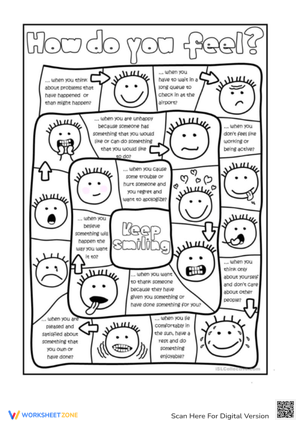
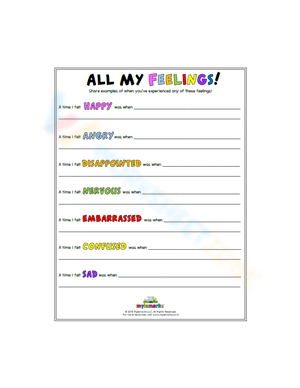
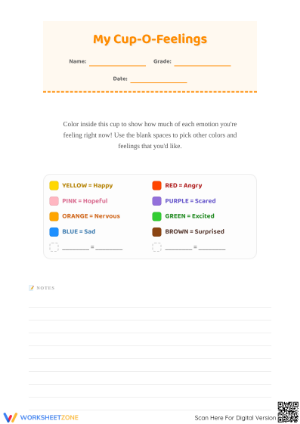
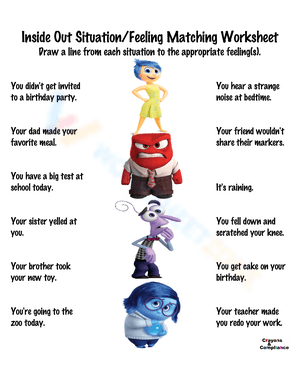
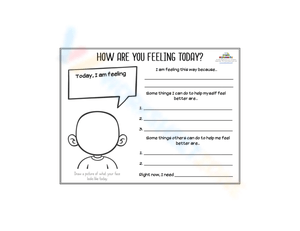
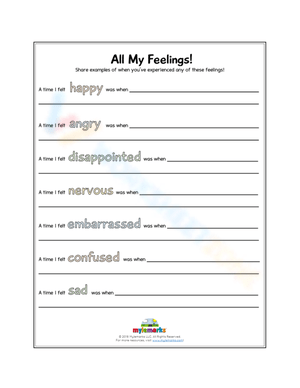
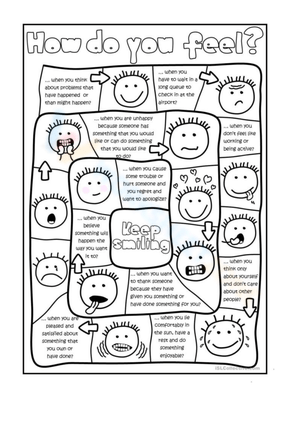
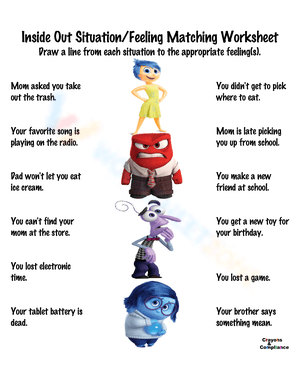
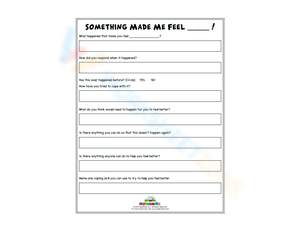
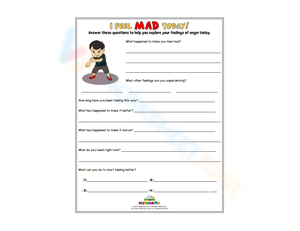
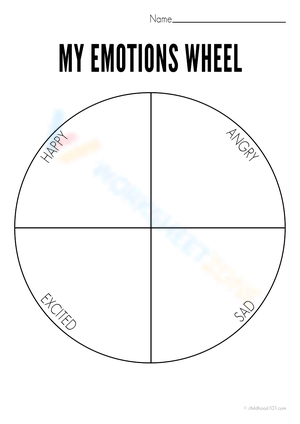
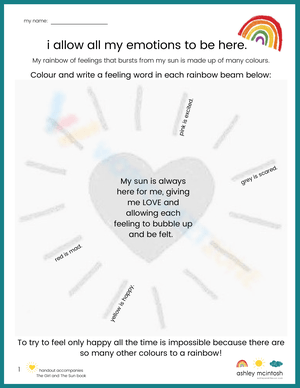
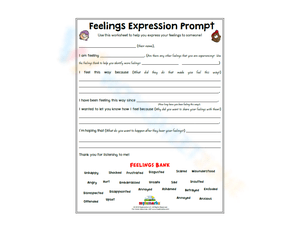
These 2nd grade emotional regulation worksheets pdf resources arrive at exactly the right developmental moment: second graders are beginning to shift from adult-managed co-regulation toward genuine self-management, and they need structured practice, not pep talks, to make that transition. The set gives teachers tools for helping students name feelings with precision, connect physical sensations to emotional states, and work through concrete calm-down strategies before a meltdown rather than after. Every worksheet is built to fit real classroom constraints — short enough for a morning meeting check-in, structured enough for a student to work through alone at a calm-down corner.
What Happens in the Body First
Before a student can de-escalate, they have to notice they're escalating. That sounds obvious, but it's genuinely hard for seven-year-olds, who often only realize they're upset after a chair gets pushed. Several worksheets in the set use body-mapping exercises to address this gap directly. Students mark where they feel physical tension — a tight throat, clenched fists, a stomach "doing flips" — and then match those sensations to an emotion word. The act of drawing on a body outline creates a moment of externalization: the feeling becomes something the student is looking at rather than drowning in.
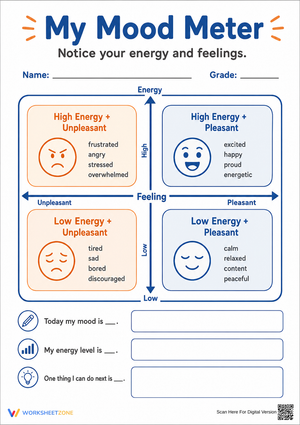
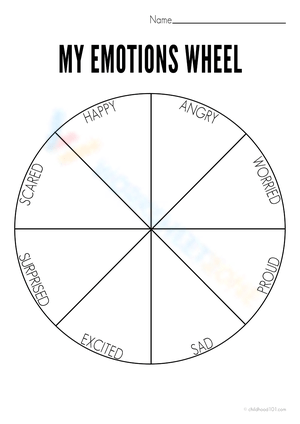
A few worksheets use emotional thermometers and zone-of-intensity scales, which give students a way to quantify how strong a feeling is rather than just whether it exists. Asking "are you angry?" gets a yes or no. Asking "how hot is your anger — a 2 or a 7?" opens a conversation. That distinction matters for second graders, who are actively building the emotional vocabulary they'll need to advocate for themselves through the rest of elementary school.
Skills These Worksheets Build
The worksheets cover a tightly focused range of self-management skills appropriate for the second-grade level — not the full arc of SEL, but the specific competencies that seven- and eight-year-olds are developmentally ready to practice:
- Recognizing physical warning signs of frustration, anxiety, and anger before a behavior escalates
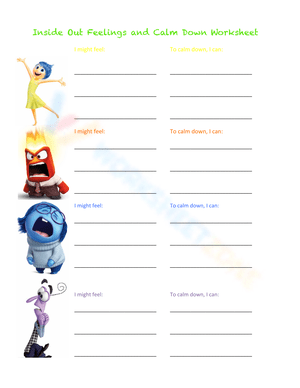
- Matching body sensations to specific emotion words beyond the default "mad" or "sad"
- Applying the Stop, Think, Choose sequence to common classroom and playground conflicts
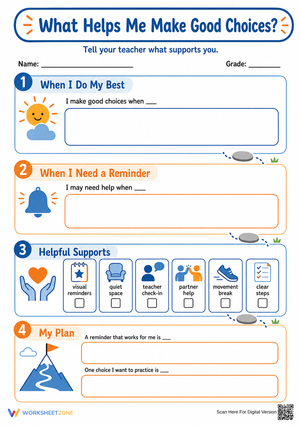
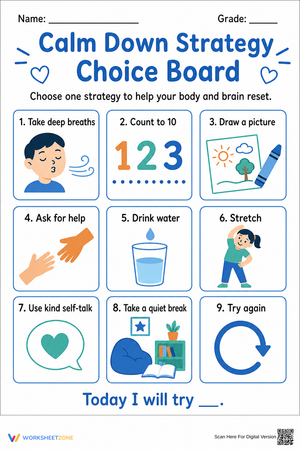
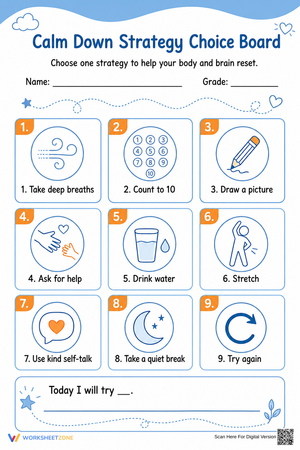
- Building a personal calm-down menu from a curated set of concrete strategies
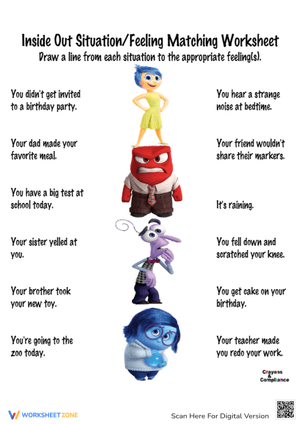
- Analyzing social scenarios to evaluate better response choices
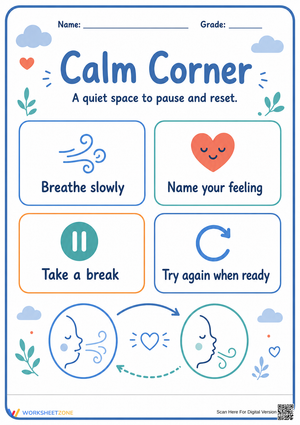
- Practicing slow-breathing and grounding exercises through step-by-step visual prompts
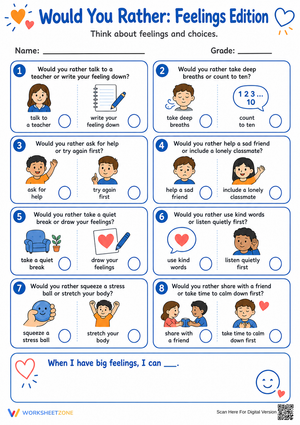
The social scenario worksheets in a 2nd grade emotional regulation worksheets pdf set deserve a specific mention. Each one presents a brief situation — a partner takes credit for shared work, a student gets left out of a game at recess — and asks students to write or draw what the character might be feeling, what they would probably do, and what a better choice could look like. Working through a conflict on paper, when no one is actually upset and the stakes are zero, gives students practice they can access when a real version of that situation happens on Friday afternoon.
Student Mistakes Worth Anticipating
The most consistent error pattern at this grade level is confusing intensity with identity. A student will say "I AM angry" rather than "I FEEL angry" — a small linguistic difference that reflects a genuinely different relationship to the emotion. When worksheets ask students to choose a calm-down strategy "for when you feel frustrated," some students resist because they don't experience frustration as something separate from themselves that they can act on. Watch specifically for the student who says "it won't work" before trying — that student usually needs more time with the body-mapping worksheets before moving to strategy selection, because they haven't yet built the internal observer needed to notice what's happening in the first place.
A second predictable difficulty: students who perform regulation during the worksheet and fall apart the moment the pencil drops. They color the thermometer correctly and can name three breathing strategies, but in an actual moment of dysregulation none of it surfaces. This is normal and developmental — procedural knowledge and in-the-moment access are different things. Teachers who treat these worksheets purely as assessments of understanding will miss the students who need far more repeated practice during calm states before the skill becomes automatic under stress.
Working These Worksheets Into Your Lesson Planning
Morning meeting is the natural entry point, and it works well. A brief feelings check-in worksheet — where students mark their current zone and choose one strategy for the day — takes about four minutes and gives teachers a fast read on who walked in carrying something heavy. It also normalizes the process so that reaching for a calm-down worksheet later in the day doesn't register as a consequence or a sign something went wrong.
The calm-down corner application is worth thinking through carefully. A common mistake is printing everything and stocking the corner with all the worksheets at once. Second graders in a heightened emotional state cannot meaningfully choose from twelve options. Keep the corner stocked with three or four resources at a time, rotating them as students grow comfortable with each one. A breathing exercise worksheet, a feelings thermometer, and a simple "what happened / what I did / what I could do next time" reflection sheet cover the range most students need without creating decision overload.
Social scenario worksheets fit best in a ten-minute small-group discussion block rather than individual seat work. The real learning happens when students hear that a classmate's instinct differs from their own — that one child's first response to being left out is to cry while another's is to say something mean, and that both responses come from the same underlying feeling. That conversation cannot happen if everyone is working silently at their desks.
Standard Alignment
These worksheets align with the CASEL Self-Management competency, specifically the sub-skills of impulse control, stress management, and identifying and applying emotional regulation strategies. At the second-grade level, CASEL frameworks expect students to recognize and label emotions in themselves and begin applying basic coping strategies — the exact territory this set covers. For districts using Common Core ELA standards, the social scenario and reflection worksheets also support CCSS.ELA-LITERACY.W.2.1 and W.2.3, as students write opinion responses about character choices and narrate a sequence of events in a low-stakes, high-relevance context. Teachers who use the writing components intentionally can address both SEL objectives and literacy standards within the same fifteen-minute block.
Meeting the Spread in Your Classroom
For students who are still building writing fluency, the scenario and reflection worksheets work equally well as drawing prompts. Replacing "write what you could do" with "draw three possible choices" preserves the real cognitive work — evaluating options — without adding the separate load of transcription for students who find writing slow or frustrating. This matters because emotional regulation practice should be most accessible to the students who need it most, and those students frequently also face academic challenges.
For students who are ahead of grade-level expectations in self-awareness, the same worksheets extend naturally by asking them to identify a second emotion underneath the first — for example, recognizing that the anger at losing a game has embarrassment underneath it. That kind of emotional layering is developmentally advanced but reachable for a confident eight-year-old working alongside a supportive adult, and it mirrors the work they'll encounter more formally in upper elementary SEL curricula.
Downloading a 2nd grade emotional regulation worksheets pdf set ahead of a predictably stressful week — before standardized testing, before a holiday break — and building it into brief daily check-ins gives anxious students practiced language for what they're experiencing rather than just a rising sense of dread they cannot name. That preparation is meaningfully different from pulling out a worksheet reactively once a student is already in distress.
Frequently Asked Questions
How many worksheets should I use per week?
Two to three worksheets per week is a workable rhythm. Emotional regulation benefits from spaced, repeated practice over time rather than an intensive unit followed by nothing. A brief check-in worksheet on Monday morning, a strategy-practice worksheet mid-week, and a short reflection worksheet on Friday creates a predictable structure students come to expect — and that predictability itself supports regulation, because consistent routines reduce ambient classroom anxiety.
Do these work alongside a student's behavior intervention plan?
These worksheets are not a replacement for a behavior intervention plan, but they complement one well. When a BIP specifies that a student should use a calm-down area, having printed resources in that space gives the student something concrete to do during the required cool-down time rather than simply waiting it out. A counselor or special education teacher should preview specific worksheets with the student before a crisis occurs. That advance practice is what makes the tool available when the student actually needs it — introducing it for the first time during a meltdown will not work.
Is it worth sending these worksheets home to families?
Yes, and it's worth doing intentionally. When families see the specific language a student is learning — the zone system, the Stop-Think-Choose model, the body-mapping vocabulary — they reinforce it at home. Sending a 2nd grade emotional regulation worksheets pdf home with a brief note explaining how the student uses it in class creates consistency between school and home, which is where regulation skills genuinely consolidate. Without that continuity, a student can end up operating with two separate systems — one for school, one for home — and neither one becomes fully automatic.
What if a student refuses to use the calm-down corner?
Refusal usually signals one of two things: the student associates the corner with punishment, or the student doesn't yet trust that stopping and using a strategy will actually help. For the first problem, the fix is consistent teacher language — the corner is where we go to get ready to learn again, not where we go when we're in trouble. For the second, use the worksheets proactively with that student during calm moments first, so they experience a strategy working before they need it under pressure. A student who has never successfully used a breathing exercise at a low-stress moment has no reason to believe it will help when they're genuinely overwhelmed.