




























Views
Downloads

Printable Feelings Coloring Cup Worksheet | Grade 1-2 Ready

Paste this activity's link or code into your existing LMS (Google Classroom, Canvas, Teams, Schoology, Moodle, etc.).
Students can open and work on the activity right away, with no student login required.
You'll still be able to track student progress and results from your teacher account.
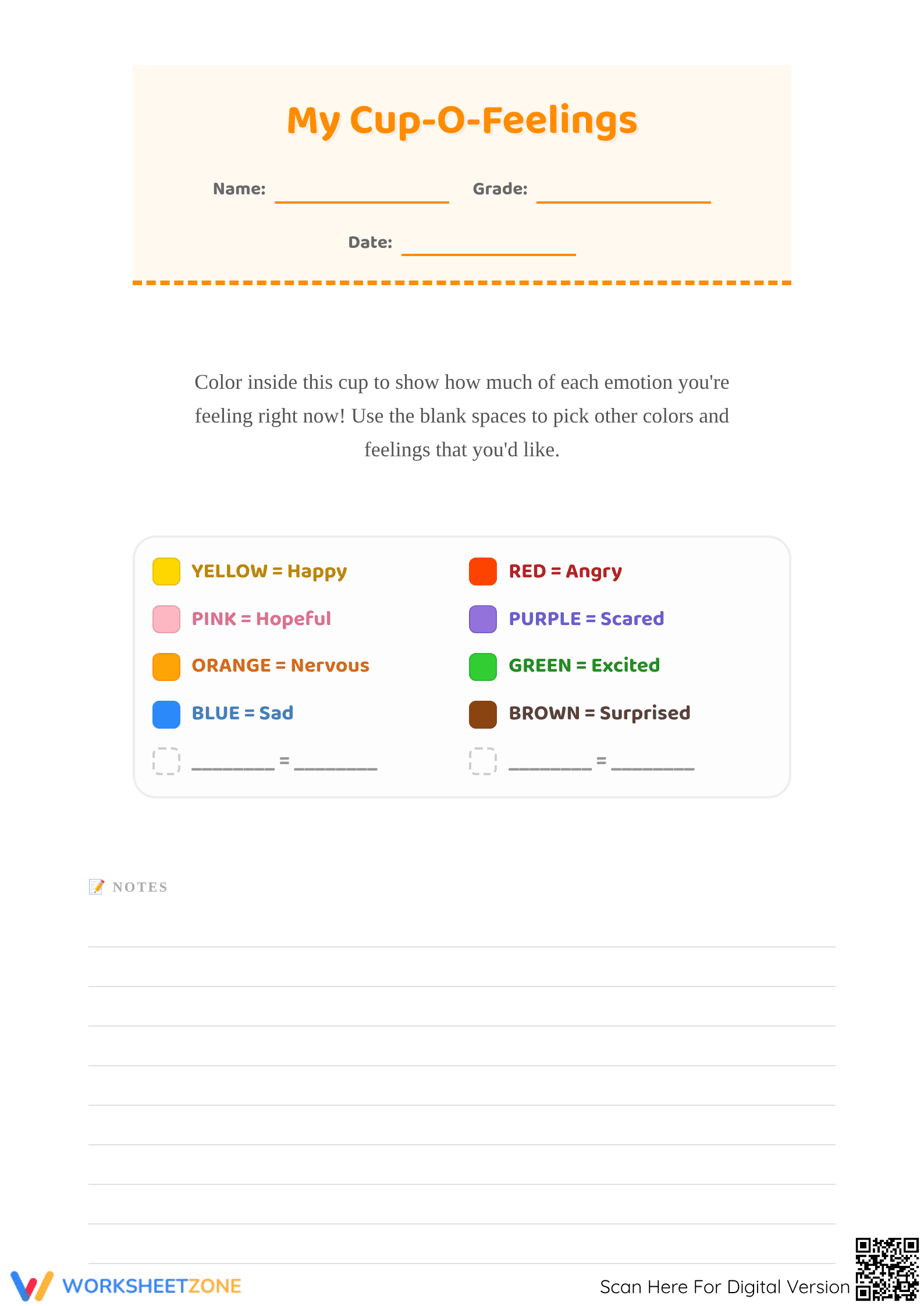
Empower students to visualize their emotions with this interactive My Cup-O-Feelings worksheet. This 3-page resource allows Grade 1 and Grade 2 learners to color an emotional 'cup' using a specific key. By transforming abstract feelings into concrete visual data, children develop the vocabulary and self-awareness necessary for effective emotional regulation and social success.
At a Glance
- Grade: 1–2 · Subject: Social Emotional Learning
- Standard:
CCSS.ELA-LITERACY.L.1.5.C— Identify real-life connections between emotion words and their visual coloring representations- Skill Focus: Emotional identification and self-regulation
- Format: 3 pages · 14 interactions · Discussion guide included · PDF
- Best For: Daily check-ins or cool-down corner activities
- Time: 15–20 minutes
What's Inside
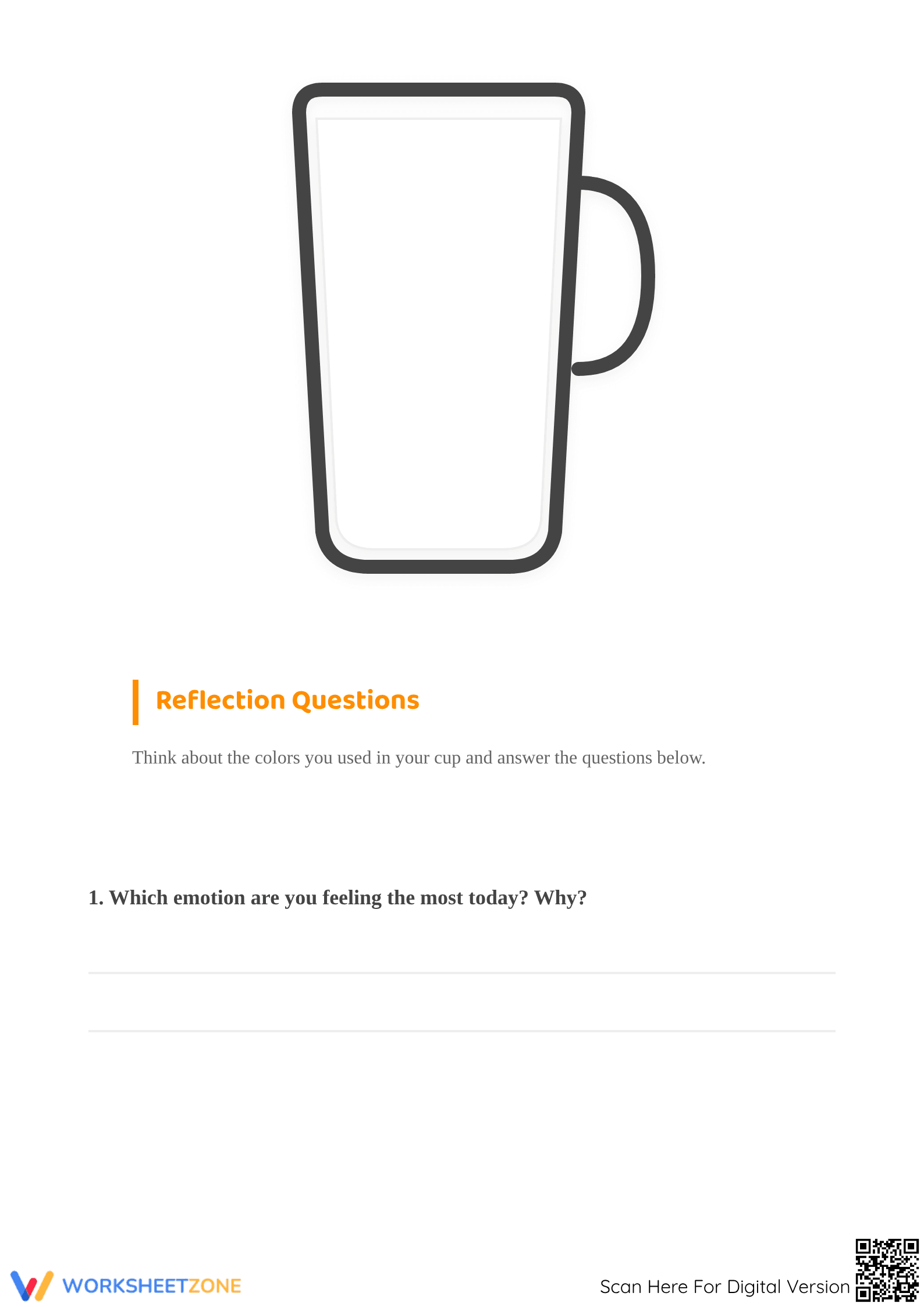
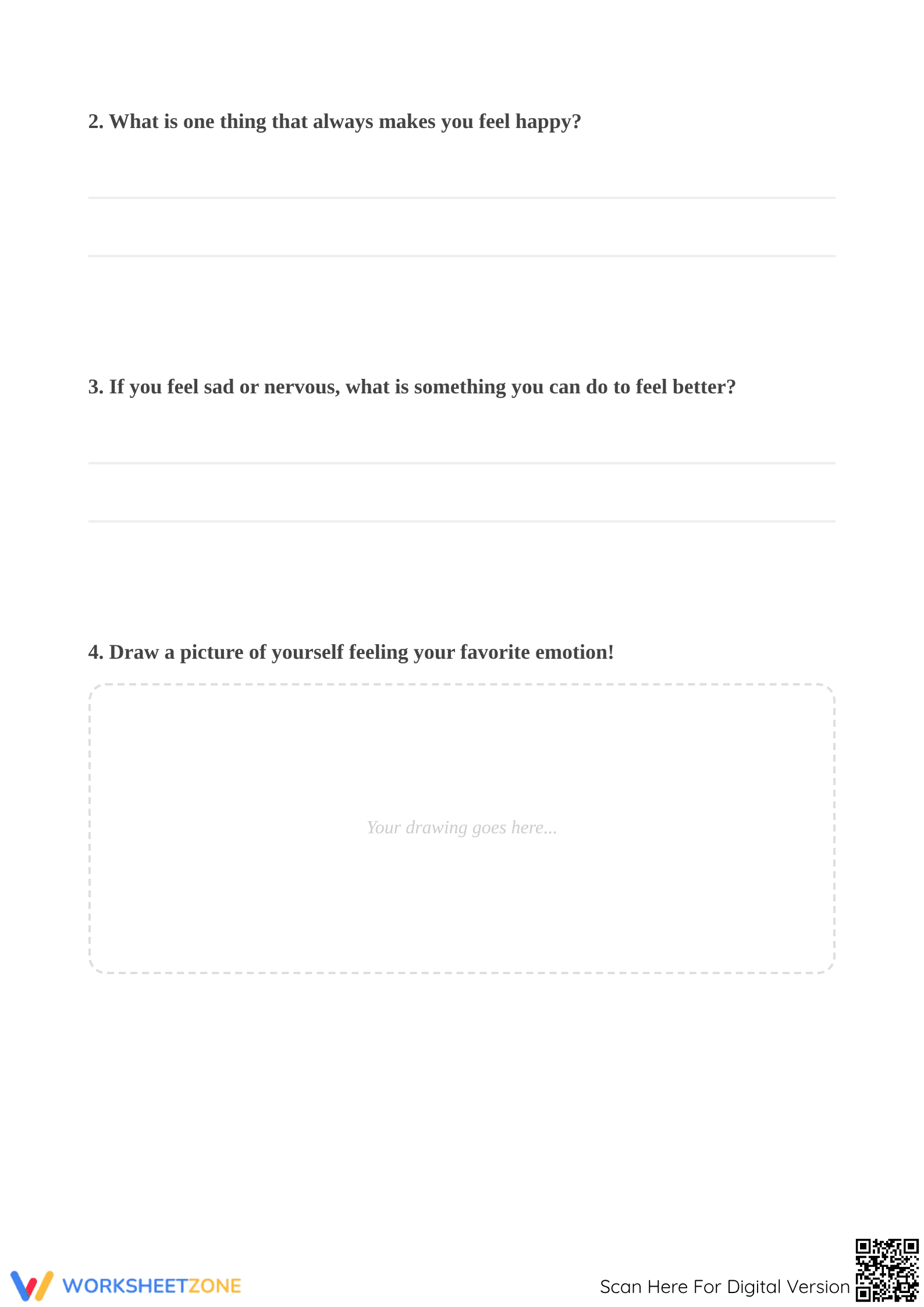
This 3-page PDF includes a color-coded key for eight emotions: Happy, Angry, Hopeful, Scared, Nervous, Excited, Sad, and Surprised. Two customizable slots allow for unique feelings. Subsequent pages provide a large-scale cup outline for coloring and four open-ended reflection questions focusing on emotional triggers and self-soothing strategies, ensuring students engage deeply with their internal states.
Zero-Prep Workflow
The Zero-Prep Workflow is designed for immediate use. Print the three-page PDF (30 seconds). Next, distribute the sheet and review the color key, allowing students to define two 'mystery' emotions (2 minutes). Finally, facilitate the reflection questions as a journal activity (10 minutes). Total teacher prep is under 2 minutes, making this an ideal emergency sub plan or transition activity.
Standards Alignment
The primary standard addressed is `CCSS.ELA-LITERACY.L.1.5.C`: 'Identify real-life connections between words and their use (e.g., note places at home that are cozy).' By associating colors with feelings and reflecting on personal happiness triggers, students build semantic networks for emotional vocabulary. This standard code can be copied directly into lesson plans, IEP goals, or district curriculum mapping tools.
How to Use It
Use this worksheet during a morning meeting as a non-verbal check-in to gauge the class's emotional temperature. Alternatively, place it in a 'Calm Down Corner' as a formative-assessment tool; observe which colors dominate a student's cup to identify those needing immediate teacher support. Expected completion time ranges from 15 to 20 minutes depending on the depth of reflection.
Who It's For
This resource is tailored for general education students in Grades 1 and 2, as well as students receiving Tier 2 SEL interventions or speech-language services focused on pragmatic language. It pairs naturally with any picture book about feelings or an anchor chart displaying facial expressions, providing a tactile extension to direct social-emotional instruction in any classroom setting.
This Feelings Coloring Cup worksheet bridges the gap between abstract emotions and concrete visual identifiers for early elementary learners. By mapping colors to states like nervousness or excitement, students engage in 'affective labeling,' a core social-emotional skill. According to a RAND AIRS 2024 report, visual metaphors—such as filling a cup—provide safe psychological distance for children to explore complex feelings. Four reflection questions encourage metacognition, asking students to recognize triggers and coping mechanisms (e.g., what makes them happy or how to feel better when sad). This 3-page printable resource aligns with CCSS.ELA-LITERACY.L.1.5.C by helping students identify real-life connections between words and their use. It serves as a versatile tool for morning meetings, counseling sessions, or ELA 'Self-to-Text' connection activities, ensuring students develop the self-awareness required for academic and social success in a modern classroom environment.


