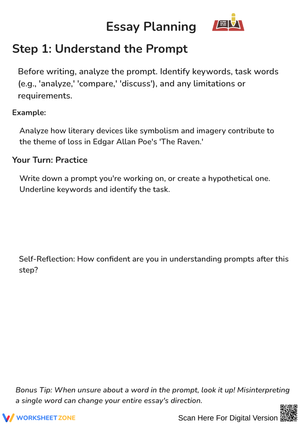
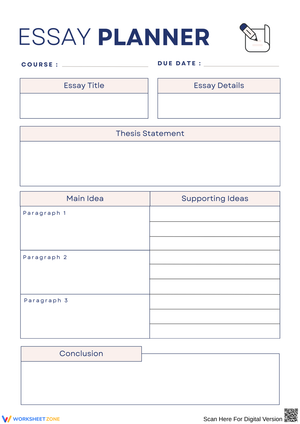
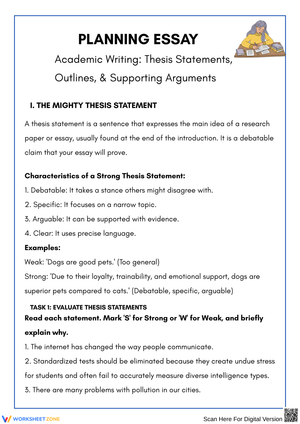
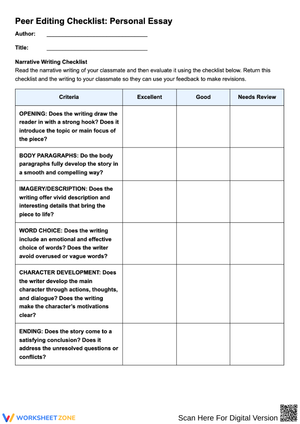
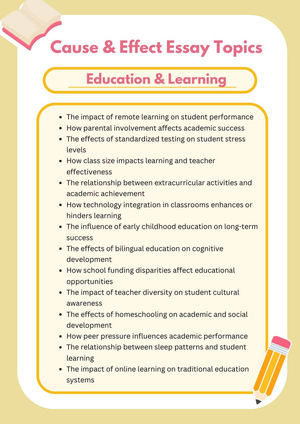
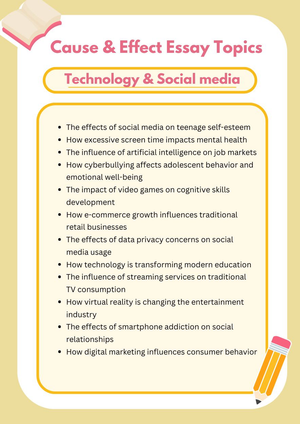
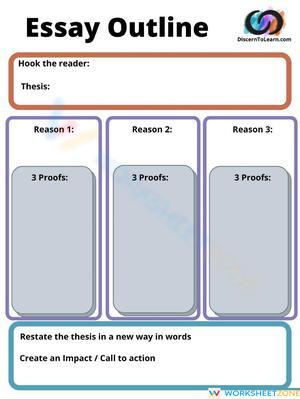
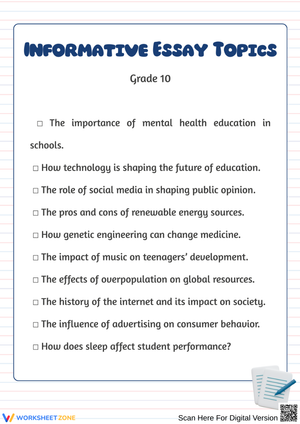
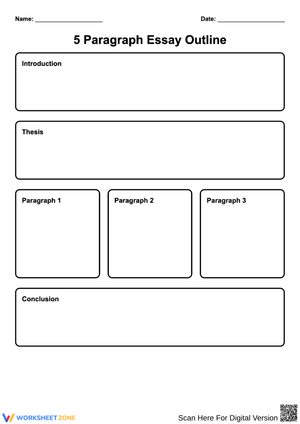
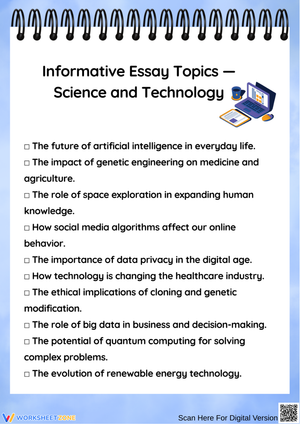
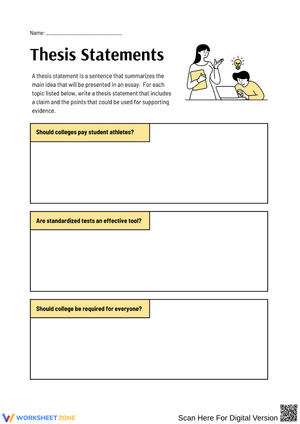
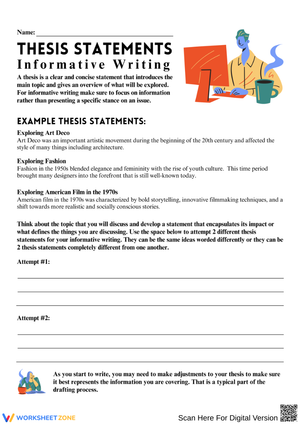
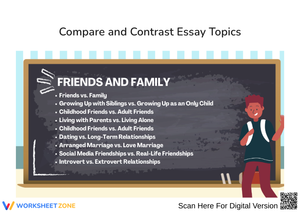
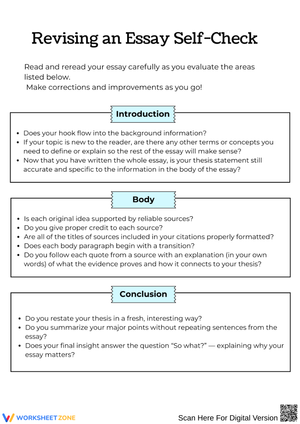
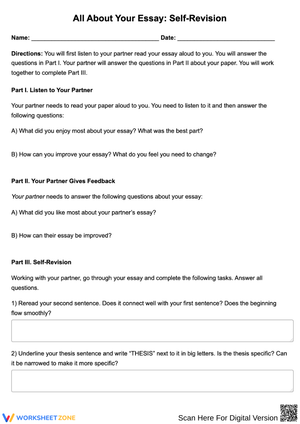
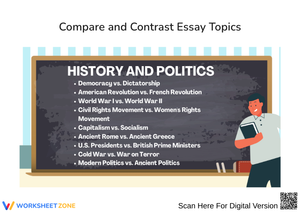
10th grade essay writing printable worksheets give English teachers a concrete way to address the skill gaps that surface at this specific grade level — the moment when students are expected to write with analytical depth but still reach for the five-paragraph habits they built in middle school. Each worksheet in this set targets a discrete component of academic writing: thesis construction, evidence integration, counterclaim development, transitional logic, and sentence-level revision. They function as standalone practice tools or as structured support within a longer writing unit.
The Specific Writing Moves Each Worksheet Targets
Grade 10 is the point where "state your opinion" has to become "construct and sustain an argument." The argumentative writing worksheets ask students to build a position, map supporting evidence from a text, and draft a counterclaim with a direct rebuttal — not simply acknowledge that an opposing view exists, but engage with its actual reasoning. Informative writing worksheets center on synthesis: students sort information into categories, define key terms with precision, and sequence ideas so each paragraph prepares the reader for the next. Narrative worksheets — a smaller portion of the set — push students on pacing and dialogue punctuation, two areas where 10th graders consistently underperform.
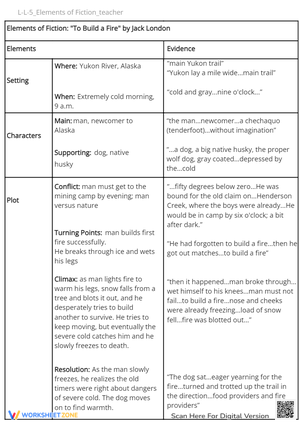
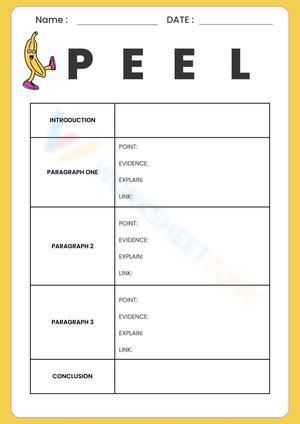
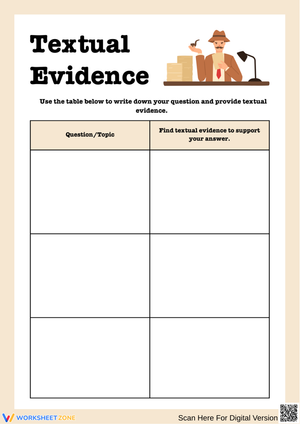
Evidence integration receives its own dedicated practice across multiple worksheets. Students who learned to "use a quote" in 8th grade often drop a line of text into a paragraph and move on, treating the quotation as self-explanatory. These exercises work through the three-move structure — context, quotation, analysis — and require students to write at least two sentences of analysis after each piece of evidence. The analysis sentences are what most students skip, and the worksheet format makes skipping them impossible.
What Goes Wrong at This Grade Level and Why
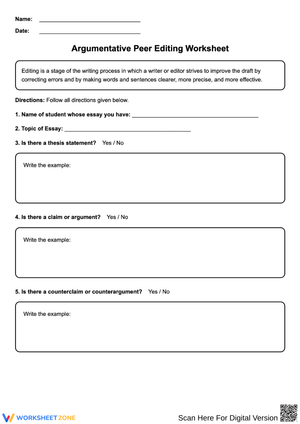
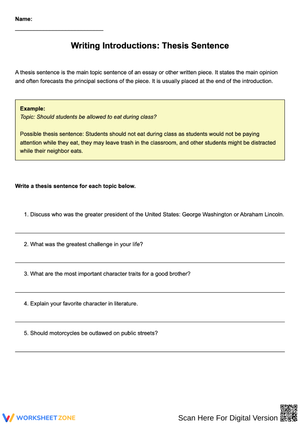
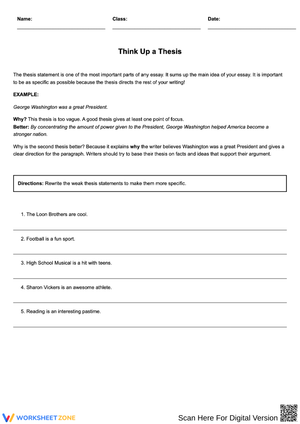
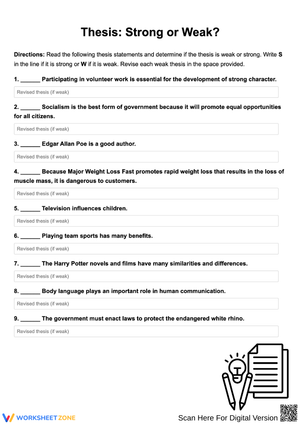
The most persistent error in 10th grade argumentative writing is the thesis that announces a topic rather than advancing a claim. Students write "This essay will discuss the effects of social media on mental health" and consider the task done. What they have not done is commit to a position. Worksheet exercises that show five thesis examples — some topic announcements, some genuine arguable claims — and ask students to rewrite the weak ones produce faster improvement than lecture alone, because students must articulate in writing why the announcement version fails.
A second pattern appears in counterclaim paragraphs. Students write one sentence acknowledging the opposing view and immediately pivot to "however, my argument is stronger." Real counterclaim work requires engaging with opposing evidence at the same intellectual level as the supporting evidence. Worksheets that present a genuine counter-argument and ask students to build a rebuttal with specific reasoning — not a dismissal — expose this gap in the first draft cycle.
Transition use is worth watching separately. Students learn "furthermore" and "in addition" and repeat them throughout an essay regardless of the logical relationship between paragraphs. An exercise that requires students to categorize transitions by function (contrast, concession, causation, elaboration) and select the correct one for a given paragraph pair makes the distinction concrete in a way that a vocabulary list does not.
Standard Alignment
These worksheets align to CCSS.ELA-LITERACY.W.9-10.1 through W.9-10.3, the three writing standards governing argument, informative/explanatory, and narrative writing at the 9th–10th grade band. The argument standard (W.9-10.1) requires students to "introduce precise claim(s), distinguish the claim(s) from alternate or opposing claims, and create an organization that establishes clear relationships among claim(s), counterclaims, reasons, and evidence" — the counterclaim and rebuttal worksheets address this directly. The informative standard (W.9-10.2b) calls for students to "develop the topic with well-chosen, relevant, and sufficient facts," which the synthesis and categorization exercises target. Language standard L.9-10.3, which covers applying knowledge of language to achieve effect, connects to the transition and sentence-variety work. Teachers who document standards coverage in lesson plans will find clear one-to-one correspondences across the set.
Where These Worksheets Fit in a Writing Unit
The bell-ringer use is well established: a thesis revision exercise takes eight minutes and sets analytical thinking in motion before a full drafting period begins. But 10th grade essay writing printable worksheets also prove their value in the middle of a unit, not only at the entry point. When students have a rough draft in hand and are stalling on revision, a targeted sentence-variety worksheet — asking them to underline every sentence, mark any that begin the same way, and rewrite three — gives reluctant revisers a specific action instead of the vague directive to "improve" their writing.
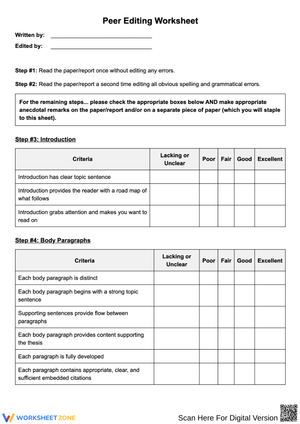
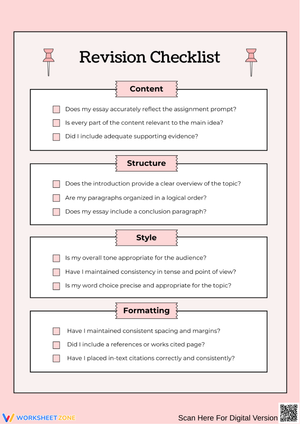
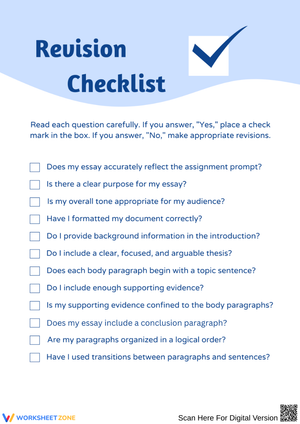
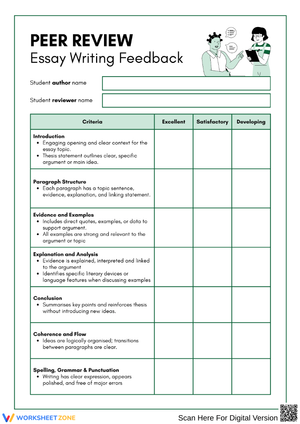
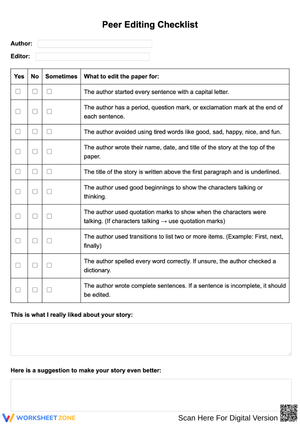
Station rotations work well for the evidence integration and transition exercises. One station runs the quote-analysis worksheet, a second handles the transition categorization exercise, and a third uses a rubric-based self-editing checklist for peer review. This structure keeps all students on focused tasks while freeing the teacher to pull a small group for thesis work. The self-editing checklist — made a mandatory step before any draft is submitted — consistently reduces the number of dropped quotes and missing thesis statements that reach the teacher's desk.
Using These Worksheets Across Different Skill Levels
Students who are still developing their academic writing benefit from working through the thesis construction worksheet with sentence stems provided: "Although [opposing view], [claim] because [reason]." Removing the structural decision makes the conceptual work more accessible without simplifying the intellectual task. For the counterclaim exercises, a sentence frame for the rebuttal paragraph gives these students a starting point without writing the paragraph for them.
The 10th grade essay writing printable worksheets also extend upward for students ready for greater challenge. The evidence integration worksheet becomes significantly harder when students must analyze an ambiguous piece of evidence — one that could support either side of an argument — and justify their analytical choice in writing. Students working at an advanced level can also apply MLA in-text citation formatting to the quote integration worksheet, adding source attribution practice to the analytical work. For honors or pre-AP sections, pairing any worksheet with an authentic text excerpt — a Supreme Court majority opinion, a long-form journalism piece — raises the cognitive demand without altering the worksheet's focus.
Frequently Asked Questions
What essay types are covered across the worksheets?
The 10th grade essay writing printable worksheets in this set cover argumentative, informative/explanatory, and narrative modes. Argumentative worksheets are the most numerous, addressing thesis construction, claim and evidence organization, counterclaim development, and rebuttal writing. Informative worksheets focus on synthesis and logical sequencing. Narrative worksheets address pacing, descriptive language, and dialogue punctuation.
Do the worksheets address MLA citation format?
The evidence integration worksheets introduce basic MLA in-text citation format as part of the three-move evidence structure. Students practice formatting cited quotations within the analytical sentence sequence. Full works-cited page formatting is not the focus here — that belongs in a dedicated research writing unit — but the in-text citation habits these worksheets build carry over directly into larger research assignments.
Can these worksheets function as formative assessment?
Yes. Because each worksheet isolates one skill, they work well as formative checks. A completed thesis construction worksheet tells a teacher immediately whether a student can distinguish a topic announcement from a genuine arguable claim. The counterclaim exercise reveals whether students understand the intellectual obligation of the rebuttal move. Both are more diagnostic than a full draft, where errors across multiple skills blur the picture of what any individual student actually understands.
How do these worksheets support students writing their first full argumentative essay?
The worksheets follow the sequence of the writing process: thesis work before outlining, outlining before drafting, evidence integration before full body paragraph construction. Students who complete the worksheets in order arrive at the drafting stage having already made most structural decisions in smaller, lower-stakes exercises. That preparation does not eliminate struggle during drafting — it redirects the struggle toward the actual writing rather than toward figuring out what the task requires.












 Interactive Worksheet Maker
 Quiz Maker
 Word Search Maker
 Crossword Puzzle Maker
 Word Scramble Generator
 Sentence Scramble Generator
 Handwriting Worksheet Generator
 Name Tracing Generator
 Fill In The Blank Generator