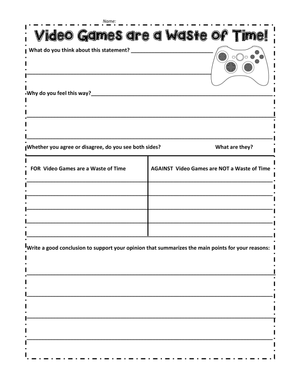
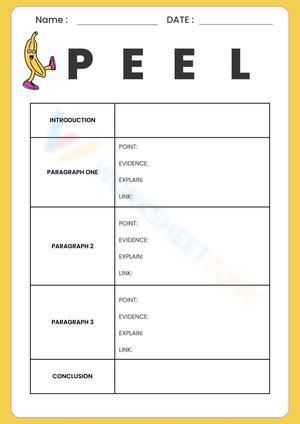
These nonfiction writing printable worksheets for 10th grade address the inflection point in high school ELA where students must move beyond the five-paragraph template and begin producing multi-source argument and analysis — a transition most students find genuinely disorienting. Each worksheet isolates a discrete skill: building a logical warrant, evaluating source credibility, integrating quoted evidence without simply dropping it into a paragraph, or sustaining an objective informational tone across an extended piece. Teachers get targeted, classroom-ready material for every phase of the writing process.
The Specific Skills Each Worksheet Targets
The set covers four nonfiction writing modes that appear consistently in 10th-grade ELA courses and on high-stakes writing assessments:
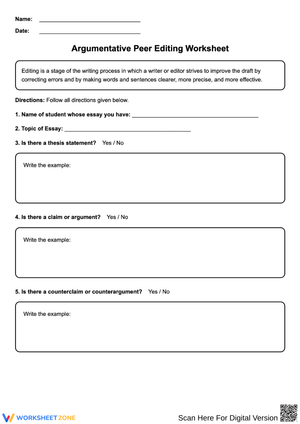
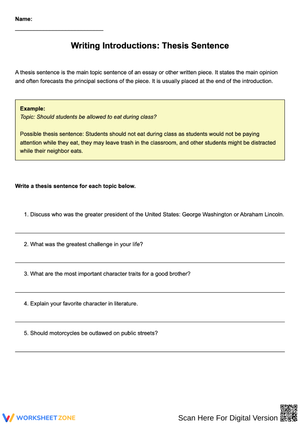
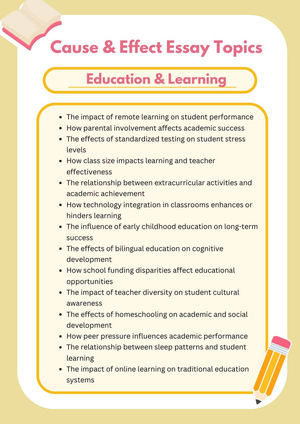
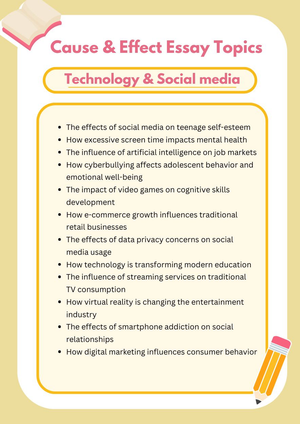
- Argumentative writing — building a logical warrant between evidence and claim, distinguishing a genuine claim from a topic statement, and engaging counterclaims substantively rather than dismissing them in a single sentence
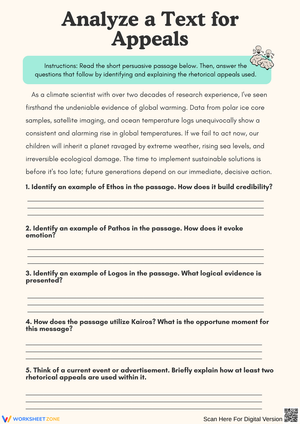
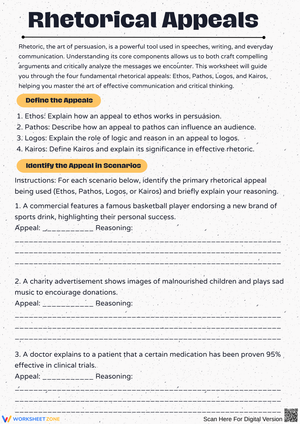
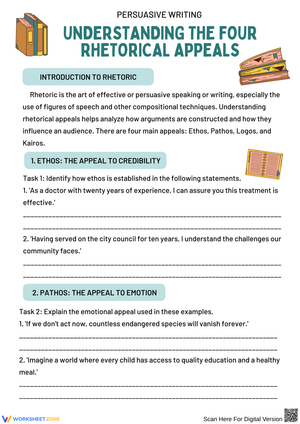
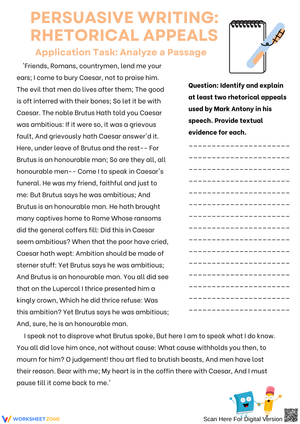
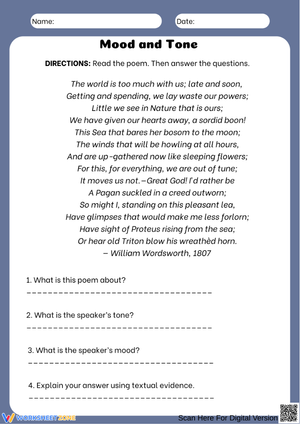
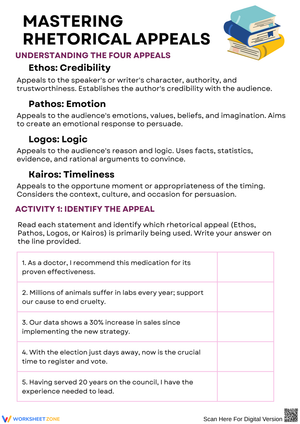
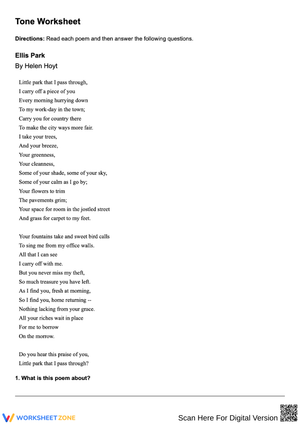
- Rhetorical analysis — annotating mentor texts for purpose, audience, and the specific effect of a stylistic choice, rather than simply labeling ethos, pathos, and logos and stopping there
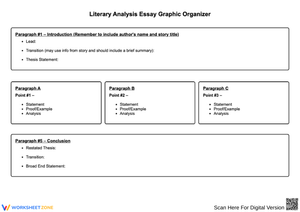
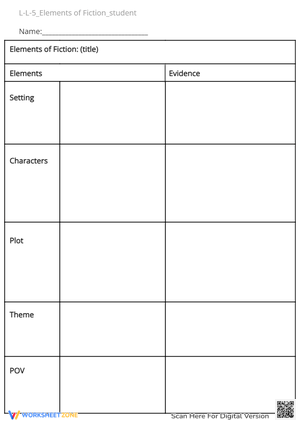
- Informative and explanatory writing — multi-source synthesis through graphic organizers, note-taking formats that separate paraphrase from direct quotation, and paragraph models for objective, well-organized prose
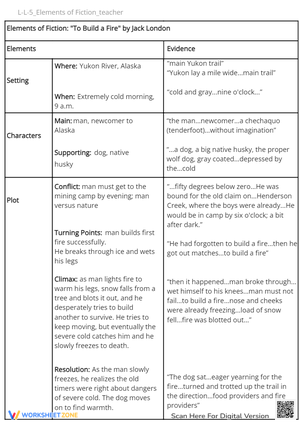
- Narrative nonfiction — applying scene-setting, pacing, and selective detail to personal essays while maintaining a clear thematic argument, rather than drifting into memoir without direction
Building These Worksheets Into Your Weekly Lesson Plan
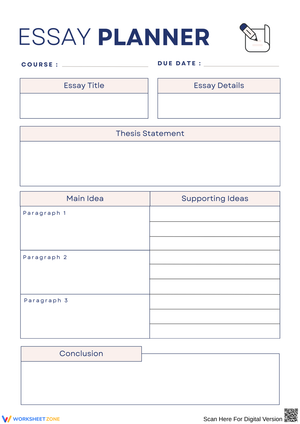
One of the most effective uses for nonfiction writing printable worksheets for 10th grade is the reverse-outline exercise, and it works best before students write a single word of their own draft. Students receive a published op-ed or editorial alongside a blank outlining worksheet. Their task is to map what the author actually does — where the central claim appears, how the evidence is sequenced, how the rebuttal is positioned. Students who complete this exercise produce more intentional outlines for their own essays because they have seen the underlying architecture of a real piece, not a textbook diagram of one. Once they understand how a published writer organizes an argument, the blank outlining worksheet signals a familiar structure to fill rather than an empty page to face.
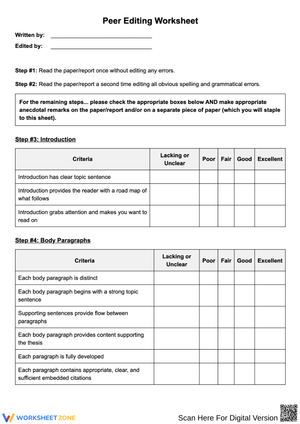
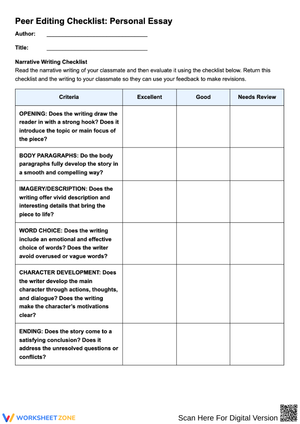
For peer review, a structured checklist worksheet replaces the vague directive to "give feedback." Students mark whether the thesis is a claim or just a topic statement, whether each body paragraph opens with a reason rather than a quotation, and whether counterclaims receive genuine engagement. This specificity produces sharper peer commentary and reinforces the reviewer's own understanding of argumentative structure. The sentence-revision worksheets also function well as bell-ringers — five minutes rewriting informal sentences into formal academic prose takes almost no setup and produces measurable improvement in drafts students submit later that same week.
Common Misconceptions Worth Anticipating Before the Drafting Stage
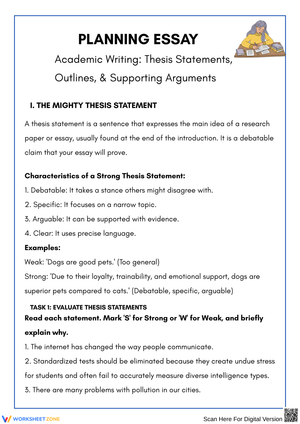
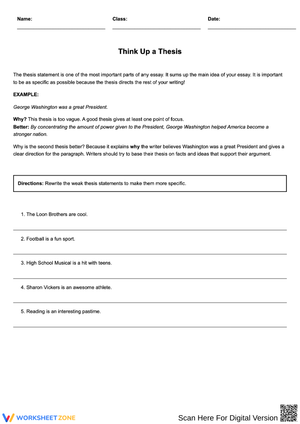
The most widespread error in 10th-grade argumentative writing is the claim that is actually a topic statement. A student writes "Climate change is a serious problem facing modern society" and considers that a thesis. Worksheets in this set address it directly: exercises ask students to take an undebatable topic sentence and transform it into a specific, contestable assertion, making the structural difference concrete rather than abstract. That single exercise, worked across two or three examples in sequence, does more to fix vague thesis writing than a class discussion about what makes a claim "debatable."
Quote-dropping is the second reliable pattern — a student places a quotation, adds the citation, and moves directly to the next point. The sentence after the quote typically reads "This shows that the policy is harmful," which restates the claim rather than explaining how the specific language of the evidence supports it. Worksheets that require students to name what the evidence demonstrates and explain why it matters — not just that it "shows" something — break this habit more reliably than simply instructing students to analyze their sources. In rhetorical analysis specifically, students who correctly identify "pathos" in a speech frequently stop there: "The author uses pathos to appeal to emotion." The worksheets build in follow-up prompts — what emotion, created by what specific word choice, producing what effect on this particular audience.
Standard Alignment
These worksheets address CCSS.ELA-LITERACY.W.9-10.1, which requires students to write arguments supporting claims with valid reasoning and sufficient evidence, acknowledge and distinguish claims from alternates, and maintain a formal, objective style throughout. They also address W.9-10.2, governing informative and explanatory writing, and W.9-10.4, requiring writing appropriate to task, purpose, and audience. In practical classroom terms, W.9-10.1 drives most of the argumentative and rhetorical analysis work in the fall semester, while W.9-10.2 typically governs the research unit in the spring. The worksheets treat these as distinct composing moves — students need to understand that making an argument and explaining information are not the same act, even when both appear in the same paper.
Differentiating the Worksheets for a Mixed-Ability Classroom
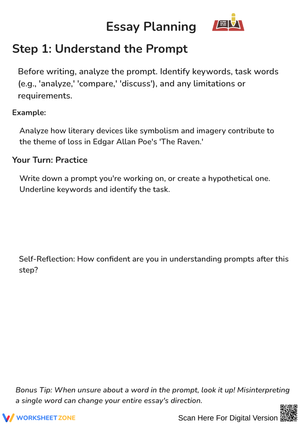
Students who freeze at open-ended prompts benefit from the more structured graphic organizers, where each labeled section specifies exactly what belongs there. This reduces cognitive load at the planning stage so students can direct their attention toward the actual thinking rather than toward figuring out what to do first. The intellectual demand stays constant; the entry point becomes more manageable.
Advanced writers often find heavily structured formats constraining. For these students, the open rhetorical analysis worksheets — a text, a set of analytic questions, no predetermined format — consistently produce more original and layered responses. Nonfiction writing printable worksheets for 10th grade that include both structured and open-ended formats within the same set give teachers genuine flexibility inside a single unit without requiring entirely separate materials for separate groups. Students reading significantly below grade level still benefit from the sentence-revision and evidence-integration worksheets, because those tasks are largely independent of source text complexity — a student who struggles with extended reading can still practice the difference between a quote that is dropped into a paragraph and one that is introduced, cited, and analyzed.
Frequently Asked Questions
Are these worksheets useful for standardized test preparation?
Yes. The argumentative writing and rhetorical analysis worksheets directly practice skills tested on the SAT Writing section, AP Language and Composition exams, and most state writing assessments. The exercises on rapid claim formulation, evidence selection under time pressure, and identifying a writer's purpose map directly onto the task demands of timed analytical prompts. Students who work through these exercises before a testing window write more organized and better-supported responses.
Can individual worksheets be inserted mid-unit, or do they follow a set sequence?
Each worksheet stands alone. If students are already mid-draft and the persistent problem is weak evidence integration, a single evidence-analysis worksheet inserted as a revision tool addresses that without restarting instruction. Teachers do not need to begin from the argumentative writing worksheets to use the rhetorical analysis or research synthesis worksheets later in a unit.
Do the worksheets include sample responses or scoring guides?
The nonfiction writing printable worksheets for 10th grade in this set include sample responses for tasks with a demonstrably stronger answer — sentence revision, warrant construction, source credibility evaluation — and scoring guides rather than answer keys for the open-ended analytical prompts, where student responses will vary legitimately by text and argument.












 Interactive Worksheet Maker
 Quiz Maker
 Word Search Maker
 Crossword Puzzle Maker
 Word Scramble Generator
 Sentence Scramble Generator
 Handwriting Worksheet Generator
 Name Tracing Generator
 Fill In The Blank Generator