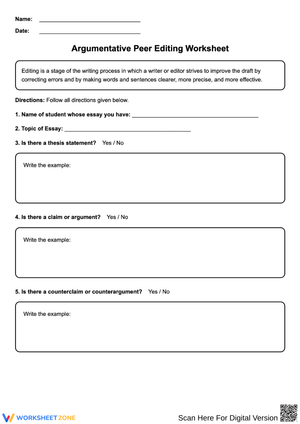
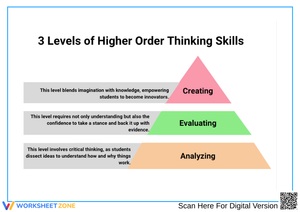
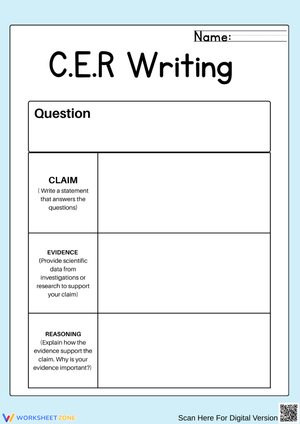
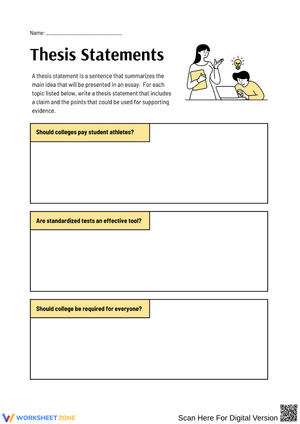
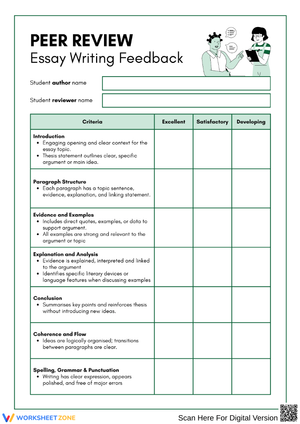
These 10th grade argument writing pdf worksheets give teachers a targeted way to address one of the more significant cognitive shifts in secondary ELA: the transition from opinion-driven persuasion into formal academic argumentation. Each worksheet isolates a specific component of that process — claim formation, evidence integration, counterclaim development, or logical reasoning analysis — rather than asking students to manage the full argument structure at once, which is precisely where most 10th graders stall when the skill is introduced through an open essay prompt alone. The set moves from discrete practice into full argument assembly across a writing unit.
The Specific Skills Each Worksheet Targets
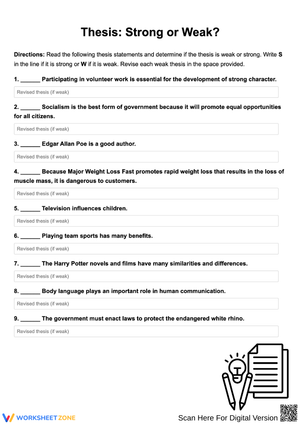
The claim and thesis worksheets ask students to sort statement types, distinguishing a debatable argumentative claim from a statement of fact, a truism, or a broad topic description. This sounds elementary until you watch a student submit "social media has both positive and negative effects" as a thesis and genuinely not understand what's missing. These worksheets push students to narrow scope and take a defensible position — not merely describe an issue.
Evidence worksheets address two distinct problems that tend to travel together: source vetting and integration technique. Students annotate short source excerpts for credibility markers, then practice embedding quotations and paraphrases using attribution language that doesn't interrupt the logical flow of the paragraph. A separate subset covers MLA in-text citation with enough structured repetition to move the mechanics toward automaticity before the full essay draft begins.
The counterclaim and rebuttal worksheets are where students show the most visible growth — and the most resistance. The stronger worksheets in this group present a position alongside two opposing views: one weak and easily dismissed, one genuinely difficult to rebut. Students who default to knocking down the easy counterargument discover the habit fast when the second option doesn't cooperate.
Logical fallacy identification worksheets provide labeled examples of circular reasoning, hasty generalization, false dichotomy, and slippery slope, then ask students to locate the same errors in unlabeled passages. The sequence matters here: students need to recognize fallacies in analyzed texts before the skill transfers to their own writing.
Frequent Errors That Show Up in Grade 10 Argument Writing
The most consistent error at this level is the non-debatable thesis. Students arrive in 10th grade having been rewarded in earlier grades for "stating their topic clearly," and they carry that frame forward. A student who writes "the death penalty is a topic of debate in the United States" believes they have written a thesis. The claim worksheets address this by placing statements along a specificity spectrum and asking students to revise each one until a genuine position emerges.
Evidence integration produces its own predictable failure: quote-dumping. Students insert a three-sentence block quotation and move on, treating the source as self-evident proof. The evidence worksheets interrupt this by building in structural accountability — no more than one sentence of quoted material for every two sentences of student analysis — and asking students to annotate their own draft paragraphs against that ratio before submitting.
Counterclaim work generates the straw-man concession: students write "some people think X, but they are wrong because Y" and consider the obligation met. Watching an entire class do this in September is diagnostic — it means counterclaim instruction needs to begin with reading and analysis, not drafting. These 10th grade argument writing pdf worksheets sequence the counterclaim strand accordingly, with analysis of strong and weak rebuttals preceding any independent writing task.
Why This Format Works for This Skill at This Grade
Argument writing carries unusually high cognitive load at 10th grade because it asks students to hold four simultaneous obligations: maintaining a specific claim, marshaling relevant evidence, representing opposing views fairly, and sustaining formal register throughout. When those four demands arrive together inside an open essay prompt, weaker writers freeze and stronger ones typically drop one variable — almost always the counterclaim. Isolating each component in a separate worksheet reduces the active demands so students can develop fluency in each part before the variables recombine.
The sequencing also reflects actual skill dependencies. Claim work precedes evidence work because a student who cannot yet write a debatable thesis will select evidence that supports a vague impression rather than a specific position. Logical fallacy analysis belongs late in the sequence — after students have written enough argument prose to recognize their own patterns in the examples on the page. Teaching fallacies before students have substantial drafting experience produces recognition without application.
Building These Worksheets Into Your Writing Unit
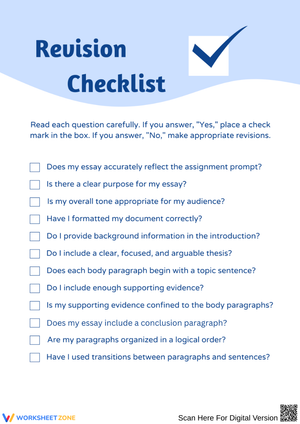
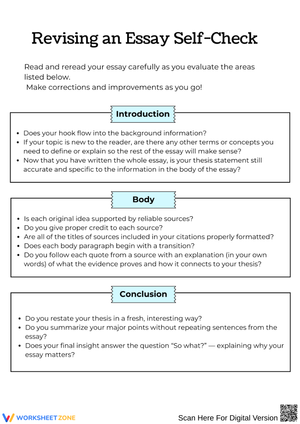
The claim and thesis worksheets make the strongest entry point — two or three class periods before students touch a full draft. Run them during the workshop block while you conference with individual students; the task is focused enough that most students work independently after a ten-minute whole-class model. Save the logical fallacy identification worksheets for the revision phase, when students can apply what they're noticing directly to in-progress drafts rather than filing the concept for later use.
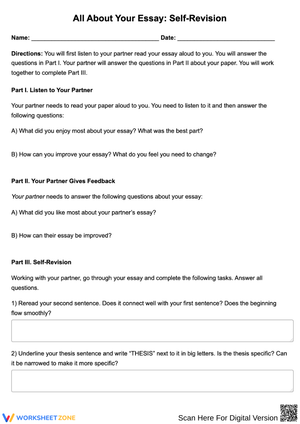
The counterclaim worksheets carry enough difficulty that they benefit from a structured partner exchange. After students complete a rebuttal section independently, a partner reads it with one explicit instruction: find the weakest concession — the place where the writer chose the easiest opposing argument and dismissed it without engaging the stronger version. That exchange, even seven or eight minutes of it before the end of class, generates more substantive revision than most written feedback cycles at this grade level.
For teachers running a writing workshop model, these 10th grade argument writing pdf worksheets fit naturally into the daily mini-lesson slot: one worksheet per session during the drafting phase, followed by immediate application to whatever argument piece students are currently working on. The files download and print cleanly, and several translate to digital annotation for classrooms that submit work through a learning management system.
Standard Alignment
The primary alignment is CCSS.ELA-LITERACY.W.9-10.1, which requires students to write arguments that introduce precise claims, develop them with relevant evidence and sound reasoning, address counterclaims fairly, and maintain formal register throughout. Instructionally, W.9-10.1 is best addressed in phases — claim development early in the unit, evidence and reasoning in the middle, counterclaim refinement as revision approaches — and the worksheet sequence maps directly onto that progression. The logical fallacy and rhetorical appeal content also connects to CCSS.ELA-LITERACY.RI.9-10.6, which addresses how authors use evidence and rhetoric to advance a point of view, grounding the analytical work in reading standards alongside writing.
Differentiating the Worksheets Across Your Classroom
Students who arrive at 10th grade writing at a 7th or 8th grade level typically struggle most with the claim worksheets — not because the concept is beyond them, but because earlier instruction accepted thesis statements that described topics rather than argued positions. These students benefit from a sentence-frame entry point: a partial thesis structure they complete before attempting to generate claims independently. Once that structure feels reliable, the open-ended claim tasks become accessible rather than paralyzing.
Advanced students who have already internalized basic claim-and-evidence structure find the most challenge in counterclaim and logical fallacy work. The stronger extension for those students is to bring in published op-ed pieces, policy briefs, or letters to the editor and ask them to identify where the author anticipates opposition — and where the author deliberately avoids it. Moving from controlled worksheet tasks to authentic texts gives those students genuine analytical work rather than a review exercise dressed up as enrichment.
For English Language Learners working at intermediate proficiency, the logical fallacy worksheets benefit from pre-teaching the fallacy terms as vocabulary before the analytical task begins. The underlying argument architecture — claim, evidence, counterclaim — mirrors organizational patterns that transfer across many languages, which means ELL students sometimes internalize the logical structure of academic argument faster than native speakers who are still unlearning the looser persuasion habits of middle school.
Frequently Asked Questions
What makes argument writing different from what students did in persuasion units in 9th grade?
The core distinction is the treatment of opposing views. Persuasion asks students to build the strongest possible case for their position. Academic argument — the W.9-10.1 standard — requires students to locate, represent accurately, and respond to the best available version of the opposing argument. These worksheets make the distinction explicit by separating counterclaim identification from rebuttal construction, treating them as two discrete intellectual moves rather than a single "address the other side" obligation.
Several students struggle to generate a topic to argue about — do these worksheets help with that?
Several worksheets in the claim strand provide topic options that students choose from rather than generate independently. Topic generation is a separate cognitive task from claim formation, and bundling the two together at the start of a unit frequently produces paralysis rather than drafting. Using provided-topic worksheets first lets students concentrate on argumentative architecture; once that structure feels familiar, sourcing their own topic becomes far less daunting.
How do the evidence worksheets handle MLA citation specifically?
The evidence worksheets include in-text citation practice using sample quotations with source information supplied — students write the attribution phrase, integrate the quotation, and format the parenthetical. These 10th grade argument writing pdf worksheets are not a substitute for a complete MLA reference guide, but they give students enough repetition with the most common citation scenario — a direct quotation from a named author inside a prose paragraph — that the mechanics stop competing with the thinking when students write their actual drafts.
Can these worksheets serve a formative assessment function, or are they strictly for practice?
They work best as formative tools — the kind of low-stakes work that reveals, mid-unit, where the class still has gaps before the summative essay draft is due. The claim worksheets make particularly effective exit tickets: five minutes at the end of a lesson, collected and sorted into three groups — strong claim, needs narrowing, not yet a claim. That sort tells you exactly which students need a reteach before drafting begins, and it keeps the full essay from being your first real data point on student understanding of thesis construction.












 Interactive Worksheet Maker
 Quiz Maker
 Word Search Maker
 Crossword Puzzle Maker
 Word Scramble Generator
 Sentence Scramble Generator
 Handwriting Worksheet Generator
 Name Tracing Generator
 Fill In The Blank Generator