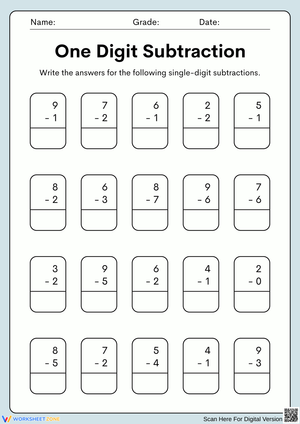
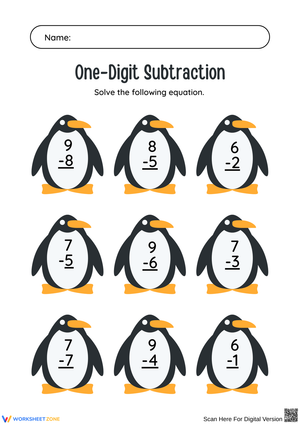
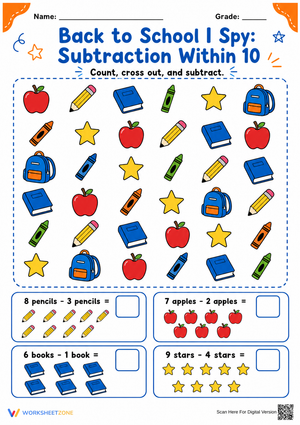
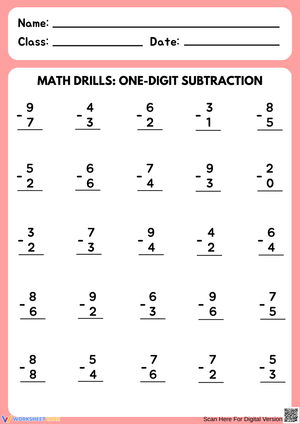
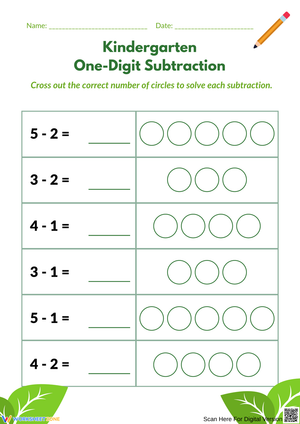
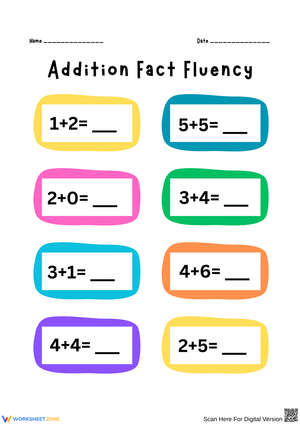
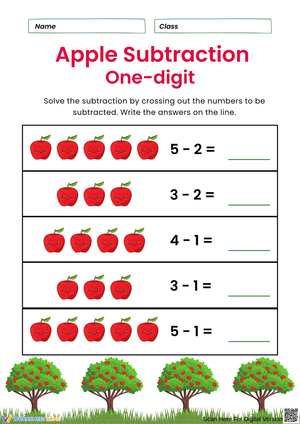
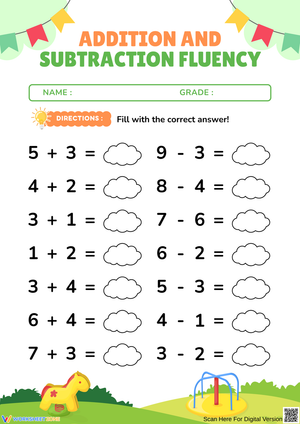
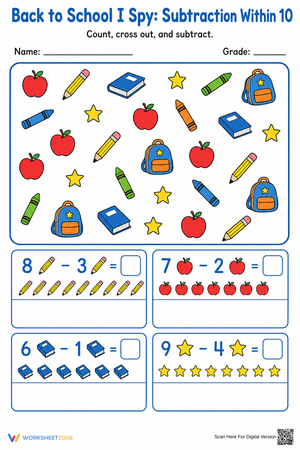
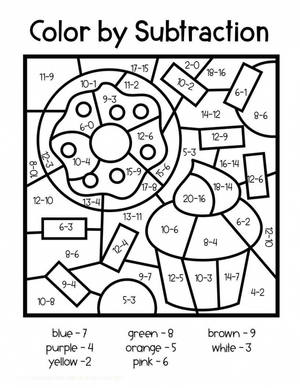
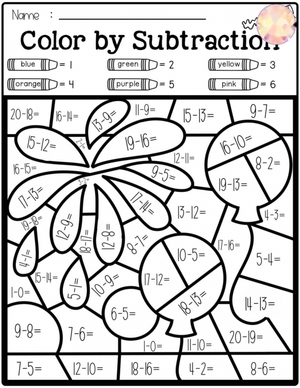
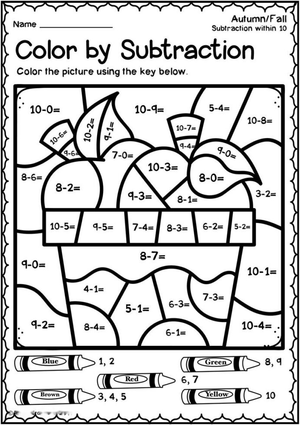
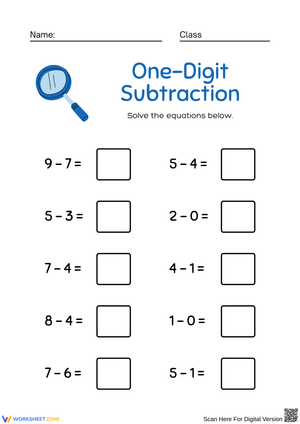
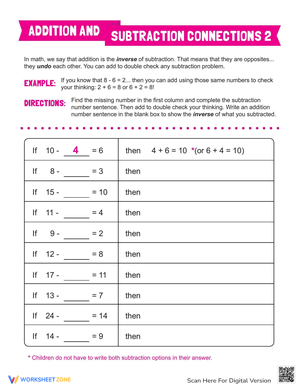
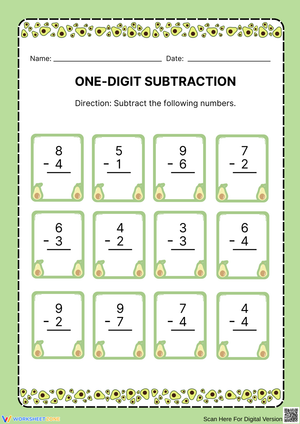
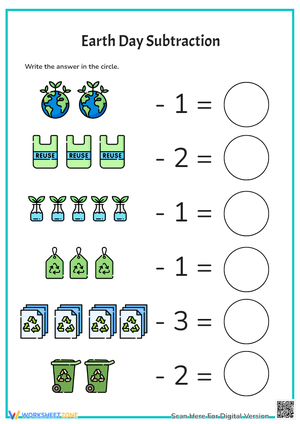
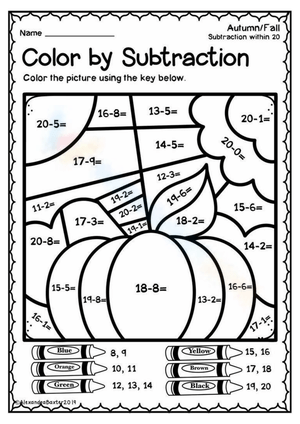
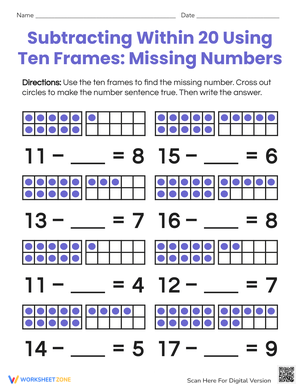
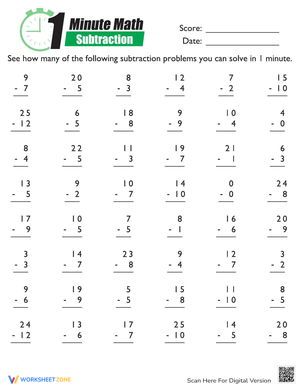
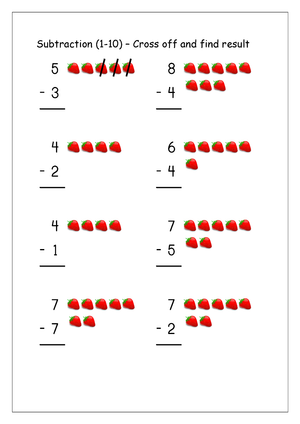
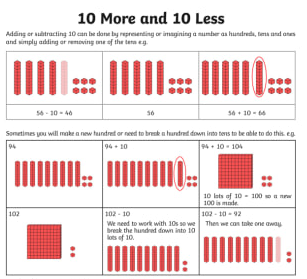
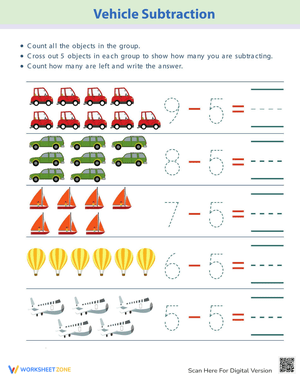
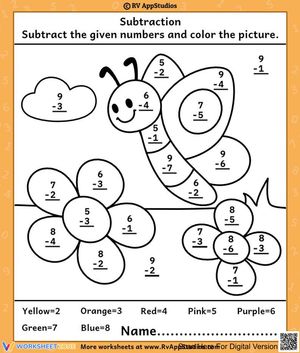
These subtraction facts worksheets for 1st grade give teachers a direct path from picture-supported counting toward automatic recall. Each worksheet in the set addresses one focused skill — subtracting within 5 with ten-frame images, completing fact families, solving missing-minuend equations — so teachers can match practice to where a student actually is rather than where the pacing guide says they should be. The set spans subtraction within 5 through within 20 and includes both visual-aid and abstract-notation formats, which means the same collection serves a class at the start of a subtraction unit and at the end of it.
The Specific Skills These Worksheets Build
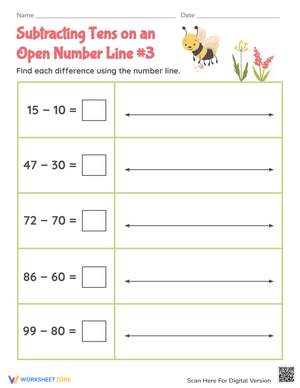
The set covers the full arc of first-grade subtraction: equations within 5 with ten-frame picture support, horizontal and vertical problems within 10, fact families, missing-number equations where the unknown is either the minuend or the subtrahend, and number-line work within 20 where students mark a starting point and count left to find the difference. That last format matters — making the direction of subtraction physically visible on the page is one of the most effective steps between manipulative work and purely abstract notation.
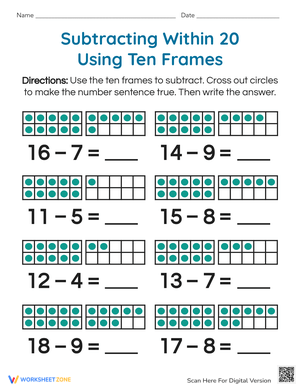
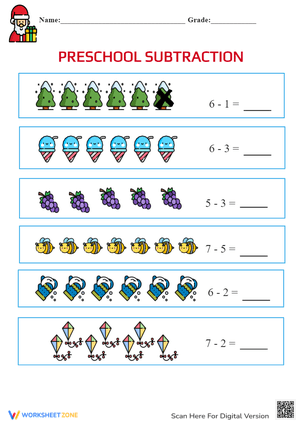
- Subtraction within 5 with ten-frame picture support
- Horizontal and vertical equations within 10
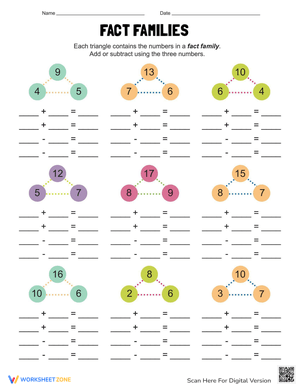
- Fact-family practice linking addition and subtraction relationships
- Number-line subtraction within 20
- Missing-number equations with unknown minuend and unknown subtrahend
- Single-digit word problems with a concrete context
Why This Format Fits the First-Grade Developmental Moment
First grade is the year students move from needing physical objects toward holding the math in their heads. A student who can model 8 — 3 with snap cubes but cannot write the answer without them is not yet fluent; the worksheet asks that same student to work without the cubes, but the ten-frame printed on early worksheets gives them a visual anchor they can trust. As facts become familiar, later worksheets drop that visual and ask for abstract recall — gradual release applied directly to fact fluency. There is also a working-memory argument worth naming: when a first grader stops to count back 9 — 4 in the middle of a two-step word problem, that computation occupies working memory that should be tracking the problem structure. Automatic recall within 10 frees that capacity for the harder thinking that accelerates in second grade.
Student Error Patterns Worth Anticipating Before the Lesson
The most persistent first-grade subtraction error is directionality reversal. A student who correctly writes 7 — 3 = 4 will often also write 3 — 7 = 4, flipping the order because subtraction still feels symmetric — they know 3, 7, and 4 belong together but have not yet internalized that the first number controls direction. Missing-minuend problems surface this immediately; a worksheet showing ___ — 3 = 5 reveals quickly which students understand what each position in the equation controls and which are pattern-matching without meaning.
A second consistent pattern appears in counting strategies. Students who count up from the subtrahend rather than counting back from the minuend often miscount and land one higher than correct. This is not a number-sense problem — it is a tracking problem. A cluster of answers that are consistently one above correct is almost always a counting-up error. Catching it during worksheet work, before it becomes a habit, takes far less time than untangling it after weeks of incorrect self-reinforcement.
Standard Alignment
These worksheets address 1.OA.C.6 — "Add and subtract within 20, demonstrating fluency for addition and subtraction within 10" — from the Common Core State Standards for Mathematics, Operations and Algebraic Thinking domain. Instructionally, the standard marks a clear shift from strategy use to fact recall: by end of year, students should not be computing 6 — 2 via finger-counting. The worksheets begin below the fluency threshold with problems within 5 so accuracy is established first, move to within 10 for fluency drilling, and extend to within 20 for grade-level exposure. That sequence maps directly onto how the standard is typically distributed across a first-grade school year.
Building These Worksheets Into Your Weekly Math Routine
Three-to-five-problem warm-up strips work better at this grade than full-length drill pages at the start of class. Print a worksheet, cut it into thirds, and distribute one strip on Monday, one on Wednesday, and one on Friday — spacing the same problems across three days builds more durable recall than presenting all 15 at once. Students who have had the weekend away from math respond particularly well to a low-stakes Monday entry task before morning meeting closes; five subtraction facts within 10 re-engages without overwhelming. These subtraction facts worksheets for 1st grade print cleanly at half-page and third-page sizes, which makes strip-cutting practical without wasted paper.
Exit tickets are the other natural slot. A five-problem worksheet at the close of a subtraction lesson tells teachers in under three minutes which students are ready to advance in number range and which need more time within 10. Scan those exit tickets in the 90 seconds before dismissal and the small-group list for the next day writes itself.
Adjusting These Worksheets Across a Range of Learners
For students who are not yet secure within 10, choose worksheets that include a printed ten-frame or number line and make clear that using it is the appropriate support for where they are — not a shortcut. As accuracy develops, transition those same students to the same number range on a worksheet without visual aids. Holding the numbers constant while removing the visual means they build confidence on facts they already recognize, not struggling with unfamiliar numbers and an unfamiliar format at the same time.
Students who have cleared within-10 fluency benefit most from missing-minuend worksheets and fact-family sets, both of which require relational thinking rather than recall. As a fluency extension, these students can use the subtraction facts worksheets for 1st grade as a personal-time challenge — recording how long a set of 10 problems takes and working to improve their own mark over successive attempts. This keeps practice purposeful without setting up a classroom comparison between students at very different points in their development.
Frequently Asked Questions
What subtraction facts should a first grader have memorized by year's end?
Students should have fast recall of all subtraction facts within 10 by the end of first grade, which is the fluency target in 1.OA.C.6. That means subtracting zero, subtracting all (5 — 5 = 0), subtracting one, and all combinations within 10. Subtraction within 20 appears in first-grade instruction, but fluency at that range is a second-grade expectation — first-grade teachers should not hold students to that bar in the same way.
Should timed drills be part of the practice routine?
Strict head-to-head timing creates math anxiety in a significant number of first graders and is not worth the tradeoff. Personal timing — where a student tracks their own time across repeated sets and tries to beat their previous mark — builds speed awareness without classroom comparison pressure. Focus on accuracy first; speed follows naturally as recall becomes automatic. A student who answers 15 problems in 4 minutes with 14 correct is in a stronger position than one who rushes through and gets 10 right.
How do these worksheets fit alongside hands-on math instruction?
The worksheets work best as the independent practice phase immediately after a concrete lesson. If students spent the first half of math class using snap cubes or ten-frame trays to act out subtraction, the worksheet is the natural next step — it asks them to do the same operation without the physical objects, which is the transfer teachers are building toward. Using subtraction facts worksheets for 1st grade directly after manipulative work, rather than days later, reinforces that the paper problem and the physical action represent the same mathematical relationship.
Which worksheet format reveals the most about a student's conceptual understanding?
Missing-minuend equations reveal more than standard problems. A student who struggles with ___ — 3 = 5 is showing something different from a student who simply does not recall 8 — 3; the missing-minuend format requires understanding what each position in the equation controls, not just pattern recognition. Five or six of these problems at the end of a unit tells a teacher more about conceptual grasp than two dozen standard equations.













 Interactive Worksheet Maker
 Quiz Maker
 Word Search Maker
 Crossword Puzzle Maker
 Word Scramble Generator
 Sentence Scramble Generator
 Handwriting Worksheet Generator
 Name Tracing Generator
 Fill In The Blank Generator