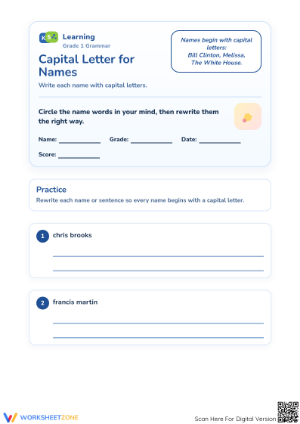
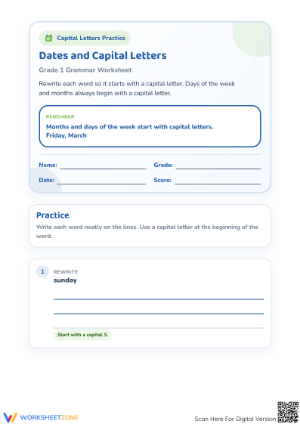
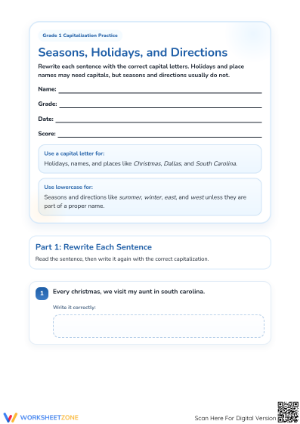
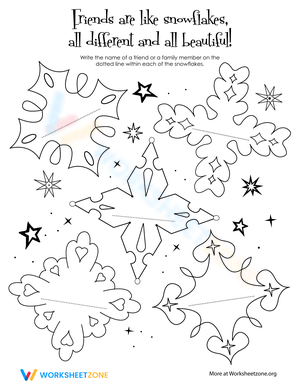
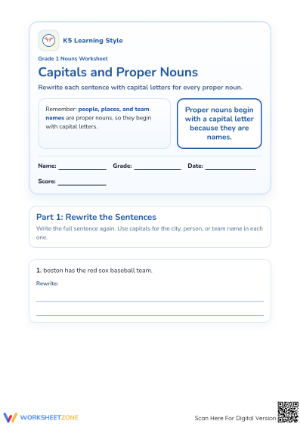
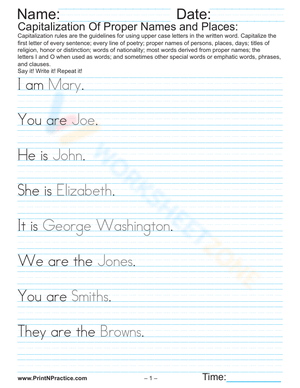
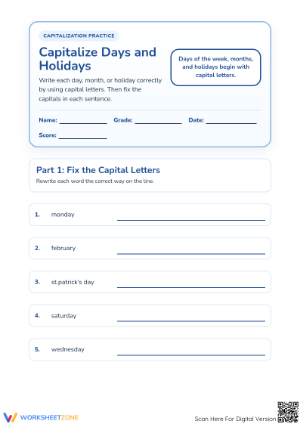
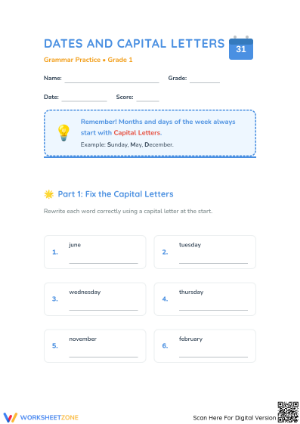
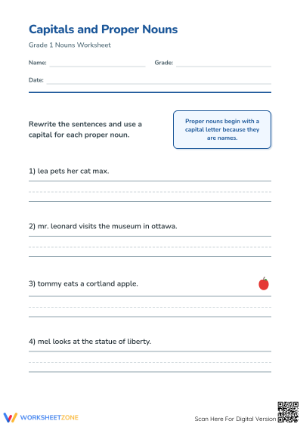
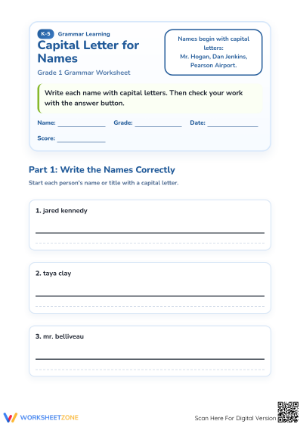
These 1st grade capitalizing proper nouns worksheets give teachers a focused grammar tool built around one of the clearest rules in early writing: certain words name a specific person, place, or time, and those words earn a capital letter. Each worksheet keeps the task tight — students practice identifying, correcting, sorting, and writing proper nouns without wading through unrelated grammar concepts. The set works across multiple lesson formats, from whole-group direct instruction to literacy centers to quick independent review.
The Specific Skills Targeted
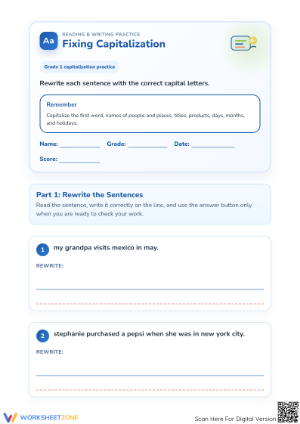
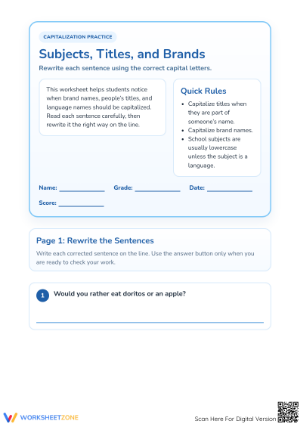
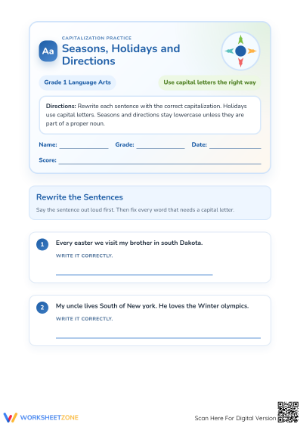
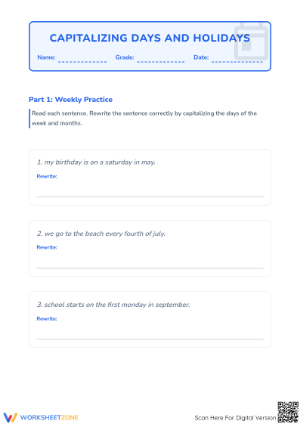
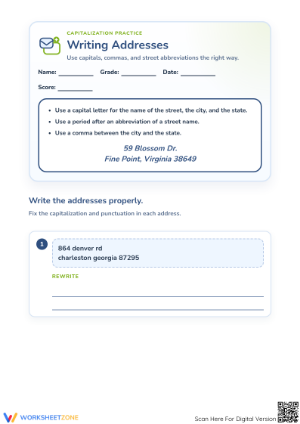
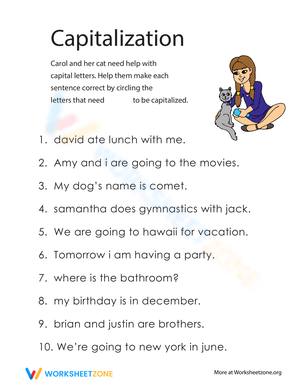
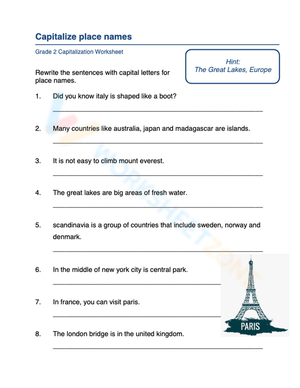
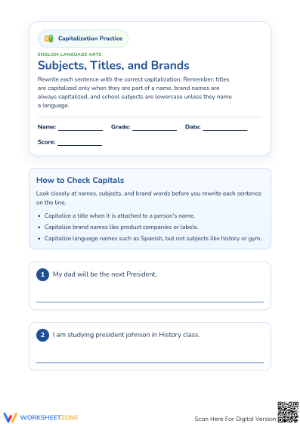
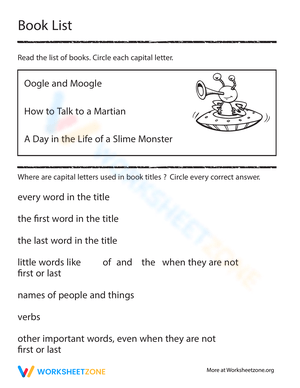
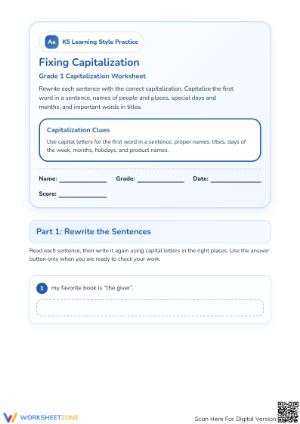
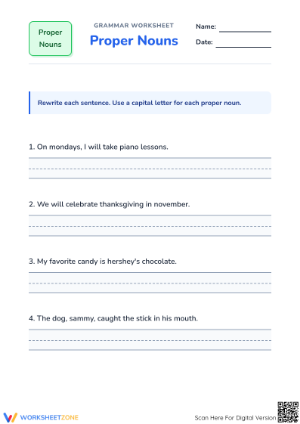
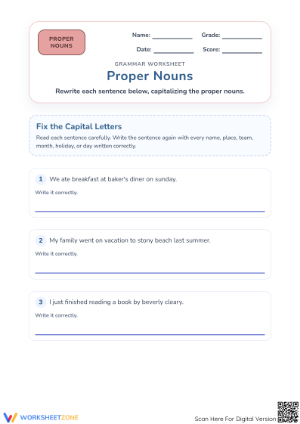
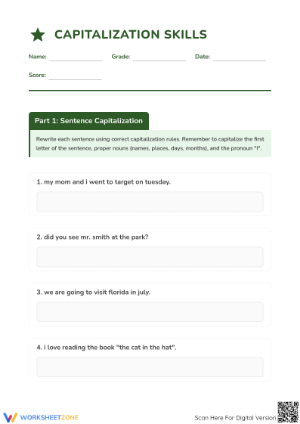
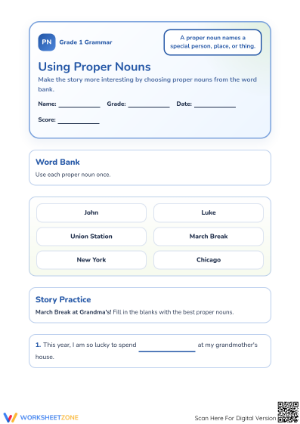
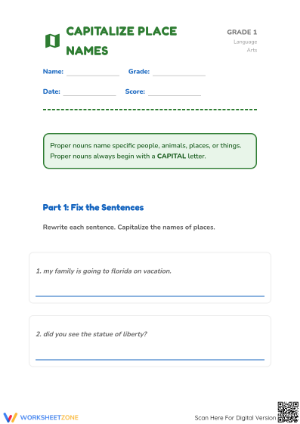
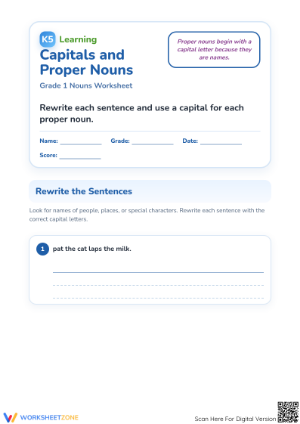
Each worksheet in this set targets one of four task types, and the progression matters. Identification tasks come first — students circle or underline proper nouns in a word list or short sentence. Sorting tasks follow, asking students to separate common nouns (city, month, teacher) from proper nouns (Austin, March, Mrs. Torres). Editing tasks then ask students to rewrite incorrectly capitalized sentences. The final task type asks students to generate original proper nouns — writing the name of their school, a family member, or their birth month in a complete sentence.
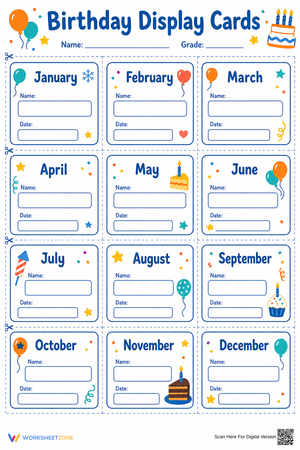
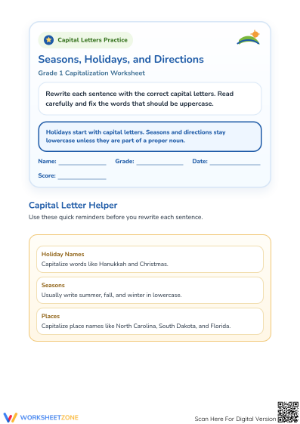
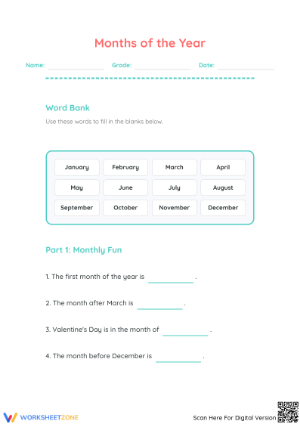
The categories of proper nouns across the worksheets reflect what Grade 1 students encounter daily: first and last names, school and street names, days of the week, months of the year, and holidays. Keeping the examples inside those five categories helps students build a reliable mental model before encountering less familiar proper nouns — brand names, geographic regions, historical figures — in later grades.
Why This Rule Belongs in First Grade
The proper noun capitalization rule arrives in Grade 1 for a developmental reason. By this point, most students already capitalize the word I and the first word of a sentence — rules absorbed largely through print exposure. Proper nouns require something more deliberate: students must classify a word before deciding whether it needs a capital. That classification step — "is this word naming a specific thing?" — is a new cognitive move, and it's one first graders can handle once they have enough vocabulary to tell a dog from Biscuit. Short, repeated practice reinforces the classification habit without overwhelming early writers who are simultaneously managing letter formation and phonics.
Frequent Student Errors Worth Watching For
The most common error in first-grade proper noun work isn't forgetting to capitalize — it's over-capitalizing. Students who grasp the rule quickly often start capitalizing any noun that feels important to them: Mom when used as a general word, Dog because they love their pet, School because it seems significant. Worksheets that include only proper noun examples reinforce this mistake without teachers realizing it. Look for pages that mix common nouns and proper nouns so students have to make the classification call on every item, not just apply a capital to every noun they recognize.
A second pattern shows up in sentence editing tasks: students correct the proper noun but miss the sentence-opening capital, or vice versa, because attending to two capitalization rules inside one sentence splits their attention. When this appears in student work, it's usually a signal to return to single-word and short-phrase practice before moving back to full sentences.
Fitting These Worksheets Into Your ELA Week
The most reliable entry point is mini-lesson follow-up. Spend eight to ten minutes modeling two or three example sentences on the board — crossing out lowercase letters and rewriting them as capitals — then hand out the identification or editing worksheet for guided practice. Students consolidate what they just watched while the rule is still active in working memory.
- Monday morning work: An editing worksheet with five sentences using names, days, or months sets a grammar focus for the week without requiring any setup time.
- Literacy center: Place one worksheet in a grammar tub alongside two colored pencils — one for circling the error, one for writing the correction. The two-color system gives you a fast visual read on student thinking when you collect the work.
- Sentence dictation follow-up: After students finish a worksheet, dictate one sentence aloud — "we go to riverside park every saturday" — and ask them to write it correctly. This moves the skill from worksheet recognition into actual writing output.
- Exit ticket: A six-item identification task at the end of a lesson shows whether students can apply the rule independently before you plan the next day's instruction.
These 1st grade capitalizing proper nouns worksheets also work well for homework after students have had classroom instruction. Sending an editing worksheet home after a week of practice gives families a concrete look at what students are learning and gives students one more exposure to the skill in a different setting.
Adjusting the Worksheets Across Ability Levels
For students who are still building confidence, start with word-level tasks rather than sentence editing. A worksheet that asks students to rewrite six proper nouns correctly — monday → Monday, emma → Emma — removes the sentence-reading load entirely and focuses attention on the capital letter decision. Students who freeze on sentence-level tasks often move quickly once they've had a few successful word-level rounds.
For students who are ready to go further, add a metacognitive step: before rewriting, they write one word explaining why the noun is proper — "person," "place," "day," or "month." This forces explicit classification rather than pattern-matching, which is the thinking move that transfers into independent writing. A further extension, useful for the strongest writers, is asking them to write an original sentence using a proper noun that doesn't appear anywhere on the worksheet.
Students who receive reading support may need the worksheet read aloud once before working independently. The grammar skill itself is usually accessible; decoding the sentences is where the barrier sits. Pair those students with a partner for the reading portion and let them complete the editing and writing steps on their own.
Standard Alignment
These worksheets address CCSS.ELA-LITERACY.L.1.2.A, which requires first graders to capitalize dates and names of people. In classroom terms, this standard appears during the first half of the year in most pacing guides — typically alongside personal narrative writing, when students are already writing names and dates in journals. Teachers who pair these worksheets with journal editing give students immediate transfer practice: they apply the rule in isolation on the worksheet, then hunt for the same error type in their own writing later the same week.
Frequently Asked Questions
Do these worksheets work for students who are still developing reading fluency?
Yes, with a minor adjustment. Worksheets that focus on word-level tasks — rewriting a list of proper nouns correctly — require minimal reading and work well for students who are still building decoding skills. Sentence-level editing tasks are better suited for students who can read the full sentence independently. Most sets include both formats, so teachers can assign by readiness rather than by a single grade-wide expectation.
How many worksheets should I use per week while teaching this skill?
One or two worksheets per week is enough during initial instruction. More than that, without varied writing practice mixed in, can turn the task into rote performance — students learn the worksheet format rather than the underlying rule. After three or four lessons, the stronger indicator of mastery is whether students catch proper noun errors in their own journal entries, not how quickly they complete a correction page.
What's the difference between using these for practice versus assessment?
Practice worksheets work best when students can ask questions and check their thinking mid-task. Assessment use means students complete the worksheet independently, without prompts or partner help, and the results directly inform reteaching decisions. A 1st grade capitalizing proper nouns worksheets set that mixes task types — identification, correction, and original writing — yields a richer picture than a single-format worksheet, because it shows whether students can both recognize and produce the rule. Reserve mixed-task worksheets for assessment moments; use single-task worksheets for daily practice.
Can these worksheets support students who need reteaching mid-year?
Definitely. Return to word-level identification and editing tasks rather than sentence-level work. Students who have already encountered the rule but haven't retained it usually respond well to familiar category examples — their own first name, the current month, the day of the week. Reanchoring the rule to words students see every day reactivates prior learning faster than introducing new examples. The 1st grade capitalizing proper nouns worksheets format is particularly useful here because individual worksheets can be pulled and used without any surrounding context, making them easy to drop into a small-group reteaching session.












 Interactive Worksheet Maker
 Quiz Maker
 Word Search Maker
 Crossword Puzzle Maker
 Word Scramble Generator
 Sentence Scramble Generator
 Handwriting Worksheet Generator
 Name Tracing Generator
 Fill In The Blank Generator