




























Views
Downloads

Proper Nouns Worksheet | Grade 1 ELA | Printable Practice

Paste this activity's link or code into your existing LMS (Google Classroom, Canvas, Teams, Schoology, Moodle, etc.).
Students can open and work on the activity right away, with no student login required.
You'll still be able to track student progress and results from your teacher account.
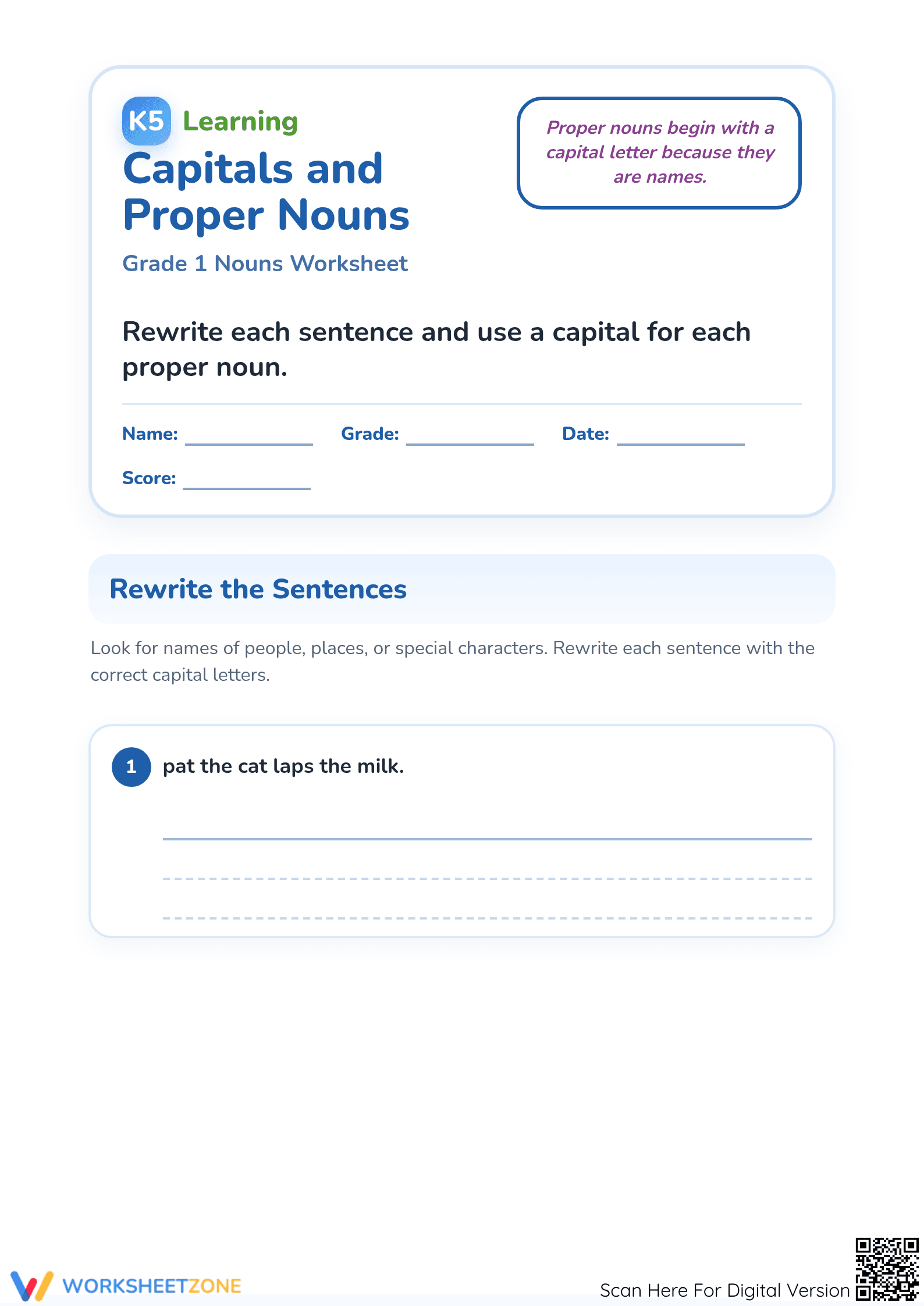
This Grade 1 proper nouns worksheet empowers young learners to identify and capitalize names of people, places, and characters within complete sentences. By practicing sentence rewrites, students bridge the gap between recognizing nouns and applying formal grammar rules. This exercise ensures foundational mechanics are mastered early, leading to more professional and clear written communication.
At a Glance
- Grade: 1 · Subject: English Language Arts (ELA)
- Standard:
CCSS.ELA-LITERACY.L.1.2.A— Capitalize the names of people and other proper nouns accurately.- Skill Focus: Proper Noun Capitalization
- Format: 2 pages · 5 problems · Answer key included · PDF
- Best For: Independent grammar practice and homework
- Time: 10–15 minutes
What's Inside
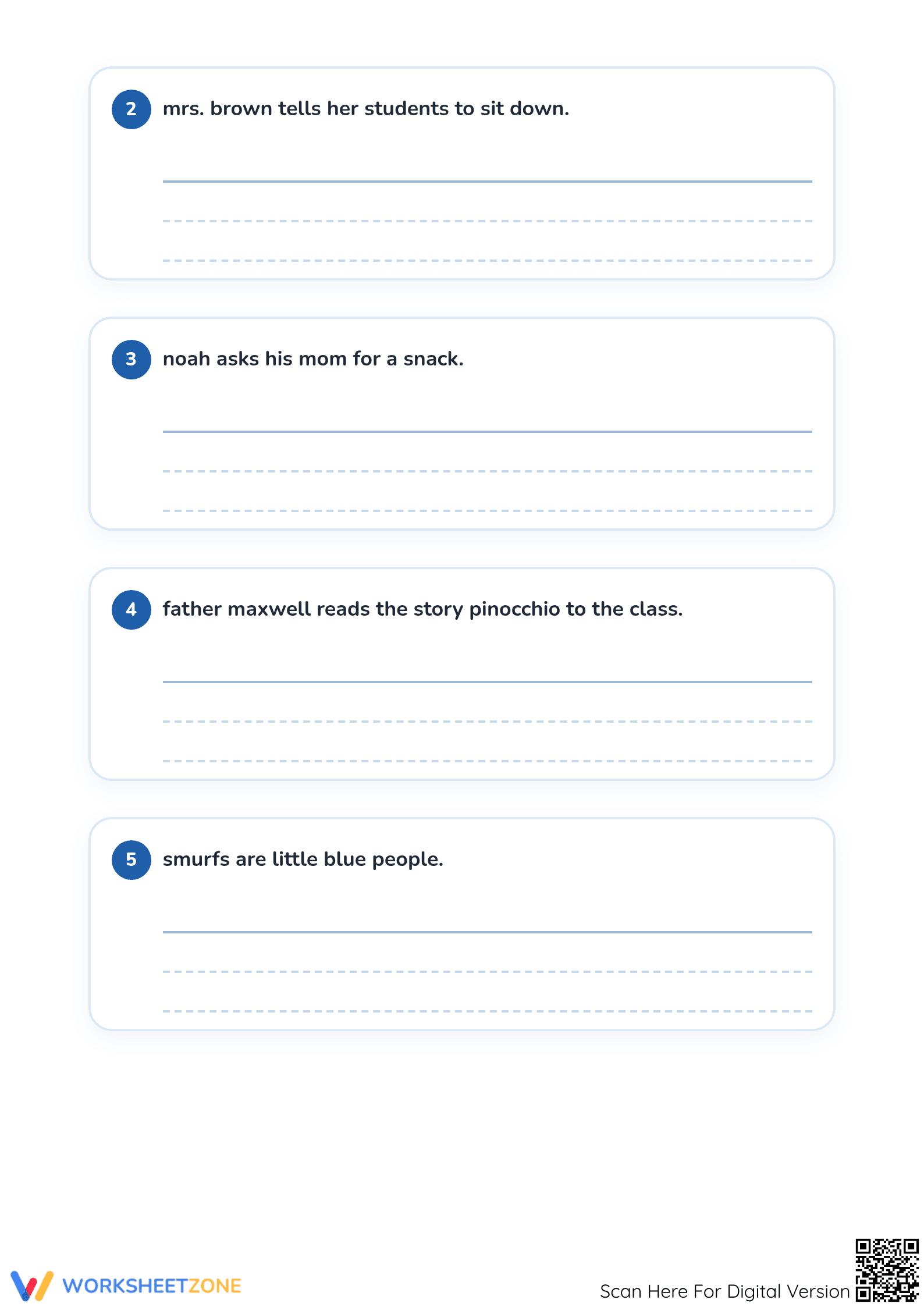
The PDF contains two pages featuring five distinct sentence-rewriting tasks. Each task presents a sentence written in all lowercase letters, requiring students to identify names like "Pat," "Noah," and "Maxwell" and rewrite them with correct capitalization. The worksheet includes a clear instructional header defining proper nouns as names, a designated scoring area, and a full answer key for rapid grading.
Skill Progression
- Guided Practice: An instructional cue defines proper nouns, providing a scaffold for the first problem.
- Supported Practice: Tasks introduce titles and fictional names, requiring students to identify names in diverse contexts.
- Independent Practice: The final challenge ensures students can generalize rules beyond individual person names.
This model moves students from recognition to autonomous correction using the gradual release framework.
Standards Alignment
This resource is aligned to CCSS.ELA-LITERACY.L.1.2.A: "Capitalize dates and names of people." It reinforces foundational sentence mechanics. Both standard codes can be copied directly into lesson plans or IEP goals.
How to Use It
Use this worksheet as a "check for understanding" after direct instruction. Observe students as they work to ensure they correctly identify names before rewriting. Alternatively, assign it as morning work or a quick homework task to keep grammar skills sharp through consistent retrieval practice.
Who It's For
This activity is designed for first-grade students or second-graders needing remedial capitalization support. It is effective for English Language Learners practicing proper name identification. Pair this with an anchor chart for maximum instructional impact.
Research from Fisher & Frey (2014) emphasizes that "gradual release of responsibility" is critical in early literacy, where students move from understanding a rule to applying it in varied contexts. This Grade 1 capitalization worksheet embodies this principle by providing 5 specific sentence-rewriting tasks centered on CCSS.ELA-LITERACY.L.1.2.A. By focusing on proper nouns and names, the resource addresses a fundamental gap in early writing mechanics. Studies from EdReports 2024 indicate that high-quality grammar resources must provide enough practice volume to ensure rule internalization without overwhelming the learner. This two-page format offers the ideal density of practice for young writers, ensuring that the concept of proper nouns becomes an automatic part of their writing repertoire. The inclusion of an answer key further supports formative assessment, allowing for immediate feedback which is a hallmark of effective educational design in primary classrooms. This evidence-based approach helps bridge the gap between oral language and written proficiency.


