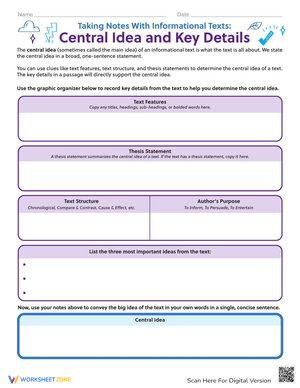
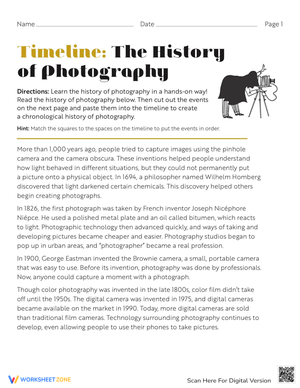
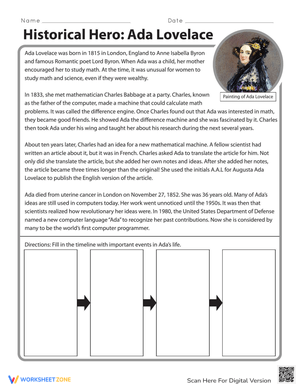
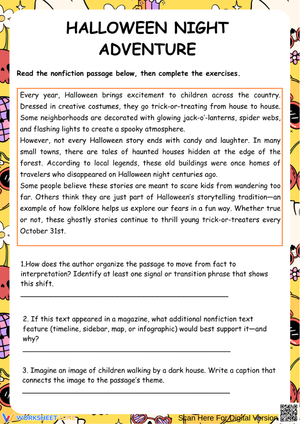
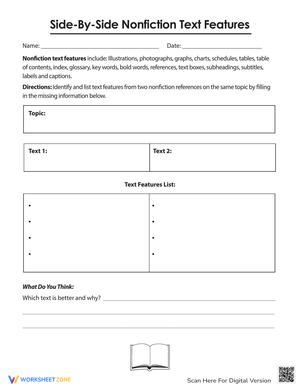
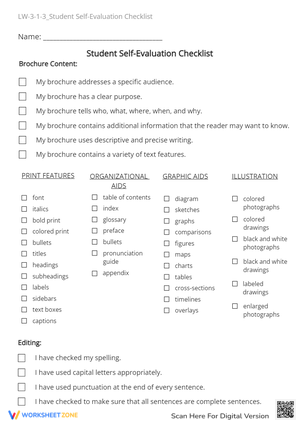
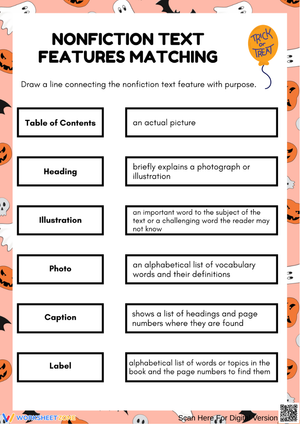
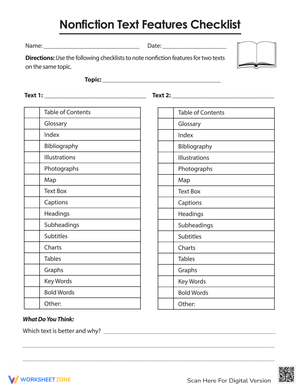
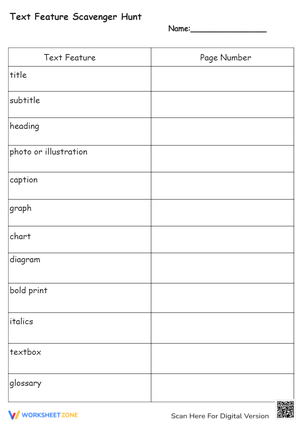
These nonfiction text features worksheets resources give teachers a ready set of targeted practice for identifying and interpreting the visual and organizational elements that make informational text actually usable — not just recognizable. Each worksheet isolates a specific feature, asks students to work with it directly, and then moves toward the harder question of why an author chose that feature in the first place. That second move is where reading for information stops being passive.
The Specific Features Targeted
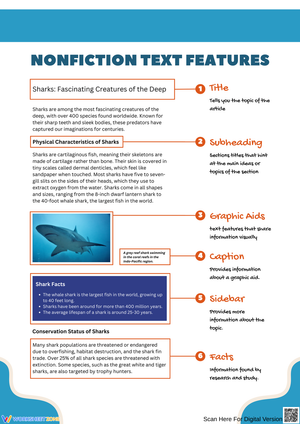
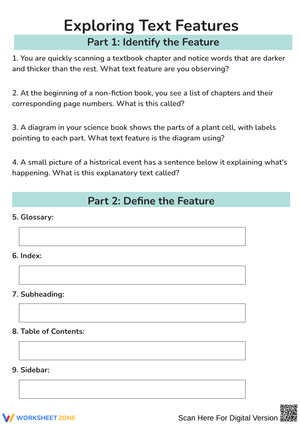
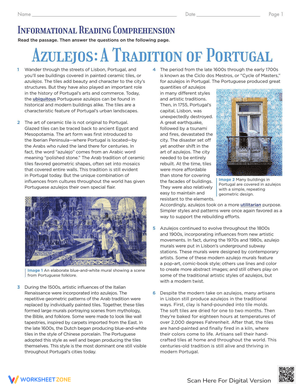
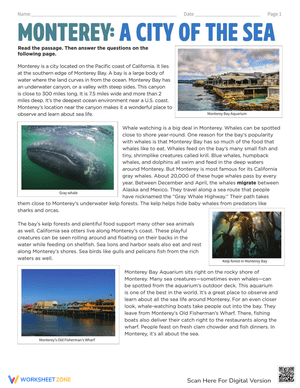
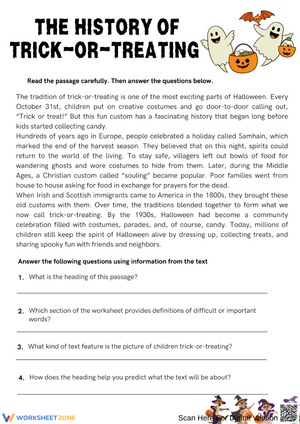
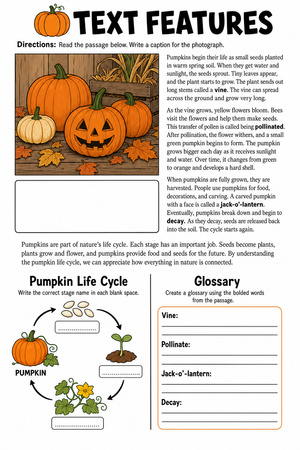
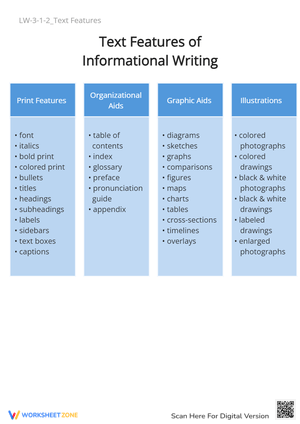
The set works across three categories of text features: organizational, graphic, and typographic. Organizational features govern navigation — table of contents, index, glossary. Graphic features carry information the prose alone cannot convey — labeled diagrams, maps, charts, photographs paired with captions. Typographic features signal importance and structure at a glance — bold print, italics, headings, subheadings.
Within those categories, each worksheet focuses on one or two features at a time:
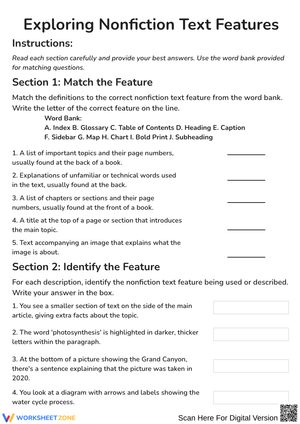
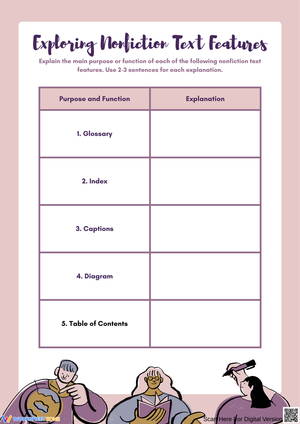
- Table of contents and index — including the functional distinction between them
- Glossary entries and their relationship to bold vocabulary in running text
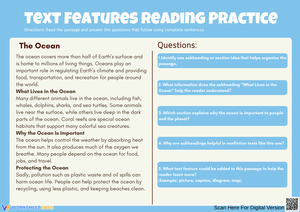
- Headings and subheadings as a hierarchy signal, not just section labels
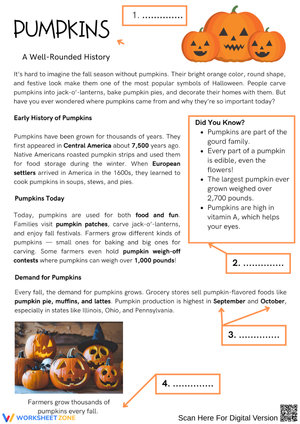
- Captions and photo labels
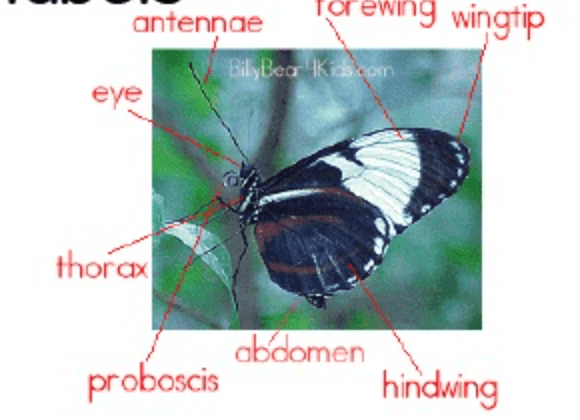
- Diagrams with labeled parts
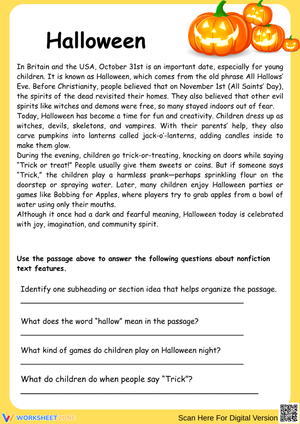
- Charts, graphs, and simple data tables
- Sidebars and text boxes that carry supplementary information
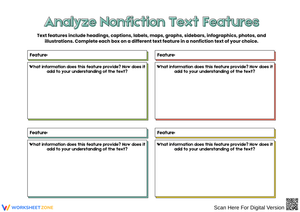
Later worksheets in the set move from identification to analysis. A student who can circle a diagram and write its name is partway there. The student who can explain why the author used a diagram instead of a prose description has the skill that transfers to science textbooks and social studies chapters — which is where this instruction is really preparing students to go.
Common Misconceptions to Watch For and Correct
The index-versus-table-of-contents confusion surfaces in nearly every class. Students see both features as "the thing that tells you where stuff is," which is not wrong but collapses a distinction that matters. When a worksheet asks students to find the page where a specific term appears, many will instinctively turn to the table of contents. That moment — when a student says "it's not here" — is exactly the right time for direct comparison: the TOC organizes chapters sequentially; the index organizes topics alphabetically. Comparison tasks that put both features side by side tend to resolve this faster than separate explanations do.
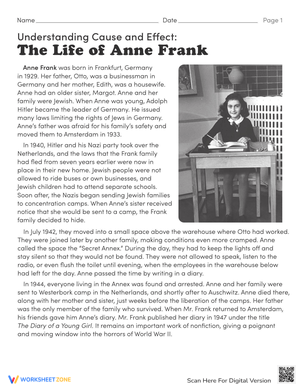
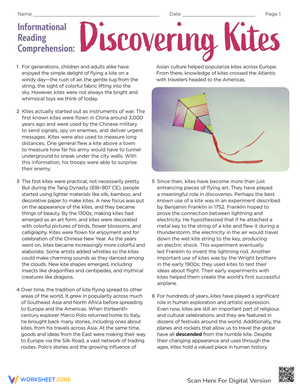
Captions are the most systematically ignored feature in student work. Students who read carefully through body paragraphs will skip a caption entirely, even when the question they're answering can only be resolved by reading it. The reason is structural: they've built the habit of moving left to right through lines of prose. Captions live outside that path. Worksheets that pose questions answerable only from caption text — not from the body paragraphs — force students to break that prose-first habit deliberately.
Bold print presents a subtler problem. Students understand that bold words signal importance, but they do not know what to do with that signal. The natural move — notice the bold term, locate the glossary entry, read the definition, return to the sentence — has to be practiced as a deliberate chain. One worksheet dedicated entirely to that sequence is worth the time before students move into mixed-feature tasks where they're expected to manage multiple features at once.
Working These Worksheets Into Your Lesson Plans Through the Week
A feature hunt at the start of any informational read-aloud is an efficient warm-up: students spend three to five minutes scanning a new text and listing every feature they notice. That primes attention before reading begins. A nonfiction text features worksheets then serves as the structured practice that names and reinforces what students just observed in the real text. The sequence — notice, name, practice — keeps the skill grounded in authentic reading rather than floating as an isolated exercise.
For teachers running content-area instruction in science or social studies, these worksheets fit naturally as brief transitions between introducing a new topic and sending students into independent reading. Ten minutes of feature practice before students open a chapter orients them to that text's structure. After the reading, returning to a worksheet that asks students to explain two features they encountered during the chapter turns the practice into a low-stakes reflection. That closing loop also gives you fast formative data — two minutes of scanning returned worksheets tells you which students are still skipping captions or still reaching for the TOC when they need the index.
Adjusting the Worksheets for a Range of Learners
A nonfiction text features worksheets set is well-suited to tiered use because the task demands can be adjusted without changing the core content. Students still building basic recognition can be directed to identification-only tasks: find the heading, circle the caption, underline the glossary word. Students who have identification down move to explanation tasks: write a sentence about what this feature tells the reader. Students working above grade level can evaluate the author's choices — was a diagram the right call here, or would a chart have communicated the data more clearly? Three different entry points, same worksheet.
For English learners, graphic and organizational features are often the most accessible starting point because they carry meaning through visual structure rather than dense prose. Labeled diagrams and captions — where the relationship between image and text is explicit — build vocabulary while teaching the skill simultaneously. That dual-purpose payoff is worth front-loading those worksheets for EL students even when the rest of the class moves through the set in a different order.
Standard Alignment
These worksheets align most directly to CCSS.ELA-LITERACY.RI.2.5 — "Know and use various text features (e.g., captions, bold print, subheadings, glossaries, indexes, electronic menus, icons) to locate key facts or information in a text efficiently" — and to CCSS.ELA-LITERACY.RI.3.5, which extends the standard to include search tools and keywords. In classroom terms, RI.2.5 is typically addressed in second grade when students first encounter trade books and simple magazines as dedicated reading material. RI.3.5 becomes the active standard in third grade as students move into content-area texts where efficient navigation matters for research tasks and timed reading assignments. The set supports both standards, making it practical for second-grade initial instruction and for third-grade review or small-group intervention work.
Frequently Asked Questions
What grade levels are the best fit for this set?
The worksheets are strongest for grades 2 through 4. Second graders are typically encountering informational text features as a named, explicit skill for the first time — these worksheets match that first-instruction context well. Third and fourth graders use them for review, for intervention, or as a bridge when moving into more complex content-area reading where the ability to navigate a text quickly becomes genuinely necessary. Some fifth-grade teachers pull the more analytical worksheets — those focused on an author's purpose for choosing a specific feature — to support the structural analysis work in RI.5.5.
Can these be used in science and social studies, not just reading block?
Content-area classes are often where the practice sticks fastest. When students complete a feature-analysis worksheet alongside a chapter they are also reading for content, the text features stop being abstract — they become tools the student actually needs right now. A nonfiction text features worksheets used during a science unit on the water cycle, for instance, gives students a concrete reason to understand why the author chose a labeled diagram over a prose explanation. The motivation to understand the feature is built into the lesson itself.
How do I read the returned worksheets as formative data?
Look at two things: which features students label incorrectly, and — more revealingly — which explanation prompts they leave blank. Blank explanation responses almost always mean the student can identify but cannot articulate. The recognition skill is present; the understanding of function is not. That gap is specific and actionable. A five-minute small-group conversation where students talk through why an author used a particular feature — rather than just pointing to it — moves those students further than another identification exercise would.












 Interactive Worksheet Maker
 Quiz Maker
 Word Search Maker
 Crossword Puzzle Maker
 Word Scramble Generator
 Sentence Scramble Generator
 Handwriting Worksheet Generator
 Name Tracing Generator
 Fill In The Blank Generator