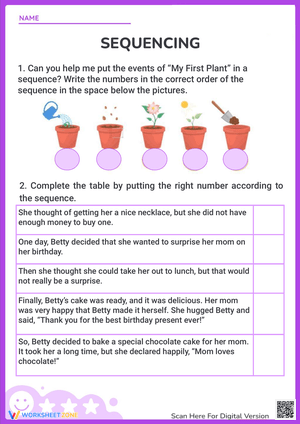
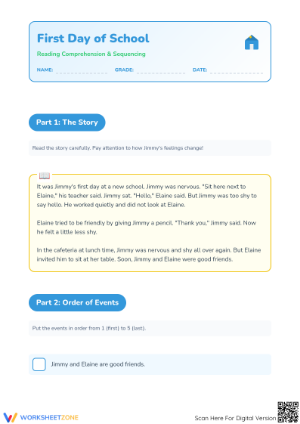
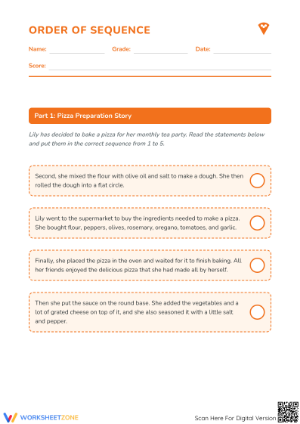
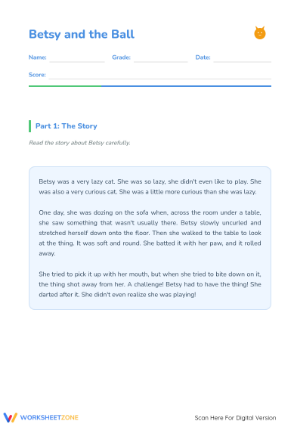
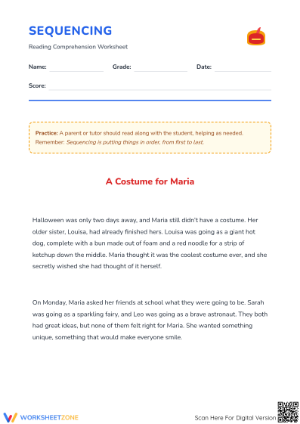
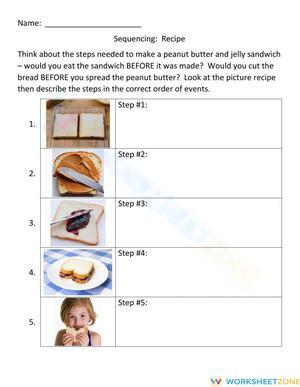
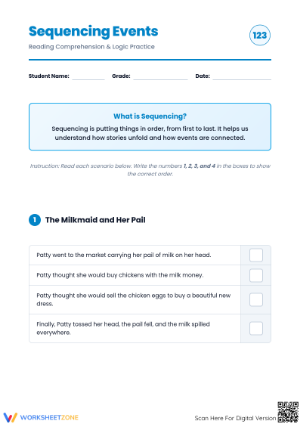
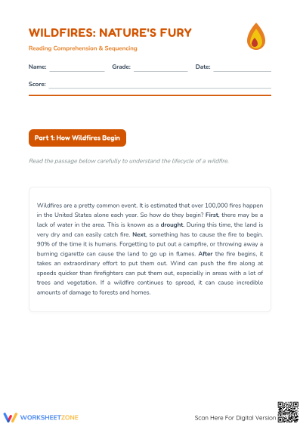
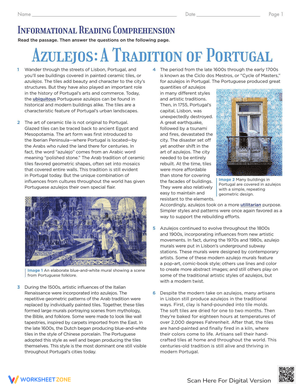
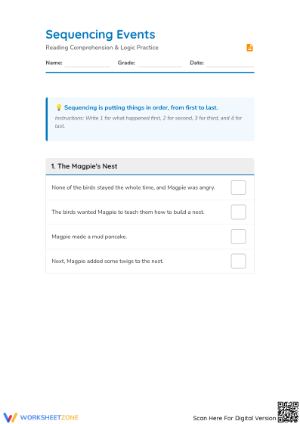
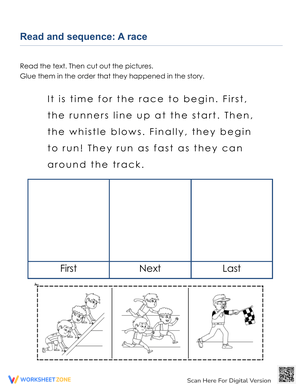
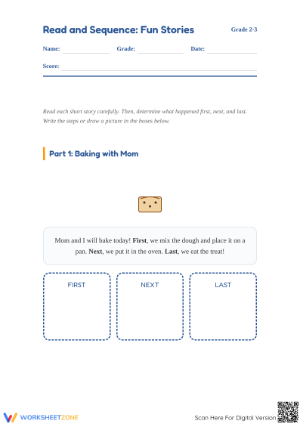
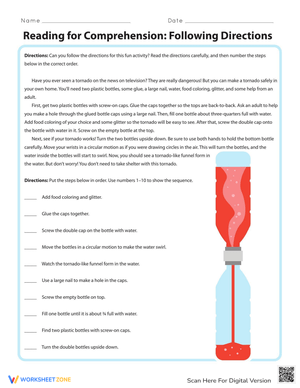
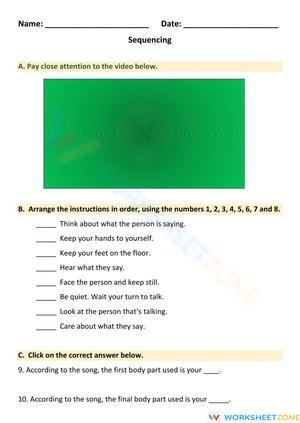
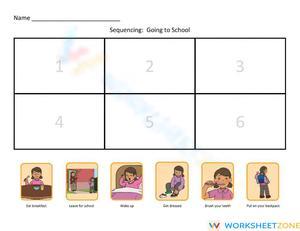
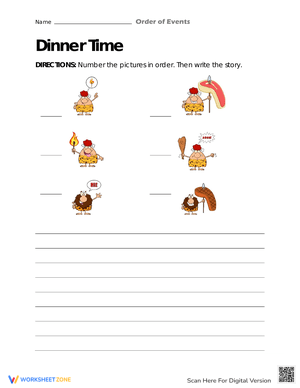
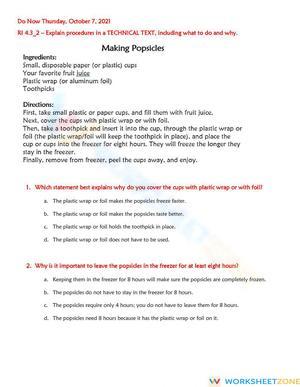
These sequencing events in nonfiction printable worksheets give grades 2–5 teachers a ready set of reading practice materials built around real informational text types — biographies, science processes, procedural how-tos, and historical timelines. Each worksheet pairs a short nonfiction passage with targeted sequencing tasks that move students past surface-level recall into a genuine understanding of how the text is built.
The Specific Skills Each Worksheet Builds
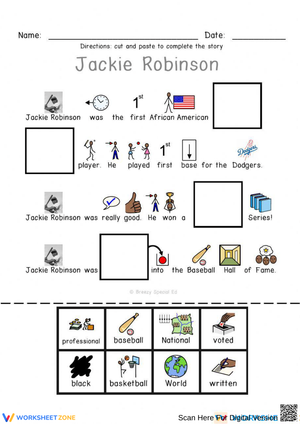
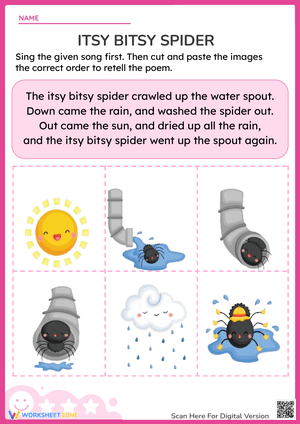
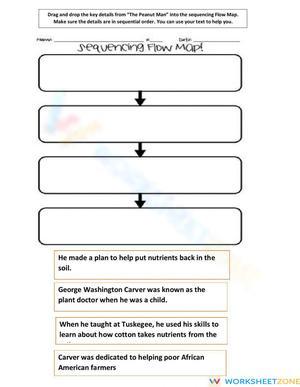
Students work with more than one type of nonfiction sequence across the set. Biographical and historical passages require chronological thinking — tracking events across a person's life or a span of history. Science and procedural passages ask students to follow a fixed order of steps where each stage depends on the one before it. Cyclical texts, like those covering the water cycle or insect life cycles, introduce a third structure: sequences that loop back to a starting point rather than terminating at a final event.
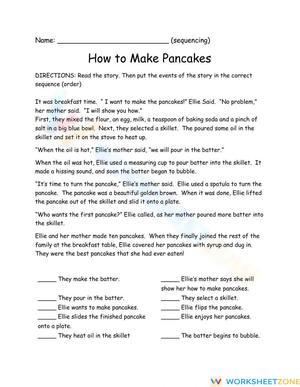
Within each worksheet, students underline or circle signal words, then use them to complete a sequence chain or timeline. Later worksheets in the set ask students to reorder scrambled events and identify which signal words provided the evidence — a task that requires them to articulate their reasoning rather than simply produce an answer. The variety of organizer formats across the set prevents students from completing tasks by habit rather than by reading carefully.
Frequent Student Errors Worth Addressing Before You Assign
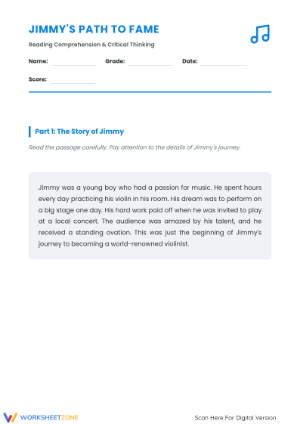
The most persistent error in this skill area is confusing mention order with chronological order. A biography might open with a scientist's Nobel Prize acceptance before circling back to her childhood experiments — and a surprising number of students record the prize first because that's where the text begins. This is different from not understanding sequence; students genuinely believe the text presents events in the order it describes them. Direct instruction on this distinction, before students attempt any worksheet independently, makes a measurable difference in accuracy.
A second problem involves the word "meanwhile." Students drilled on first-next-then chains treat "meanwhile" as another forward-moving marker, placing the "meanwhile" event after the previous one rather than alongside it. The distinction between sequential and simultaneous relationships in nonfiction is worth a brief whole-class discussion before assigning any worksheet that uses parallel-action language. Students who skip this conversation often produce sequences that are internally consistent but factually wrong.
A third pattern worth noting: students who handle basic signal words with confidence — first, then, finally — stall when a passage uses more formal markers like "prior to," "in the interim," or "following the conclusion of." These students are not failing at sequencing; they're encountering vocabulary that sits just outside their reading range. Previewing three or four Tier 2 signal words before independent work keeps the focus on structural analysis rather than turning the task into a vocabulary exercise.
How to Build These Worksheets Into Your Weekly Lesson Plans
The shorter passages in the set work well as a five-minute opening when you're launching a content-area unit — a quick life cycle passage before a science lesson on ecosystems, or a brief historical timeline before beginning a biography study. Students get a low-stakes preview of the subject matter while practicing sequencing, which reduces the background-building you need to do before the main lesson.
During guided reading, one worksheet per group session is enough. The passage length allows for about ten minutes of independent reading and task completion, leaving time for the discussion that actually drives comprehension — asking students why they placed a particular event where they did and what text evidence supports that placement. The worksheets prompt that conversation; they don't replace it.
End-of-unit, a fresh worksheet covering the same content domain provides a clean formative snapshot. Students who sequenced correctly during instruction but stumble on a new passage are demonstrating a transfer problem, not a retention problem. That distinction matters for planning your next instructional steps, and the worksheet gives you something concrete to point to during a parent conference or a data team meeting.
Adjusting the Set Across Ability Levels
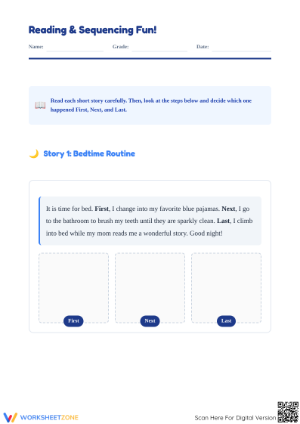
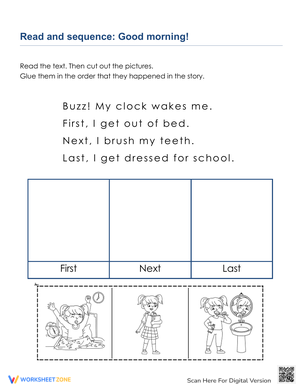
For students reading below grade level, separate the cognitive demands before moving to the written worksheet. Print the events from a passage on individual slips of paper and have students arrange them physically on their desk first. This separates the work of determining sequence from the organizational demands of marking a worksheet, and it lets students — especially ELL students — demonstrate structural understanding before the full language load is in play.
These sequencing events in nonfiction printable worksheets also extend naturally for students who are ready for a harder challenge. Ask those students to work backward from a completed sequence: locate the specific sentence or phrase in the passage that justifies each placement. This reverse-sequencing task requires text citation and exposes whether a student sequenced from actual textual evidence or from prior knowledge about the topic. It's a meaningful challenge that doesn't require any additional materials.
For students bridging into informational writing, the sequence chains on each worksheet function as a rough outline. Students rewrite the sequence in their own words, using signal words to connect steps — a practical transfer exercise that reinforces both reading and the organizational expectations of W.3.2 and W.4.2 without requiring a separate writing assignment.
Standard Alignment
The core standard for this skill is CCSS.ELA-LITERACY.RI.3.3, which asks students to describe relationships among historical events, scientific ideas, or procedural steps "using language that pertains to time, sequence, and cause/effect." Adjacent standards RI.2.3 and RI.4.3 address the same skill at lower and higher text complexity, and RI.5.3 extends the expectation to explaining how events, concepts, and procedures interact with one another. The signal-word tasks embedded in these sequencing events in nonfiction printable worksheets address the "language that pertains to time" clause directly — which makes completed worksheets useful documentation in standards-based grading systems when teachers need evidence of RI.3.3 or RI.4.3 progress across a marking period.
Frequently Asked Questions
Which passage types work best for introducing this skill to second graders?
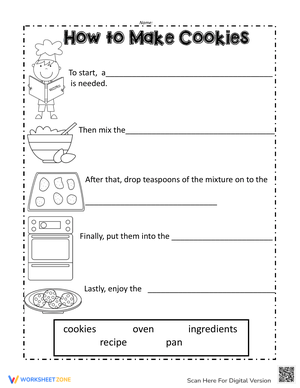
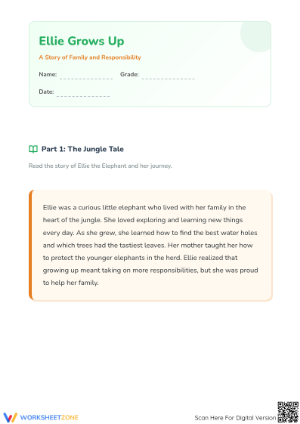
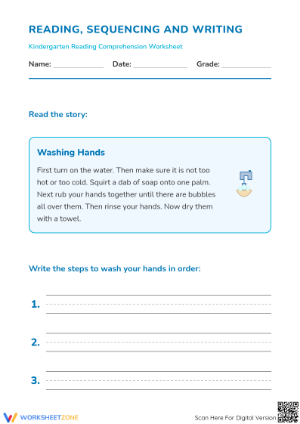
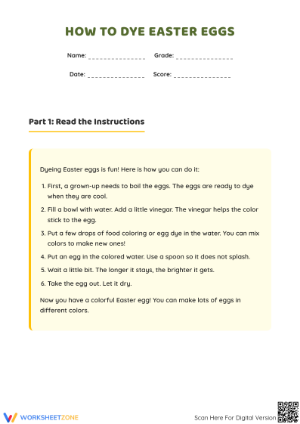
Start with procedural texts — how something is made or how a simple process unfolds. Second graders have direct experience with procedures, so the logical order feels intuitive before they've had formal practice with unfamiliar nonfiction structures. Once they can sequence a familiar procedure accurately, move to life cycle passages, then to biographical excerpts, which present the greatest challenge because events may appear out of chronological order in the text itself.
Can these worksheets be used in science or social studies class, not just during ELA?
These sequencing events in nonfiction printable worksheets include science, social studies, and procedural passage types, so the content match is usually direct. A science teacher covering the water cycle can assign the relevant worksheet as a reading support without pulling time from ELA. Social studies teachers working through a historical period can use the biographical and timeline worksheets to reinforce the sequence of events students are already studying in that unit. The worksheets don't require an ELA period — they work wherever students are reading nonfiction.
How do I handle students who produce the correct sequence but can't explain how they got there?
Require students to circle or underline the signal word, date, or phrase that justifies each placement before they record the sequence. Making the evidence visible is the step most teachers skip, and it's the step that distinguishes students who are sequencing from the text from students who are sequencing from background knowledge about the topic. The latter group will struggle on unfamiliar content — and you won't know they have a gap until you require them to show their evidence.
Is an answer key included with each worksheet?
Each worksheet includes a teacher answer key showing the correct event order along with the signal words or textual evidence that support each placement. For tasks where more than one defensible order exists — typically in passages without explicit signal words — the key notes the acceptable variations and suggests discussion prompts for exploring the ambiguity with students.












 Interactive Worksheet Maker
 Quiz Maker
 Word Search Maker
 Crossword Puzzle Maker
 Word Scramble Generator
 Sentence Scramble Generator
 Handwriting Worksheet Generator
 Name Tracing Generator
 Fill In The Blank Generator