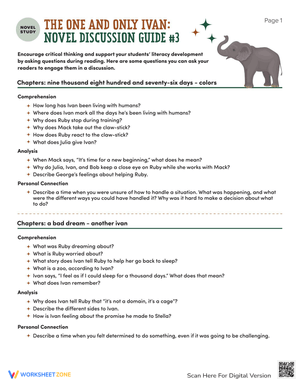
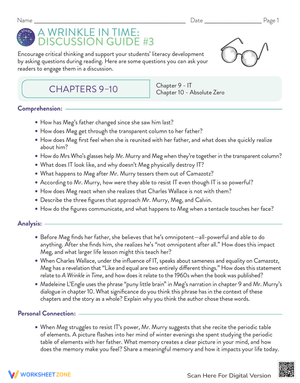
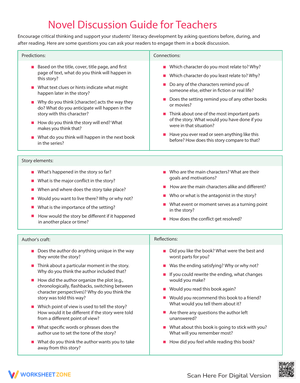
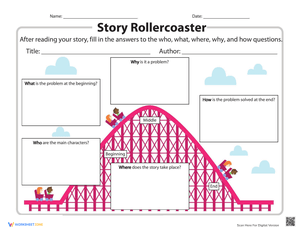
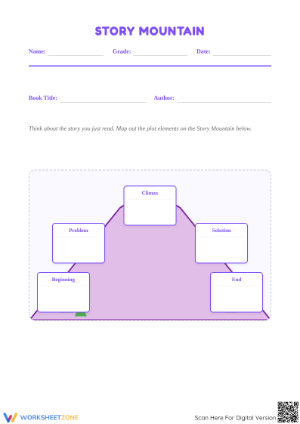
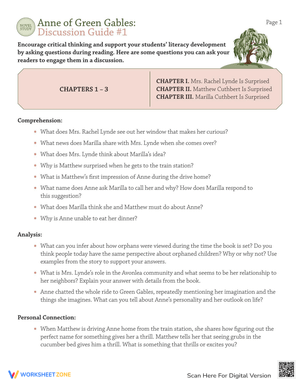
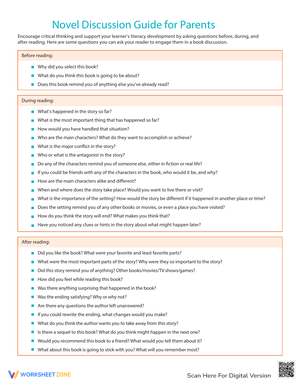
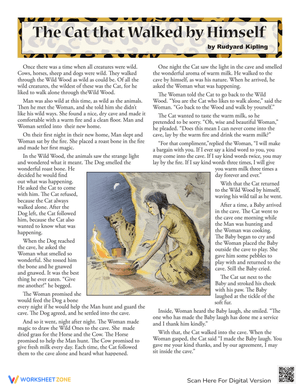
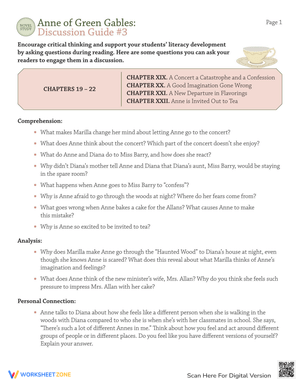
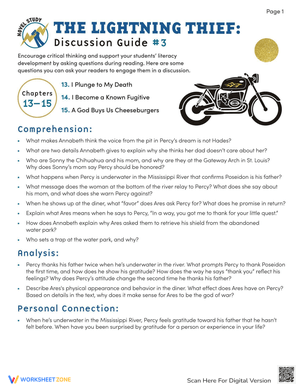
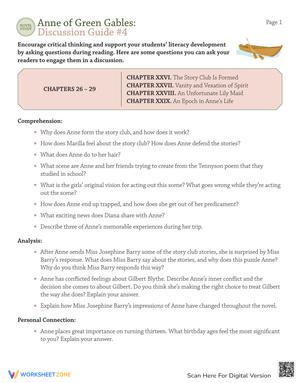
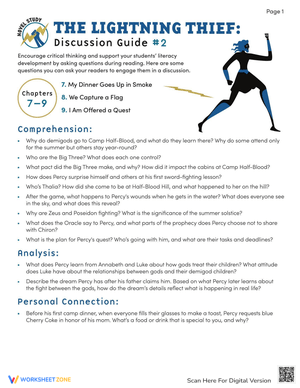
These sequencing events in fiction worksheets resources give teachers a ready-made tool for one of the most revealing moves in ELA comprehension: asking students to reconstruct story structure from the inside out. Each worksheet pairs a self-contained fiction passage with ordering tasks, so the thinking happens while the story is still fresh — not as an abstract exercise disconnected from actual reading.
What the Set Targets Across Grade Levels
The tasks run a genuine skill progression. Early worksheets ask students to order three clearly discrete events from simple narratives where first, next, and last are nearly telegraphed by the text. Later worksheets in the set push students further:
- Distinguish the order in which events occurred from the order in which the narrator reveals them — a critical shift once students encounter even mild flashbacks
- Identify the inciting incident: the single event without which the rest of the sequence wouldn't exist
- Select the five most plot-significant events from a longer passage rather than ordering a pre-selected list
- Recognize how parallel events — two characters in different locations during the same story moment — fit into a unified timeline
That last task — selecting rather than ordering — is harder than most teachers expect, and it's the moment where a solid sequencing events in fiction worksheets set earns its time in the room. Students can move pre-written strips into the right slots without truly understanding which moments drive the plot. Selection forces a different, deeper engagement.
Student Errors Worth Anticipating Before You Hand These Out
The error that shows up most reliably, across grade levels, is confusing narration order with story order. The moment a text opens with something like "That afternoon changed everything" and then flashes back to morning, students will often place the morning scene first — not because they can't read, but because they're responding to the sequence of sentences on the page rather than the sequence of events in the story's world. A third-grader who handles a straightforward three-event narrative without difficulty will fall apart on that single structural move. It's worth naming the difference explicitly before distributing any worksheet that includes a flashback passage.
A second pattern appears on selection tasks: students choose emotionally memorable moments instead of causally pivotal ones. The scene where the character cries, or the moment of a big win, gets selected every time — even when those scenes don't cause anything that follows. Sequence practice only builds comprehension when students understand that the logic being tracked is causal, not emotional. That distinction takes direct instruction, not just repeated practice.
Getting the Most Out of These Worksheets in Your Planning
The most efficient use in a weekly schedule is the Monday sequence check. After students have read a chapter or story on Friday, a quick three-to-five event ordering task at the start of Monday's block reactivates the text before any discussion begins. It takes about eight minutes and immediately shows who retained the plot and who is operating on vague impressions.
For guided reading groups, these sequencing events in fiction worksheets resources work well when the task follows the text immediately — not as homework, but as a during-group activity. Read the passage together, then give students four minutes to order the events independently before comparing answers with a partner. The conversation that happens when two students disagree on placement is often more instructive than the correct answer itself.
Literacy center setups benefit from a physical manipulation step: print the event strips, cut them, and have students arrange them on a flat surface before writing anything. Students who rush to record without sorting are usually guessing — a pattern you can address in a follow-up conference once you've watched the center in action.
Adjusting These Worksheets for a Range of Learners
For students who struggle with reading volume, reduce the event count to three and supply a signal word bank alongside the passage — terms like first, then, finally — so they can hunt for structural clues rather than holding the full text in working memory. The goal is experiencing the logic of sequence correctly; the memory load can decrease as the skill solidifies.
Advanced readers need selection tasks, not additional ordering tasks. Giving a student who already understands chronological order another five-event strip sort won't move their thinking. Ask them instead to identify the inciting incident and write one sentence explaining why the events that follow depend on it causally. Some teachers also use the worksheets as a pre-writing tool at this level: sequence someone else's story structure first, then apply the same thinking to a piece of original fiction. That cross-application tends to sharpen awareness of plot logic in ways that comprehension questions alone don't reach.
Standard Alignment
These worksheets address CCSS.ELA-LITERACY.RL.2.5 (describing the overall structure of a story, including how the beginning introduces and the ending concludes the action) and RL.3.5 (referring to parts of stories and how successive portions build on earlier sections). At the upper elementary level, the work connects to RL.4.5 and RL.5.3, which ask students to explain how chapters and scenes fit together and how characters respond as the plot moves forward. In classroom terms, these standards surface most often during fall narrative reading units and again during spring units on realistic and historical fiction, when texts begin to include non-linear structures that require students to distinguish story time from narration time.
Frequently Asked Questions
Are these worksheets useful alongside a novel, or only for short passages?
Each worksheet includes its own self-contained passage, so no outside text is required. The skills transfer directly to novel work, though. After students practice with short fiction, many teachers apply the same framework to chapter books — tracking one key event per chapter on a class chart — using the vocabulary and logic the worksheets established. The worksheets build the skill; the novel gives it scope.
At what grade level should I start using these?
The simplest worksheets in the set work for late first grade and second grade, where stories use clear temporal signal words and three or four discrete events. The more demanding tasks — those involving event selection, flashback recognition, or parallel timelines — belong in grades four and five, once students have enough experience with extended fiction to hold a more complex story structure in mind.
What should I do when a student orders events correctly but can't explain why?
That's a common and important stopping point. A student who sorts strips into the right order is demonstrating literal recall, not necessarily comprehension of causation. The follow-up move is to ask: "What would have happened if this event had not occurred?" If the student can't answer, they're working at the recall level — a fine starting point, but one that needs to move further. These sequencing events in fiction worksheets resources include tasks that ask students to justify placement in writing, which makes that gap visible early and gives you a concrete classroom conversation to have before the lesson ends.












 Interactive Worksheet Maker
 Quiz Maker
 Word Search Maker
 Crossword Puzzle Maker
 Word Scramble Generator
 Sentence Scramble Generator
 Handwriting Worksheet Generator
 Name Tracing Generator
 Fill In The Blank Generator