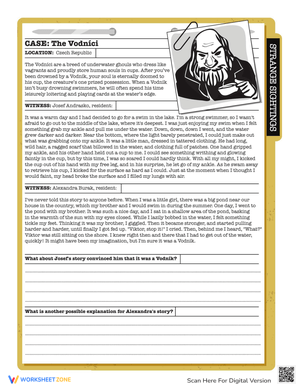
These compare and contrast characters worksheets give teachers a ready-made structure for the reading skill students find hardest to do without support: moving from "they're different" to explaining why those differences actually matter inside the story. Each worksheet asks students to identify specific traits, name evidence from the text, and make a comparative claim — not just sort details into columns.
What Each Worksheet Asks Students to Do
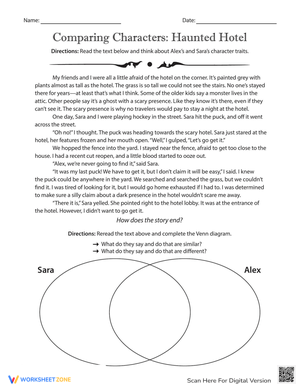
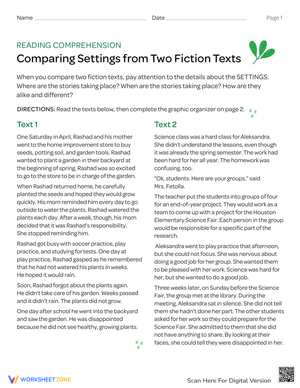
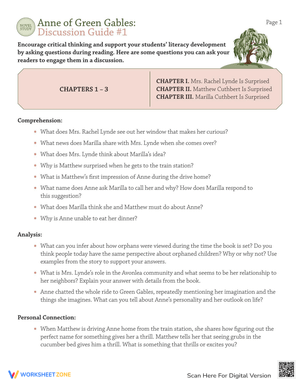
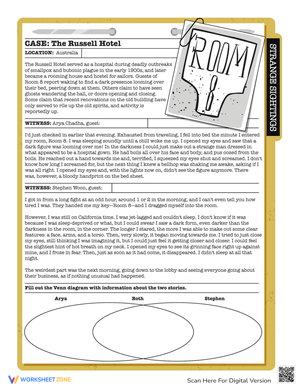
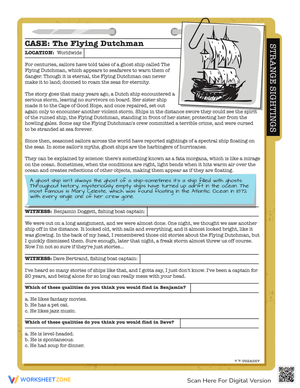
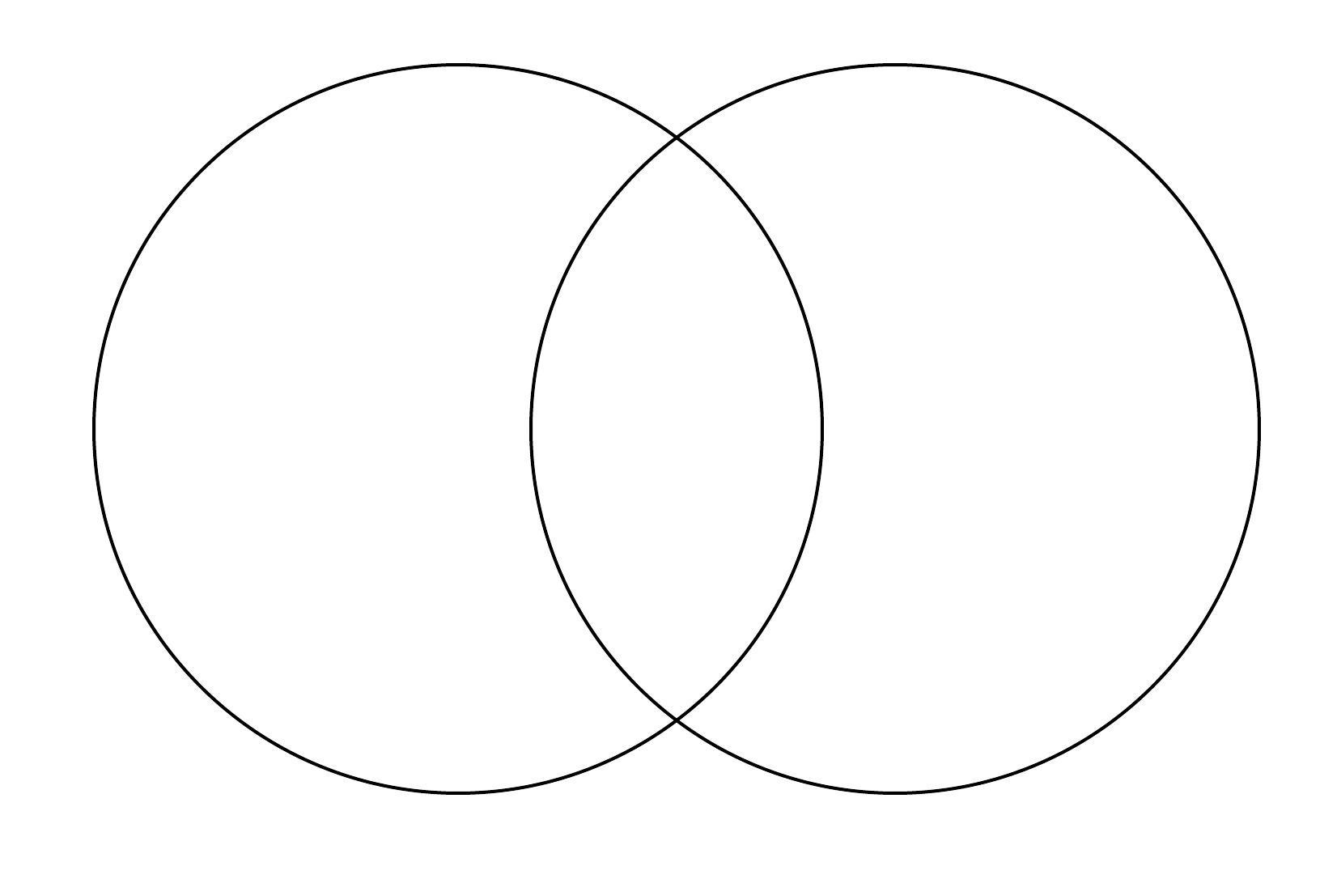
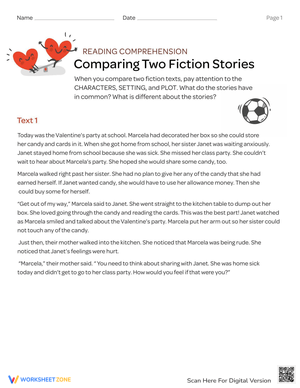
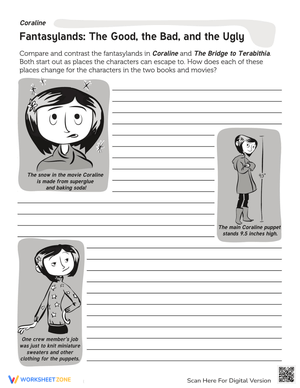
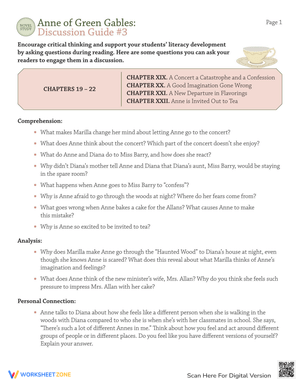
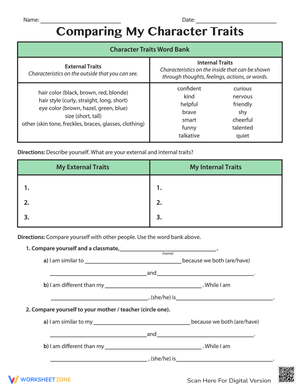
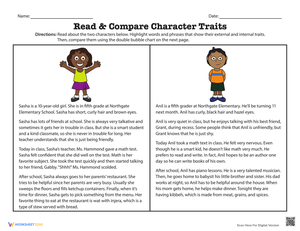
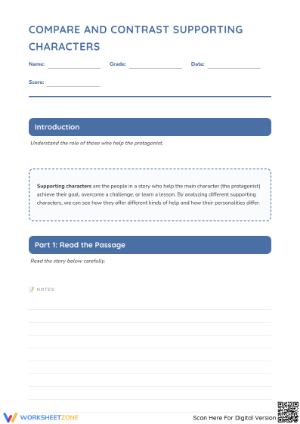
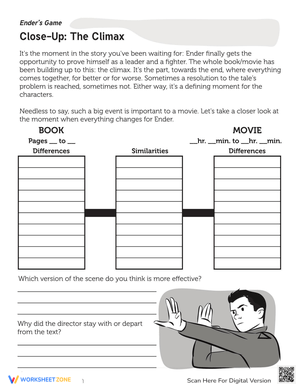
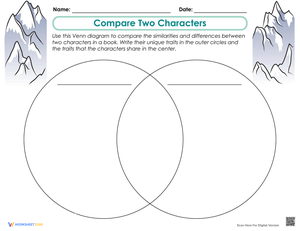
The set uses three organizational formats — Venn diagrams, T-charts, and multi-character trait matrices — matched to different stages of character analysis. Venn diagrams work when the comparison is genuinely two-sided and students need to hold similarities and differences in a single visual field. T-charts cut the noise when the instructional goal is pure contrast. The matrix worksheets, which ask students to compare three or more characters across categories like motivation, values, and response to conflict, appear in the more demanding worksheets in the set.
Across all formats, students practice these specific moves:
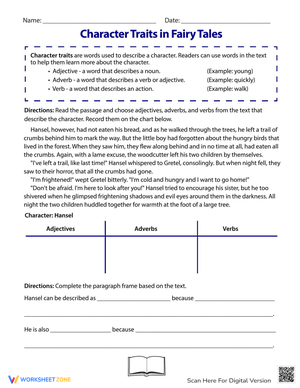
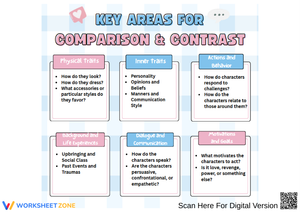
- Naming an internal trait — emotional, moral, motivational — and distinguishing it from a physical or behavioral observation
- Supporting every trait with a direct quote or close paraphrase, including the page or chapter location
- Identifying moments where two characters share a trait but express it differently — the move that separates surface comparison from real analysis
- Writing a sentence that connects a character difference to a specific plot event or conflict
Errors Students Make When Comparing Characters — and How to Catch Them Early
The most predictable problem is students treating physical description as character analysis. A student who writes "tall and dark-haired" in the trait column has noticed the character; they haven't analyzed one. Each worksheet labels the trait column "internal trait" and follows it with a secondary prompt: "How does this trait affect how the character acts or decides?" That single question catches most surface-level responses without requiring one-on-one redirection for every student.
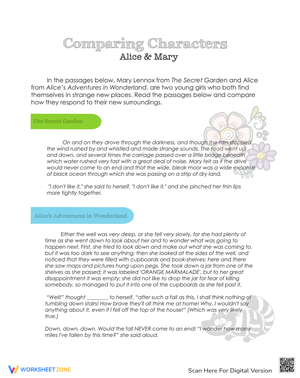
The Venn diagram's overlapping section produces a second, more subtle problem. Students fill that space last, and when they do, they reach for the easiest shared observation available — "both want to win," "both are kids." The overlap is actually where comparative thinking gets most precise: two characters might share ambition while pursuing it through entirely different ethical choices. Each worksheet addresses this by placing a prompt inside the overlap zone: "Write a shared trait AND explain how each character expresses it differently." Without that constraint, the shared section becomes a throwaway.
Building These Worksheets Into Your Instructional Sequence
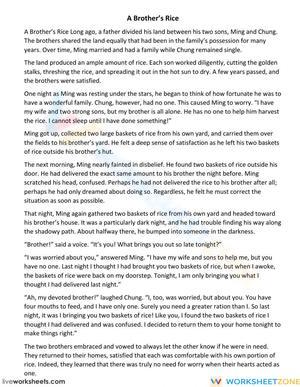
These worksheets fit at multiple points in a reading unit, not only as a culminating task. During shared reading, a compare and contrast characters worksheets functions well as a prediction tool: have students fill in what they anticipate about each character's motivations at the unit midpoint, then return to the same chart after the climax. The gap between the two versions generates discussion more efficiently than a review question ever will.
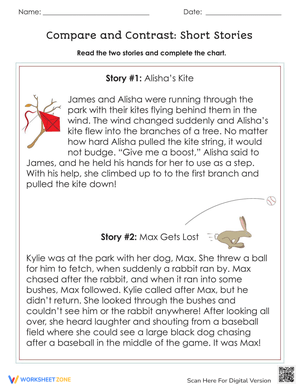
The T-chart format holds up as a solid Monday warm-up during the independent reading block. Give students eight minutes to add one supported observation per column — one trait, one piece of evidence — and the chart builds incrementally across the week. By Thursday, students have the raw material for a comparative paragraph without starting from scratch on Friday.
For whole-class instruction, think-alouds are the most efficient way to establish expectations before students work independently. Read a passage aloud, then narrate the decision out loud: "I'm putting 'protective' in Atticus's column rather than 'kind' because the scene on page 87 shows him risking something concrete — that's a choice, not just a feeling." Students need to see the distinction between a vague label and a text-supported character claim before they can reproduce it on their own.
Adjusting Each Worksheet for the Range of Learners in Your Room
For students who struggle to locate usable evidence, the most practical adjustment is to pre-load one teacher-supplied example in each column before distributing the worksheet. The example shows the expected level of specificity — trait named, passage referenced, brief explanation — without completing the task. Students who see the model are far less likely to treat the column as a vocabulary list.
A compare and contrast characters worksheets in the matrix format gives advanced readers a more demanding task: comparing three characters across five categories and drafting a thesis that accounts for a pattern across all of them. That's a harder cognitive lift than a two-column comparison, and it doesn't require creating a separate assignment from scratch.
One honest tradeoff worth naming: the structured prompt format frustrates students who prefer open-ended written response. If your class includes strong readers who balk at fill-in frames, let them use the worksheet as a review checklist — they verify their own analytical notes against the categories without filling in every field literally.
Standard Alignment
CCSS.ELA-LITERACY.RL.5.3 — "Compare and contrast two or more characters, settings, or events in a story or drama, drawing on specific details in the text" — is the anchor standard for this set. Instructionally, this standard extends from RL.4.3, which asks students to describe characters in depth using specific text details, and builds toward RL.6.3, where students explain how characters respond and change as a plot arc progresses. The simpler worksheet formats align to fourth-grade instruction; the matrix worksheets stretch into sixth-grade application. The textual evidence requirement running through every worksheet also supports the reading-writing integration built into the CCSS Writing standards for argument and explanation.
Frequently Asked Questions
Which format should I introduce first with students who are new to character comparison?
Start with the T-chart. It demands fewer decisions — students fill two labeled columns and don't have to judge whether a detail belongs in a shared or distinct zone. Once they understand what a text-supported character trait looks like, the Venn diagram's overlapping section makes far more intuitive sense. Introducing the Venn diagram first with inexperienced comparers usually results in the overlap being left blank or filled with the most trivial observation students can find.
Do these worksheets work with picture books, or only longer texts?
They work well with picture books, especially in grades 2–4. A book like Enemy Pie or Each Kindness gives students characters whose contrasting values drive the entire plot, and the shorter text makes it far easier to locate evidence without losing track of the story. Starting with a picture book and a T-chart is almost always more productive than beginning with a novel and a matrix for students who are new to the skill.
How do I use these worksheets as a formative check rather than a final grade?
When using a compare and contrast characters worksheets as a formative tool, look at the evidence column first, before you read the trait column. If a student's evidence is vague — a page number with no quote or paraphrase — they located something but couldn't articulate it. If the evidence column is blank, that's a different problem entirely. The vague-evidence pattern is far more common, and it nearly always points to students who need explicit modeling of how to cite and paraphrase within an analytical response.
What do I do when two students disagree about a character's traits?
Ask both students to read their evidence aloud before you mediate anything. The disagreement is almost never actually about the character — it's about which scene each student is drawing from. Characters change across a narrative, and a student citing chapter two and a student citing chapter twelve may both be reading accurately. A worksheet that includes a "story moment" column — asking where in the text a specific observation comes from — makes these conversations much cleaner, and it teaches students that character analysis is tied to narrative arc, not to a fixed label assigned at the beginning of a book.












 Interactive Worksheet Maker
 Quiz Maker
 Word Search Maker
 Crossword Puzzle Maker
 Word Scramble Generator
 Sentence Scramble Generator
 Handwriting Worksheet Generator
 Name Tracing Generator
 Fill In The Blank Generator