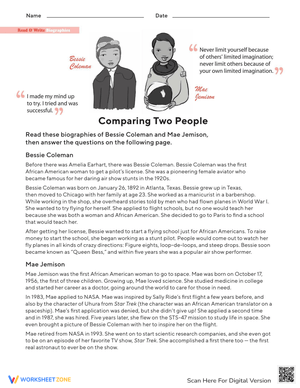
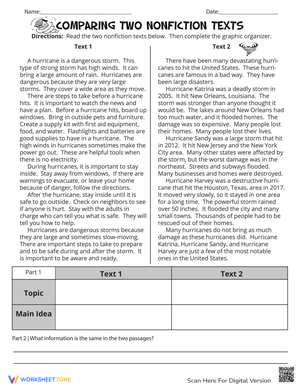
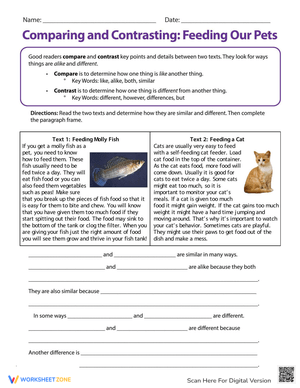
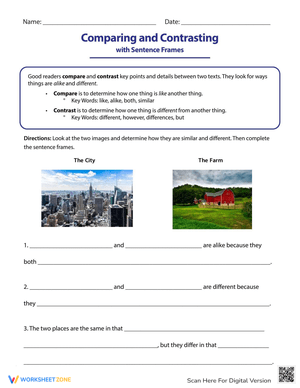
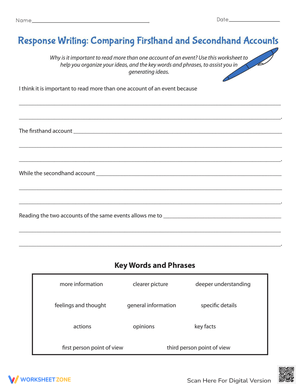
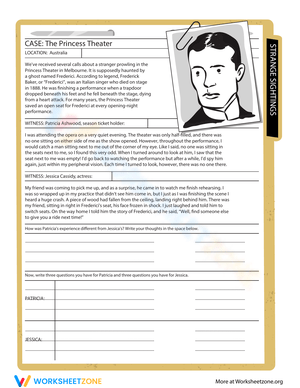
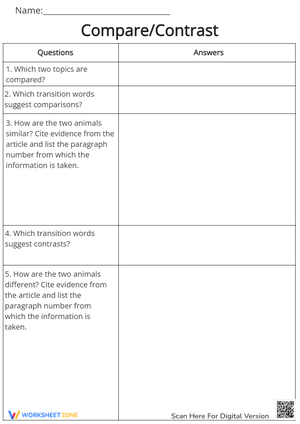
These compare and contrast in nonfiction worksheets give teachers a ready set of paired-passage exercises built around the specific demands of informational text — signal word recognition, structured comparison across multiple attributes, and short written response. The passages cover science and social studies topics, so the set fits naturally into content-area blocks as well as dedicated reading periods.
Skills These Worksheets Build
Each worksheet targets a distinct layer of comparative analysis. Students do not simply fill in an organizer and move on. The work is more deliberate:
- Identifying and underlining comparison and contrast signal words within a passage before organizing any information
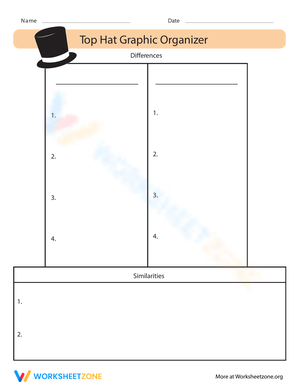
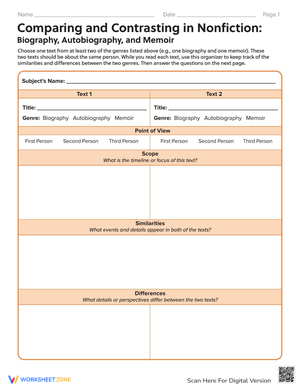
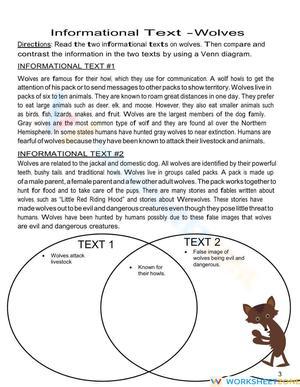
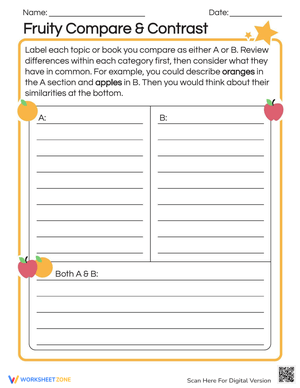
- Sorting facts into a two-column matrix — a format that handles dense factual content far better than overlapping circles when students are comparing more than two or three attributes
- Distinguishing between surface similarities ("both are mammals") and structurally meaningful ones ("both shift feeding strategies in response to seasonal scarcity")
- Writing a summary sentence that captures the most significant point of comparison rather than restating a bulleted list in prose form
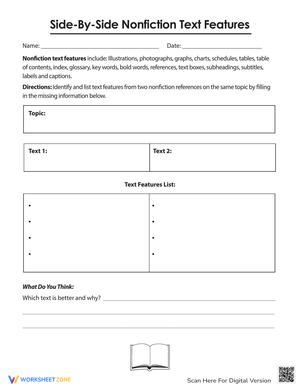
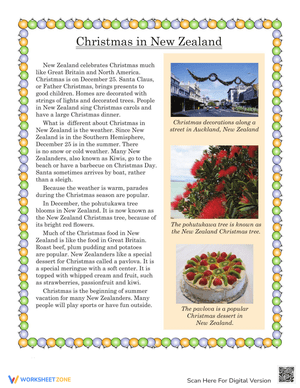
- Examining text features — headings, captions, bold vocabulary terms — as part of comparing how two authors chose to present the same subject
The progression across the set moves from passages with explicit signal words and obvious connections toward texts where the author never names the comparison directly. That shift is where real analytical work begins, and where most students need the most repetition.
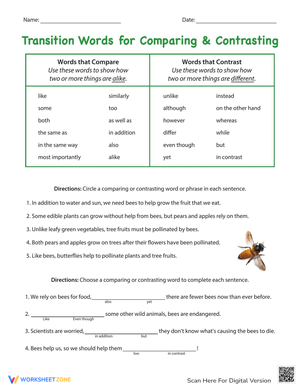
Signal Words and What They Actually Reveal
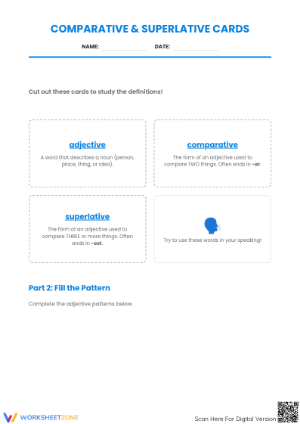
Words like similarly, likewise, and in contrast do more than indicate direction — they expose the author's organizational logic. When a student learns to stop at however and ask what two things are being held in tension, the reading slows down in a productive way. That deliberate pause is the habit worth building.
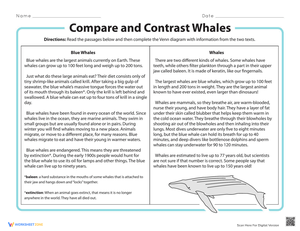
Each worksheet includes a signal word task that asks students to mark words in context before they move to the graphic organizer. This ordering matters. When students underline on the other hand in the passage first, they come to the matrix with the structure already partially decoded. Reversing that order — handing students the organizer before they read for signal words — tends to produce shallow results, because students skim for isolated facts rather than tracking the author's reasoning.
Building These Worksheets Into a Weekly Lesson Sequence
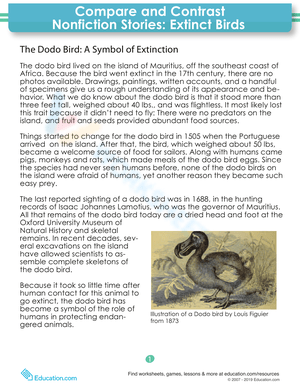
The most effective use of these resources is a three-day cycle rather than a single lesson. Day one: the class reads one of the paired passages together, focusing on comprehension and vocabulary. Day two: introduce the second passage and model how signal words connect or separate ideas across both texts. Day three: students work through the compare and contrast in nonfiction worksheets independently, with both passages available alongside the organizer. By day three, students have enough context to write a comparison with real depth rather than surface observation.
These worksheets also hold up as Monday warm-ups when the previous week covered a related topic. A ten-minute paired-passage comparison at the start of class is a low-stakes way to activate prior knowledge and surface lingering gaps before new instruction begins. For teachers running a workshop model, one worksheet per week fits into the independent work block without disrupting conferring time.
Errors Students Make That These Worksheets Help Surface
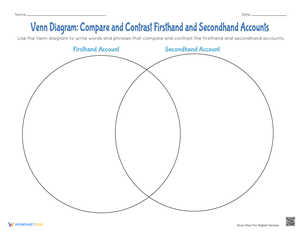
The most persistent mistake is what might be called the "both are" problem. Students filling in a Venn diagram or matrix will write "both live in North America" or "both eat plants" — technically accurate statements that reveal little analytical thinking. Each worksheet asks students to rank their listed similarities by importance and explain why one connection matters more than another. That ranking step is where shallow thinking becomes visible and correctable.
A second consistent problem appears when students move from Venn diagrams to matrices for the first time. Many copy full sentences directly from the text into matrix cells, which looks like completion but is not. They are extracting without processing. The written response section at the bottom of each worksheet requires students to restate the comparison in their own words, and that is where the copying strategy surfaces quickly. A brief one-on-one conversation about paraphrasing usually corrects it within one or two more practice rounds.
Students with strong decoding skills but less analytical experience often struggle specifically with passages that carry no explicit signal words. They can read both texts fluently but do not know how to begin comparing without a linguistic cue. The later worksheets in the set use passages written in this style deliberately, giving teachers a clear read on which students have internalized the comparison framework and which still depend on the author to signal it for them.
Adjusting the Set for Students Working at Different Levels
For students still building comprehension fluency, the most useful adjustment is not simplifying the graphic organizer — it is reducing the number of comparison attributes required. Asking a struggling reader to compare two texts across five categories produces fragmented, surface-level responses. Asking the same student to work across two well-chosen attributes produces something far more substantive. The matrix format makes this easy: mark which rows each student is responsible for completing and leave the rest blank.
Students working above grade level need a different kind of push. They complete the matrix quickly and accurately but rarely move into interpretive territory without a prompt. The compare and contrast in nonfiction worksheets address this with an optional extension question on each worksheet: students identify which author made the stronger case and cite specific word choices that support that judgment. That task requires a defensible claim backed by textual evidence — skills that transfer directly to analytical writing in later grades.
For English language learners, a printed signal word reference card used alongside each worksheet reduces vocabulary load without reducing the analytical demand of the task. The goal is for ELL students to spend their cognitive effort on comparison thinking, not on decoding what in contrast or likewise means mid-task.
Frequently Asked Questions
Do these worksheets work for both science and social studies content?
Yes. The passages in the set cover topics from both content areas — animal adaptations, ecosystems, historical events, and geography. Teachers have used them during science blocks, social studies units, and ELA periods without adjusting the task format. The analytical skill transfers across subject matter, and nonfiction passages from multiple disciplines reinforce that transfer.
What graphic organizer format do the worksheets use?
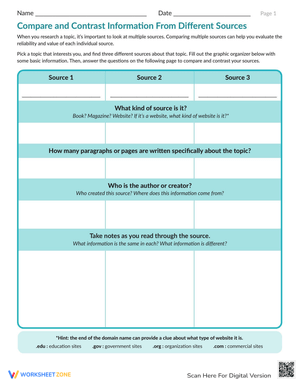
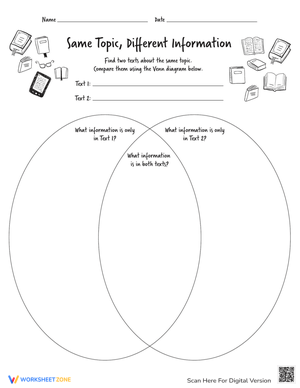
The set includes both Venn diagrams and two-column comparison matrices. Venn diagrams appear in the earlier worksheets where passages have fewer comparison points. The matrix format takes over in the more advanced worksheets because it keeps dense factual information legible and requires students to label what they are comparing — not just where facts land in overlapping circles.
Can I use these as assessments, or are they practice only?
Each worksheet functions as either practice or a formative check depending on how you deploy it. The written response section gives teachers enough student-generated text to judge whether a student has genuinely understood the comparison or is pattern-matching from the organizer. Several teachers use these compare and contrast in nonfiction worksheets as exit tickets after paired-passage lessons, which keeps the turnaround fast and the data immediately usable for the next day's instruction.












 Interactive Worksheet Maker
 Quiz Maker
 Word Search Maker
 Crossword Puzzle Maker
 Word Scramble Generator
 Sentence Scramble Generator
 Handwriting Worksheet Generator
 Name Tracing Generator
 Fill In The Blank Generator