Understanding Prepositions in the Elementary Classroom
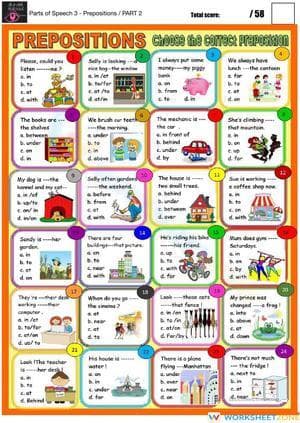
Prepositions are the essential connectors that allow students to describe relationships between people, places, and objects. For elementary teachers, teaching prepositions is more than just memorizing a list of words; it involves helping students visualize spatial and temporal relationships. Our prepositions worksheets collection is designed to provide teachers with the structured materials needed to move students from basic identification to complex sentence construction. By integrating these resources into your daily ELA blocks, you can provide the consistent practice required for grammar mastery.
When students first encounter prepositions, they often focus on simple spatial indicators like in, on, and under. However, as they progress through the grades, the complexity of these relationships increases. Teachers must introduce prepositions of time and movement to help students build more descriptive and accurate sentences. Using a variety of worksheet formats ensures that learners with different needs can engage with the material effectively. Whether you are working with first graders just starting to identify location or fifth graders analyzing prepositional phrases, having a reliable set of PDF resources is a significant advantage for any classroom practitioner.
Categorizing Prepositions: Place, Time, and Movement
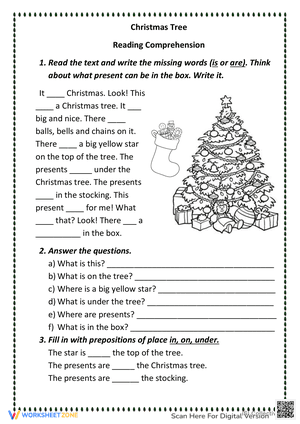
Effective grammar instruction requires breaking down prepositions into logical categories. This helps students organize their thinking and apply the correct words in the right contexts. Place prepositions, such as behind, beside, and between, are usually the first to be taught because they can be easily demonstrated with physical objects in the classroom. Many teachers use hands-on activities where students place a pencil in or under a desk to solidify these concepts before moving to written worksheets.
Prepositions of time, including before, after, during, and since, require a more abstract level of thinking. These words help students sequence events and understand the duration of actions. Practice in this area is vital for improving reading comprehension, as students must be able to track the timeline of a story. Movement prepositions, such as through, across, and into, describe a path or direction. These are often the most challenging for students to master because they involve dynamic actions rather than static positions. Providing focused worksheets that target each of these categories allows for targeted intervention and clearer progress monitoring.
The Role of Prepositional Phrases in Sentence Structure
Once students are comfortable identifying individual prepositions, the next step is understanding prepositional phrases. A prepositional phrase consists of a preposition and its object, along with any modifiers. Understanding this structure is a building block for more advanced writing. By teaching students to identify the object of the preposition, teachers help them avoid common errors like subject-verb disagreement or confusing a preposition with an adverb.
In higher elementary grades, students should be encouraged to use prepositional phrases to add detail and variety to their writing. Instead of saying The cat sat, a student can write The cat sat on the comfortable red sofa. This level of detail transforms simple sentences into descriptive prose. Our worksheets provide exercises that challenge students to expand their sentences using phrases, helping them see the immediate impact of prepositions on their own writing quality. This transition from identification to application is where true language proficiency begins to take shape.
Classroom Implementation
Integrating prepositions worksheets into your curriculum should be a planned and sequential process. Start with a whole-group lesson using visual aids and physical manipulatives to define the concept. Once students have a basic grasp, use the worksheets for guided practice during small-group instruction. This allows the teacher to provide immediate feedback and correct misconceptions before they become habituated. For students who grasp the concept quickly, use the worksheets as independent centers or enrichment activities that challenge them to write original paragraphs using specific prepositions.
Formative assessment is another area where these PDF resources shine. A quick worksheet can serve as an exit ticket to gauge student understanding at the end of a lesson. Teachers can use the data from these worksheets to group students for future instruction or to determine if a particular concept needs to be retaught. Consistency is the key to success in grammar instruction. By making preposition practice a regular part of the weekly routine, teachers ensure that students retain the information and can apply it across all subjects, not just during dedicated ELA time.
Teacher Tips for Preposition Mastery
One effective strategy is to create a preposition word wall that grows as you introduce new words throughout the year. Reference this wall during writing assignments to encourage students to use a wider variety of prepositions. Another tip is to use picture books to hunt for prepositions. Have students identify prepositional phrases in their favorite stories and then use those same phrases in their own sentences. This connects grammar instruction to real-world literature, making it more meaningful for the students.
According to Education.com, utilizing multisensory approaches in grammar instruction can lead to a 30% increase in student engagement and retention. Their educational resources emphasize that combining visual worksheets with kinesthetic activities, such as acting out prepositional phrases, helps students internalize the relationships being described. This blended approach ensures that all learning styles are accommodated within the classroom environment, leading to better overall outcomes for the entire student population.
Supporting ESL Learners with Prepositions
Prepositions are notoriously difficult for English Language Learners (ESL) because they do not always translate directly from one language to another. For these students, visual-heavy worksheets are an absolute necessity. Providing clear diagrams that show the relationship between objects helps bridge the language gap and allows ESL students to demonstrate their understanding without being limited by their vocabulary.
Teachers should be aware that prepositions of movement often cause the most confusion for non-native speakers because they imply a transition that might be expressed through verb conjugations in other languages. Focusing on the distinction between to and toward or into and inside can prevent long-term grammatical errors. Providing repetitive, low-stakes practice through PDF worksheets allows ESL learners to build confidence and fluency at their own pace. Scaffolding this instruction with sentence frames ensures that every student has the tools they need to succeed in the mainstream classroom.
Assessing Student Progress and Common Pitfalls
When assessing student work, look for common errors such as using the wrong preposition for a specific context or forgetting the object of the preposition. Our worksheets include sections that specifically address these common pitfalls, providing students with the opportunity to analyze and correct errors in a controlled setting. Peer editing is also a powerful tool for preposition mastery. Have students swap their writing and highlight every prepositional phrase they find. This process not only reinforces the concept for the student whose work is being edited but also provides the editor with valuable practice in identification and analysis. By the end of fifth grade, students should be able to use a wide range of prepositions accurately and purposefully in their formal writing assignments.
Final Frequently Asked Questions Section
1. How do teachers differentiate preposition practice for diverse learners?
Differentiating preposition instruction involves providing varied levels of support based on student needs. For struggling learners, teachers can use worksheets with visual prompts and word banks to reduce the cognitive load. Advanced students can be challenged with worksheets that require them to analyze complex sentences or rewrite paragraphs to include more sophisticated prepositional phrases.
2. What are the most common prepositions for elementary students to learn?
The most common prepositions for elementary students usually include those related to basic spatial relationships such as in, on, at, by, from, with, and to. As students move into the middle elementary years, they should be introduced to more complex words like between, among, through, and during. The goal is to build a solid foundation with high-frequency words before moving on to less common or more abstract prepositions.
3. Can these PDF worksheets be used for remote or hybrid learning?
Yes, PDF worksheets are highly versatile and can be used in various learning environments. For remote learning, they can be uploaded to a learning management system for students to complete digitally or print at home. In a hybrid model, teachers can use the worksheets for in-person instruction and then provide additional PDF resources for home-based practice.
4. How do prepositional phrases function in a sentence?
Prepositional phrases function as either adverbs or adjectives within a sentence. When a phrase describes a noun or pronoun, it acts as an adjective, such as The book on the table is mine. When it describes a verb, adjective, or another adverb, it acts as an adverb, such as She ran through the park. Teaching students to identify these functions helps them understand how different parts of a sentence work together to convey meaning and detail.
5. What is the best way to introduce prepositions to first graders?
The best way to introduce prepositions to young learners is through concrete, physical examples. Use a stuffed animal and place it in different locations, asking students to describe where it is. Once they can verbally identify prepositions like in, on, and under, move to worksheets that pair these words with simple illustrations. This transition from physical objects to representative drawings helps students build a solid conceptual foundation for future grammar study.















 Interactive Worksheet Maker
 Quiz Maker
 Word Search Maker
 Crossword Puzzle Maker
 Word Scramble Generator
 Sentence Scramble Generator
 Handwriting Worksheet Generator
 Name Tracing Generator
 Fill In The Blank Generator