Plural noun formation looks simple until a student writes mouses instead of mice or leaves an -s off a word that clearly needs one. Singular and plural nouns worksheets give teachers a fast, repeatable way to build this skill from kindergarten oral practice through grade 2 written mastery. Rather than reteaching the whole concept every time an error shows up, a short worksheet lets a teacher target the exact rule a student is missing, whether that is adding -es after a sibilant sound or learning an irregular form that does not follow any rule at all.
For US K-2 ELA and reading intervention teachers, this kind of worksheet is less about novelty and more about volume. Students need many low-stakes reps with regular and irregular plurals before the forms become automatic in their own writing, and worksheets are the most efficient way to generate that repetition inside a normal class period.
How the Skill Builds From Kindergarten to Grade 2
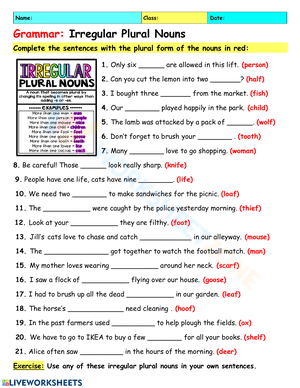
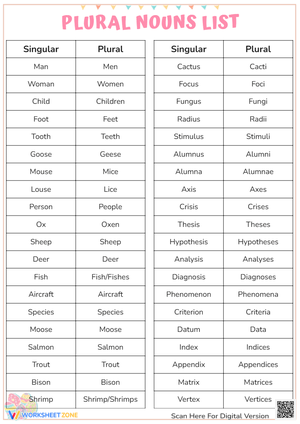
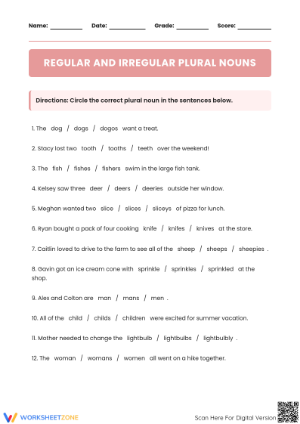
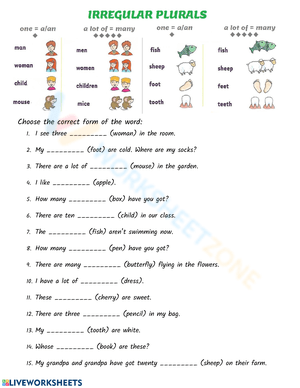
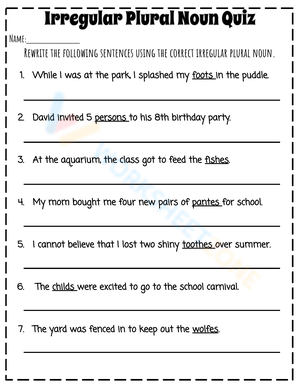
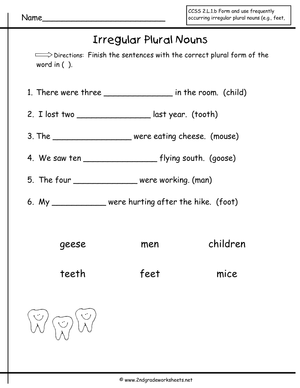
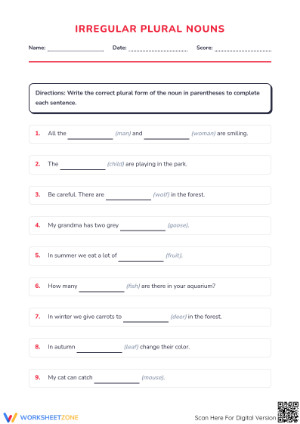
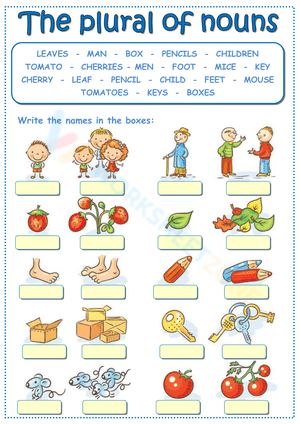
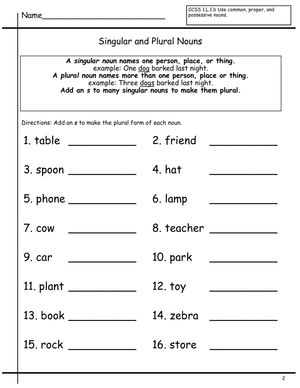
Plural noun instruction is not a single lesson; it is a three-year progression. CCSS.ELA-LITERACY.L.K.1.c introduces the concept orally, asking kindergartners to form regular plural nouns by adding -s or -es without yet worrying about spelling accuracy in writing. CCSS.ELA-LITERACY.L.1.1.c moves the skill into written application, requiring grade 1 students to use singular and plural nouns with matching verbs in basic sentences. CCSS.ELA-LITERACY.L.2.1.b then raises the bar again, asking grade 2 students to form and use frequently occurring irregular plural nouns such as feet, children, teeth, and mice.
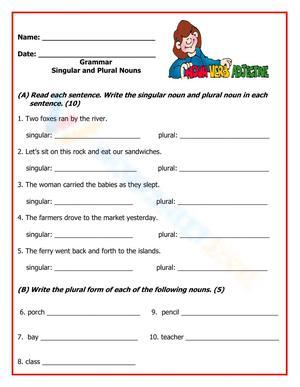
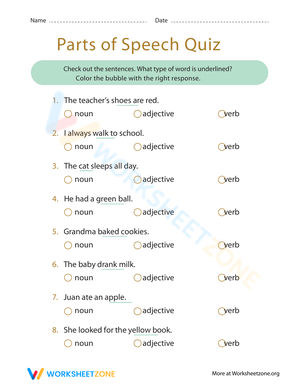
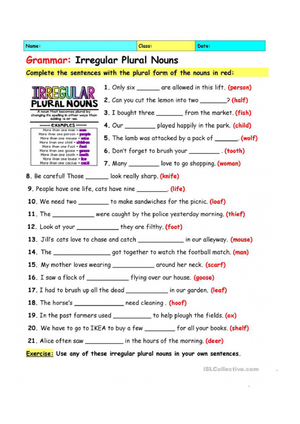
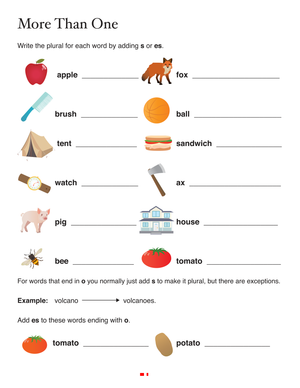
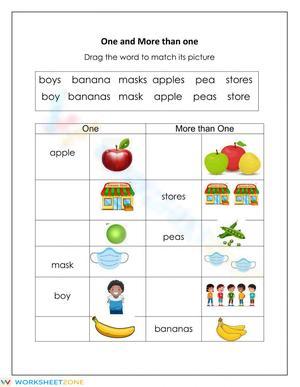
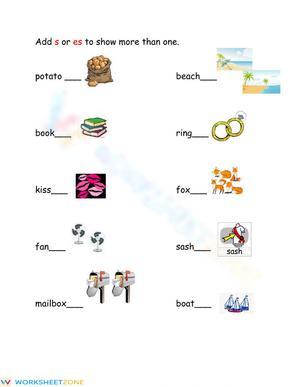
Worksheets that map to this progression let a teacher pick the right entry point for a given class or a given student. A kindergarten team might use picture-matching worksheets where students circle the plural form, while a grade 2 teacher leans on sentence-completion pages that isolate irregular nouns.
Pairing Plural Nouns With Subject-Verb Agreement
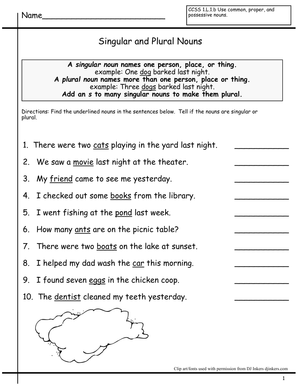
CCSS.ELA-LITERACY.L.1.1.c does not stop at plural formation; it also requires students to use singular and plural nouns with matching verbs in basic sentences. A worksheet that only asks students to pluralize a noun in isolation skips half of what the standard actually requires.
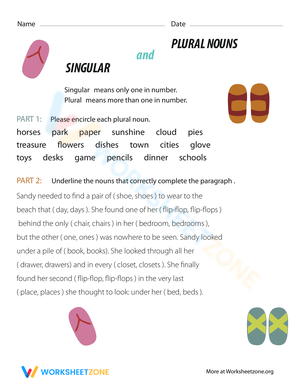
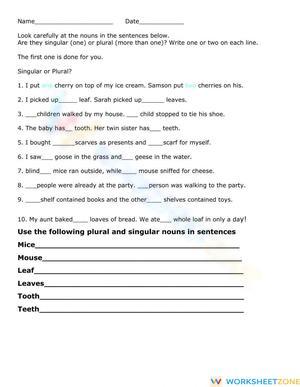
Once students can reliably form regular and irregular plurals, the next worksheet step is sentence-level practice: The dog runs versus The dogs run, or The child plays versus The children play. This pairing reinforces that plural nouns are not just a spelling exercise but a grammar choice that changes the rest of the sentence, which is exactly the connection grade 1 students are expected to make.
Classroom Implementation
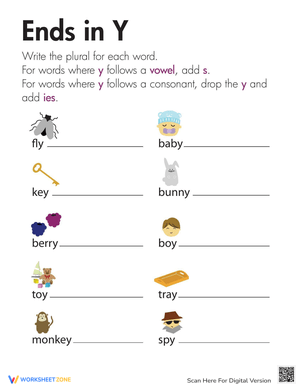
A practical weekly sequence for this skill might start with a whole-class sorting worksheet that separates regular -s, regular -es, and y-to-i words into three columns, giving every student a shared vocabulary for the three rule types. Midweek, small groups working below grade level can use an irregular-plurals-only worksheet while the rest of the class moves to sentence-level practice pairing plural nouns with matching verbs. By the end of the week, a short mixed worksheet combining both regular and irregular items serves as the formative check that tells the teacher who is ready to move on and who needs another targeted round.
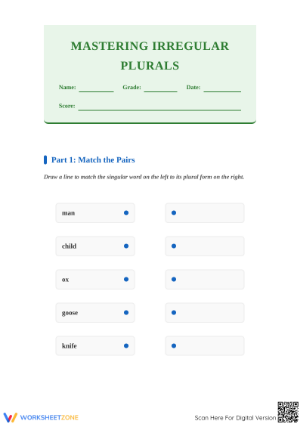
For reading intervention teachers working in pull-out or push-in groups, keeping a bank of irregular-only worksheets on hand is especially useful, since these groups often need repeated exposure to the same four or five irregular nouns across multiple sessions rather than a single worksheet delivered once.
Frequently Asked Questions
1. What grade level typically learns singular and plural nouns?
Kindergarten introduces the concept orally under CCSS.ELA-LITERACY.L.K.1.c, grade 1 students apply it in writing with matching verbs under CCSS.ELA-LITERACY.L.1.1.c, and grade 2 students extend it to irregular plural nouns under CCSS.ELA-LITERACY.L.2.1.b.
2. What is the difference between regular and irregular plural nouns worksheets?
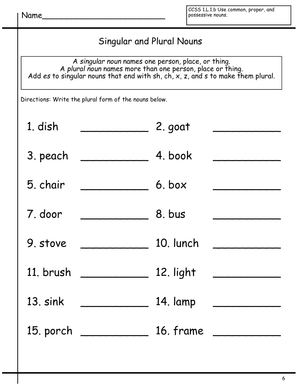
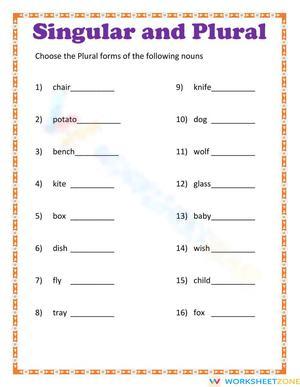
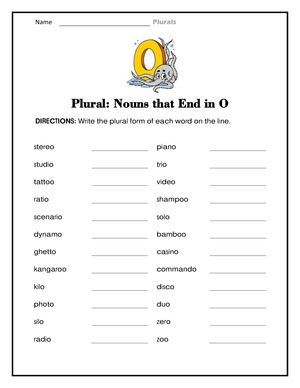
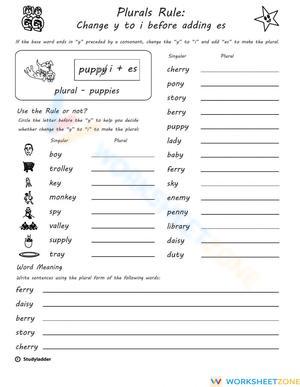
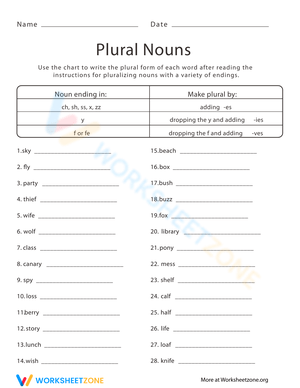
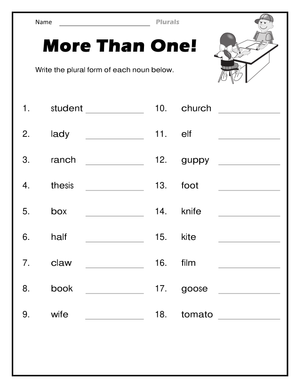
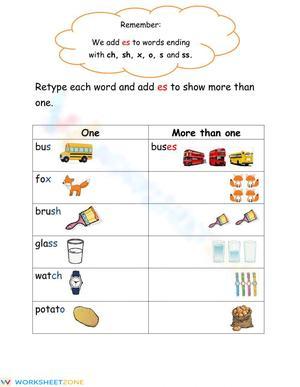
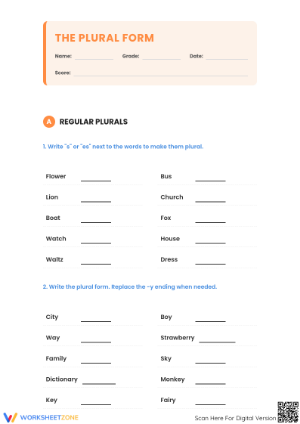
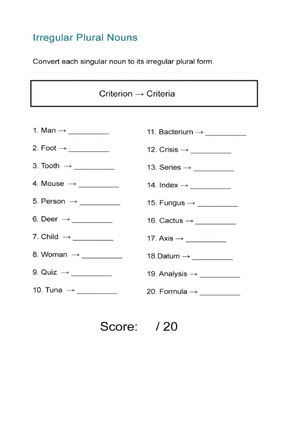
Regular plural worksheets practice predictable patterns such as adding -s, adding -es after s, x, z, ch, or sh, and changing y to i before -es. Irregular plural worksheets isolate nouns like child/children, mouse/mice, and foot/feet that do not follow any of these spelling rules and need to be memorized instead.
3. How can teachers use these worksheets for grammar intervention or review?
An irregular-only worksheet works well for diagnosing which specific irregular forms a student has not yet mastered, since mixing in regular -s words can mask that gap. A short mixed worksheet later in the week then serves as a formative check before moving to new content.
4. Which Common Core standards align with singular and plural noun practice?
CCSS.ELA-LITERACY.L.K.1.c covers oral formation of regular plurals, CCSS.ELA-LITERACY.L.1.1.c covers written use of singular and plural nouns with matching verbs, and CCSS.ELA-LITERACY.L.2.1.b covers frequently occurring irregular plural nouns.












 Interactive Worksheet Maker
 Quiz Maker
 Word Search Maker
 Crossword Puzzle Maker
 Word Scramble Generator
 Sentence Scramble Generator
 Handwriting Worksheet Generator
 Name Tracing Generator
 Fill In The Blank Generator