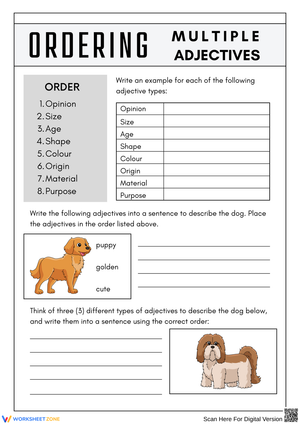
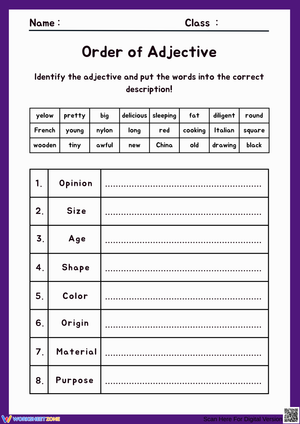
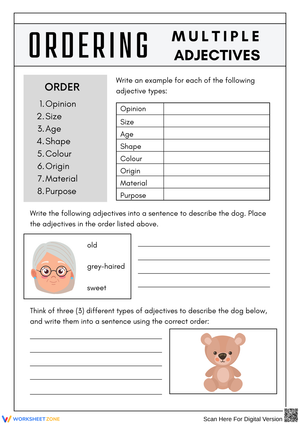
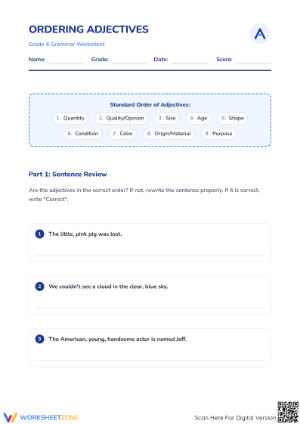
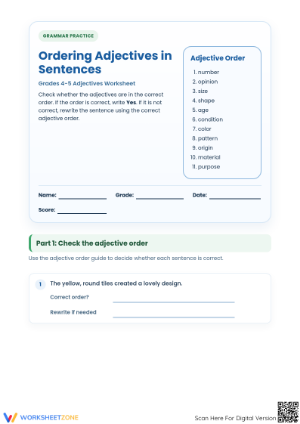
Fourth grade writing samples often reveal the same pattern: a student describes a bag as red small instead of a small red bag, and the sentence just sounds off before a teacher even marks it. That instinct gap is exactly what order of adjectives worksheets are built to close. These printable practice sets give teachers a structured way to target CCSS.ELA-LITERACY.L.4.1.d, which asks students to order adjectives within sentences according to conventional patterns, without turning grammar time into an abstract lecture.
Teaching the OSASCOMP Mnemonic
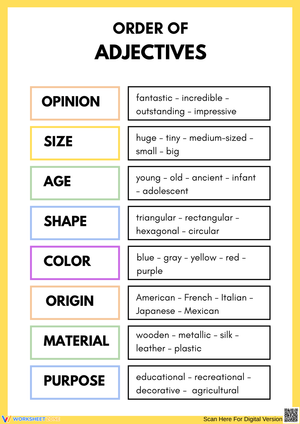
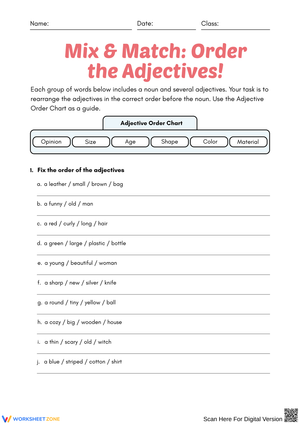
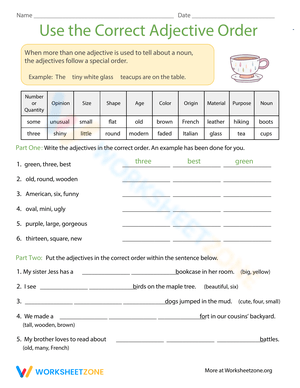
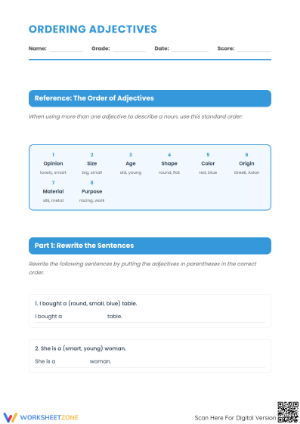
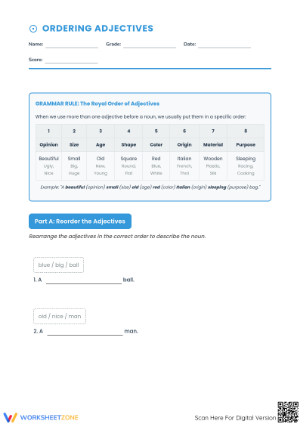
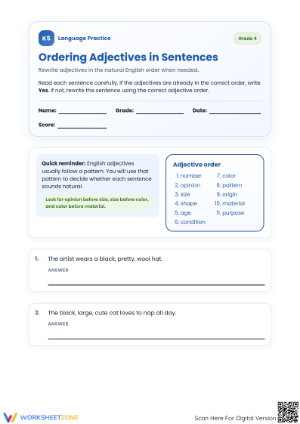
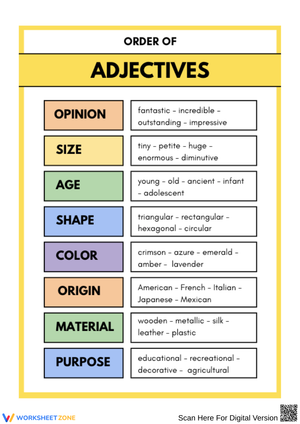
Many teachers introduce the acronym OSASCOMP, standing for Opinion, Size, Age, Shape, Color, Origin, Material, Purpose, as a memory anchor for the adjective sequence. Writing the letters across a poster or worksheet header gives students a quick reference point while they build or unscramble sentences. Students sorting the words wooden, old, and beautiful into a phrase would place beautiful first as an opinion word, old second as an age word, and wooden last as a material word, producing beautiful old wooden chair.
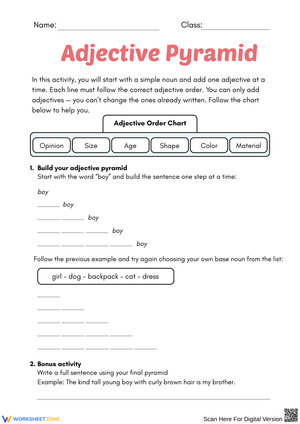
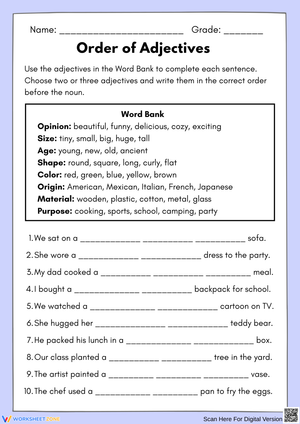
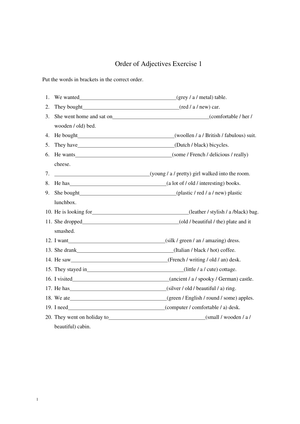
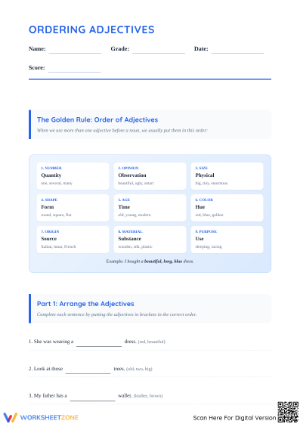
Practicing with concrete, classroom-relevant nouns such as backpacks, pencils, and lunch boxes keeps the exercise grounded rather than abstract. Worksheets that pair the mnemonic with sentence-building slots let students physically test different orders before settling on the conventional one, which reinforces the pattern better than simply reading a rule aloud.
Cumulative Adjectives Versus Coordinate Adjectives
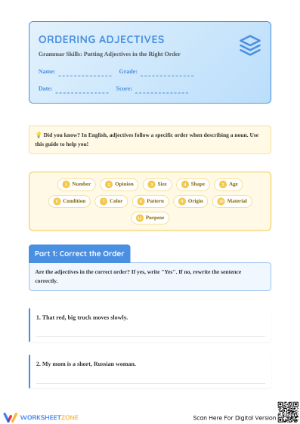
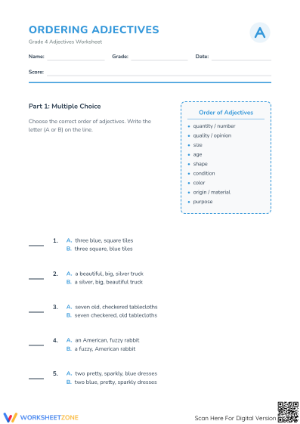
One common student mix-up involves comma placement. Cumulative adjectives, the kind covered by the conventional order pattern, are not separated by commas or the word and, as in a small red bag. Coordinate adjectives, by contrast, belong to the same category and can be joined with and or separated by a comma, as in a tired, hungry toddler. Worksheets that include both sentence types side by side help students notice the difference rather than assuming every adjective string needs a comma.
Supporting English Language Learners Explicitly
Native English speakers usually apply adjective order intuitively without ever being taught the rule, which means the pattern can feel invisible until a teacher names it directly. English language learners generally need explicit instruction because their intuition has not been shaped by years of ambient exposure to English word order. For these students, order of adjectives worksheets should slow down and isolate one category pair at a time, such as size and color only, before combining three or more categories in a single sentence.
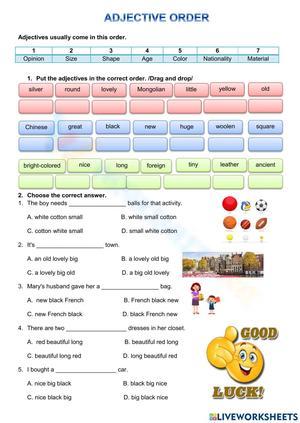
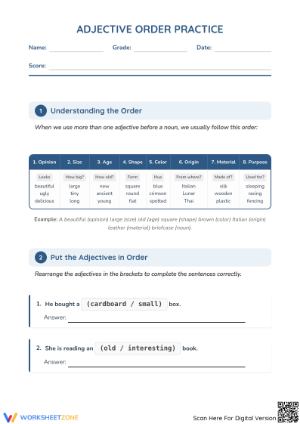
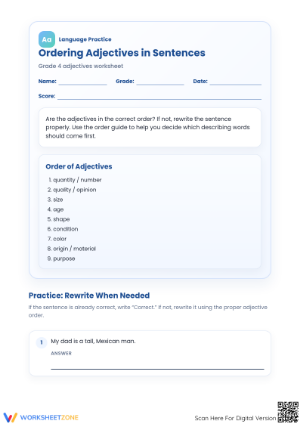
Visual scaffolds help here too. A worksheet that color-codes each adjective category, or that provides a numbered OSASCOMP chart directly on the page, gives English language learners a reference they can return to independently during independent practice.
Using Worksheets for Formative Assessment
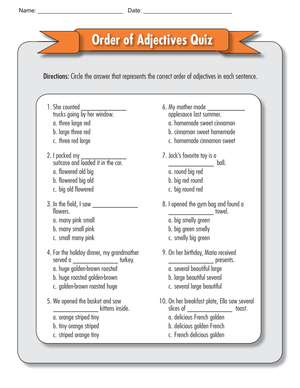
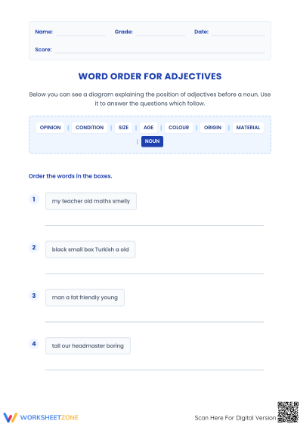
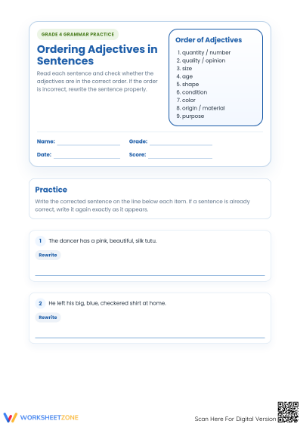
Because adjective order errors are easy to spot at a glance, a five-minute exit ticket built from two or three unscrambling sentences can function as a genuine formative check rather than busywork; a teacher scanning twenty exit tickets can typically sort students into reteach, practice, and enrichment groups within a few minutes, which is far faster than grading a full paragraph-length writing sample for the same skill.
Quick checks like this pair naturally with small-group rotations. Students who consistently misorder adjectives can join a short reteach group focused on OSASCOMP, while students who demonstrate mastery move to an enrichment worksheet that asks them to write original five-adjective descriptions of a chosen object.
Teacher Tips for Classroom Implementation
Anchor the rule visually. Keep an OSASCOMP chart posted near the writing area so students can self-check during independent writing, not just during grammar worksheets.
- Start each mini-lesson with one real sentence from a class read-aloud book, then ask students to identify the adjective categories used.
- Limit initial practice sentences to three adjectives before introducing four or five, since longer strings increase cognitive load quickly.
- Pair unscrambling worksheets with a short peer-share step so students hear the corrected sentence spoken aloud.
- Revisit adjective order during writing conferences, asking students to check their own descriptive sentences against the OSASCOMP order.
These small structural choices turn a single grammar worksheet into a repeatable routine that students recognize and can apply independently within a few weeks. The clearest sign the practice has worked is when students start applying the pattern in their own drafts without prompting, underlining places where they used two or more adjectives together and checking each instance against the OSASCOMP order during revision.
Frequently Asked Questions
1. What grade level typically learns the order of adjectives rule in US classrooms?
The order of adjectives standard is formally introduced under CCSS.ELA-LITERACY.L.4.1.d in fourth grade, though teachers often preview or reinforce the concept in third grade and continue reviewing it into fifth grade as students refine their descriptive writing.
2. What is the correct order of adjectives before a noun?
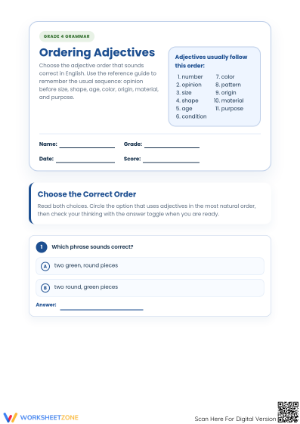
The conventional sequence is typically taught as determiner or quantity, opinion, size, age, shape, color, origin, material, purpose, then the noun, often remembered through the mnemonic OSASCOMP.
3. How can teachers help English language learners with adjective order specifically?
English language learners generally benefit from explicit instruction rather than relying on intuition, so isolating one or two adjective categories at a time and providing a visible OSASCOMP reference chart supports steady progress.
4. Do commas ever separate adjectives in the conventional order sequence?
No. Cumulative adjectives that follow the conventional order, such as a small red bag, are not separated by commas or and, while coordinate adjectives from the same category, such as tired and hungry, can be joined with and or a comma.
5. How should these worksheets be used in a small-group intervention or review station?
Short unscrambling or sentence-building worksheets work well as a five to ten minute station task, allowing a teacher to circulate, catch reordering errors in real time, and regroup students based on accuracy for a quick reteach or enrichment follow-up.












 Interactive Worksheet Maker
 Quiz Maker
 Word Search Maker
 Crossword Puzzle Maker
 Word Scramble Generator
 Sentence Scramble Generator
 Handwriting Worksheet Generator
 Name Tracing Generator
 Fill In The Blank Generator