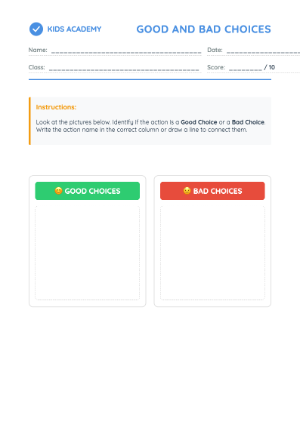
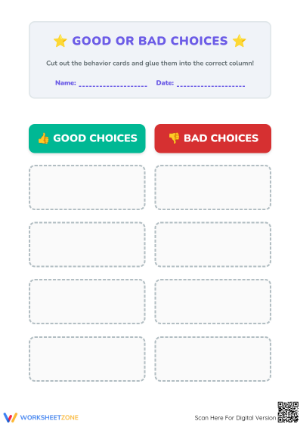
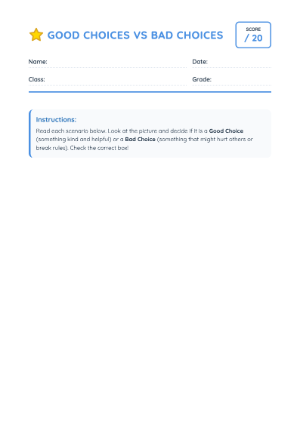
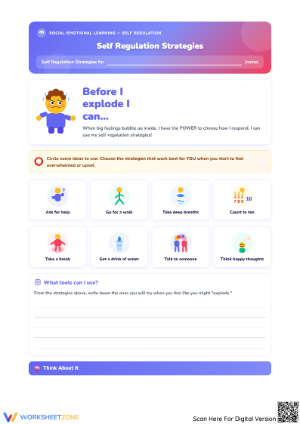
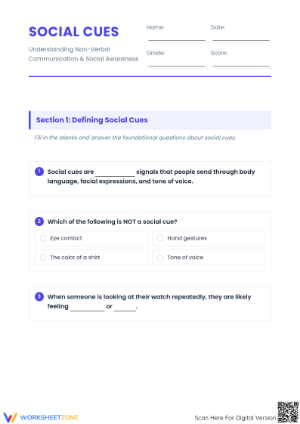
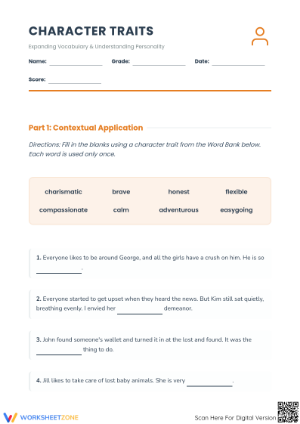
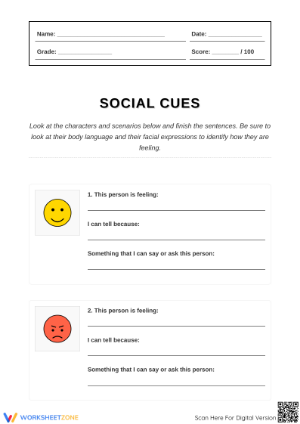
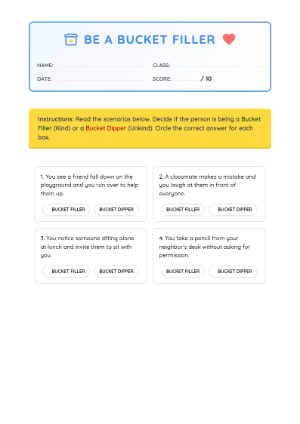
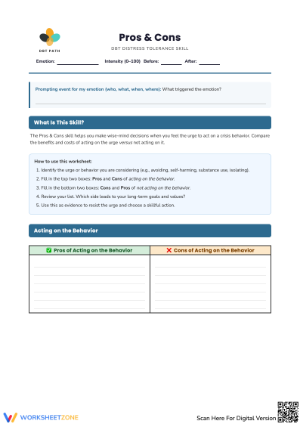
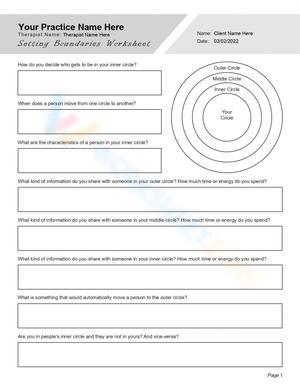
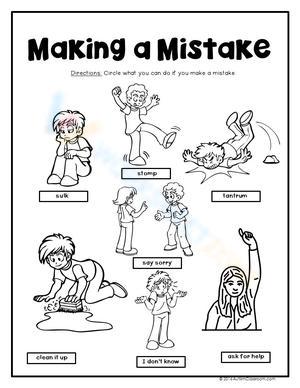
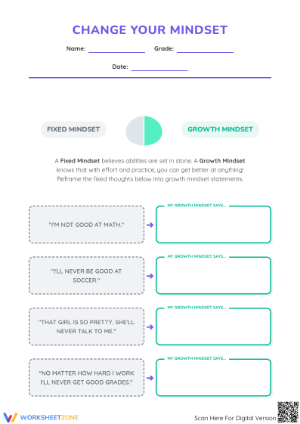
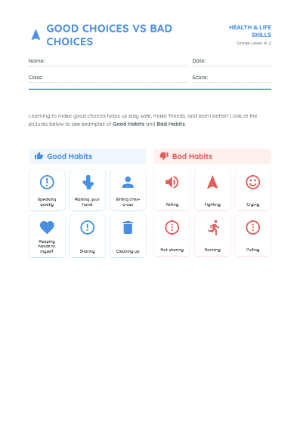
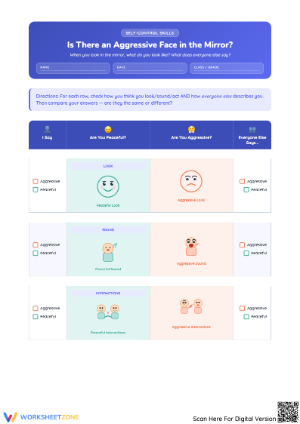
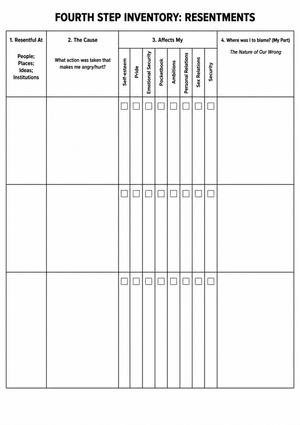
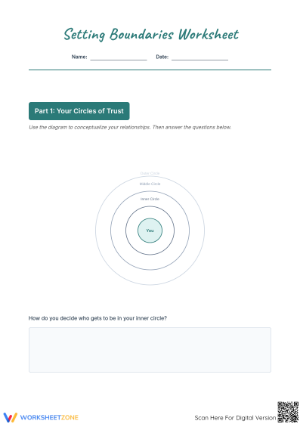
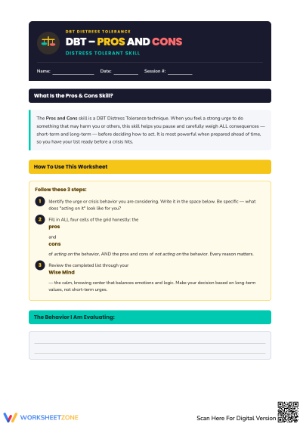
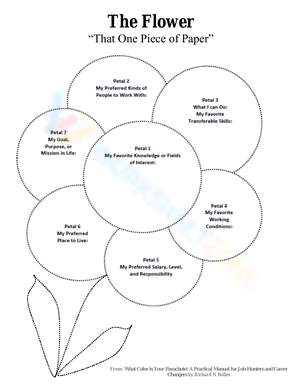
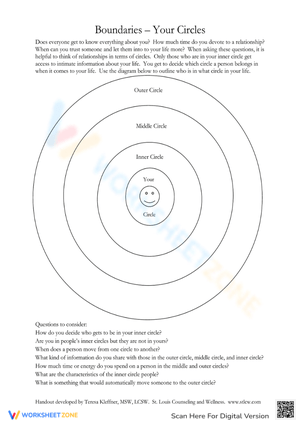
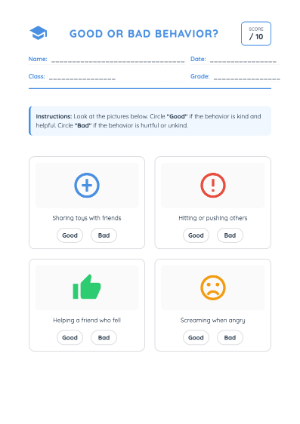
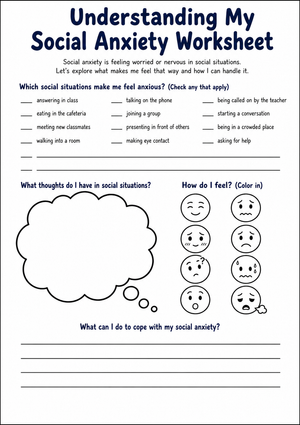
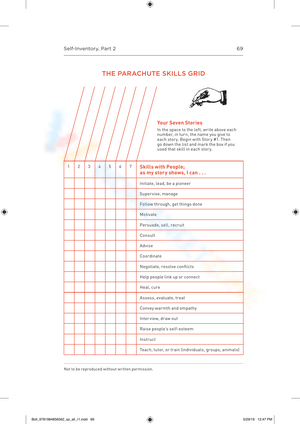
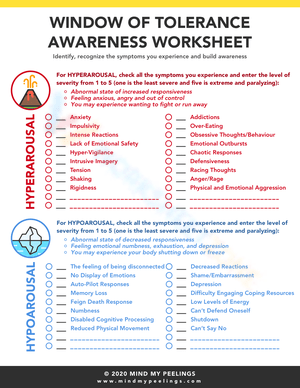
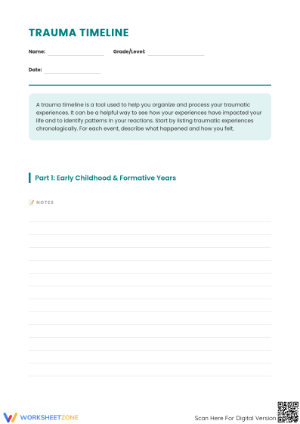
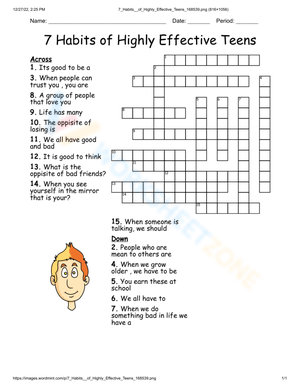
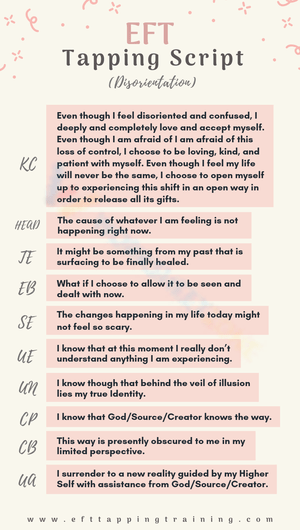
These college behavior worksheets pdf give instructors in freshman seminar, dual-enrollment, and college-readiness courses a printable way to address participation, attendance, and accountability without reducing the conversation to a list of punishable offenses. Each worksheet operates as a structured reflection rather than a disciplinary form — a distinction that matters considerably in how a 19-year-old receives the task.
What Each Worksheet Addresses
The strongest college behavior worksheets pdf resources isolate one behavior focus per sheet rather than bundling five concerns onto a single handout. Cognitive load research supports this directly — when students are asked to evaluate their attendance, their discussion habits, and their digital conduct all at once, responses become generic and the reflection loses its usefulness.
The set covers five behavior areas that surface consistently in post-secondary and transition settings:
- Attendance and punctuality
- Participation in whole-class and small-group work
- Academic honesty
- Digital conduct in class and online course environments
- Response to instructor and peer feedback
Within each worksheet, students work through a brief scenario, mark a rating scale, and write one specific action step. The feedback-response worksheet consistently produces the most candid student writing because it asks not just "did you act on the feedback?" but "if you didn't, explain why" — a follow-up that students have nowhere to hide from.
Student Resistance Patterns Worth Anticipating and Addressing
The most persistent obstacle is students reading these worksheets as punitive. Twelve years of behavior forms assigned as consequences create a strong associative reflex — even when the framing is developmental, the format alone triggers defensiveness. A thirty-second verbal setup before distributing ("This is a course habit check, not a write-up — I'm doing one too") reduces that response noticeably and changes the tone of the writing that follows.
Vague writing is the second consistent problem. Ask students what went wrong in a group project and "communication issues" covers roughly 90% of first responses. That answer is not false; it is simply unusable. Worksheets that include a second-level prompt — "Name one specific moment when the breakdown occurred and describe who said what" — push students past the surface layer into reflection that can actually drive a behavior change. When selecting or adapting a worksheet, the presence of a specificity-forcing follow-up question is the single feature most worth checking for.
A third pattern surfaces in attendance worksheets specifically: students with the most chronic absences are also the most likely to leave the attendance-impact question blank. Rather than collecting these forms cold, pair the worksheet with a brief one-on-one follow-up. The form gives the conversation a structure; the conversation gives the student a reason to complete it honestly.
How to Work These Worksheets Into Your Weekly Course Plan
The two most productive moments for these worksheets are the first week of the term and the period immediately following a group project. During the first week, a participation-norms worksheet doubles as a class-culture activity — students complete it individually, then the class builds a shared agreement from the collective responses. After a group project, a post-collaboration behavior reflection captures friction while it is still specific enough to be useful, and gives instructors documented language for the grade-justification conversation that frequently follows.
For counseling, advisory, and student-support settings, a single college behavior worksheets pdf used as a standing check-in tool — at weeks three, seven, and twelve of a term — creates a visible record across time. That documentation is more useful in a support meeting than a verbal summary of how things are going, because both parties can point to specific entries rather than impressions.
These worksheets also function as a reliable substitute-teacher contingency. A focused 15-minute reflection on digital conduct or peer communication gives a sub something purposeful to distribute, requires no prior course knowledge, and produces written responses the instructor can read and reference upon return.
Adapting These Worksheets for a Range of Student Contexts
For students in dual-enrollment programs — simultaneously navigating high school social dynamics and college expectations — the worksheets benefit from a one-sentence orientation frame at the top: not a re-explanation of the rules, but a description of what professional participation actually looks like in a post-secondary classroom. Students who have never sat in a college course need that reference point before they can meaningfully evaluate themselves against it.
For students with documented support needs, adding a required written explanation field below each rating-scale item shifts the task from circling numbers into genuine self-monitoring practice — and produces richer documentation without a full redesign of the form. A student who marks "3 out of 5" on participation and then writes "I wanted to respond to Marcus's point but second-guessed my answer" has given you something concrete to work with in a follow-up conversation. At the other end, students who are already functioning well behaviorally can complete the same worksheet from the perspective of a struggling peer and write two sentences of advice. That reframe shifts the task from self-report to perspective-taking, which is a more demanding exercise for students who have already internalized the underlying habits.
Standard Alignment
These worksheets connect directly to CASEL's five core social-emotional competencies — self-awareness, self-management, social awareness, relationship skills, and responsible decision-making — with the heaviest instructional weight on self-management and responsible decision-making. In classroom terms, that means the worksheets address goal-setting, reflection on impulse and behavioral response, and personal accountability, which CASEL maps explicitly across the high school and post-secondary transition bands. For teachers in dual-enrollment or freshman seminar settings who need a literacy-adjacent standards rationale, CCSS SL.11-12.1 describes the collaborative discussion behaviors — preparation, response to evidence, and building on others' contributions — that the participation worksheets reinforce directly. That alignment gives instructors a defensible rationale when documenting the academic purpose of a behavior reflection activity for administrators or program coordinators.
Frequently Asked Questions
Are these worksheets only for students who are already having behavioral problems?
No. These work best as a routine feature for all students, framed as professional development practice rather than correction. Students with strong habits still benefit from articulating those habits in writing, particularly when preparing for group work, presentations, or internship settings where self-awareness and communication matter beyond the classroom.
How much class time does a behavior reflection take?
The written portion takes ten to twelve minutes. Adding a brief two-minute partner share brings the total to around fifteen. Anything longer starts to feel out of proportion to the rest of the course and quietly erodes student buy-in over repeated uses.
Can a printable reflection replace a formal behavior intervention plan?
A college behavior worksheets pdf supports a formal plan well as the documentation and reflection component — it gives students a structured way to track patterns and articulate next steps, which is useful in student support meetings. It does not replace a plan developed with counseling or disability services for students whose behavior is rooted in documented needs. The worksheet is one tool within a broader institutional response, not the response itself.
Should these worksheets be graded?
Completion credit outperforms quality grading for behavior reflection tasks. When students believe a response will be evaluated for correctness, they write what they assume the instructor wants to read. A simple "completed / not completed" mark, paired with a brief written or verbal response from the teacher, consistently produces more honest writing and more useful follow-up conversations.