


























Views
Downloads

Mother's Day Questionnaire | Grade 3 Printable Worksheet
Paste this activity's link or code into your existing LMS (Google Classroom, Canvas, Teams, Schoology, Moodle, etc.).
Students can open and work on the activity right away, with no student login required.
You'll still be able to track student progress and results from your teacher account.
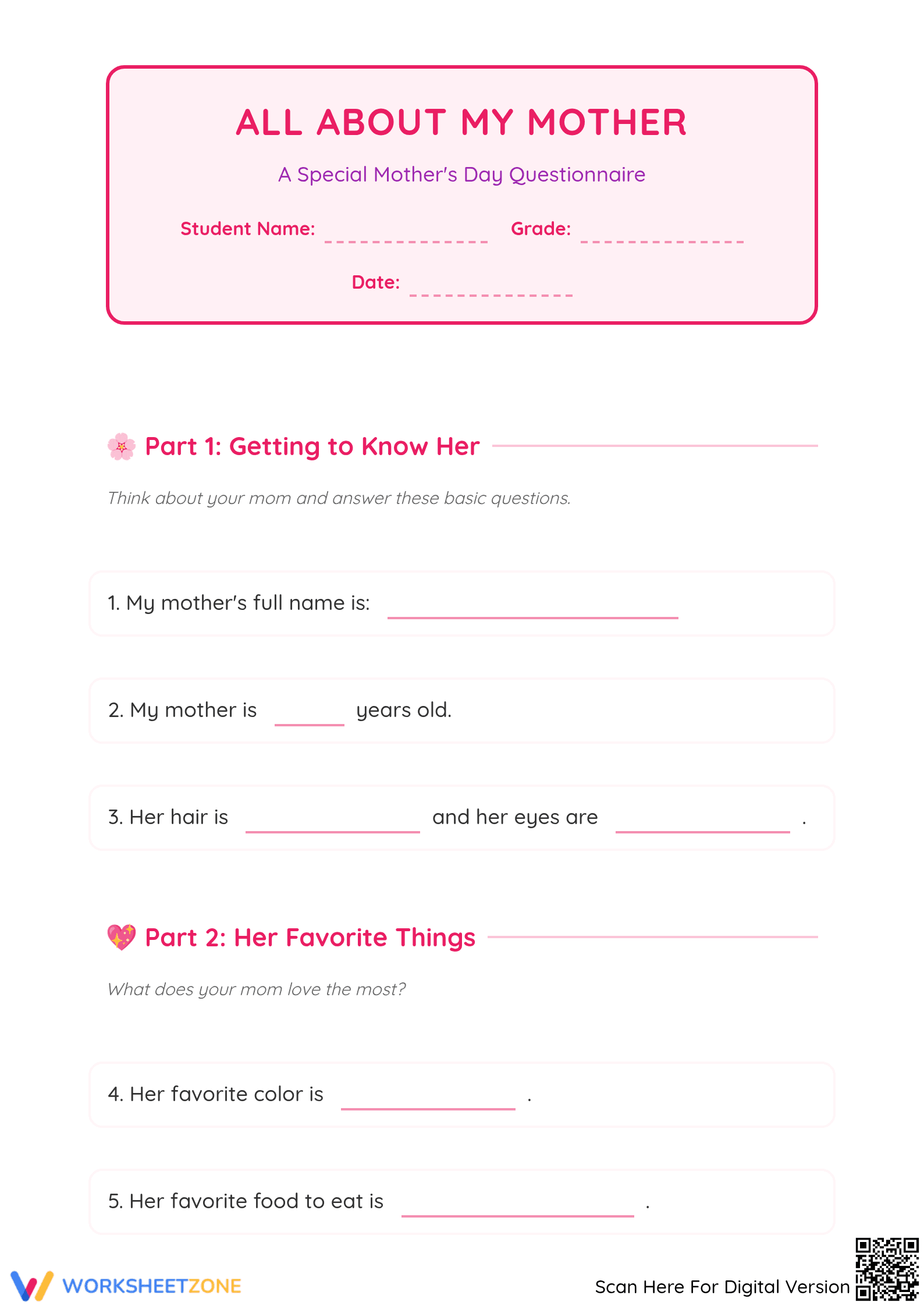
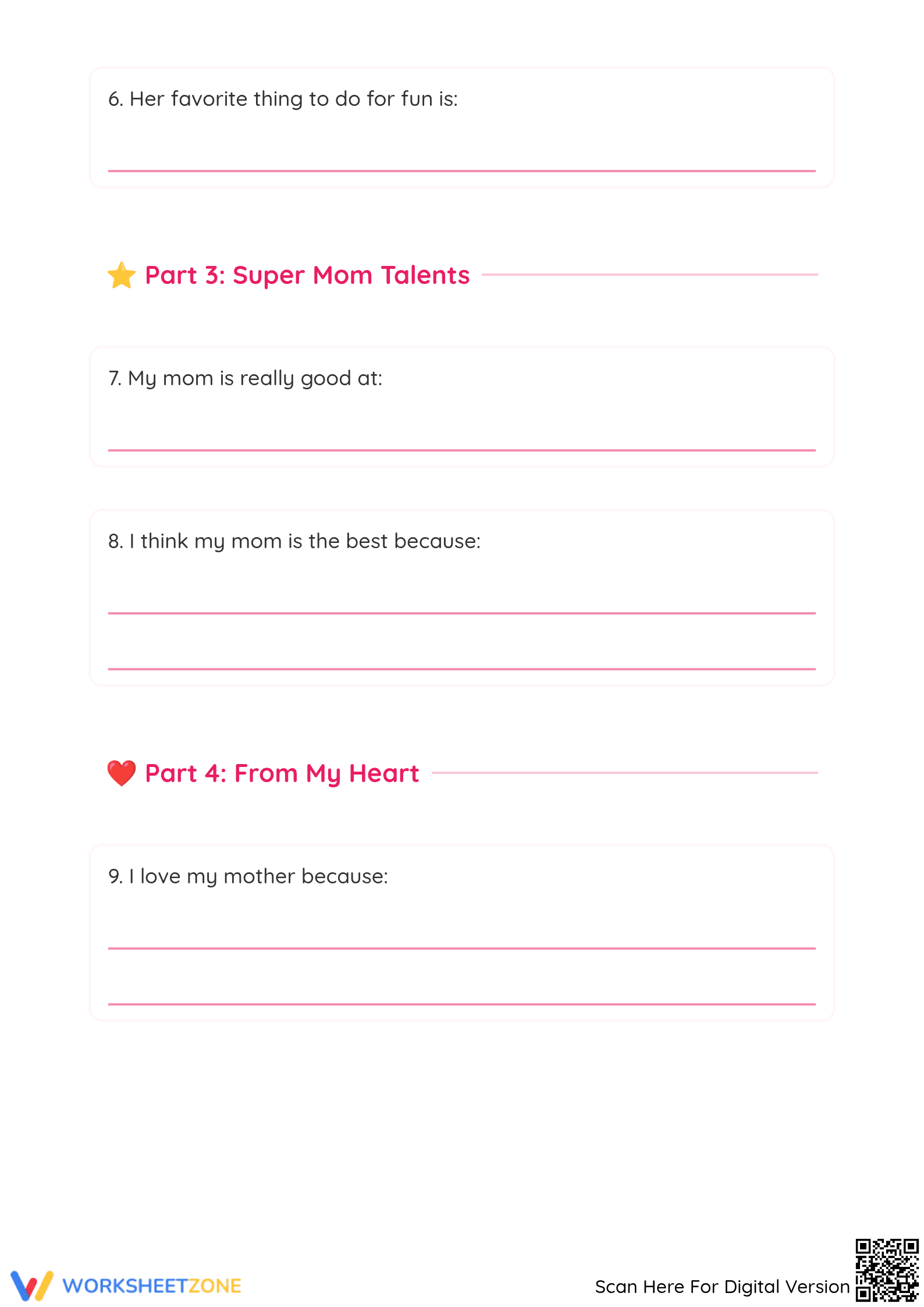
This Grade 3 Mother's Day writing worksheet provides a structured framework for students to express gratitude while practicing descriptive language. By completing 10 specific prompts, learners develop their ability to recall details and articulate personal opinions. This activity serves as both a meaningful holiday keepsake and a functional literacy exercise for elementary classrooms.
At a Glance
- Grade: 3 · Subject: English Language Arts
- Standard:
CCSS.ELA-LITERACY.W.3.10— Write routinely for a range of tasks, purposes, and audiences- Skill Focus: Descriptive writing and personal reflection
- Format: 3 pages · 10 problems · Answer key N/A · PDF
- Best For: Seasonal morning work or holiday gifts
- Time: 20–30 minutes
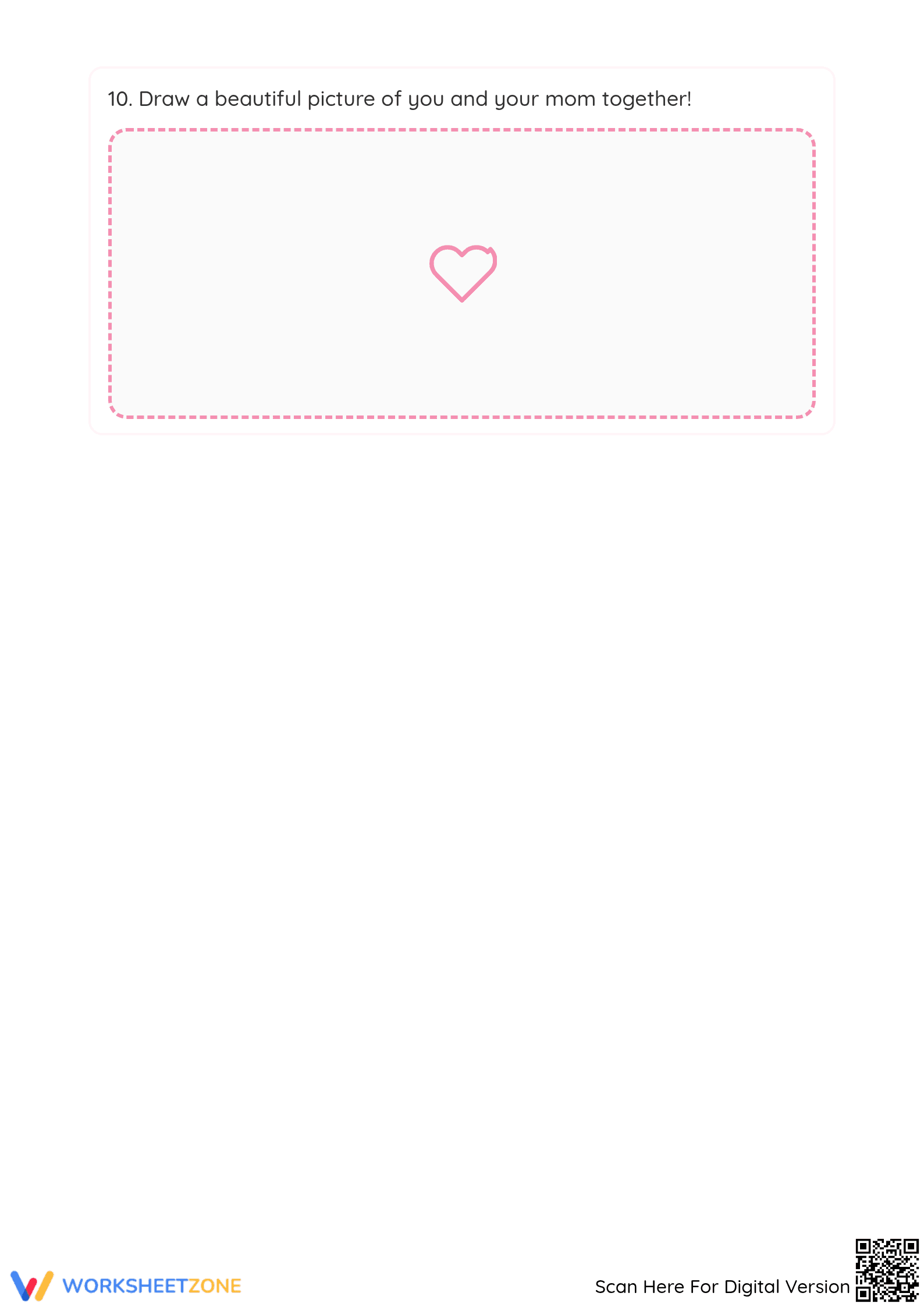
The resource consists of a three-page PDF document organized into four distinct thematic sections. Part 1 focuses on biographical facts, Part 2 explores preferences, Part 3 highlights specific talents, and Part 4 encourages heartfelt reflection. The final page features a dedicated creative space for a hand-drawn illustration, allowing students to combine visual arts with their written responses.
Zero-Prep Workflow
- Print: Select the three-page PDF and print enough copies for your roster (30 seconds).
- Distribute: Hand out the packets during a morning meeting or dedicated writing block (1 minute).
- Review: Scan completed questionnaires for sentence structure and descriptive adjective usage (5 minutes).
Total teacher preparation time is under two minutes, making this an ideal solution for busy holiday weeks or unexpected substitute teacher plans.
Standards Alignment
This worksheet aligns with CCSS.ELA-LITERACY.W.3.10, which requires students to write routinely over shorter time frames for specific tasks and purposes. By engaging with these prompts, students practice the habit of writing to communicate personal meaning. Additionally, it supports CCSS.ELA-LITERACY.L.3.1 by requiring the use of nouns, pronouns, and adjectives in a real-world context. Both standard codes can be copied directly into lesson plans, IEP goals, or district curriculum mapping tools.
How to Use It
Assign this worksheet during the first 20 minutes of the school day as a calm, focused morning work activity. It also functions effectively as a pre-writing brainstorm for a longer Mother's Day essay or card. As a formative assessment, observe if students can provide specific details versus generic responses, which indicates their level of descriptive proficiency. Expected completion time ranges from 20 to 30 minutes depending on the detail of the drawing.
Who It's For
This resource is tailored for Grade 2 and Grade 3 students but can be adapted for Grade 1 with additional scribing support. It is particularly useful for general education classrooms looking for inclusive holiday activities. Pair this worksheet with a mentor text about family or a descriptive writing anchor chart to reinforce the use of sensory details and vivid adjectives.
According to research by Fisher & Frey (2014), routine writing tasks that connect to a student's personal life significantly increase engagement and fluency. This Mother's Day questionnaire leverages that connection, using the familiar topic of a parent to scaffold the writing process. By meeting the requirements of CCSS.ELA-LITERACY.W.3.10, the worksheet ensures that students are practicing the essential habit of writing for a specific audience—in this case, a family member. The structured nature of the 10 prompts prevents the cognitive overload often associated with blank-page writing assignments, allowing students to focus on word choice and sentence construction. This approach aligns with evidence-based practices for elementary literacy development, providing a clear purpose for writing that results in a tangible product. Educators can use these responses to gauge a student's ability to move from concrete facts to abstract expressions of emotion and gratitude.


