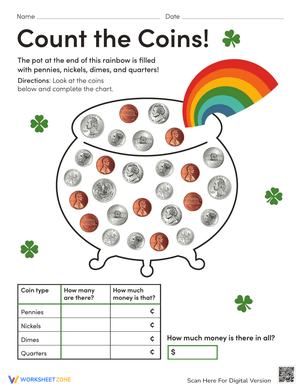
These st patrick's day printable worksheets resources give K–5 teachers a full week of academically grounded practice built around March's most anticipated classroom celebration. The set spans counting and graphing, phonics and vocabulary, procedural writing, and fine motor work — tight enough to drop into existing routines, varied enough to carry every subject block in the school day.
The Specific Skills Targeted
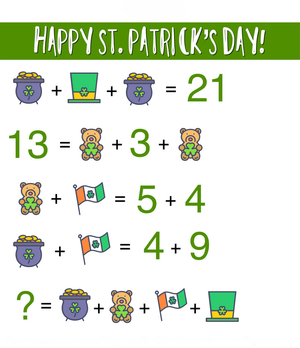
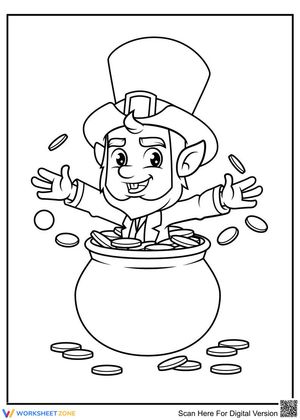
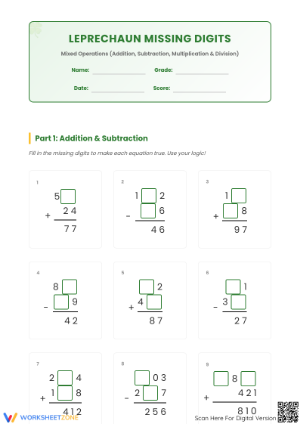
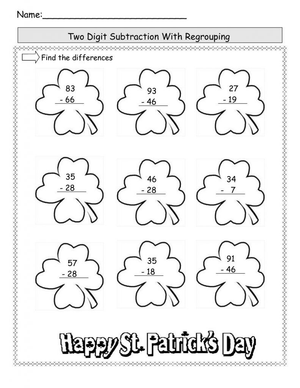
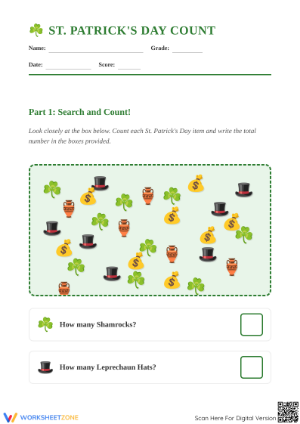
Math coverage moves deliberately across grade-level bands. Kindergartners count gold coins arranged in irregular clusters inside a leprechaun's pot — the irregular arrangement is intentional, pressing students past rote row-counting toward genuine one-to-one correspondence. First and second graders solve addition and subtraction problems embedded in rainbow and clover visuals. Upper elementary students work through a two-step graphing task: they first record data on a tally chart, then transfer those totals to a blank bar graph with axes they must label themselves. That transfer step is where the most useful errors appear, and catching them on paper is faster than catching them mid-unit test.
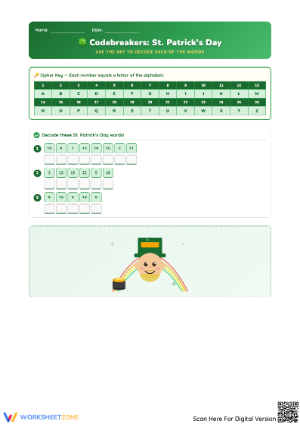
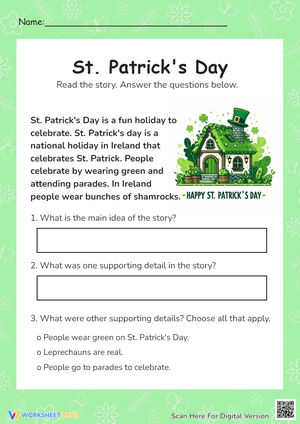
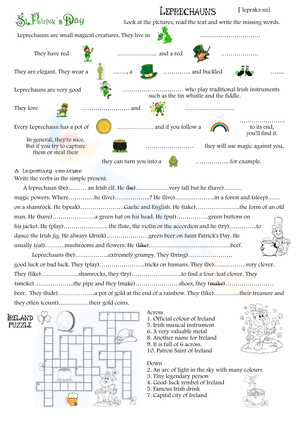
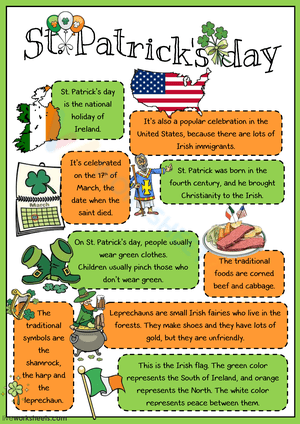
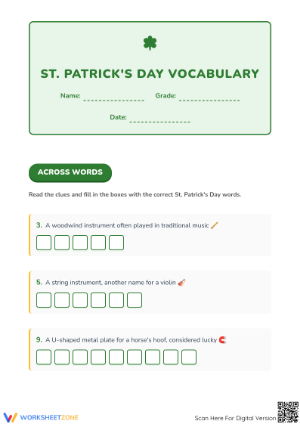
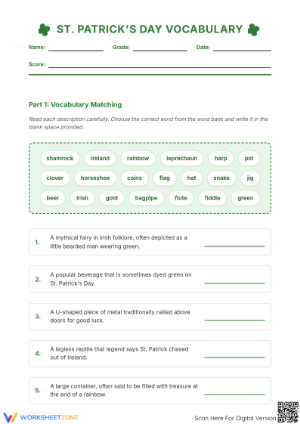
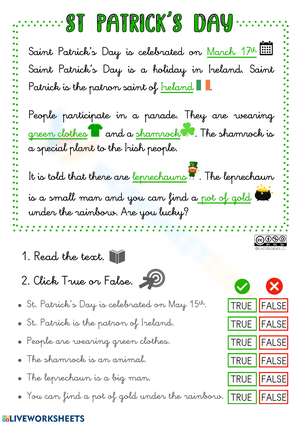
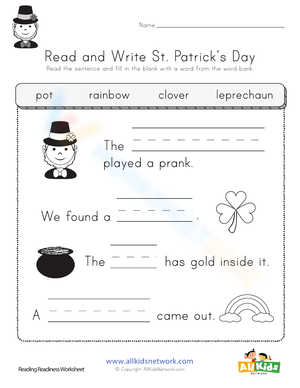
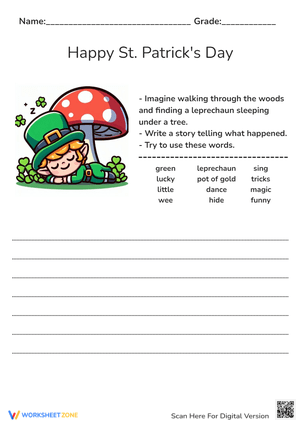
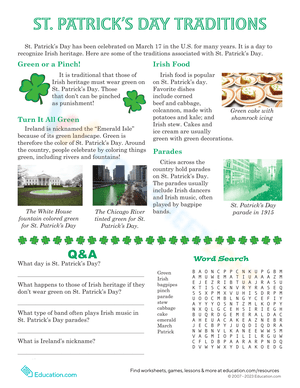
Literacy worksheets in this st patrick's day printable worksheets set address phonics targets that are typically mid-sequence for K–2 by March. The sh digraph in shamrock, the gr blend in green, and the tr blend in tradition let teachers reinforce blends already introduced without reaching for a separate resource. Vocabulary work moves beyond letter-searches: students read a short passage on Irish folklore, underline unfamiliar words, and sort them by part of speech. The creative writing worksheet uses a procedural format — "How to Catch a Leprechaun" — which requires numbered steps and sequence connectors, making it useful for any teacher mid-unit on informational or procedural writing.
Frequent Student Errors Worth Watching For
On the graphing worksheet, students who tally accurately will still leave axis labels blank. This isn't a conceptual gap — they know what a label is — but the labeling step isn't yet automatic for most second graders in March. In a whole-class math period, blank labels disappear into the noise. When you collect these after a center rotation and scan the stack, you'll find the pattern in about thirty seconds. That's formative data that changes what you teach the next morning.
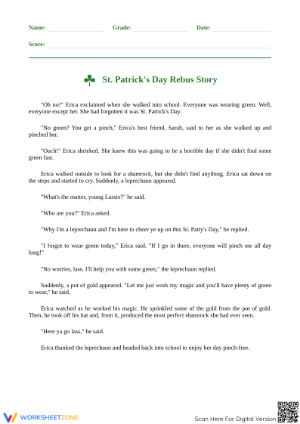
The procedural writing prompt surfaces a different and equally consistent error: sequence logic breaks. Students write four steps that, read in order, describe a process that couldn't actually work — Step 2 depends on a tool that doesn't appear until Step 3. The content is creative and enthusiastic; the logical structure underneath hasn't caught up. One revision cycle with a student example on the document camera is usually enough for the class to internalize what "each step depends on the previous one" means in practice.
In the counting worksheets, younger students reliably lose count when coins are clustered rather than lined up. That's not an error to address with a simpler version of the task — it's the precise moment that leads to teaching students to circle objects as they count. The worksheet creates the context; the teaching move is yours.
How to Build These Worksheets Into Your Lesson Plans
The most efficient structure is one worksheet per morning the week of March 17th. Students settle faster when something is already on the desk, and a familiar, low-stakes task during morning arrival reduces the transition drag that eats into your first lesson. By Wednesday, the creative writing worksheet is no longer intimidating — students have had two days of math and phonics work that built the routine and the holiday vocabulary they'll draw on.
A center rotation works cleanly if you already run literacy and math stations. Assign the math worksheet to the independent practice station, the vocabulary annotation worksheet to the word-work station, and the writing prompt to a partner station where students read their steps aloud to a classmate and flag logic gaps before writing the final version. Each st patrick's day printable worksheets in the rotation takes roughly twelve to fifteen minutes, fitting a standard center block without rushing and freeing you to pull small groups during that same window.
Adapting the Set for Mixed-Ability Classrooms
For students still building number sense, pair the counting worksheet with a ten-frame. The irregular coin clusters on the worksheet are a productive challenge once students have an organizing structure to anchor to — without it, the irregular layout produces counting errors that don't teach anything. For the graphing worksheet, pre-fill one axis label so students construct the second label rather than generating both from nothing. That single adjustment shifts the task from frustrating to manageable for students who understand the math but freeze at open-ended production.
Students working above grade level can extend the writing prompt without any additional printing. Ask them to add a closing argument explaining why their leprechaun trap outperforms a classmate's design — comparative reasoning that folds argument writing into the task naturally. On the math side, ask them to write an original word problem using the data from their completed bar graph. Both extensions take three minutes to assign verbally and produce genuine writing and reasoning practice.
Standard Alignment
The counting worksheets address K.CC.B.4 and K.CC.B.5, the kindergarten standards for understanding the relationship between numbers and quantities and counting to answer "how many?" with up to twenty arranged or scattered objects. The bar graph construction worksheet targets 2.MD.D.10, which asks second graders to draw picture graphs and bar graphs and use them to solve simple put-together, take-apart, and compare problems. This standard appears consistently on state assessments in second grade, making the worksheet a low-stakes preview of the question format students encounter in spring testing.
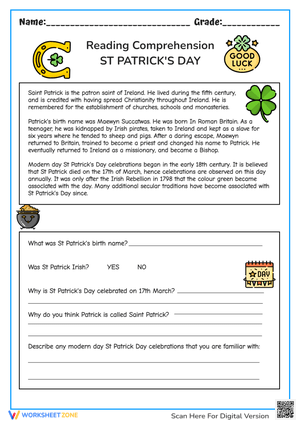
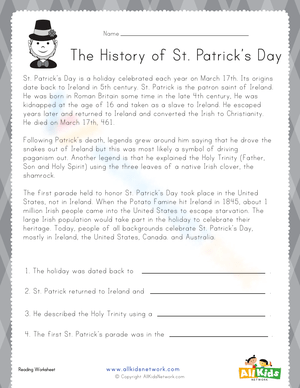
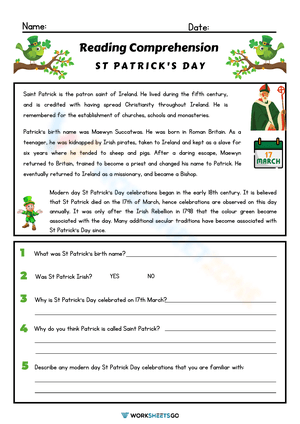
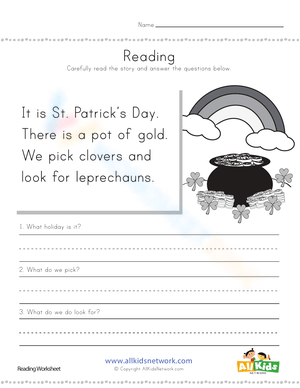
On the ELA side, the procedural writing prompt aligns with W.2.3 and W.3.3 for sequence and event structure. The vocabulary annotation activity supports L.4.4, and the reading comprehension passage addresses RI.3.1 and RI.4.1 — asking students to cite textual evidence for both explicit statements and inferences. Teachers tracking standards mastery across the year find these worksheets a natural mid-spring checkpoint for skills that need reinforcement before end-of-year assessments.
Frequently Asked Questions
What grade range does the set cover?
Most math worksheets target kindergarten through second grade, while the graphing, vocabulary annotation, and writing worksheets are appropriate for second through fifth grade. The procedural writing prompt has been used in grades 2–6 with minimal adjustment — a number of sixth-grade teachers use it as a sequence-logic exercise before beginning formal argumentative writing.
Which worksheets hold up to lamination and dry-erase use?
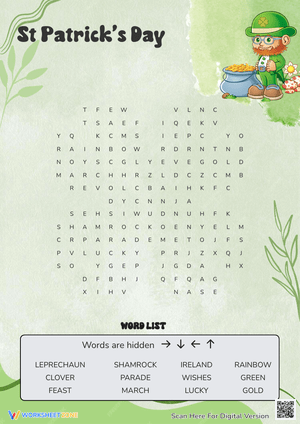
The maze, the counting worksheet, and the bar graph template all work well laminated and completed with dry-erase markers. Those three cycle through multiple class periods and hold up across years. The writing prompt and vocabulary annotation worksheets are better as single-use consumables because students annotate in the margins and write on blank lines that need to stay clean for each use.
How do these worksheets fit in a classroom that limits holiday content?
The academic content — counting, graphing, procedural writing, phonics — functions independently of the holiday framing. The holiday imagery appears in the illustrations, not in the instructions. Teachers in schools that restrict explicit holiday programming routinely introduce these as spring math or March writing practice, and the tasks work exactly the same way. The st patrick's day printable worksheets label describes the visual theme of the artwork, not a religious or cultural obligation attached to the lesson.
Can I use these worksheets as portfolio evidence of student learning?
The graphing and writing worksheets are the strongest candidates for documentation. The graphing worksheet shows whether students can transfer tally data into a labeled visual representation — a specific, observable skill. The writing prompt shows procedural development over time when you keep one from each month; a March sample filed alongside February and April samples gives a concrete picture of growth in sequencing and sentence-level mechanics without requiring a separate formal assessment.












 Interactive Worksheet Maker
 Quiz Maker
 Word Search Maker
 Crossword Puzzle Maker
 Word Scramble Generator
 Sentence Scramble Generator
 Handwriting Worksheet Generator
 Name Tracing Generator
 Fill In The Blank Generator