




























Views
Downloads
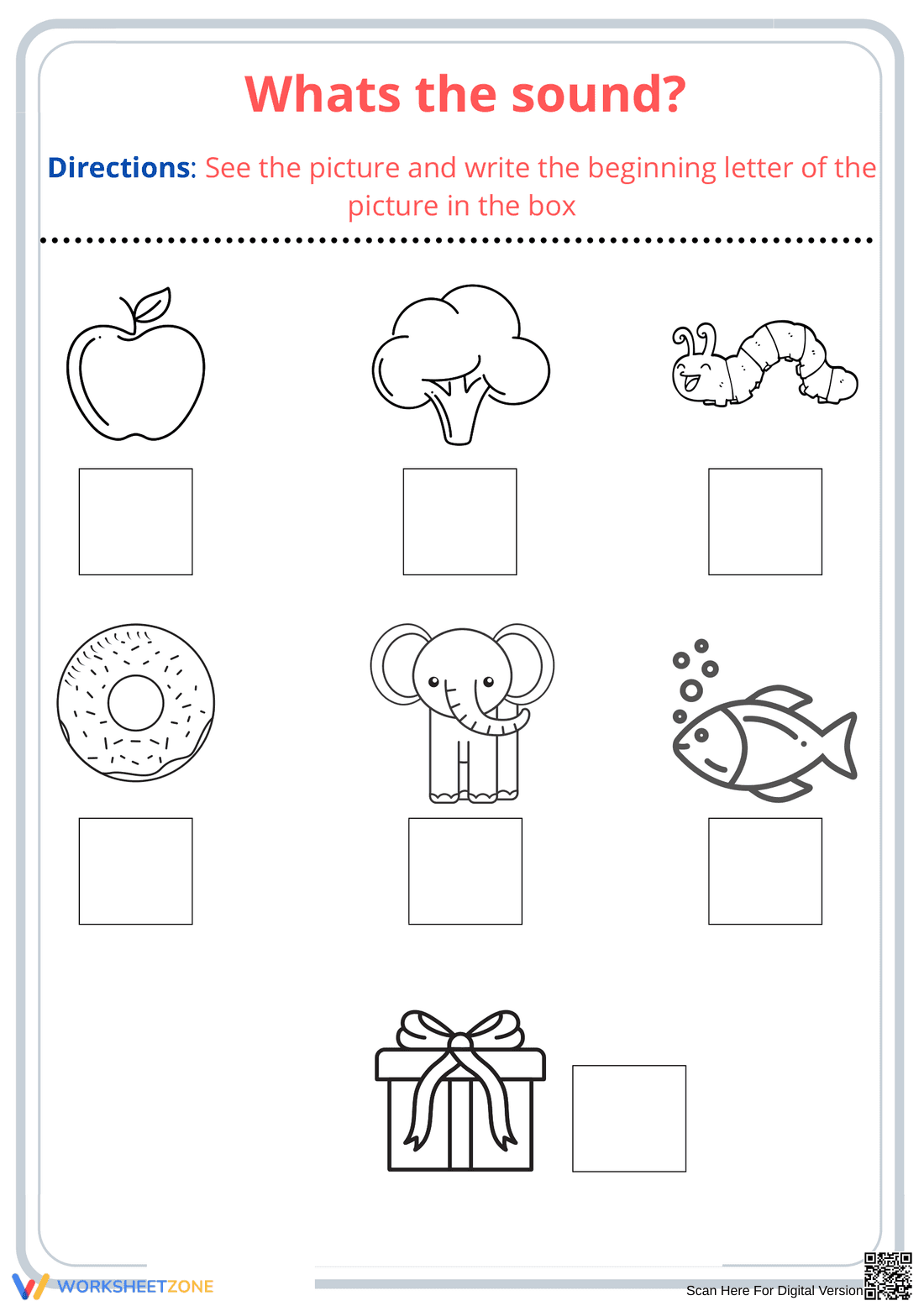
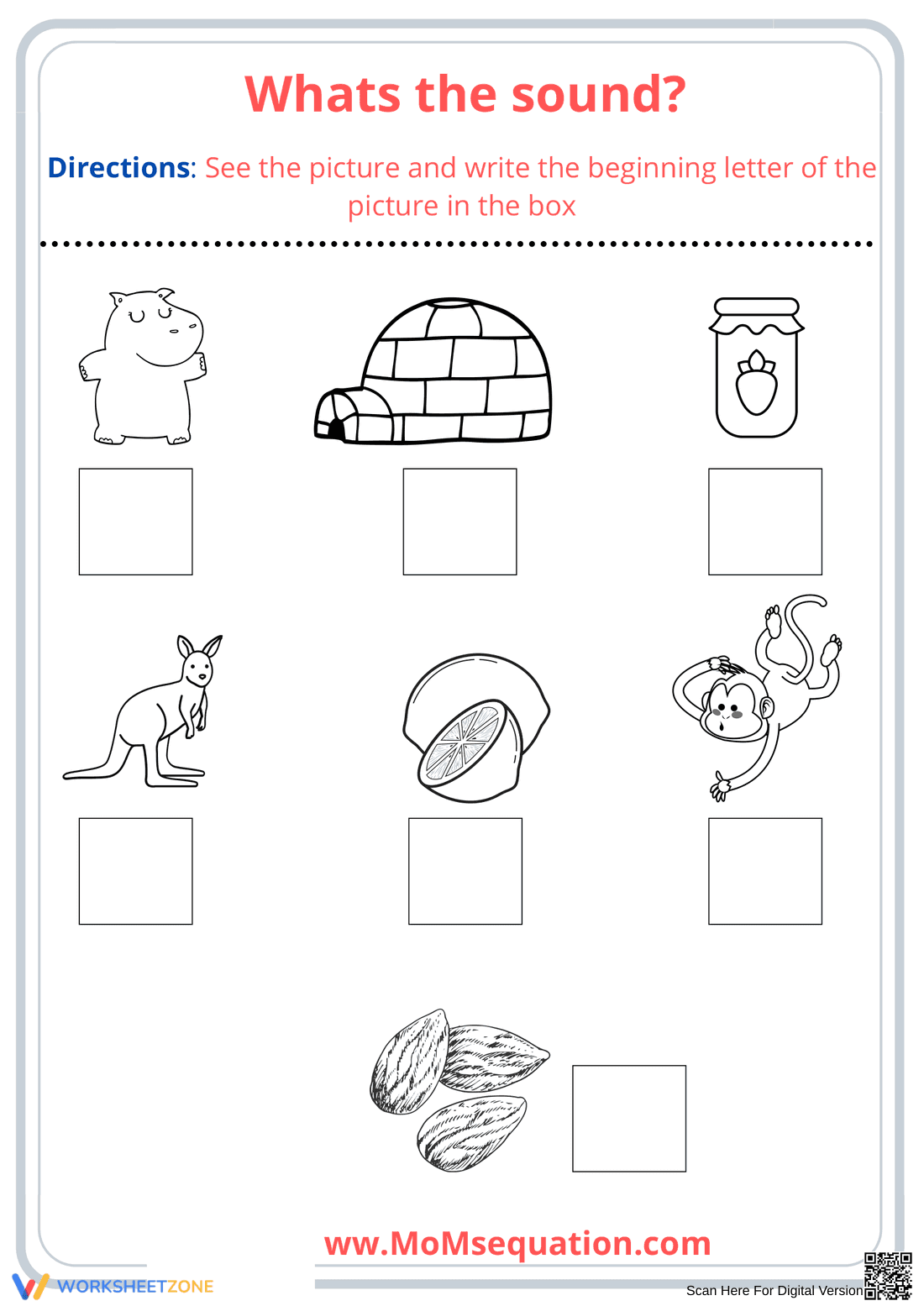
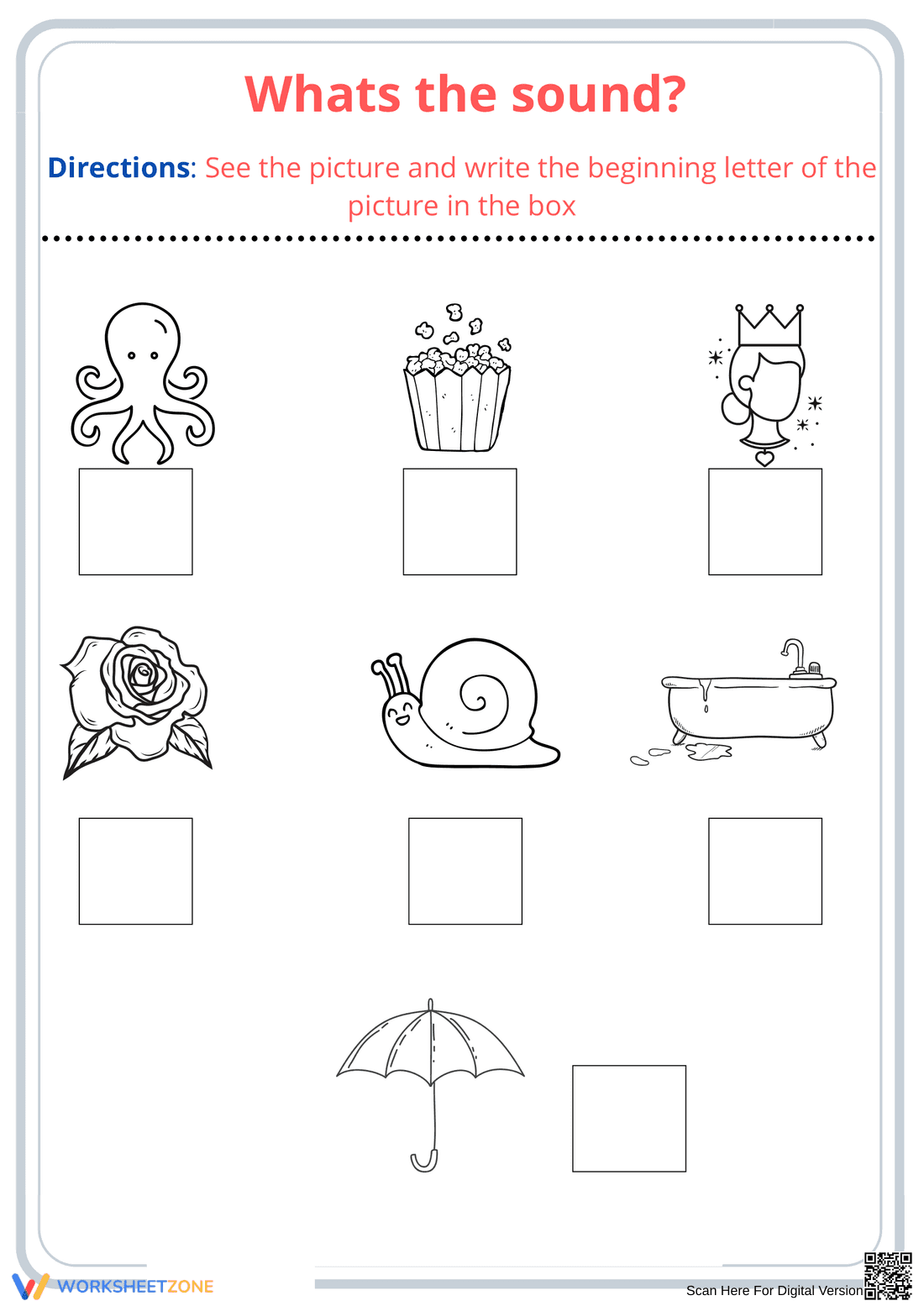
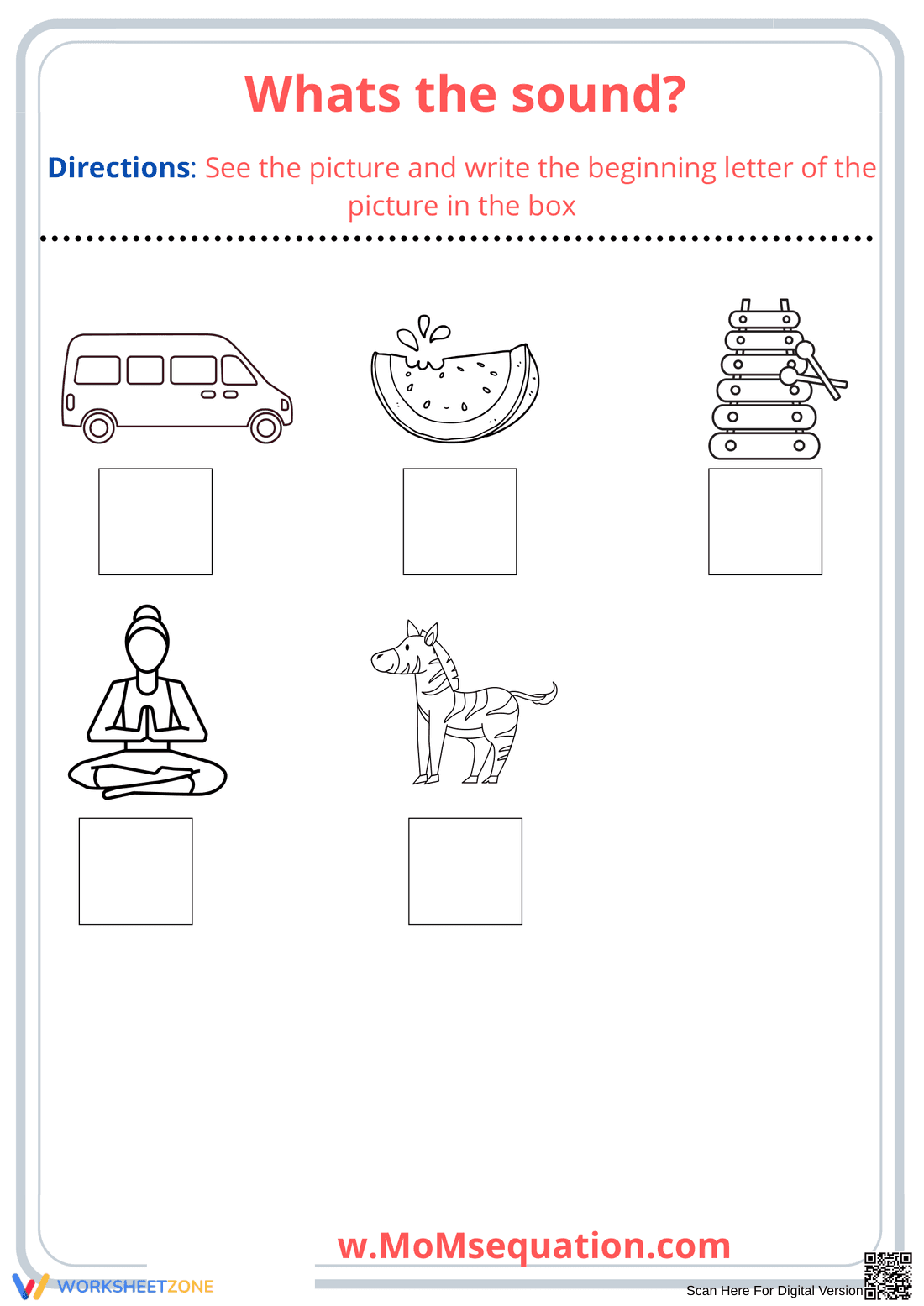

Beginning Sounds Worksheet | Grade 1 Printable Phonics

Paste this activity's link or code into your existing LMS (Google Classroom, Canvas, Teams, Schoology, Moodle, etc.).
Students can open and work on the activity right away, with no student login required.
You'll still be able to track student progress and results from your teacher account.
This foundational phonics worksheet helps early readers master letter-sound correspondence by identifying the initial phonemes of familiar everyday objects. Students look at clear illustrations and write the correct starting letter for each word, building essential decoding skills required for fluent reading.
At a Glance
- Grade: 1 · Subject: English
- Standard:
CCSS.ELA-LITERACY.RF.1.2.C— Isolate and pronounce initial sounds in words- Skill Focus: Beginning Sounds
- Format: 4 pages · 26 problems · PDF
- Best For: Independent practice or morning work
- Time: 15–20 minutes
This four-page resource features 26 distinct picture-matching tasks designed to reinforce phonemic awareness. Each page presents easily recognizable black-and-white illustrations, such as an apple or elephant, paired with a blank box. Students determine the word, isolate the first sound, and write the corresponding letter. The clean layout minimizes visual clutter, allowing young learners to focus entirely on the phonics task.
Designed for immediate classroom implementation, this resource requires zero teacher setup.
- Print (1 minute): Download the PDF and print. The black-and-white design saves ink.
- Distribute (1 minute): Hand out during morning work or literacy centers.
- Review (3 minutes): Check responses using whole-group call-and-response.
With a total prep time of under two minutes, this packet is an ideal addition to any emergency sub plan.
This activity is directly aligned to CCSS.ELA-LITERACY.RF.1.2.C, requiring students to isolate and pronounce initial sounds in spoken words. It also supports foundational writing standards by having students physically form the letters. Both standard codes can be copied directly into lesson plans, IEP goals, or district curriculum mapping tools.
Deploy this worksheet during literacy centers to reinforce direct instruction on consonant sounds. It serves as an excellent independent activity while the teacher pulls small guided reading groups. For a formative assessment, observe students as they work: if a child consistently confuses 'b' and 'd', you can immediately identify which correspondences need reteaching. Students typically complete the 26-problem set within 15 to 20 minutes.
This resource is designed for first-grade students mastering basic phonics, but is equally effective for second-grade intervention. The straightforward format makes it accessible for English Language Learners building vocabulary alongside phonemic awareness. Pair this worksheet with a classroom alphabet anchor chart to provide additional scaffolding for struggling readers.
Developing strong phonemic awareness is a critical predictor of future reading success in early elementary education. According to Fisher & Frey (2014), providing students with frequent, low-stakes opportunities to practice letter-sound correspondence significantly improves their ability to decode unfamiliar texts and builds long-term reading comprehension. This worksheet directly supports CCSS.ELA-LITERACY.RF.1.2.C by requiring learners to isolate and pronounce initial sounds in words, effectively translating auditory phonemes into written graphemes. By integrating clear visual cues with structured phonics practice, educators can better support diverse learning profiles and solidify foundational literacy skills. Consistent engagement with targeted exercises, such as these 26 beginning sound tasks, ensures that early readers build the automaticity required for fluent reading. This evidence-based approach bridges the gap between spoken language and written text, equipping young students with the essential tools they need to navigate more complex literacy challenges.


