


























Views
Downloads

Dandelion Life Cycle Printable Worksheet | Grade 3
Paste this activity's link or code into your existing LMS (Google Classroom, Canvas, Teams, Schoology, Moodle, etc.).
Students can open and work on the activity right away, with no student login required.
You'll still be able to track student progress and results from your teacher account.
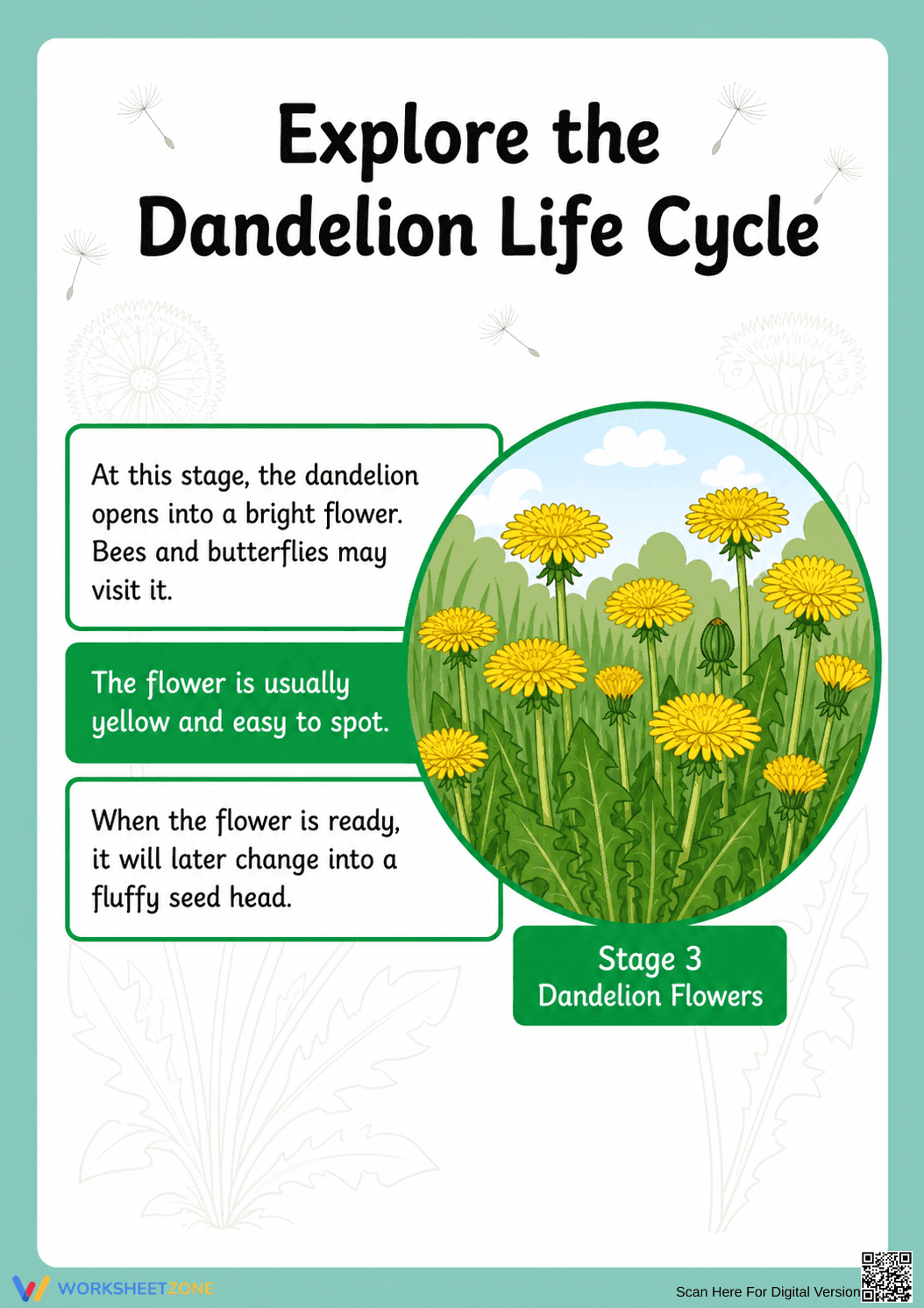
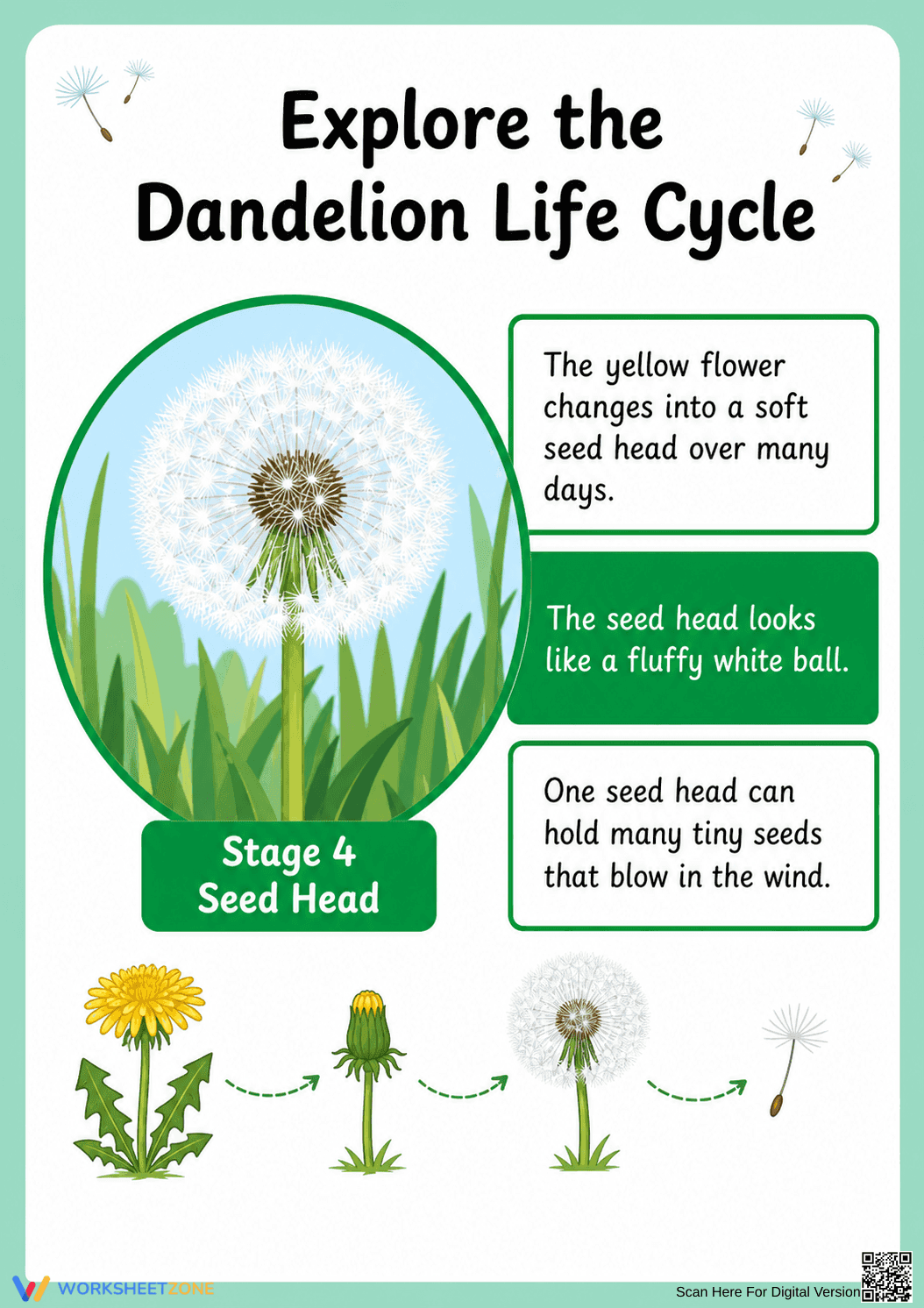
This comprehensive dandelion life cycle worksheet helps students visualize and sequence the stages of plant growth. By reading informational text and completing labeling activities, learners will develop a clear understanding of how a seed transforms into a mature plant and reproduces.
At a Glance
- Grade: 3 · Subject: Science
- Standard:
3-LS1-1— Develop models to describe organism life cycles- Skill Focus: Sequencing plant life cycles
- Format: 8 pages · 18 problems · No answer key · PDF
- Best For: Independent science practice
- Time: 25–35 minutes
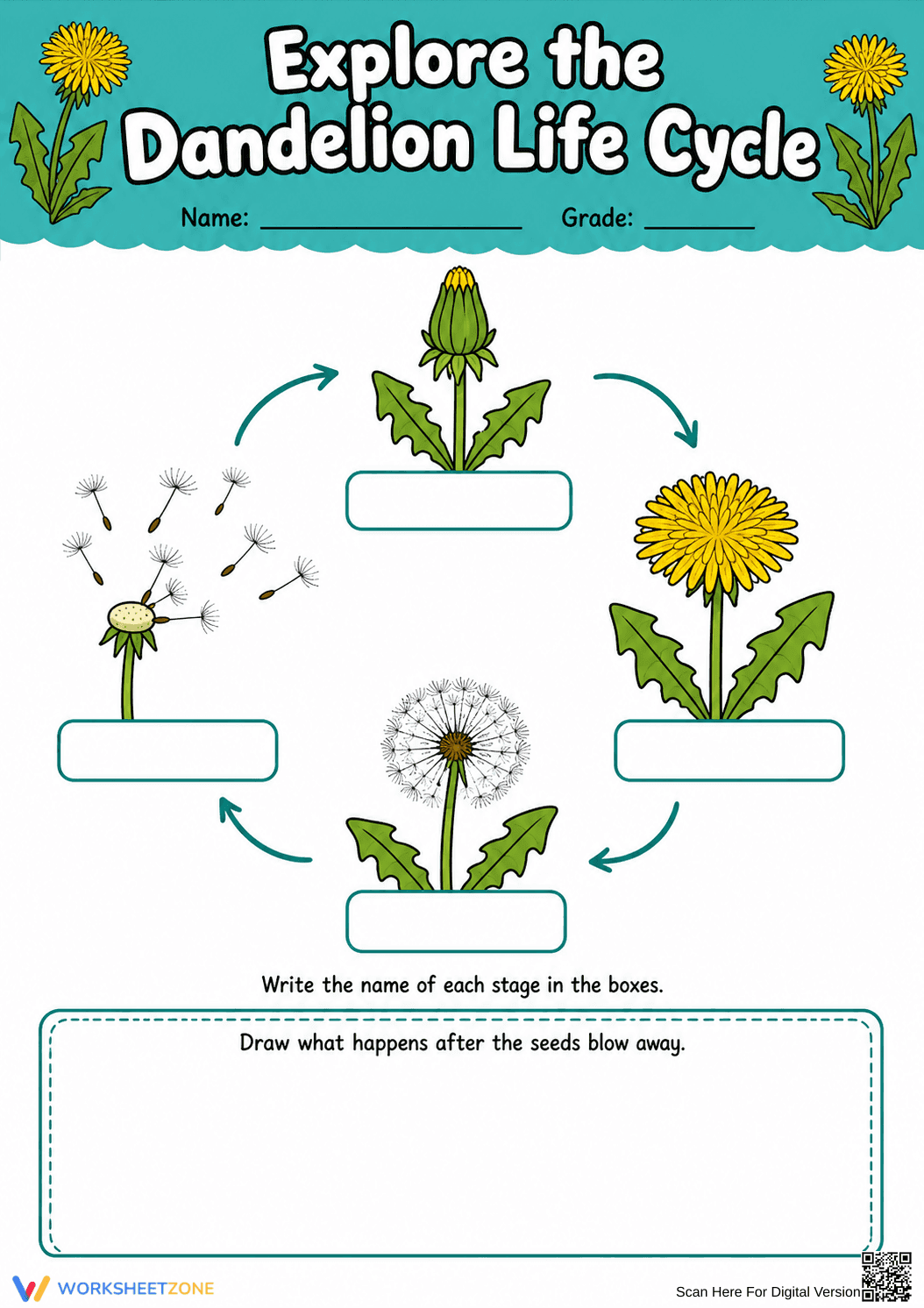
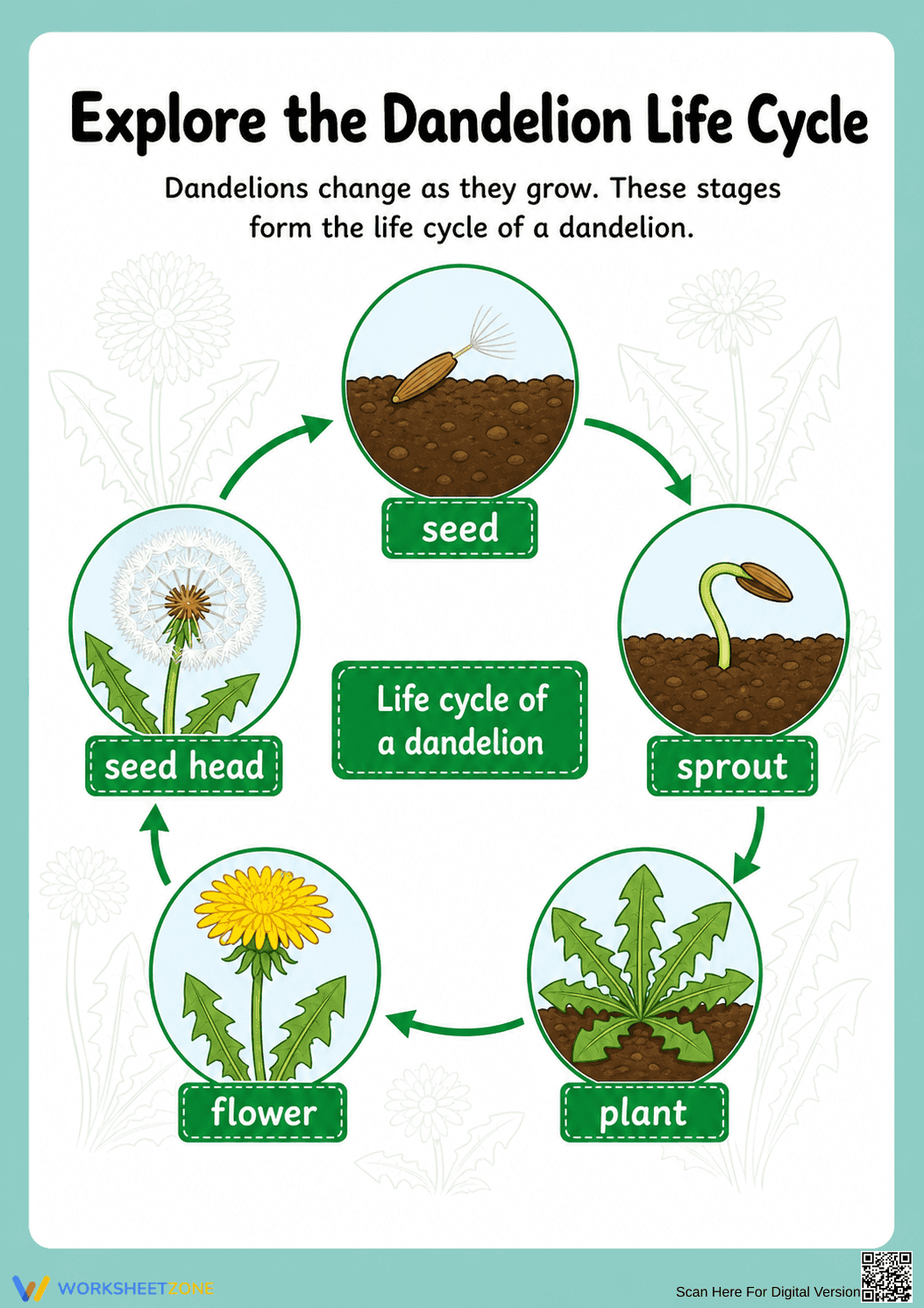
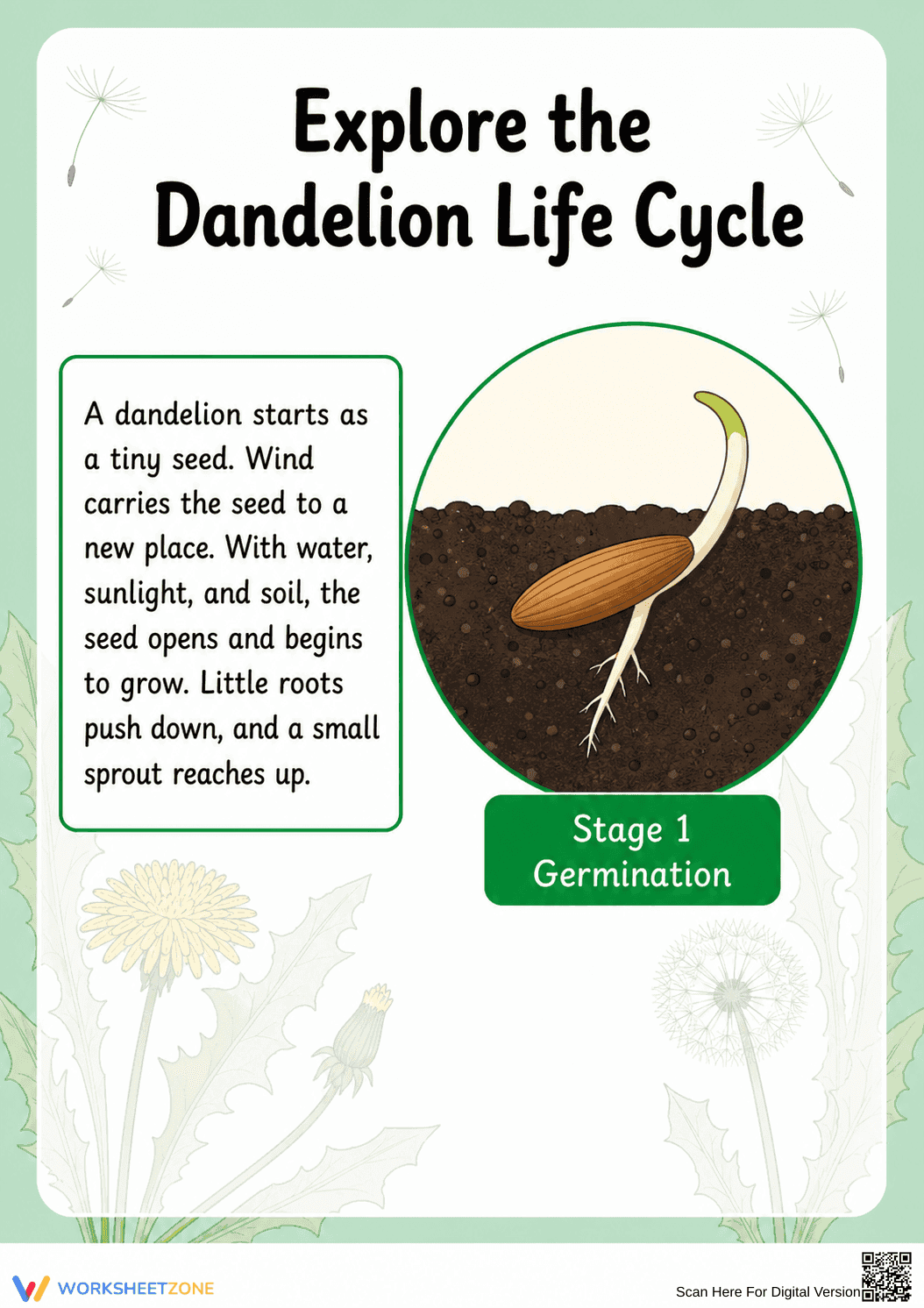
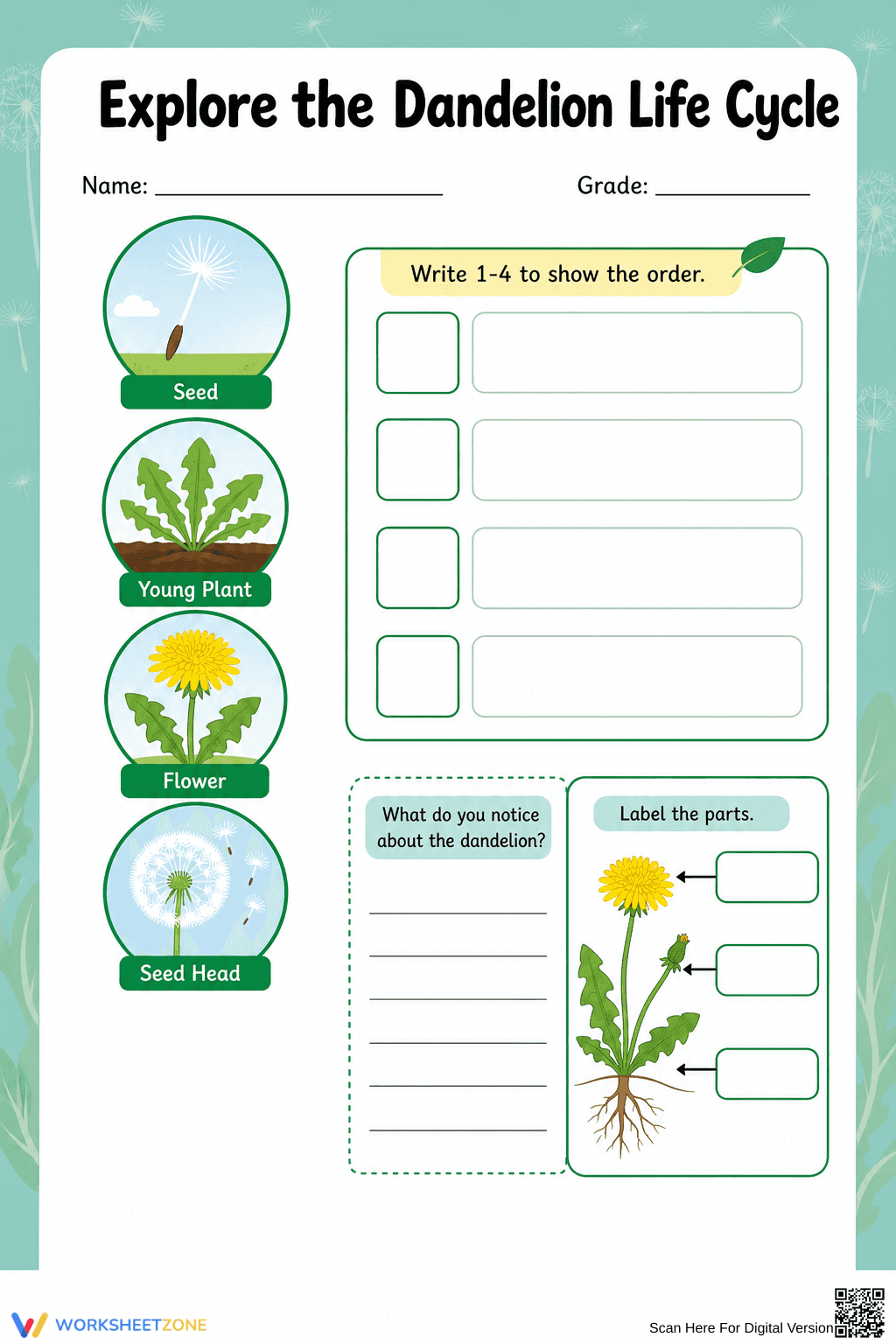
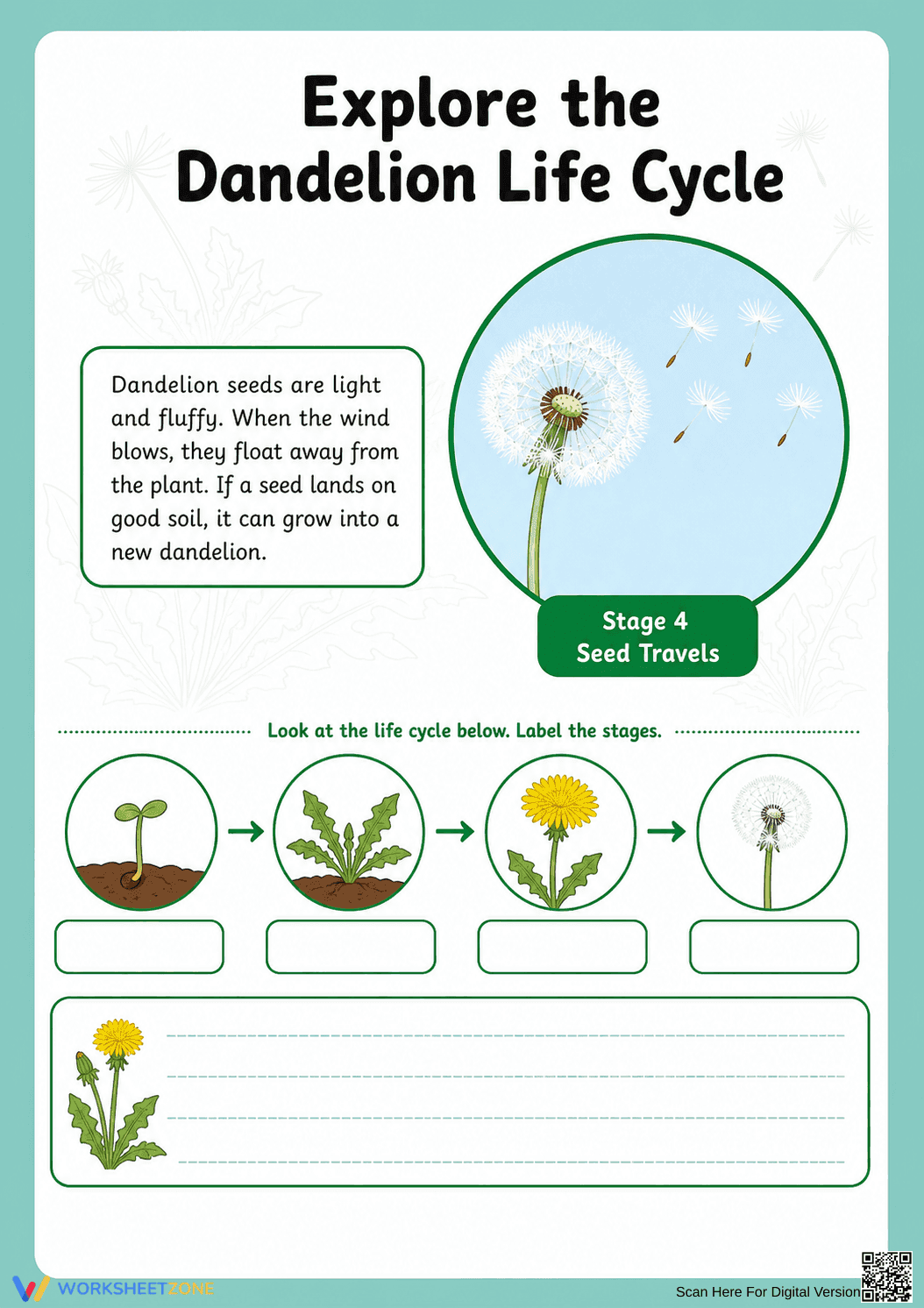
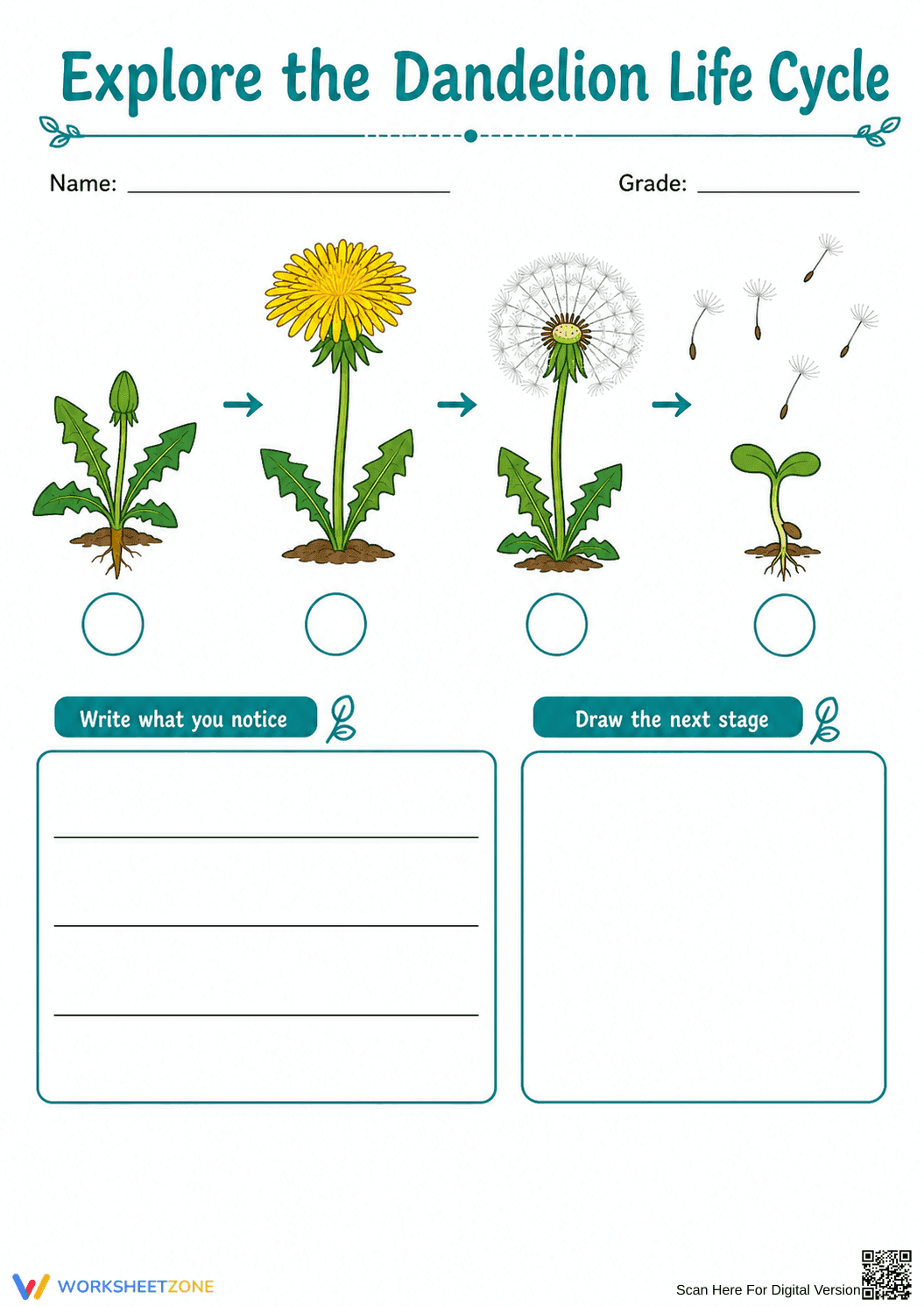
This packet includes eight pages of integrated reading and activities. Students will find beautifully illustrated informational pages detailing each stage of the dandelion's growth, from germination to seed dispersal. The activity pages feature diagram labeling, sequence ordering tasks, and short-answer observation prompts. A word bank is visually integrated into the reading sections to support vocabulary acquisition.
Zero-Prep Workflow
- Print (1 minute): The eight-page PDF is formatted for standard letter paper and requires no special cutting or assembly.
- Distribute (1 minute): Hand out the packets at the start of your science block. The reading passages are built directly into the assignment.
- Review (3 minutes): Walk through the first labeling diagram together to ensure students understand the visual flow of the cycle arrows.
With under two minutes of total teacher prep time, this resource is highly suitable for emergency sub plans or independent science centers.
Standards Alignment
This resource is aligned to 3-LS1-1, requiring students to develop models to describe that organisms have unique and diverse life cycles but all have in common birth, growth, reproduction, and death. By labeling and ordering the dandelion stages, students actively build this conceptual model. Both standard codes can be copied directly into lesson plans, IEP goals, or district curriculum mapping tools.
How to Use It
Use this packet during direct instruction as a guided reading and science activity. Read the informational pages aloud as a class, then have students complete the labeling and sequencing pages independently. Alternatively, assign it as a self-contained science center where students read and work at their own pace. As a formative assessment observation tip, watch how students order the 1-4 sequence on page four to verify they understand the chronological flow of plant growth. Expected completion time is 25 to 35 minutes.
Who It's For
This resource is designed for early elementary students, specifically second and third graders learning about plant biology. The clear illustrations and short text blocks provide built-in differentiation for visual learners and emerging readers. It pairs naturally with a hands-on nature walk to find real dandelions or a direct instruction lesson on seed dispersal.
Aligning science instruction to 3-LS1-1 ensures students can develop models to describe organism life cycles accurately. According to a ScienceDirect TpT Analysis, integrating informational text with visual diagramming significantly improves content retention in elementary science education. When students actively label and sequence the stages of a dandelion's growth, they move beyond rote memorization and begin to understand the cyclical nature of biological reproduction. This dual approach of reading comprehension and visual modeling supports diverse learning profiles and reinforces core scientific vocabulary. Providing structured, step-by-step visual aids allows young learners to grasp complex biological processes like germination and seed dispersal with greater independence. By utilizing resources that combine clear illustrations with targeted observation prompts, educators can foster a deeper, more intuitive understanding of plant biology in the early elementary classroom.


