


























Views
Downloads
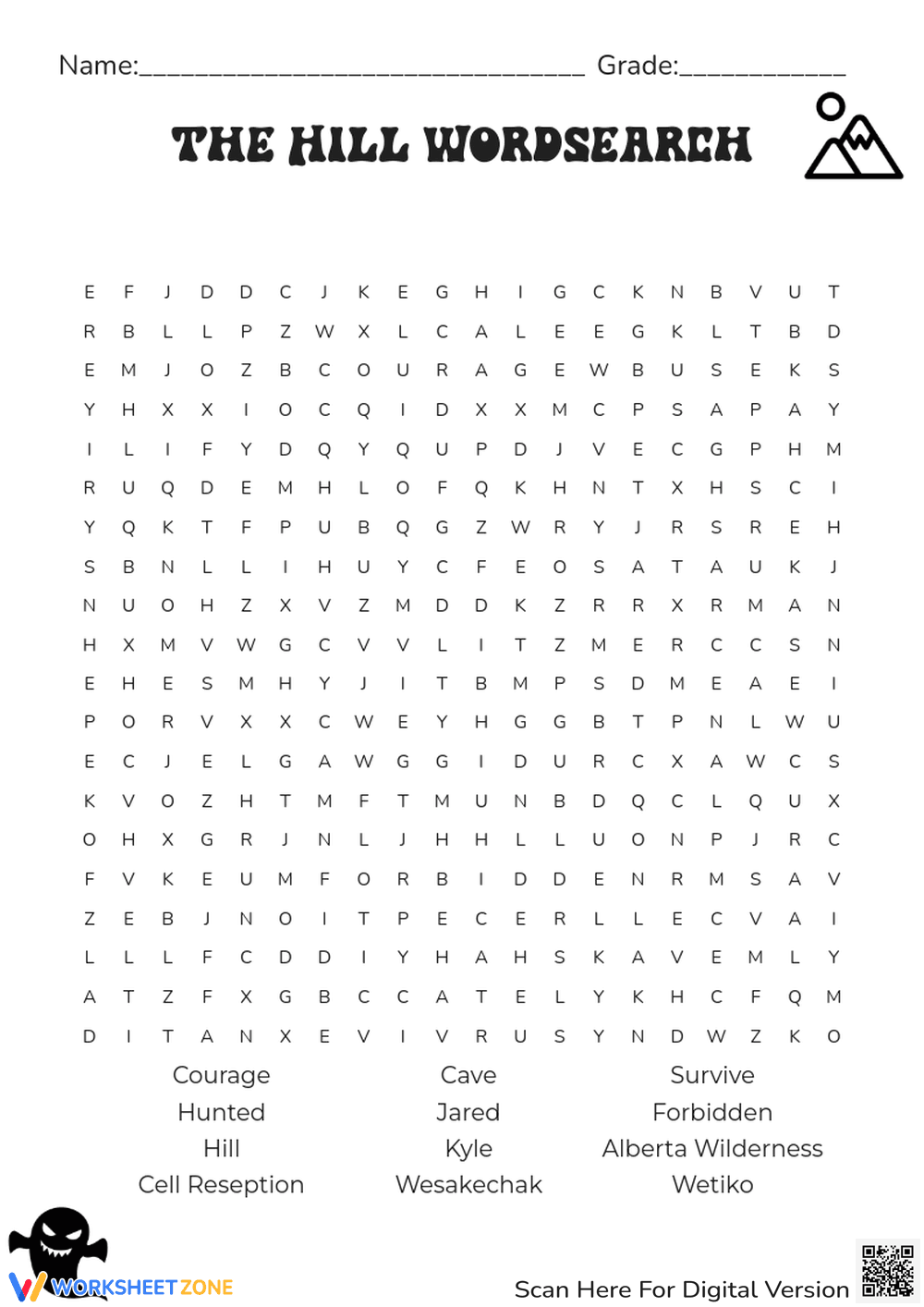

The Hill Word Search | Essential Grade 11 ELA Worksheet
Paste this activity's link or code into your existing LMS (Google Classroom, Canvas, Teams, Schoology, Moodle, etc.).
Students can open and work on the activity right away, with no student login required.
You'll still be able to track student progress and results from your teacher account.
This Grade 11 ELA worksheet provides a focused vocabulary review for Karen Bass's novel, The Hill. Students identify 12 critical plot elements and character names within a complex letter grid to reinforce their understanding of the setting and conflict. It serves as an effective post-reading activity to solidify textual recall and thematic recognition.
At a Glance
- Grade: 11 · Subject: ELA
- Standard:
CCSS.ELA-LITERACY.RL.11-12.1— Cite strong and thorough textual evidence to support analysis of what the text says explicitly- Skill Focus: Plot Vocabulary & Character Identification
- Format: 1 page · 12 problems · Answer key included · PDF
- Best For: Post-reading review or emergency sub plans
- Time: 15–20 minutes
This single-page PDF features a high-density word search grid containing 12 specific terms related to the Alberta wilderness setting, Cree mythology (Wesakechak, Wetiko), and central characters like Jared and Kyle. The layout is clean and professional, including a clear word bank at the bottom and a dedicated space for student names and grades. A full answer key is provided for rapid grading and student self-correction.
The workflow for this resource is designed for maximum efficiency. Teachers can print the single-page PDF in less than 30 seconds. Distribution takes approximately 1 minute during a transition period. Reviewing the completed puzzles using the included answer key requires only 1 minute per student, making the total teacher prep time under 2 minutes. This makes it an ideal choice for unexpected schedule changes or as a supplemental activity for early finishers.
This resource aligns with CCSS.ELA-LITERACY.RL.11-12.1, which requires students to cite strong and thorough textual evidence to support analysis of what the text says explicitly. By identifying key terms like "Alberta Wilderness" and "Forbidden," students demonstrate their grasp of the novel's explicit setting and thematic boundaries. This standard code can be copied directly into lesson plans, IEP goals, or district curriculum mapping tools.
Use this worksheet as a bell-ringer activity immediately following the completion of the novel to gauge student familiarity with key terminology. Alternatively, assign it as a formative assessment during a literature circle to ensure all group members are tracking major plot points. Completion typically takes 15 to 20 minutes depending on student familiarity with the text and their scanning speed.
This activity is designed for Grade 11 students studying contemporary Canadian literature or survival-themed fiction. It is particularly useful for English Language Learners (ELL) who benefit from visual word recognition and reinforcement of proper nouns from the text. Pair this worksheet with a character map or a plot diagram of The Hill to deepen the instructional impact and prepare students for analytical writing.
According to the RAND AIRS 2024 report on literacy engagement, structured vocabulary activities like word searches can lower the affective filter for high school students engaging with complex texts. This Grade 11 worksheet targets CCSS.ELA-LITERACY.RL.11-12.1 by focusing on explicit textual details from Karen Bass's The Hill. By isolating 12 specific terms—including character names and mythological figures—the resource facilitates rapid recall of the Alberta wilderness setting and the supernatural conflict. Research from Fisher & Frey (2014) suggests that such word-recognition tasks support the gradual release of responsibility by providing a low-stakes independent practice phase. This printable PDF is an evidence-based tool for reinforcing literary terminology and ensuring students can identify the foundational components of the narrative before moving into higher-order analysis or essay writing.


