


























0
Views
0
Downloads

0.0
0
Save
0 Likes
Share
Tapestry of Wonder Poetry Analysis
0 Views
0 Downloads
Paste this activity's link or code into your existing LMS (Google Classroom, Canvas, Teams, Schoology, Moodle, etc.).
Students can open and work on the activity right away, with no student login required.
You'll still be able to track student progress and results from your teacher account.
Information
Description
What It Is:
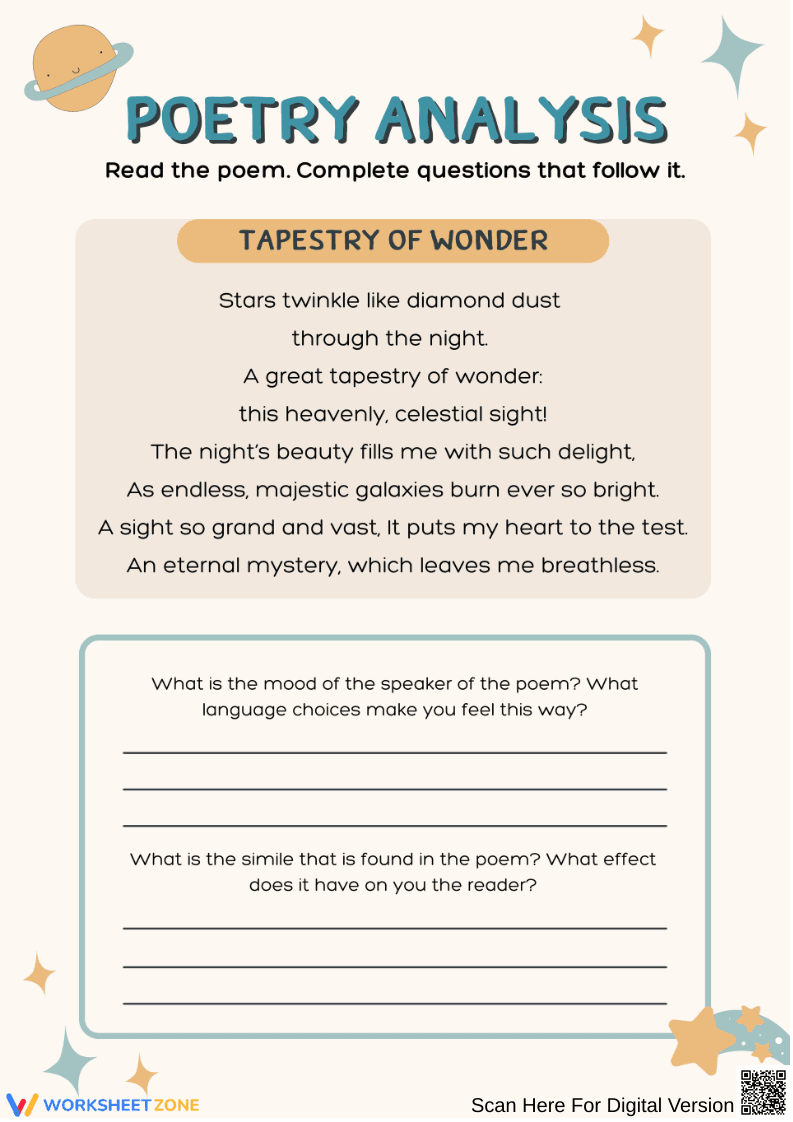
A poetry analysis worksheet featuring the original poem Tapestry of Wonder. Students read the poem and answer guided questions that help them explore mood, figurative language, and the poet’s use of imagery.
Why Use It:
This worksheet encourages deeper reading and helps students identify literary devices in context. By analyzing tone and similes, learners strengthen critical thinking, vocabulary, and comprehension of poetic techniques.
How to Use It:
• Read the poem together or individually.
• Discuss the imagery and language patterns students notice.
• Answer the mood and simile questions in the lined response area.
• Use the poem as a springboard for creative writing or further literary analysis.
Grade Suitability:
Best suited for middle-grade learners:
• Grades 7-8 for guided practice
• Grades 9-10 for independent literary analysis
Target Users:
ELA teachers, small reading groups, poetry units, literacy intervention programs, and students practicing close reading skills.
A poetry analysis worksheet featuring the original poem Tapestry of Wonder. Students read the poem and answer guided questions that help them explore mood, figurative language, and the poet’s use of imagery.
Why Use It:
This worksheet encourages deeper reading and helps students identify literary devices in context. By analyzing tone and similes, learners strengthen critical thinking, vocabulary, and comprehension of poetic techniques.
How to Use It:
• Read the poem together or individually.
• Discuss the imagery and language patterns students notice.
• Answer the mood and simile questions in the lined response area.
• Use the poem as a springboard for creative writing or further literary analysis.
Grade Suitability:
Best suited for middle-grade learners:
• Grades 7-8 for guided practice
• Grades 9-10 for independent literary analysis
Target Users:
ELA teachers, small reading groups, poetry units, literacy intervention programs, and students practicing close reading skills.


