


























Views
Downloads


Printable Short & Long Vowels Worksheet | Grade 1 ELA
Paste this activity's link or code into your existing LMS (Google Classroom, Canvas, Teams, Schoology, Moodle, etc.).
Students can open and work on the activity right away, with no student login required.
You'll still be able to track student progress and results from your teacher account.
This phonics worksheet helps early readers master vowel sounds by actively sorting words into short and long vowel categories. Students practice decoding single-syllable words and matching them to the correct phonetic pattern, building essential foundational reading skills required for reading fluency and spelling accuracy.
At a Glance
- Grade: 1 · Subject: ELA
- Standard:
CCSS.ELA-LITERACY.RF.1.2.A— Distinguish long from short vowel sounds in words- Skill Focus: Short and Long Vowels
- Format: 3 pages · 22 problems · Answer key included · PDF
- Best For: Independent practice and literacy centers
- Time: 15–20 minutes
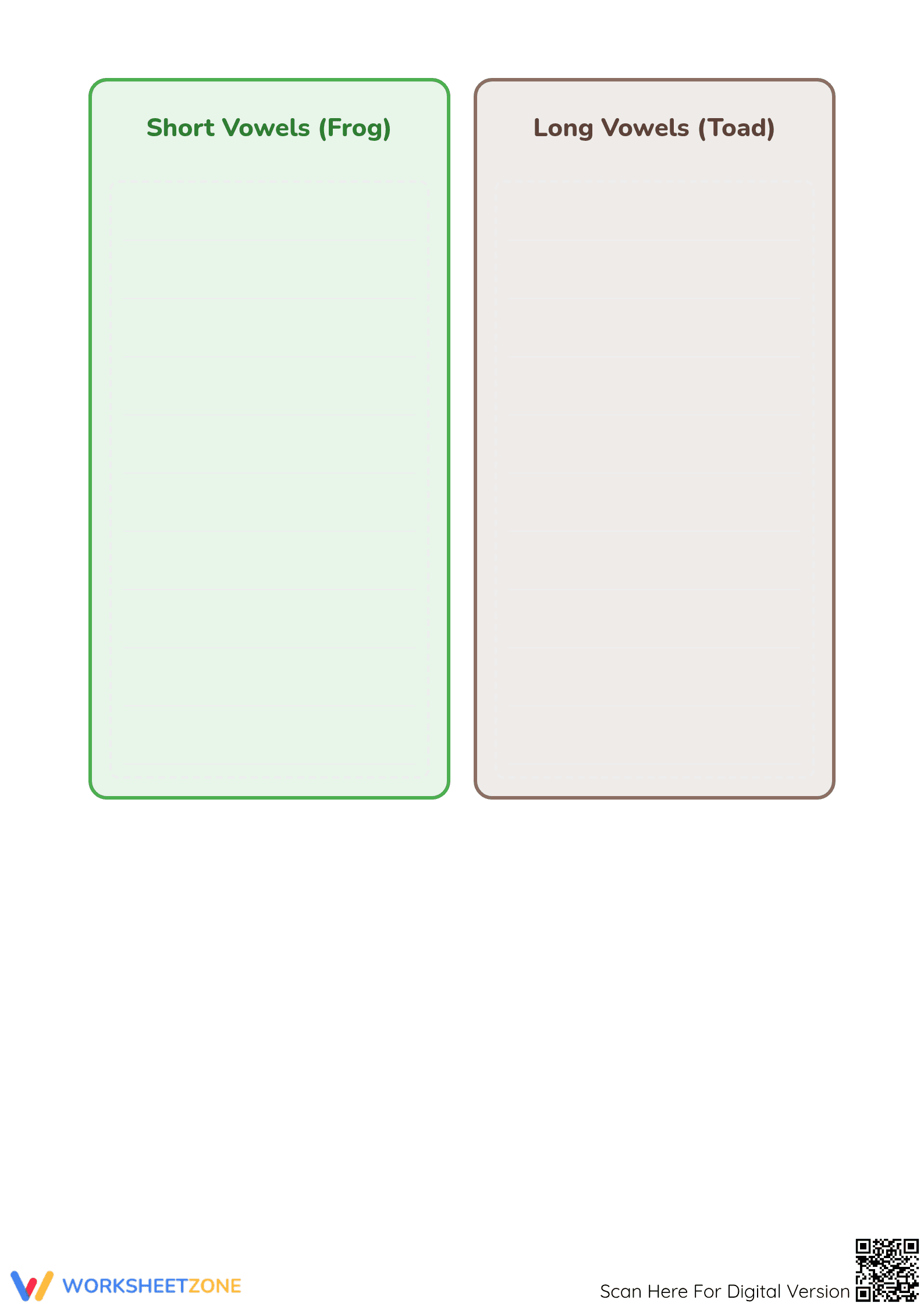
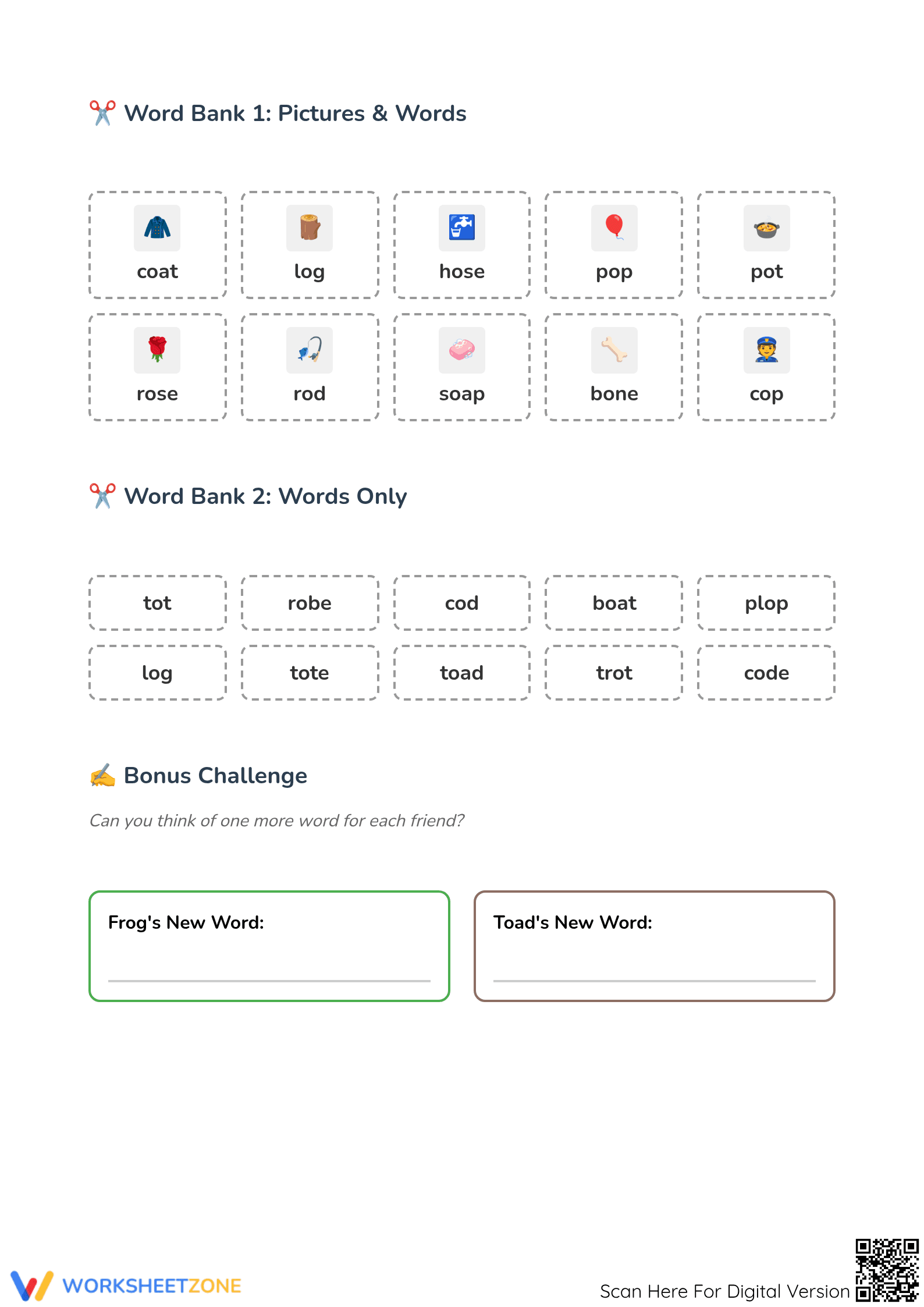
This resource features a three-page layout designed for hands-on engagement. It includes a clear instruction page with a notes section, a two-column sorting mat labeled for short and long vowels, and a dedicated cut-and-paste word bank page. The word banks offer both picture-supported words and text-only words to scaffold learning, plus a bonus challenge for students to generate their own examples. A complete answer key is provided for quick grading.
Skill Progression
- Guided practice: Begin with the picture-supported word bank, allowing students to use visual cues to identify the vowel sounds before sorting.
- Supported practice: Move to the text-only word bank, requiring learners to decode the words independently and apply their phonetic knowledge.
- Independent practice: Complete the bonus challenge where students must generate and write one original short vowel word and one long vowel word.
This structured approach follows a gradual-release model, moving from highly scaffolded picture cues to independent word generation.
Standards Alignment
Aligned to CCSS.ELA-LITERACY.RF.1.2.A: Distinguish long from short vowel sounds in spoken single-syllable words. It also supports early spelling conventions by reinforcing common vowel team and silent-e patterns. Both standard codes can be copied directly into lesson plans, IEP goals, or district curriculum mapping tools.
How to Use It
Deploy this activity during literacy centers after direct instruction on vowel sounds. It serves as an excellent hands-on station where students can physically manipulate the words. Alternatively, use it as a Friday review assignment to consolidate the week's phonics lessons. As a formative assessment tip, observe students while they sort the text-only words; hesitation here often indicates a need for a quick reteach on silent-e or vowel team rules. Expect completion to take 15 to 20 minutes.
Who It's For
This worksheet is designed for first-grade students developing foundational reading skills, though it serves as effective remediation for second graders. To differentiate, provide only the picture word bank to struggling readers, while challenging advanced students to write sentences using the sorted words. Pair this activity with a phonics anchor chart displaying common long vowel spelling patterns.
Mastering the ability to distinguish long from short vowel sounds in words is a critical milestone in early literacy development, directly addressed by CCSS.ELA-LITERACY.RF.1.2.A. When students can accurately identify and categorize these sounds, they build the orthographic mapping skills necessary for fluent reading and accurate spelling. According to Fisher & Frey (2014), providing students with hands-on, manipulative tasks like sorting activities significantly increases cognitive engagement and retention of phonetic rules compared to passive worksheet completion. By requiring learners to physically cut, categorize, and paste words based on their internal vowel sounds, this resource bridges auditory processing with visual recognition. This multisensory approach ensures that foundational phonics concepts are firmly established, reducing decoding errors in connected text and supporting long-term reading comprehension success across all primary grade levels.


