


























Views
Downloads
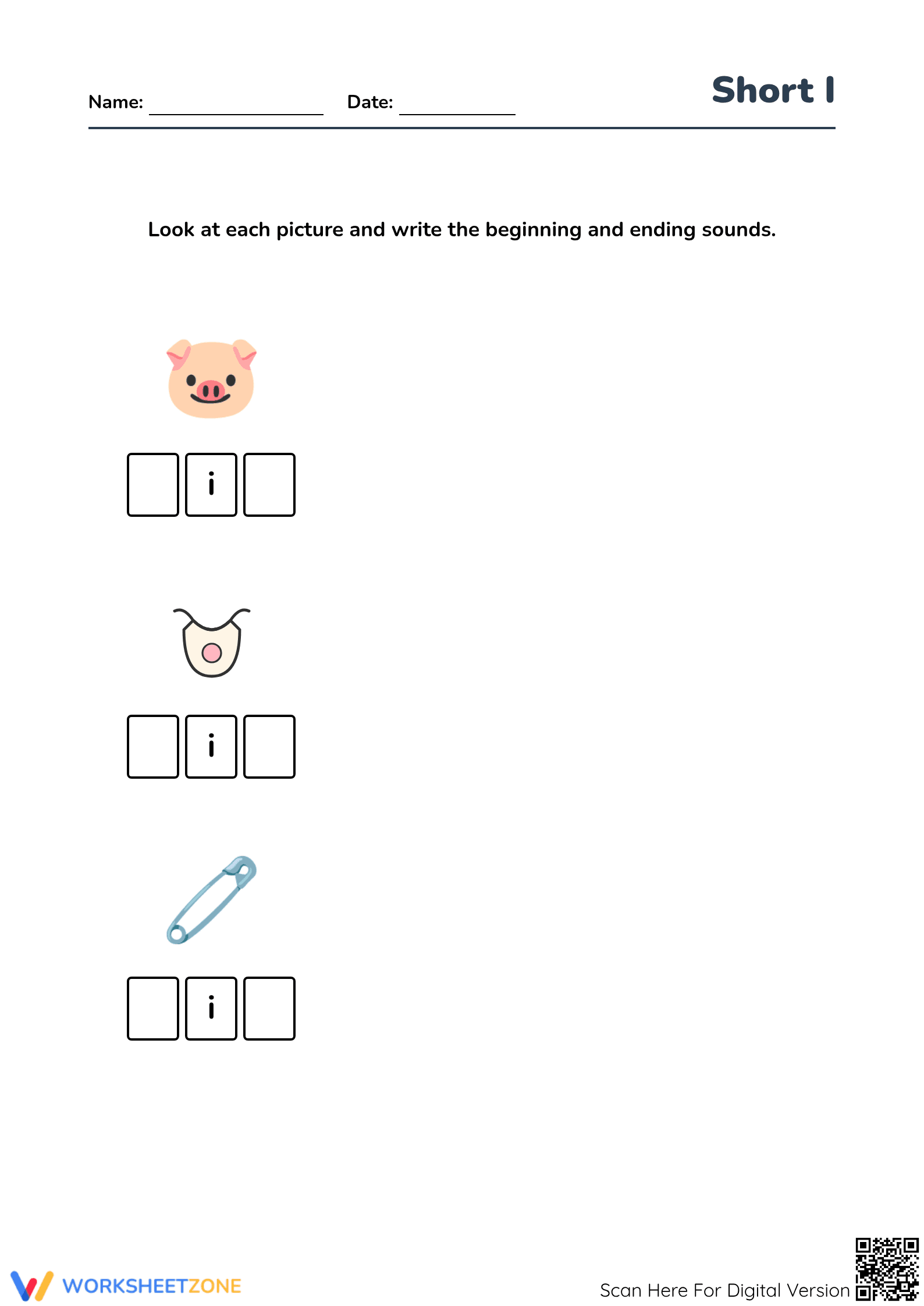


Grade 1 Short Vowel I — Printable No-Prep Worksheet
Paste this activity's link or code into your existing LMS (Google Classroom, Canvas, Teams, Schoology, Moodle, etc.).
Students can open and work on the activity right away, with no student login required.
You'll still be able to track student progress and results from your teacher account.
This Grade 1 phonics worksheet helps students master the short vowel "i" sound by isolating and writing the beginning and ending consonants of common CVC words. By filling in the missing letters for familiar pictures, early readers build essential phonemic awareness and decoding skills required for fluent reading.
At a Glance
- Grade: 1 · Subject: English
- Standard:
CCSS.ELA-LITERACY.RF.1.2.C— Isolate and pronounce sounds in single-syllable words- Skill Focus: Short Vowel I (CVC Words)
- Format: 2 pages · 6 problems · Answer key included · PDF
- Best For: Independent practice and phonics centers
- Time: 10–15 minutes
This resource features two pages of highly visual phonics practice. Students are presented with six clear, recognizable images (such as a pig, bib, and pin) alongside three letter boxes. The middle box is pre-filled with the short vowel "i," prompting learners to identify and write the correct initial and final consonants. A complete answer key is provided to ensure accurate grading and immediate feedback.
Zero-Prep Workflow
- Print (1 minute): Simply download the PDF and print the two student pages. The layout is clean and uses minimal ink.
- Distribute (1 minute): Hand out the worksheets during your literacy block. The visual cues make the instructions instantly clear to young learners.
- Review (2 minutes): Use the included answer key to quickly check student work or project it on the board for self-correction.
Total teacher preparation time is under two minutes, making this an ideal activity for busy mornings or easy inclusion in a substitute teacher plan.
Standards Alignment
This worksheet is directly aligned to CCSS.ELA-LITERACY.RF.1.2.C, requiring students to isolate and pronounce initial, medial vowel, and final sounds in spoken single-syllable words. It supports foundational spelling by connecting sounds to written letters. Both standard codes can be copied directly into lesson plans, IEP goals, or district curriculum mapping tools.
How to Use It
Deploy this worksheet during independent practice after a direct instruction mini-lesson on the short "i" sound. It works exceptionally well as a literacy center station where students can work at their own pace. For a quick formative assessment, observe students as they write; note whether they struggle more with identifying the beginning sound or the ending sound, which can inform your small-group interventions. Most first graders will complete this activity in 10 to 15 minutes.
Who It's For
This activity is designed for first-grade students developing their phonemic awareness and early decoding skills. It is also highly effective for second-grade students who need targeted intervention or review of short vowel sounds. For students requiring extra support, provide an alphabet chart or a set of physical letter tiles they can manipulate before writing. Pair this worksheet with a short vowel decodable reader to reinforce the skill in context.
Mastering the short vowel sounds is a critical milestone in early literacy development. According to a recent EdReports 2024 analysis of foundational reading programs, explicit practice with CVC words significantly improves students' ability to decode unfamiliar text. This worksheet targets CCSS.ELA-LITERACY.RF.1.2.C, helping students isolate and pronounce sounds in single-syllable words. By requiring learners to identify both the initial and final consonants around a fixed medial vowel, the activity strengthens phoneme segmentation and orthographic mapping. These foundational skills are absolutely essential for transitioning from phonetic spelling to fluent, automatic word recognition. Providing structured, visual opportunities to practice these specific phonics patterns ensures that young readers build the automaticity necessary for reading comprehension in later grades. This targeted approach aligns perfectly with evidence-based practices for early literacy instruction, ensuring every student has the tools to succeed.


