What Weathering, Erosion, and Deposition Worksheets Actually Teach
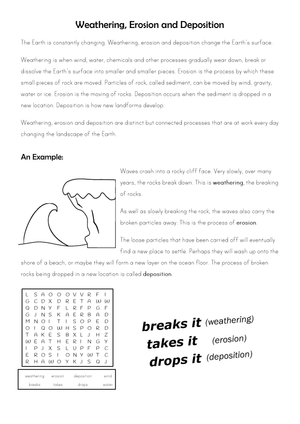
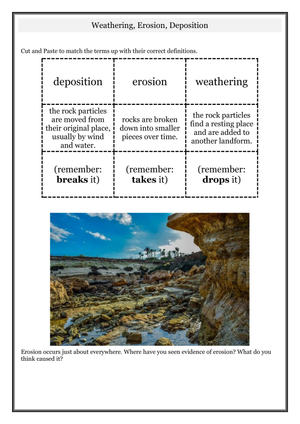
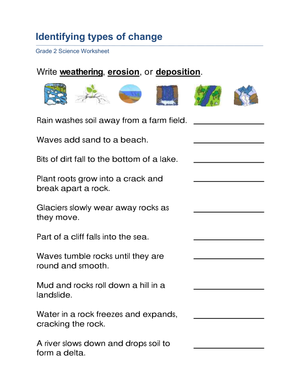
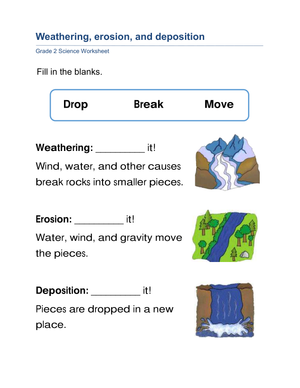
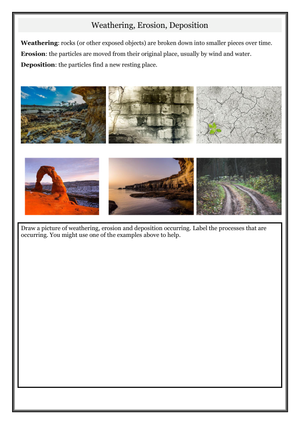
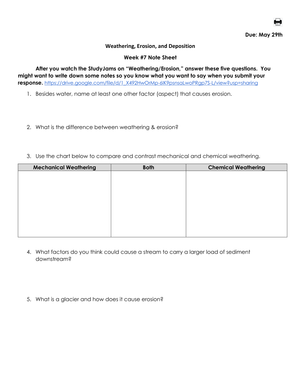
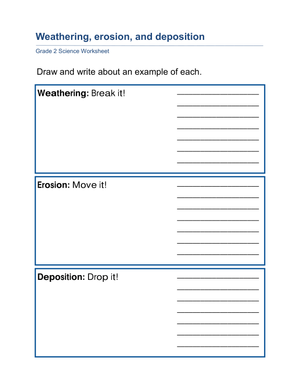
These worksheets exist to help students separate three processes that look similar but happen at different moments in a rock's journey. Weathering breaks rock down in place, erosion transports the loosened pieces, and deposition drops that material somewhere new. When students can name which process a photo or diagram shows, they're ready for the observation work that anchors most elementary Earth science units.
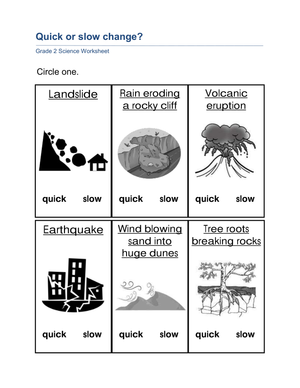
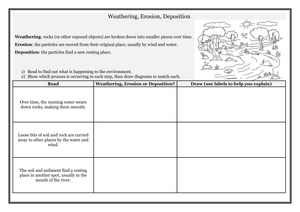
A strong set of weathering, erosion, and deposition worksheets does more than define terms. It asks students to sort examples, label diagrams, and record what they notice about slope, water, wind, and time. That move from vocabulary to evidence is exactly what upper-elementary science expects, so the pages carry real instructional weight instead of filling a Friday slot.
How These Worksheets Map to NGSS 4-ESS2-1
Grade 4 is where this topic sits most clearly in the standards, and worksheets on weathering, erosion, and deposition line up with it directly. That alignment gives you an easy answer when a coach or administrator asks why a printable belongs in a standards-based block.
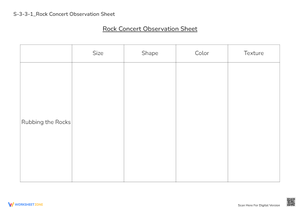
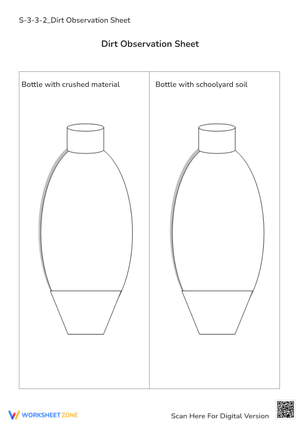
The most useful design detail is that 4-ESS2-1 keeps its assessment boundary to a single form of weathering or erosion at a time. That constraint is a gift for worksheet design: a recording sheet that isolates one variable such as slope angle or water volume matches the standard's intent better than a busy page trying to compare every process at once. Build your data sheets around one testable factor and student thinking stays sharp.
According to the Next Generation Science Standards, performance expectation 4-ESS2-1 asks Grade 4 students to "make observations and/or measurements to provide evidence of the effects of weathering or the rate of erosion by water, ice, wind, or vegetation." That single sentence defines the exact evidence your worksheets should collect.
Differentiation Across a Mixed-Ability Class
One topic can serve a wide range of readers if the worksheet format shifts while the science stays constant.
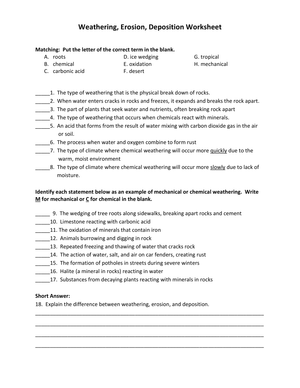
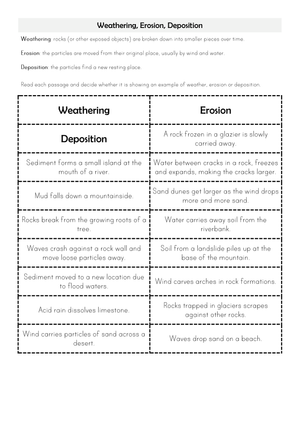
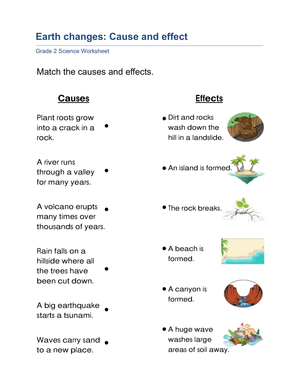
- Struggling readers: sorting and matching pages with picture cues carry the meaning without heavy text.
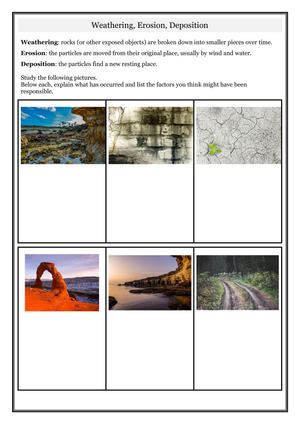
- Visual learners: diagram-labeling pages let students show understanding through position and arrows.
- Advanced students: short-response prompts ask them to justify a claim with evidence from the demonstration.
Since weathering, erosion, and deposition also feed landform and water cycle units, the same worksheet bank stretches across several weeks. A canyon diagram used in this unit reappears when you study how rivers shape the land, so nothing you print is single-use.
Classroom Implementation
Start with the sorting worksheet as a warm-up on day one and collect it as a baseline. Move to a diagram-labeling page during your core lesson, then reserve the recording sheet for the day you run a slope or water-volume demonstration. Use short-response items as exit tickets so you can group students for the next session before they walk out. For small-group intervention, pull the students who confused erosion and deposition on the baseline and rerun only the paired-image sorting task. Keep completed recording sheets in a science folder; three or four single-variable sheets become the evidence trail you need when reporting on 4-ESS2-1 progress.
Frequently Asked Questions
1. What is the difference between weathering, erosion, and deposition worksheets meant to teach?
They teach that weathering breaks rock down in place, erosion moves the broken material, and deposition drops it in a new spot. The worksheets ask students to tell those three steps apart and then find evidence of each in diagrams or observations.
2. What grade level typically covers this topic under NGSS?
Grade 4 is the clearest fit, tied to performance expectation 4-ESS2-1. Grade 6-8 Earth science units revisit the same processes in more depth, so the worksheets also support review at the middle school level.
3. How can teachers use these worksheets alongside a hands-on erosion experiment?
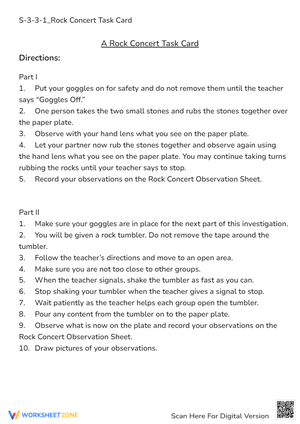
Use a single-variable recording sheet during the experiment. Hold everything constant except one factor such as slope angle or water volume, and have students predict, observe, and write a claim. This matches the standard's focus on one form of erosion at a time.
4. What are common misconceptions students have about weathering versus erosion?
Students often merge erosion and deposition, and they tend to think weathering means only physical breaking. Build items that separate moving from dropping and that include at least one example of chemical weathering to correct both.
5. How should these worksheets be used for formative assessment versus review?
Use the sorting page as a baseline check and exit-ticket short responses to group students the same week. For review, return to the diagram-labeling pages before a unit test so students reconnect the three processes in one scene.












 Interactive Worksheet Maker
 Quiz Maker
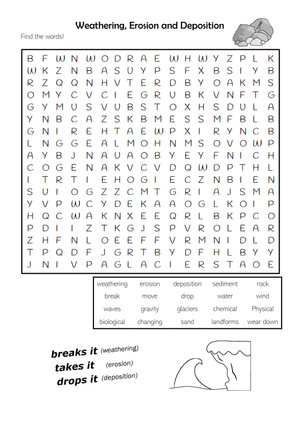
 Word Search Maker
 Crossword Puzzle Maker
 Word Scramble Generator
 Sentence Scramble Generator
 Handwriting Worksheet Generator
 Name Tracing Generator
 Fill In The Blank Generator