




























Views
Downloads
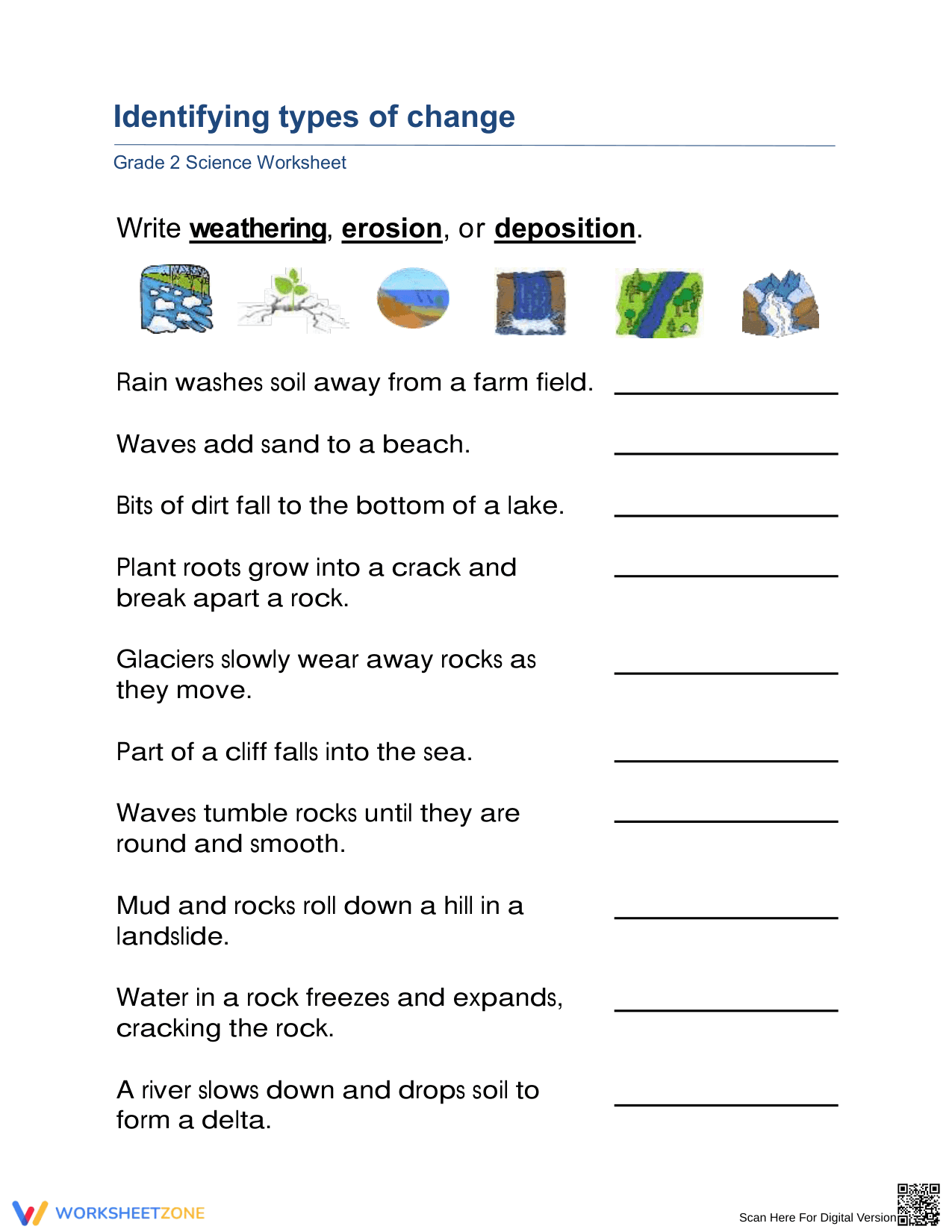
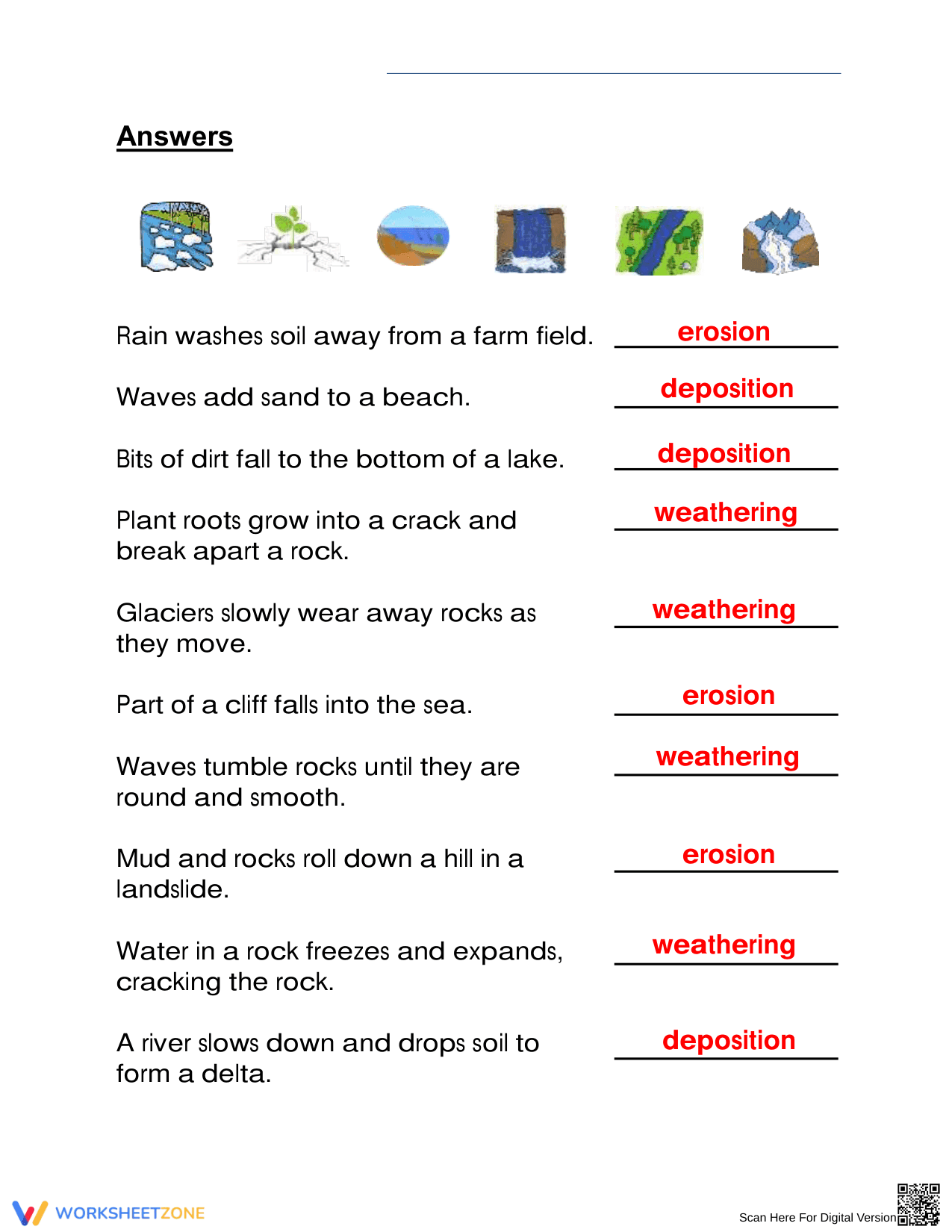

Essential Earth Science Worksheet: Weathering and Erosion

Paste this activity's link or code into your existing LMS (Google Classroom, Canvas, Teams, Schoology, Moodle, etc.).
Students can open and work on the activity right away, with no student login required.
You'll still be able to track student progress and results from your teacher account.
This Grade 3 earth science worksheet helps students master the critical distinction between weathering, erosion, and deposition. By analyzing 10 real-world scenarios, learners identify the specific geological processes that reshape our planet. This resource ensures students understand how natural forces break down materials, transport sediment, and create new landforms across various landscapes.
At a Glance
- Grade: 3 · Subject: Earth Science
- Standard:
4-ESS2-1— Make observations to provide evidence of the effects of weathering and erosion- Skill Focus: Weathering, Erosion, and Deposition Identification
- Format: 1 page · 10 problems · Answer key included · PDF
- Best For: Independent practice or quick formative assessment
- Time: 15–20 minutes
Inside this resource, you will find a cleanly formatted one-page worksheet featuring 10 descriptive sentences. Each scenario challenges students to apply their knowledge of geological changes, such as plant roots breaking rocks or rivers forming deltas. The document includes visual icons for each category and a comprehensive answer key for fast, accurate grading and immediate student feedback.
Zero-Prep Workflow
- Print (30 seconds): Simply select the page and print the required number of copies for your classroom or small group.
- Distribute (1 minute): Hand out the sheets to students; the clear instructions and word bank mean no verbal explanation is required.
- Review (1 minute): Use the included answer key to check for understanding or facilitate a peer-review session at the end of class.
This workflow is specifically designed for high-efficiency instruction and works perfectly as a standby sub plan or a bell-ringer activity.
This worksheet is aligned to standard `4-ESS2-1`: "Make observations and/or measurements to provide evidence of the effects of weathering or the rate of erosion by water, ice, wind, or vegetation." It specifically targets the foundational vocabulary and conceptual understanding required for this performance expectation. This standard code can be copied directly into lesson plans, IEP goals, or district curriculum mapping tools.
Use this worksheet as a post-instruction review after a lesson on the rock cycle or earth's systems. It serves as an excellent formative assessment tool; observe if students struggle with the transport aspect (erosion) versus the settling aspect (deposition). Expect students to complete the 10-item identification list within 15 to 20 minutes of quiet independent work.
This resource is designed for Grade 3 and 4 students studying earth science. It provides scaffolded support through the inclusion of a clear word bank and descriptive prompts. For further extension, pair this worksheet with a hands-on stream table demonstration or a reading passage about national parks that showcase extreme examples of erosion and weathering.
According to the ScienceDirect TpT Analysis, effective earth science instruction requires the integration of specific vocabulary with real-world observation to build long-term retention. This worksheet facilitates that connection by asking students to visualize physical processes like glaciers wearing away rocks or waves adding sand to a beach. By isolating the three phases of geological change—breaking, moving, and dropping—the resource aligns with the 4-ESS2-1 standard's emphasis on evidence-based observation. Research suggests that focused, one-page practice sets reduce cognitive load for younger learners, allowing them to concentrate on the nuance between similar scientific terms. This 10-task assessment provides sufficient data points for teachers to measure student mastery without overwhelming the learner. The inclusion of an answer key further supports the gradual release of responsibility model by enabling immediate self-correction and classroom discussion of complex earth system interactions.


