


























1 / 2
0
Views
0
Downloads

0.0
0
Save
0 Likes
S-K2-8_Senses Chart
0 Views
0 Downloads
Paste this activity's link or code into your existing LMS (Google Classroom, Canvas, Teams, Schoology, Moodle, etc.).
Students can open and work on the activity right away, with no student login required.
You'll still be able to track student progress and results from your teacher account.
Information
Description
What It Is:
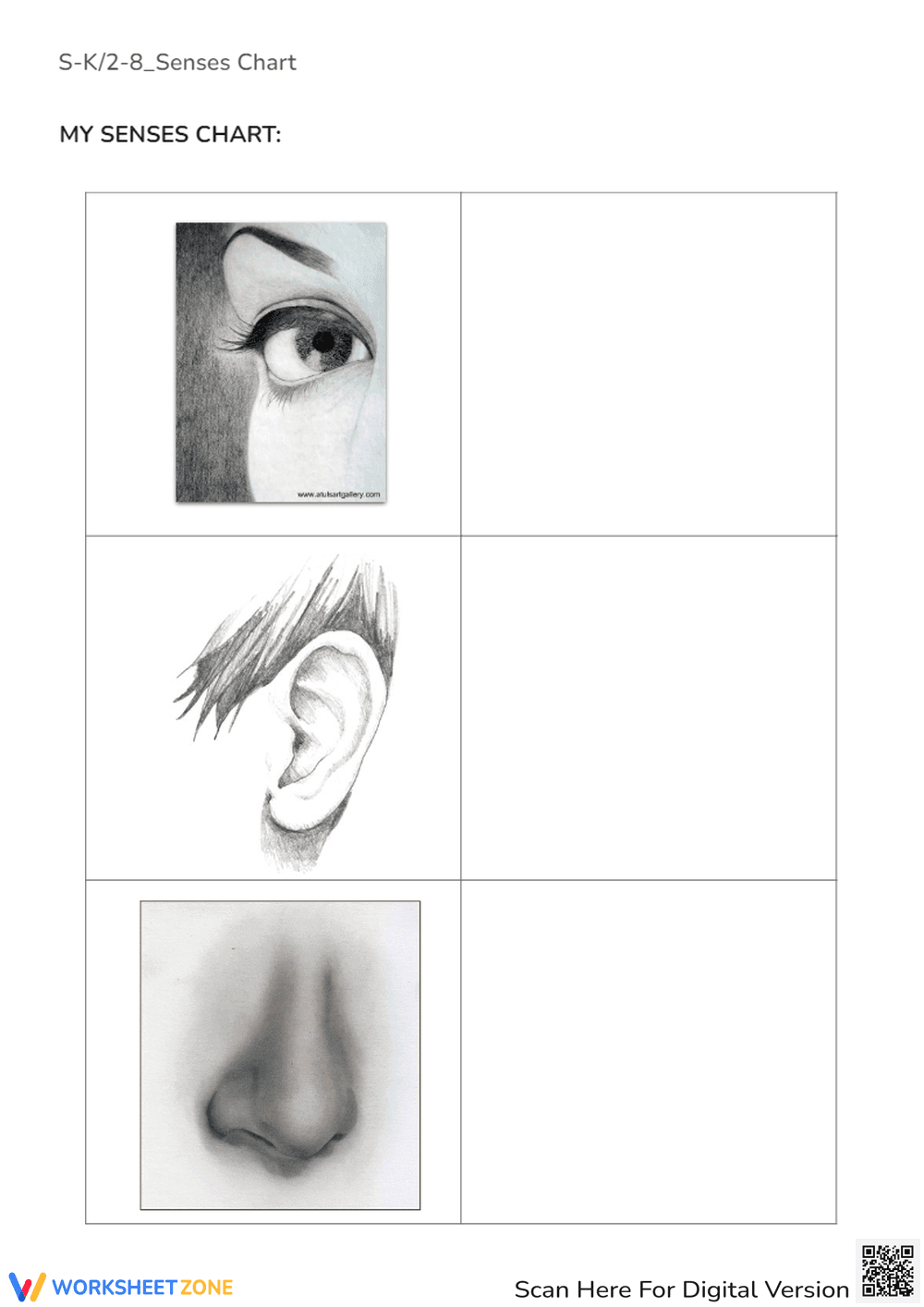
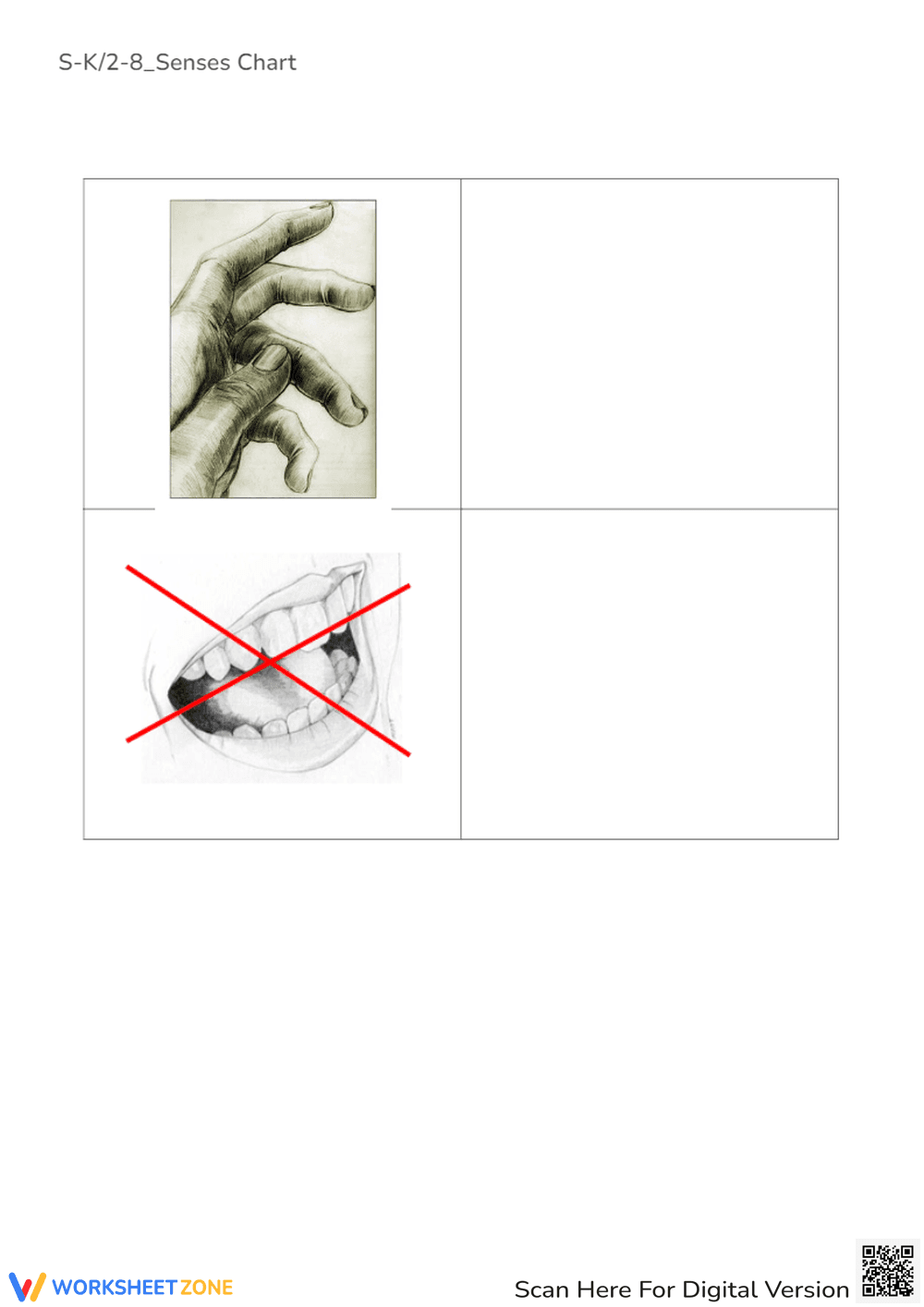
This is a worksheet titled 'My Senses Chart'. It features a table with three rows. The first row contains a detailed drawing of an eye. The second row shows a drawing of an ear. The third row displays a drawing of a nose. Each row has an adjacent blank space for writing or drawing.
Grade Level Suitability:
Suitable for Kindergarten to Grade 2 (K-2). The worksheet focuses on basic sensory organs, making it appropriate for early elementary students learning about the five senses. The visual aids support understanding for young learners.
Why Use It:
This worksheet helps students identify and understand the function of different sensory organs (eye, ear, nose). It promotes observation skills and can be used to explore the sense of sight, hearing, and smell. The blank spaces encourage students to describe or illustrate what they see, hear, or smell.
How to Use It:
Instruct students to identify the sensory organ in each row (eye, ear, nose). Then, have them use the adjacent blank space to write words or draw pictures related to what they can see, hear, or smell using that organ. For example, next to the eye, they could draw a rainbow or write the word 'colors.'
Target Users:
This worksheet is ideal for elementary school students, particularly those in Kindergarten through second grade, learning about the five senses. It can also be helpful for students with visual learning styles.
This is a worksheet titled 'My Senses Chart'. It features a table with three rows. The first row contains a detailed drawing of an eye. The second row shows a drawing of an ear. The third row displays a drawing of a nose. Each row has an adjacent blank space for writing or drawing.
Grade Level Suitability:
Suitable for Kindergarten to Grade 2 (K-2). The worksheet focuses on basic sensory organs, making it appropriate for early elementary students learning about the five senses. The visual aids support understanding for young learners.
Why Use It:
This worksheet helps students identify and understand the function of different sensory organs (eye, ear, nose). It promotes observation skills and can be used to explore the sense of sight, hearing, and smell. The blank spaces encourage students to describe or illustrate what they see, hear, or smell.
How to Use It:
Instruct students to identify the sensory organ in each row (eye, ear, nose). Then, have them use the adjacent blank space to write words or draw pictures related to what they can see, hear, or smell using that organ. For example, next to the eye, they could draw a rainbow or write the word 'colors.'
Target Users:
This worksheet is ideal for elementary school students, particularly those in Kindergarten through second grade, learning about the five senses. It can also be helpful for students with visual learning styles.


