




























Views
Downloads

Printable Aquatic Animal Habitats Worksheet | Grade 1

Paste this activity's link or code into your existing LMS (Google Classroom, Canvas, Teams, Schoology, Moodle, etc.).
Students can open and work on the activity right away, with no student login required.
You'll still be able to track student progress and results from your teacher account.
This hands-on science worksheet helps first-grade students master aquatic ecosystems by matching animals to their correct water habitats. By cutting, sorting, and gluing eight different species into river, pond, swamp, and ocean environments, learners actively build their understanding of where specific animals thrive and why.
At a Glance
- Grade: 1 · Subject: Science
- Standard:
2-LS4-1— Compare the diversity of life in different habitats- Skill Focus: Matching animals to aquatic habitats
- Format: 3 pages · 12 tasks · Answer key included · PDF
- Best For: Independent science centers
- Time: 20–25 minutes
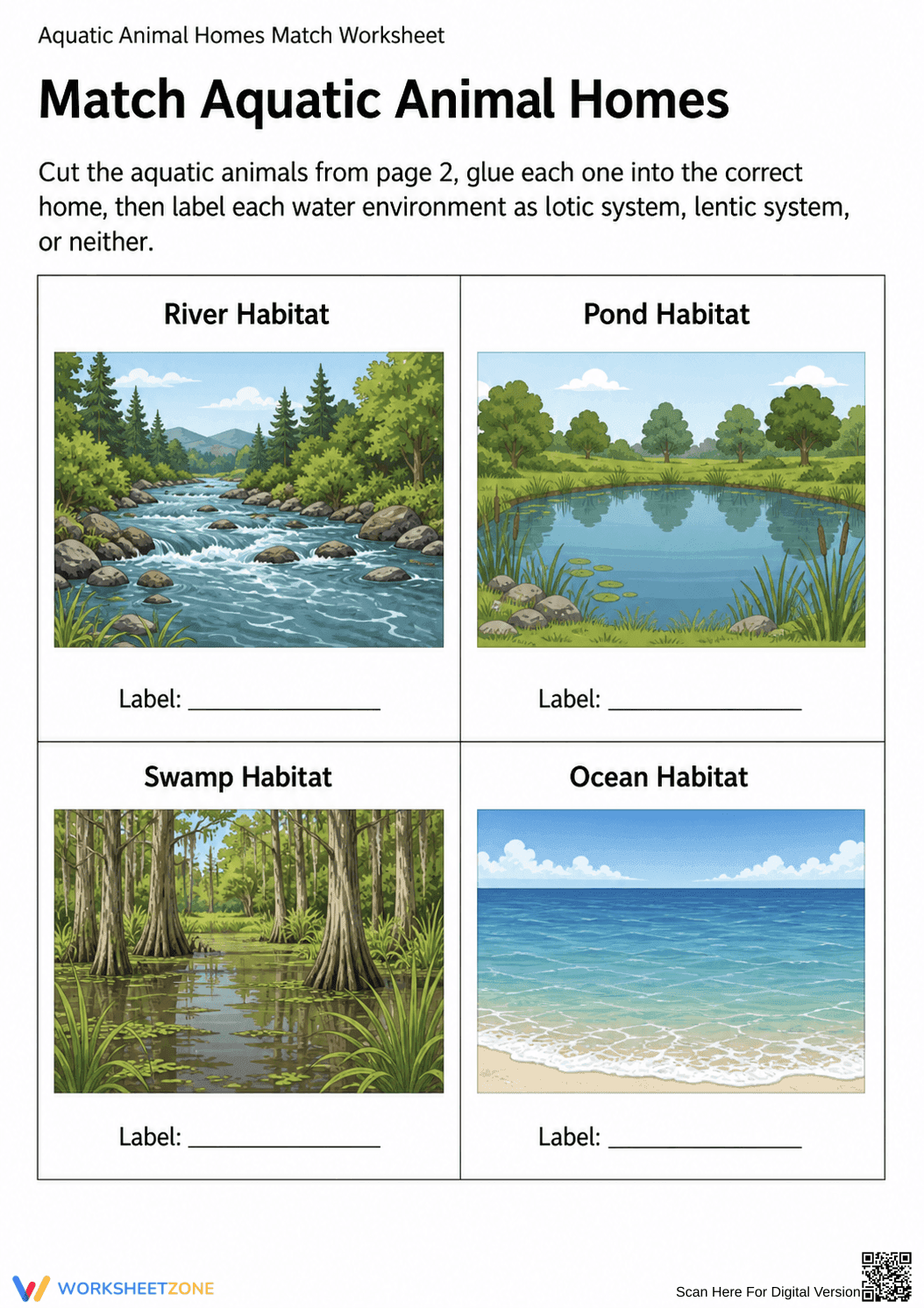
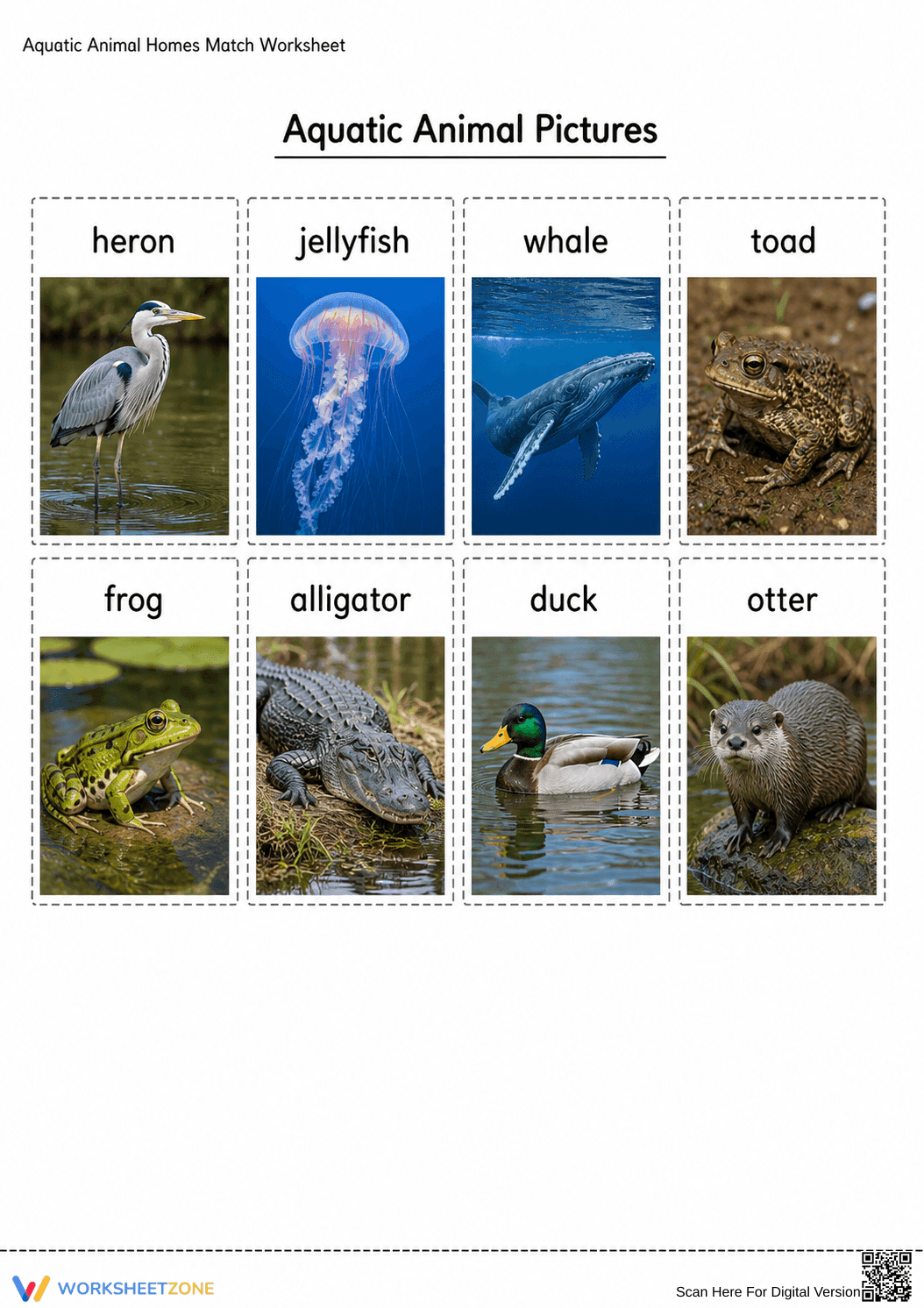
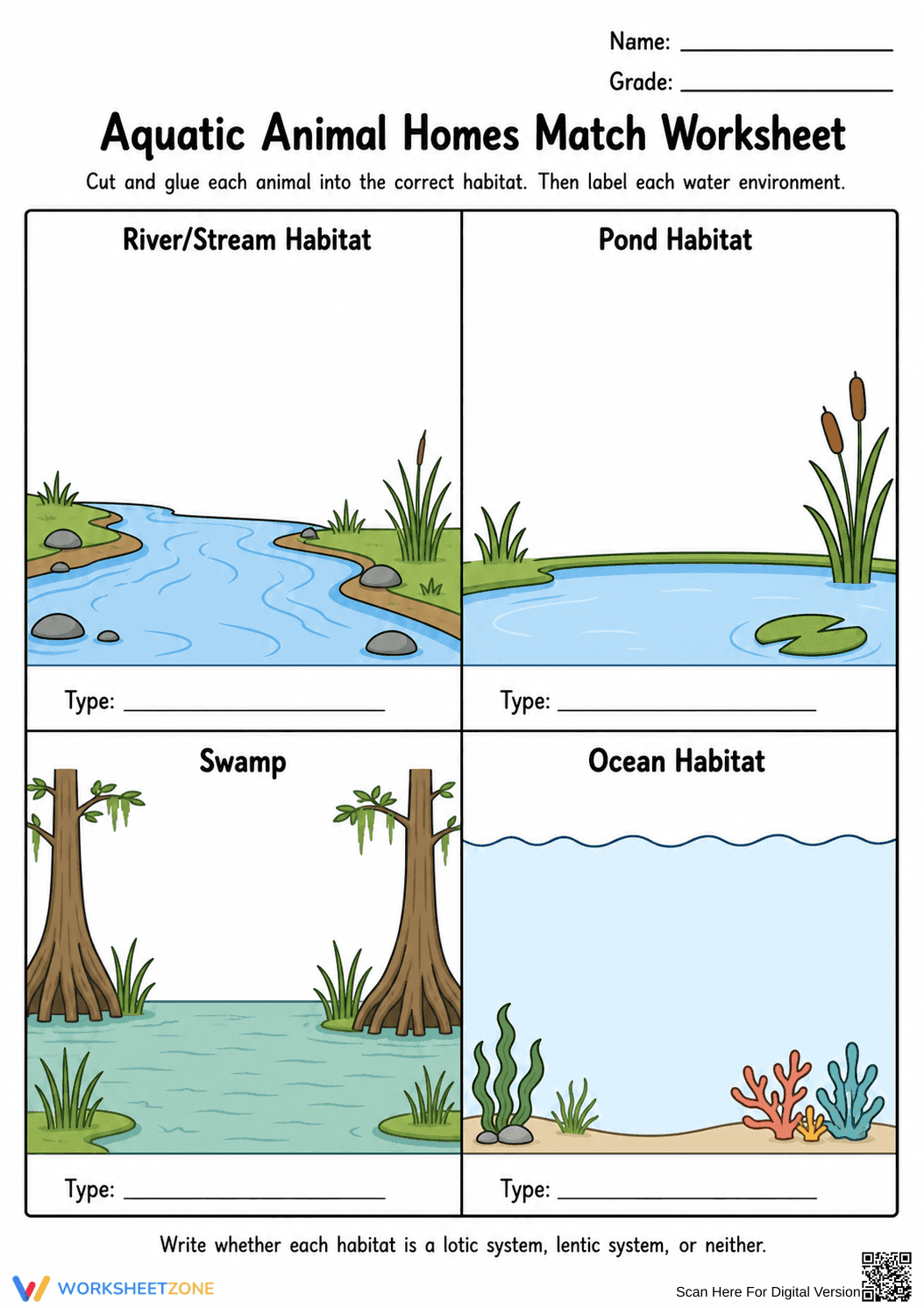
This resource includes three distinct pages to support student learning. The first page serves as a visual reference guide, displaying vibrant illustrations of river, pond, swamp, and ocean habitats. The second page provides eight photographic cut-outs of aquatic animals, including a heron, jellyfish, and otter. The final activity page features four blank habitat quadrants where students will glue their animals and write labels identifying each as a lotic or lentic water system.
- Guided practice: Students begin by reviewing the reference page to understand the visual differences between the four aquatic environments and the concepts of lotic (flowing) versus lentic (still) water.
- Supported practice: Learners cut out the eight animal photographs, using fine motor skills to prepare their sorting materials while discussing where each creature might live.
- Independent practice: Students independently glue each animal into the correct habitat quadrant and write the appropriate water system label for each environment.
This gradual-release approach ensures students build confidence before applying their knowledge independently.
This activity is aligned to the Next Generation Science Standards, specifically focusing on 2-LS4-1: Make observations of plants and animals to compare the diversity of life in different habitats. It also introduces foundational vocabulary for water systems. Both standard codes can be copied directly into lesson plans, IEP goals, or district curriculum mapping tools.
This worksheet is highly effective as an independent science center activity following a whole-class lesson on aquatic biomes. Teachers can place the reference sheet in a clear sleeve at the center while students complete the cut-and-paste activity page. Alternatively, it serves as an engaging interactive notebook entry. As a formative assessment tip, observe students while they sort the animals before gluing; ask them to explain their reasoning for placing the jellyfish in the ocean versus the pond to check for understanding. Expected completion time is 20 to 25 minutes.
This resource is designed for first-grade students, though it is easily adaptable for kindergarten or second-grade classrooms studying ecosystems. The inclusion of real photographs alongside illustrated habitats provides excellent visual scaffolding for English Language Learners and visual learners. It pairs perfectly with a read-aloud book about water habitats or a direct instruction lesson on lotic and lentic systems.
Understanding where organisms live is a fundamental component of early elementary science education. This activity supports 2-LS4-1 by helping students compare the diversity of life in different habitats through hands-on sorting. According to a ScienceDirect TpT Analysis, incorporating tactile activities like cutting and pasting into science instruction significantly improves vocabulary retention and conceptual understanding in young learners. By requiring students to physically move and categorize the animals into specific aquatic environments, this worksheet moves beyond rote memorization and encourages active cognitive processing. The integration of academic vocabulary, such as lotic and lentic systems, further challenges students to classify environments based on water movement. This multi-sensory approach ensures that foundational ecological concepts are firmly established, preparing students for more complex biological studies in subsequent grade levels.


