


























Views
Downloads

Grade 5 Reading Comprehension — Printable No-Prep Worksheet
Paste this activity's link or code into your existing LMS (Google Classroom, Canvas, Teams, Schoology, Moodle, etc.).
Students can open and work on the activity right away, with no student login required.
You'll still be able to track student progress and results from your teacher account.
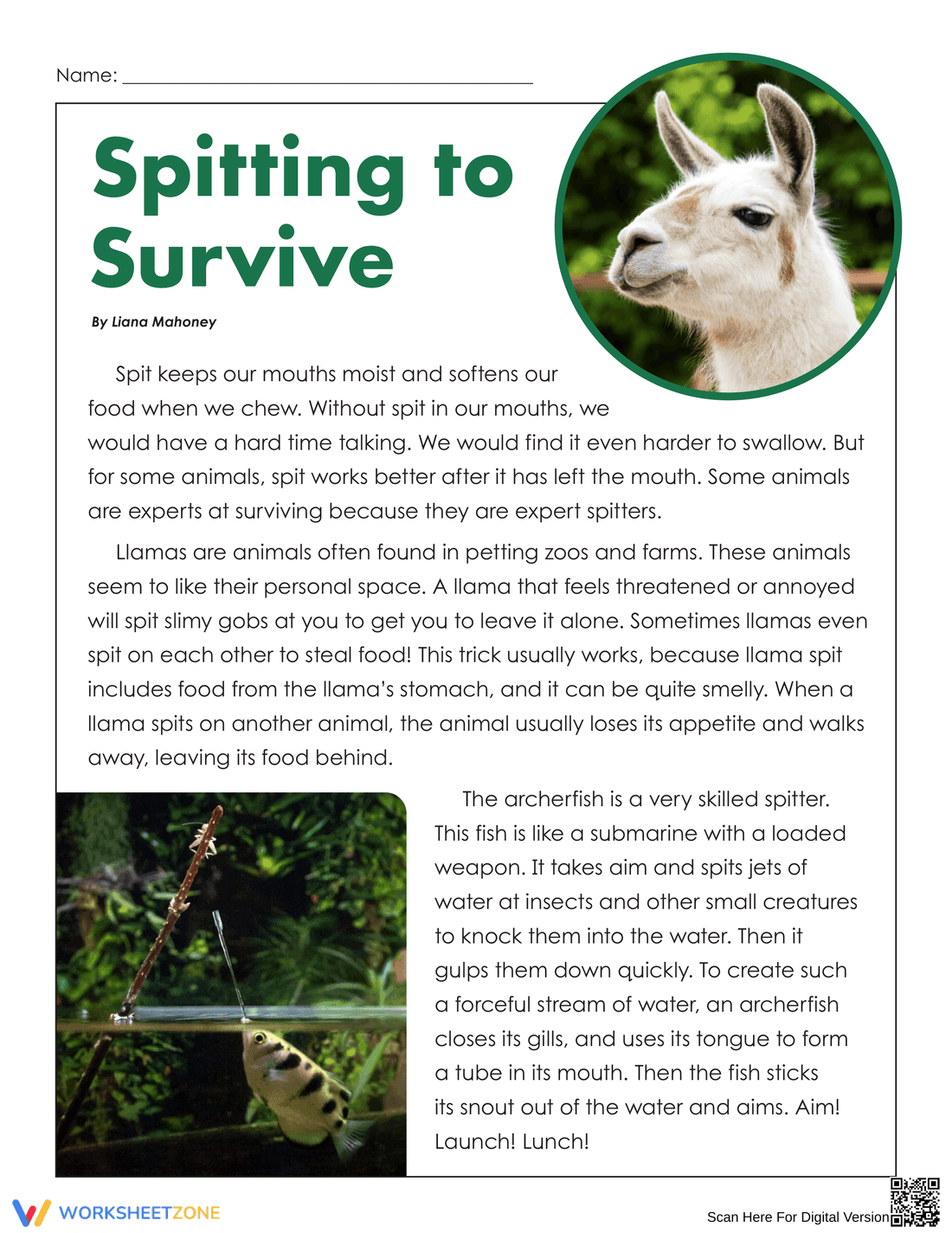
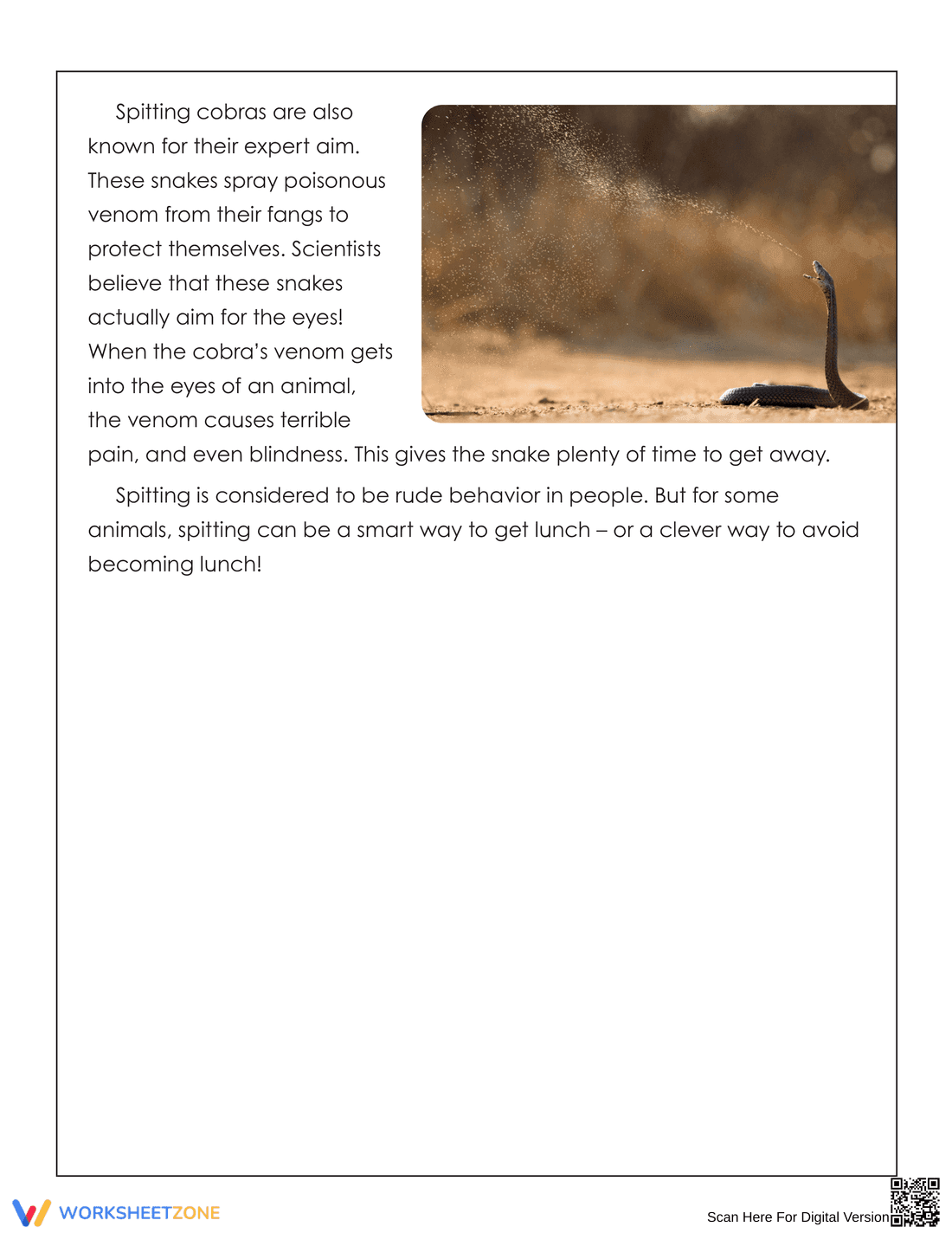
This Grade 5 reading comprehension worksheet builds essential informational text skills by having students read an engaging passage about animals that spit to survive. Students will practice extracting key details, determining main ideas, and answering text-dependent questions to strengthen their overall reading proficiency and analytical abilities.
At a Glance
- Grade: 5 · Subject: ELA
- Standard:
CCSS.ELA-LITERACY.RI.5.1— Quote accurately from a text to explain explicitly and draw inferences- Skill Focus: Reading Comprehension
- Format: 2 pages · 5 problems · Answer key included · PDF
- Best For: Independent practice and sub plans
- Time: 15–20 minutes
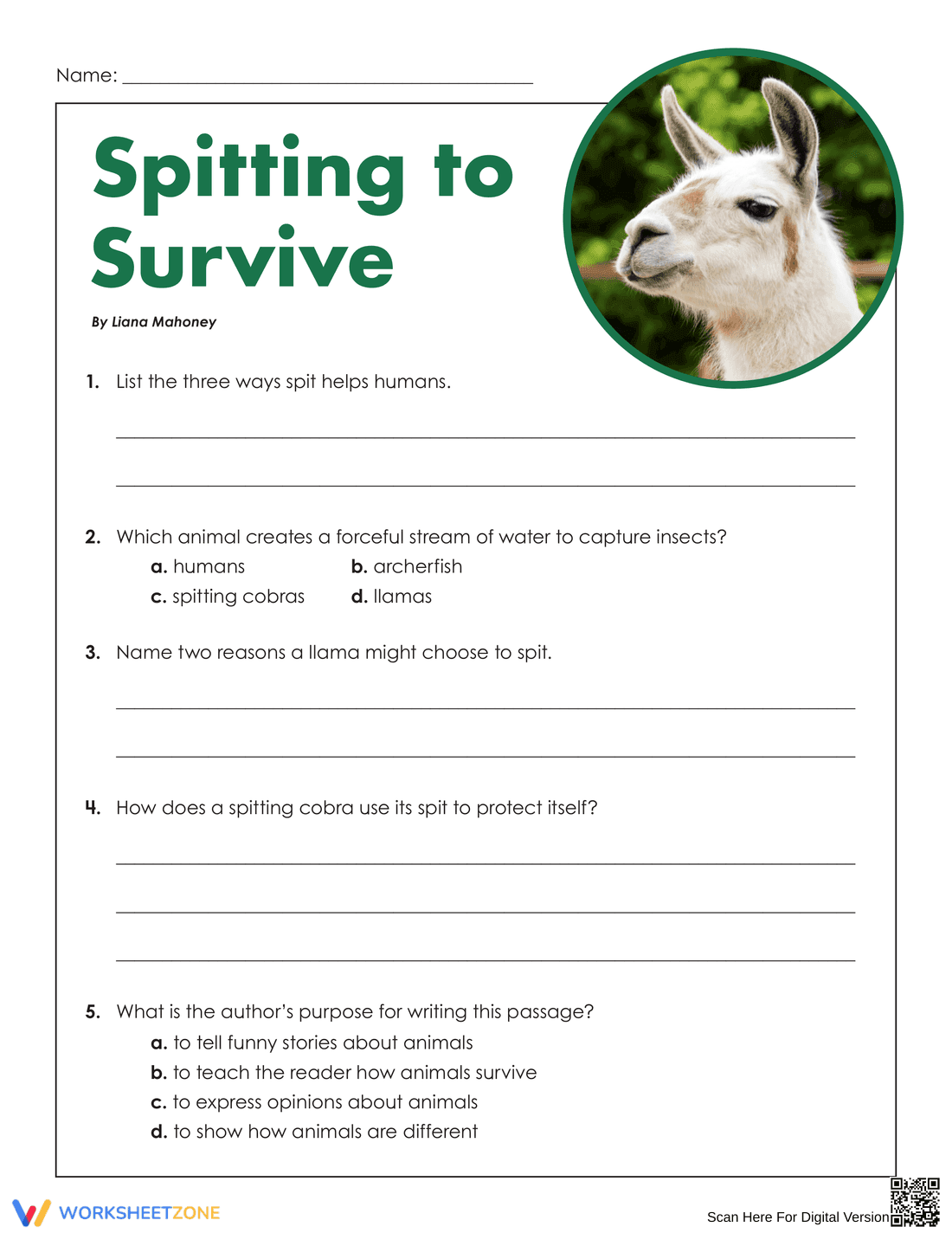
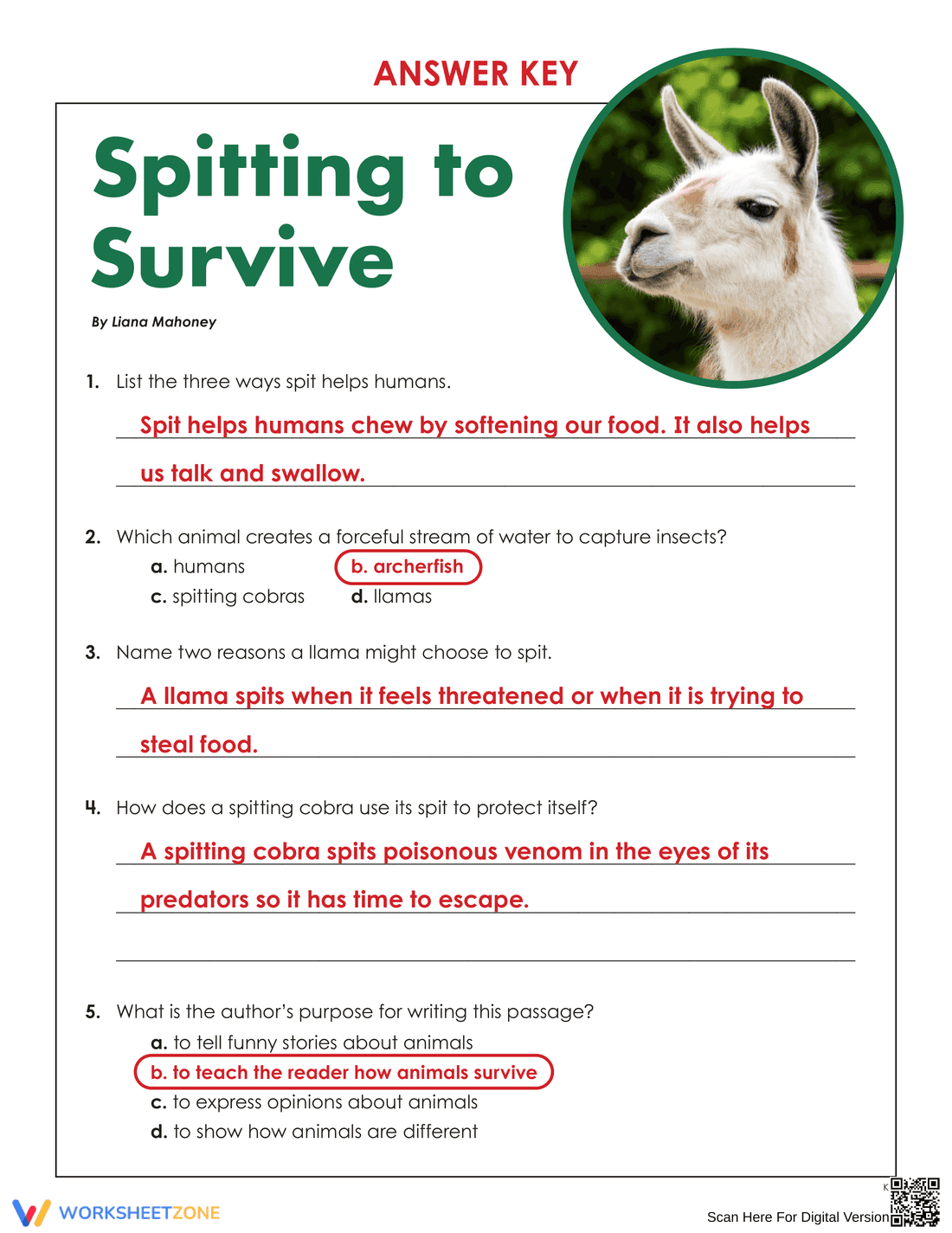
This resource features a high-interest informational passage titled "Spitting to Survive," detailing the unique survival mechanisms of llamas, archer fish, and spitting cobras. Following the text, students will tackle five text-dependent questions that require them to return to the passage for evidence. The two-page layout includes the reading material on the first page and the comprehension questions on the second, complete with a full answer key for straightforward grading.
Designed for maximum efficiency, this worksheet requires absolutely zero teacher setup. Print (1 minute): Simply download the PDF and print a class set. Distribute (1 minute): Hand out the passage and question sheet to students. Review (3 minutes): Use the included answer key to quickly check student responses or guide a whole-class review. The self-explanatory nature of the text makes it an ideal, stress-free option for emergency sub plans or independent reading stations.
This worksheet is tightly aligned to CCSS.ELA-LITERACY.RI.5.1: "Quote accurately from a text when explaining what the text says explicitly and when drawing inferences from the text." It also supports secondary goals in determining main ideas and summarizing informational content. Both standard codes can be copied directly into lesson plans, IEP goals, or district curriculum mapping tools.
Integrate this passage during your dedicated reading block as independent practice after a mini-lesson on finding text evidence. Alternatively, use it as a formative assessment tool; observe whether students are actively highlighting or underlining key details in the text before answering the questions. Expected completion time ranges from 15 to 20 minutes, depending on the student's reading fluency level.
This resource is primarily designed for fifth-grade students developing their informational reading skills. The high-interest topic naturally engages reluctant readers, while the straightforward text structure provides necessary scaffolding for students reading slightly below grade level. Pair this passage with an anchor chart on citing text evidence to maximize instructional impact.
Mastering informational text analysis is a critical milestone for upper elementary students. This resource targets CCSS.ELA-LITERACY.RI.5.1, requiring learners to quote accurately from a text to explain explicitly and draw inferences. According to a recent ScienceDirect TpT Analysis, high-interest, non-fiction passages significantly increase student engagement and retention of comprehension strategies compared to traditional textbook excerpts. When students interact with fascinating topics like animal survival adaptations, they are more likely to actively apply critical thinking skills and seek out textual evidence to support their conclusions. By providing structured practice with text-dependent questions, educators can effectively bridge the gap between basic decoding and advanced analytical reading. This targeted approach ensures students build the necessary stamina and comprehension skills required for middle school readiness and standardized assessments.


