


























Views
Downloads

Printable Book Selection Worksheet | Grade K ELA
Paste this activity's link or code into your existing LMS (Google Classroom, Canvas, Teams, Schoology, Moodle, etc.).
Students can open and work on the activity right away, with no student login required.
You'll still be able to track student progress and results from your teacher account.
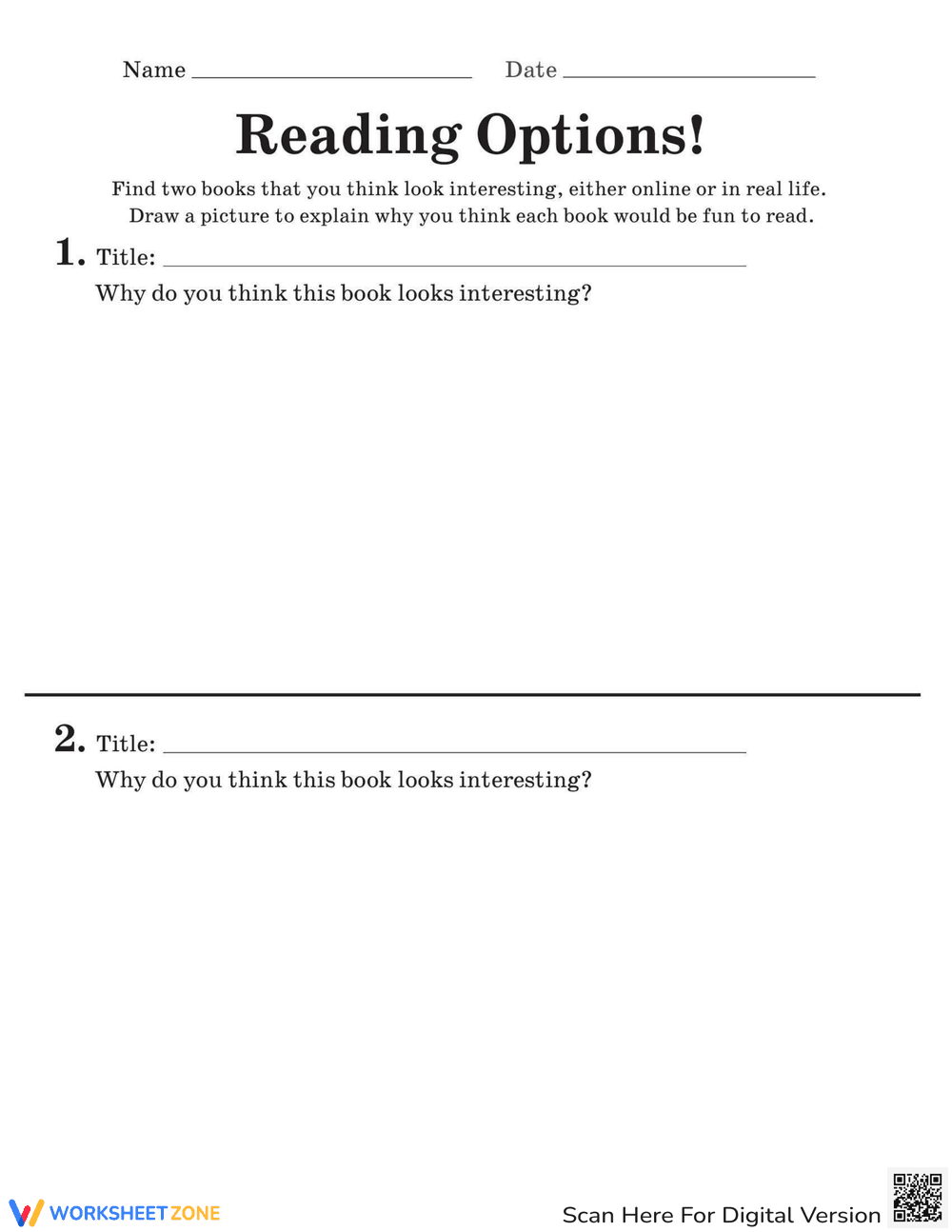
This Kindergarten reading worksheet helps young learners actively engage with texts by selecting books that capture their interest. Students practice early literacy skills by identifying titles and illustrating their reasoning, fostering a sense of purpose and excitement for independent or group reading activities.
At a Glance
- Grade: Kindergarten · Subject: ELA
- Standard:
CCSS.ELA-LITERACY.RL.K.10— Engage in reading activities with purpose- Skill Focus: Book selection and expressing interest
- Format: 1 page · 2 tasks · Open-ended · PDF
- Best For: Independent reading centers
- Time: 15–20 minutes
This single-page resource features two structured sections where students document their reading choices. Each section includes a designated line for writing or copying a book title, followed by a large, unlined space for drawing a picture. The open-ended format allows pre-writers to express their thoughts visually while providing space for early writers to practice letter formation. No answer key is required, as responses are entirely personalized to the student's interests.
Zero-Prep Workflow
- Print (1 minute): Generate the PDF and print a class set. The black-and-white design is ink-friendly.
- Distribute (1 minute): Hand out the worksheets alongside a classroom library bin or during a school library visit.
- Review (3 minutes): Circulate as students draw, asking them to verbally explain why their chosen books look fun to read.
With under two minutes of teacher prep, this activity suits emergency sub plans or quick literacy transitions.
This worksheet aligns directly with CCSS.ELA-LITERACY.RL.K.10: "Actively engage in group reading activities with purpose and understanding." By asking students to intentionally select books and articulate their interest through drawing, the activity builds the foundational purpose required for active reading engagement. The standard code can be copied directly into lesson plans, IEP goals, or district curriculum mapping tools.
How to Use It
Deploy this worksheet during independent reading centers or after a library visit. Before a new unit, allow students to browse topical books and select favorites. As a formative assessment observation tip, listen to students as they describe their drawings; note whether they reference the book's cover art, topic, or prior knowledge to justify their choice. Expected completion time ranges from 15 to 20 minutes depending on drawing detail.
Who It's For
This resource is designed for Kindergarten students developing early literacy and decision-making skills. It naturally differentiates for varying ability levels: pre-writers can dictate the title to a teacher and focus entirely on the illustration, while advanced students can attempt phonetic spelling for the titles and add labels to their drawings. Pair this worksheet with a diverse classroom library or a direct instruction lesson on how to preview a book by looking at its cover and title.
Fostering student agency in text selection is critical for early literacy. When young learners have structured opportunities to choose reading materials, intrinsic motivation increases. This worksheet supports CCSS.ELA-LITERACY.RL.K.10 by requiring students to engage in reading activities with purpose. By asking children to visually articulate why a book looks interesting, educators can bridge the gap between visual processing and reading comprehension. According to Fisher & Frey (2014), providing students with guided choices in their reading materials not only builds stamina but also encourages a deeper connection to the text. This simple, one-page activity transforms a standard library visit into an intentional exercise in critical thinking, ensuring that even the youngest readers begin to understand the purpose behind their reading choices.


