


























Views
Downloads

CCSS.RI.7.10 Worksheet: ASL Reading — Grade 7 Aligned
Paste this activity's link or code into your existing LMS (Google Classroom, Canvas, Teams, Schoology, Moodle, etc.).
Students can open and work on the activity right away, with no student login required.
You'll still be able to track student progress and results from your teacher account.
This Grade 7 reading comprehension worksheet helps students master nonfiction text analysis through an engaging passage about American Sign Language. Students read the informational text and answer three targeted questions to demonstrate their understanding of key details. Use this resource to build critical literacy skills.
At a Glance
- Grade: Grade 7 · Subject: Reading
- Standard:
CCSS.RI.7.10— Read and comprehend literary nonfiction at the high end of the grade band- Skill Focus: Nonfiction reading comprehension
- Format: 2 pages · 3 problems · Answer key not included · PDF
- Best For: Independent reading practice and assessment
- Time: 20–30 minutes
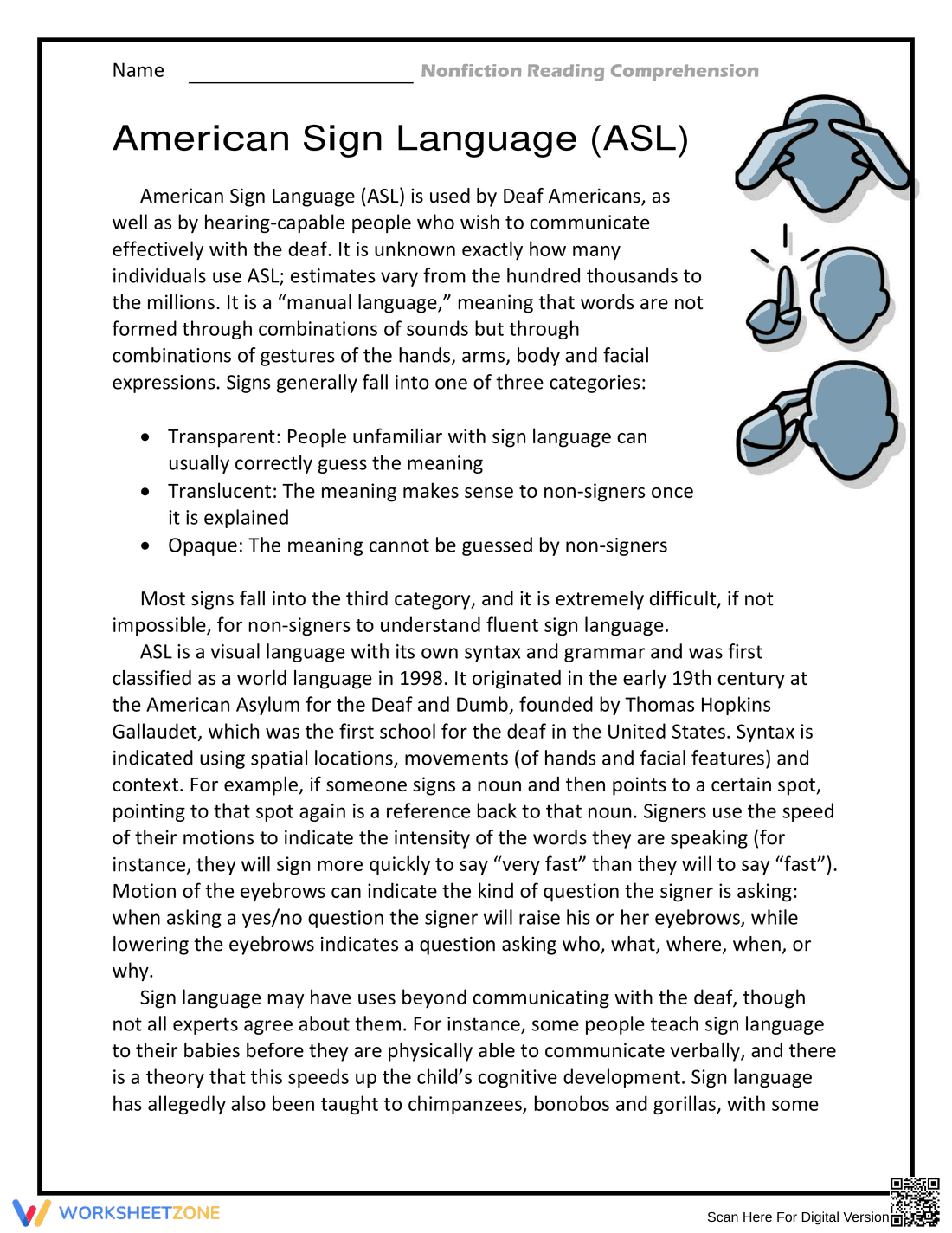
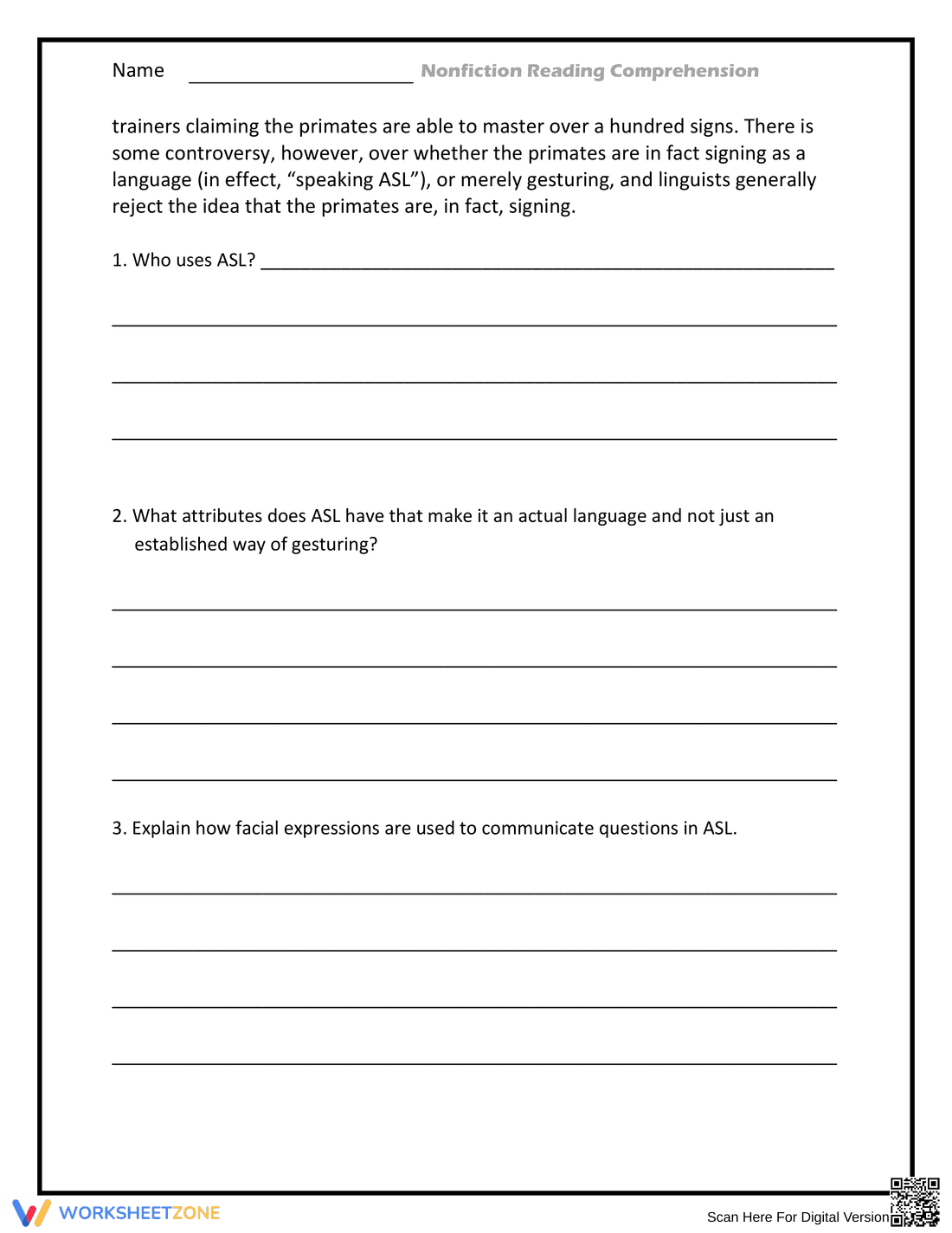
This two-page resource features an informational passage detailing the history and structure of American Sign Language (ASL). The text introduces key terms like transparent, translucent, and opaque signs. The second page contains three open-ended comprehension questions requiring students to write complete sentences, citing evidence directly from the text.
To measure progress toward standard mastery, the three tasks evaluate different levels of comprehension. The first question assesses basic recall of who uses ASL. The second requires students to explain the linguistic attributes qualifying ASL as a distinct language. The final question asks students to synthesize how facial expressions convey grammatical meaning. Teachers can map these responses to proficiency levels—approaching, meeting, or exceeding—and record scores directly into gradebooks or IEP progress notes.
Standards Alignment
This worksheet aligns with Common Core Standard CCSS.RI.7.10, requiring students to read and comprehend literary nonfiction in the grades 6-8 text complexity band. Engaging with this complex text builds the stamina required for middle school reading. This standard code can be copied directly into lesson plans, IEP goals, or district curriculum mapping tools.
How to Use It
This resource is ideal for independent practice during a reading lesson. Assign the passage for silent reading, then have students complete the three questions. Walk around to observe their ability to locate evidence in the text. This activity takes 20 to 30 minutes and serves as a great formative assessment.
Who It's For
This worksheet is designed for seventh-grade students, but works well for eighth-grade review or sixth-grade enrichment. It benefits English language learners needing focused practice with structured informational texts. Pair this worksheet with an introductory video on basic ASL signs to maximize student engagement.
According to the Fisher & Frey (2014) framework for close reading, exposing middle school students to complex informational texts is vital for developing academic vocabulary and critical thinking skills. This worksheet supports that goal by aligning with the CCSS.RI.7.10 standard, which focuses on reading and comprehending grade-level nonfiction. By analyzing the structure of American Sign Language, students practice extracting key details and summarizing complex ideas. The three open-ended questions require students to formulate written responses based on textual evidence, reinforcing the connection between reading comprehension and writing. This structured approach ensures that students build the necessary stamina for assessments while gaining exposure to diverse cultural topics. Educators can confidently integrate this resource into their curriculum, knowing it meets academic standards and promotes essential literacy outcomes for diverse learners.


