




























Proven Ecological Pyramids Worksheet | Grades 6-12 Science
Paste this activity's link or code into your existing LMS (Google Classroom, Canvas, Teams, Schoology, Moodle, etc.).
Students can open and work on the activity right away, with no student login required.
You'll still be able to track student progress and results from your teacher account.
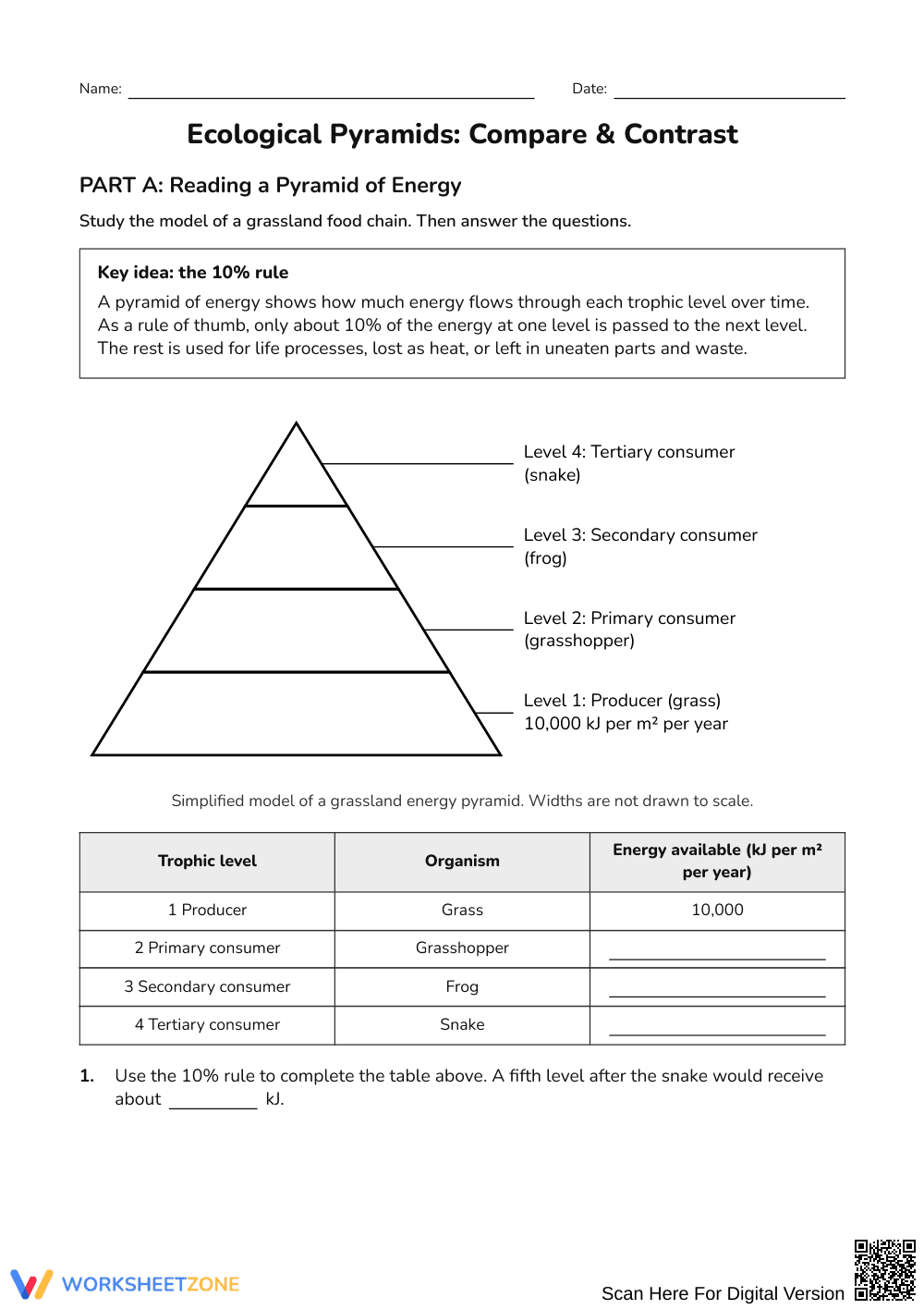
This comprehensive science worksheet guides secondary students through comparing and contrasting ecological pyramids across trophic levels. Students examine energy flow, organism counts, and biomass using realistic biological data sets. By evaluating the 10% rule, learners discover why energy pyramids remain upright while others can invert.
At a Glance
- Grade: Grades 6–12 · Subject: Science
- Standard: Model energy flow, biomass distribution, and trophic relationships in ecosystems
- Skill Focus: Compare & contrast ecological pyramids
- Format: 4 pages · 27 problems · Answer key included · PDF
- Best For: Ecosystem modeling and concept mastery
- Time: 45–60 minutes
What's Inside
What's Inside provides 4 pages of focused analytical tasks and a complete 4-page answer key. Students analyze grassland energy values, evaluate inverted pyramids in oak woodland and marine habitats, and synthesize key distinctions using a comparative matrix organizer.
Skill Progression
- Guided practice (Part A): Students study a grassland model, apply the 10% rule to fill data tables, and explain why energy pyramids remain upright.
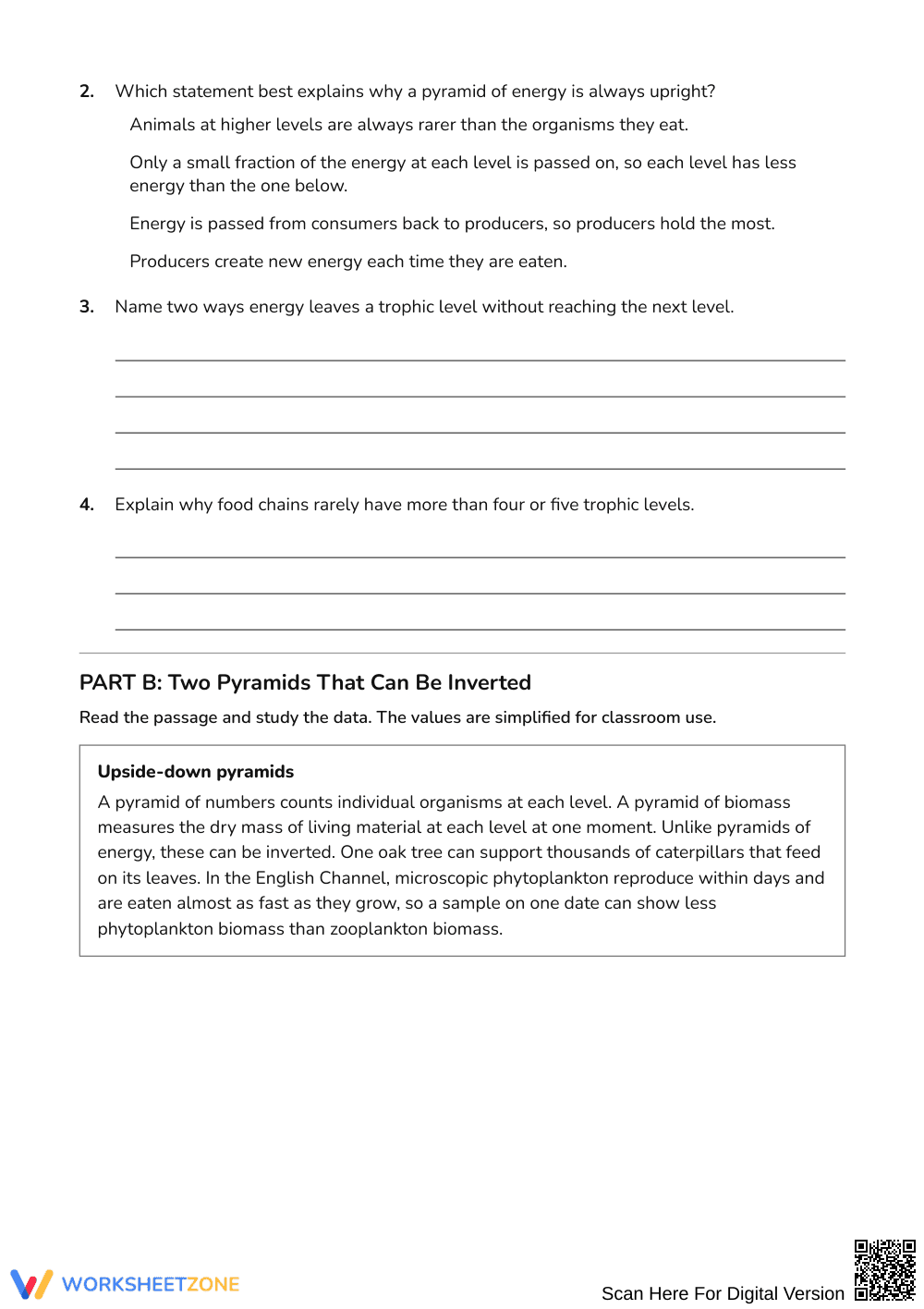
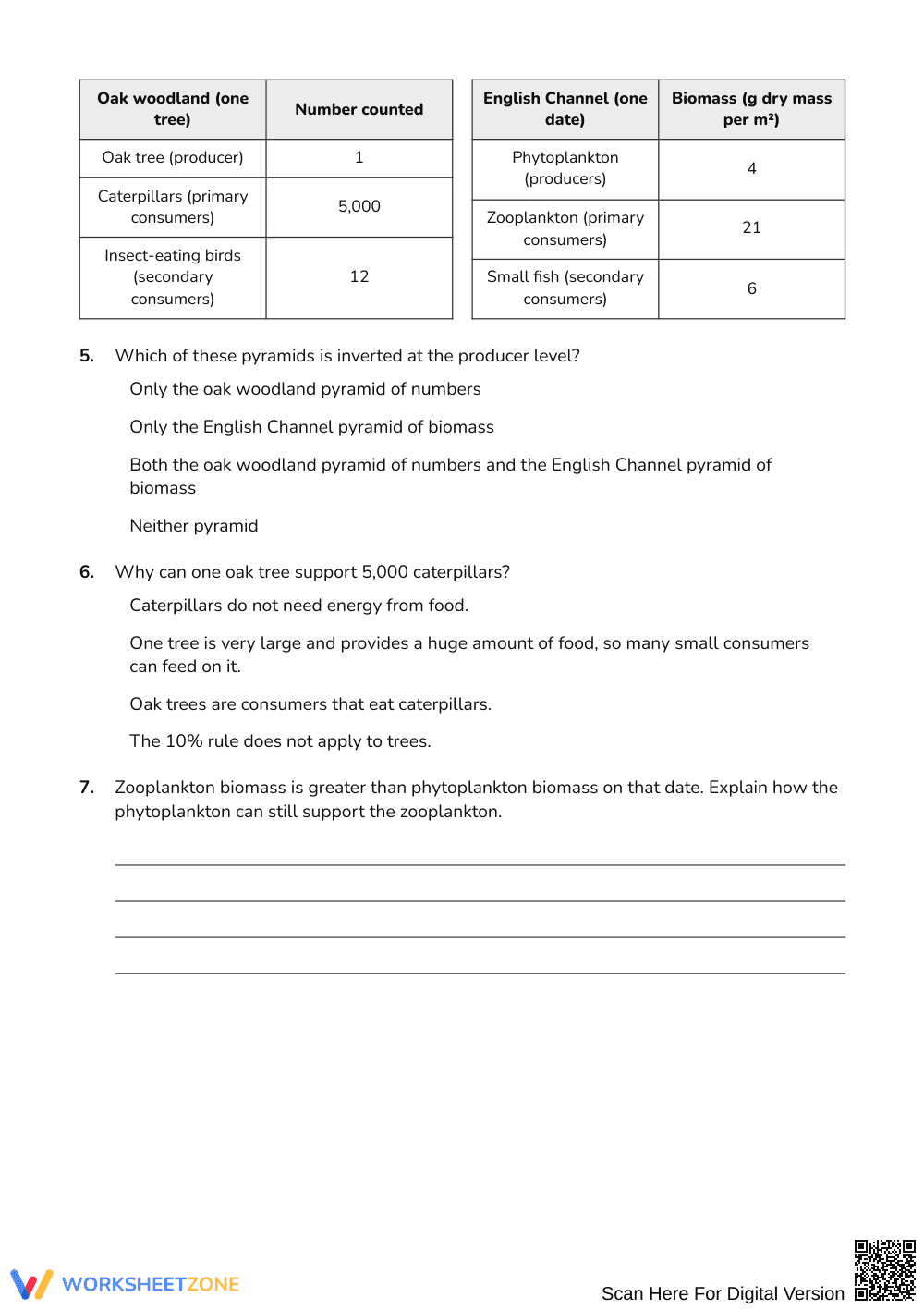
- Supported practice (Part B): Learners analyze data from oak woodlands and the English Channel to explain inverted number and biomass pyramids.
- Independent practice (Part C): Students complete a four-part comparison matrix and formulate written explanations comparing ecological models.
This sequence implements a gradual-release model, progressing from guided calculations to independent scientific evaluation.
Standards Alignment
This worksheet aligns with middle and high school life science standards on ecosystem dynamics and energy transfer. Students use scientific models to evaluate energy flow and matter cycling across trophic levels. Both standard codes can be copied directly into lesson plans, IEP goals, or district curriculum mapping tools.
How to Use It
Use this worksheet after direct instruction on food chains and trophic efficiency. During independent work, check Part B to confirm students understand why instantaneous marine biomass inverts while energy flow stays upright. Expected completion time is 45 to 60 minutes.
Who It's For
Designed for Grades 6–12 life science and biology classes, this resource supports diverse learners through structured data tables and conceptual writing prompts. Pair this practice with an introductory trophic levels lesson or ecosystem food web diagram.
Fisher & Frey (2014) emphasize that purposeful scaffolding through structured compare-and-contrast analysis significantly accelerates secondary science mastery. When students contrast energy flow with instantaneous biomass measurements across trophic levels, they reconcile common ecological misconceptions regarding food chain length and producer abundance. This 4-page worksheet guides learners through 27 calibrated tasks that move sequentially from concrete calculations using the 10% rule to multi-variable matrix analysis. By modeling realistic ecological systems such as temperate oak woodlands and marine phytoplankton dynamics, the resource reinforces how thermodynamic constraints govern living systems. The gradual-release structure provides explicit support for identifying inverted trophic relationships before asking students to justify scientific model selection. As documented in Fisher & Frey (2014), providing comparative organizers alongside real-world quantitative data solidifies conceptual transfer, enabling learners to explain why usable energy diminishes rapidly across successive consumer levels in diverse terrestrial and aquatic biomes.


