


























Views
Downloads


Printable Fact-Checking Word Search | Grades 4–5 ELA
Paste this activity's link or code into your existing LMS (Google Classroom, Canvas, Teams, Schoology, Moodle, etc.).
Students can open and work on the activity right away, with no student login required.
You'll still be able to track student progress and results from your teacher account.
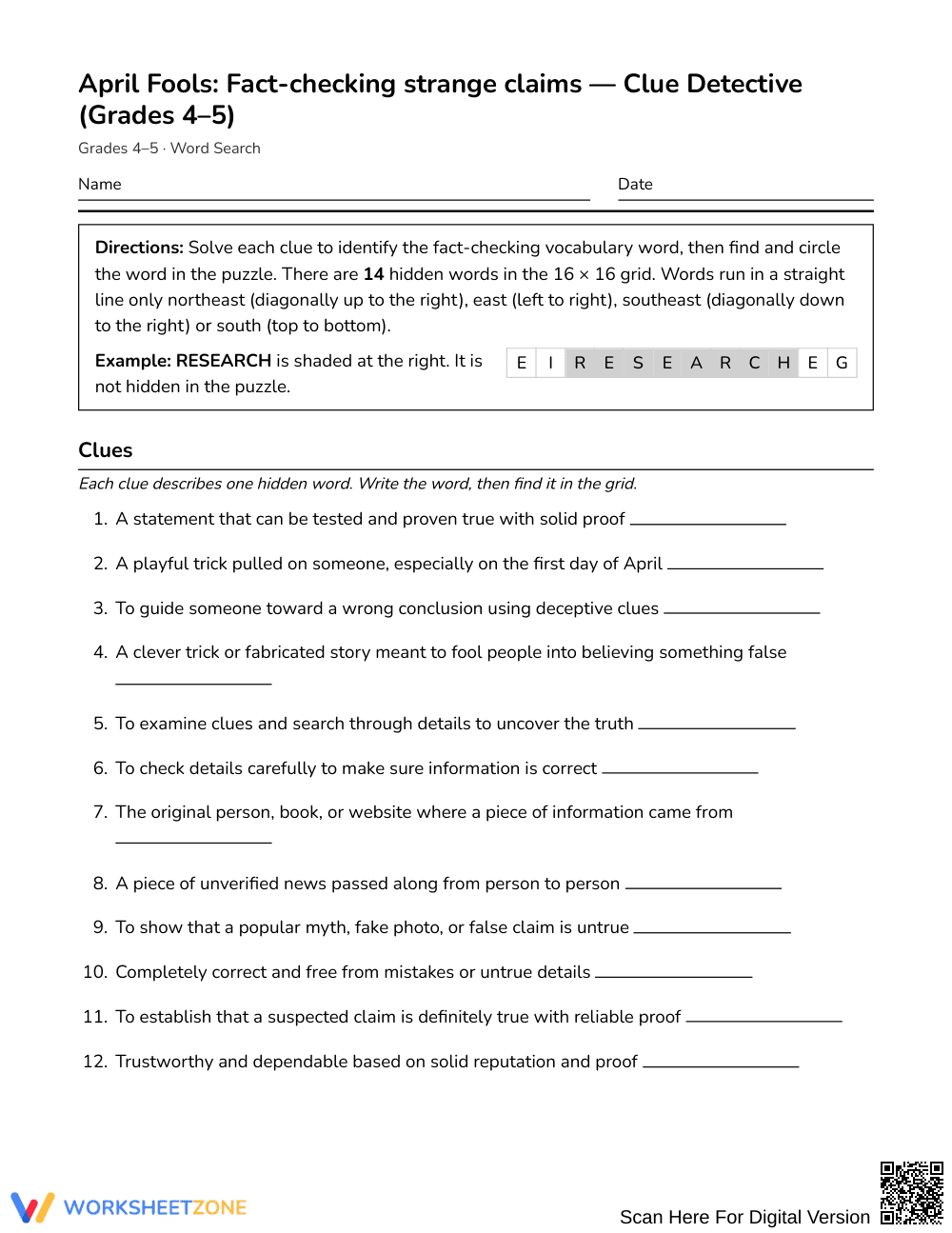
This fact-checking word search equips students in Grades 4–5 with critical media literacy terms needed to evaluate surprising claims and questionable information. By defining key vocabulary and locating terms within the grid, learners strengthen reading comprehension and reinforce text analysis skills essential for inquiry.
At a Glance
- Grade: Grades 4–5 · Subject: English Language Arts (ELA)
- Standard: Not standards-assessed — vocabulary enrichment
- Skill Focus: fact-checking strange claims through contextual definitions
- Format: 3 pages · 14 words · Full three-page answer key included · Printable PDF
- Best For: Informational text introductory lessons, media literacy warm-ups, or vocabulary centers
- Time: 20–30 minutes of focused classroom work
What's Inside
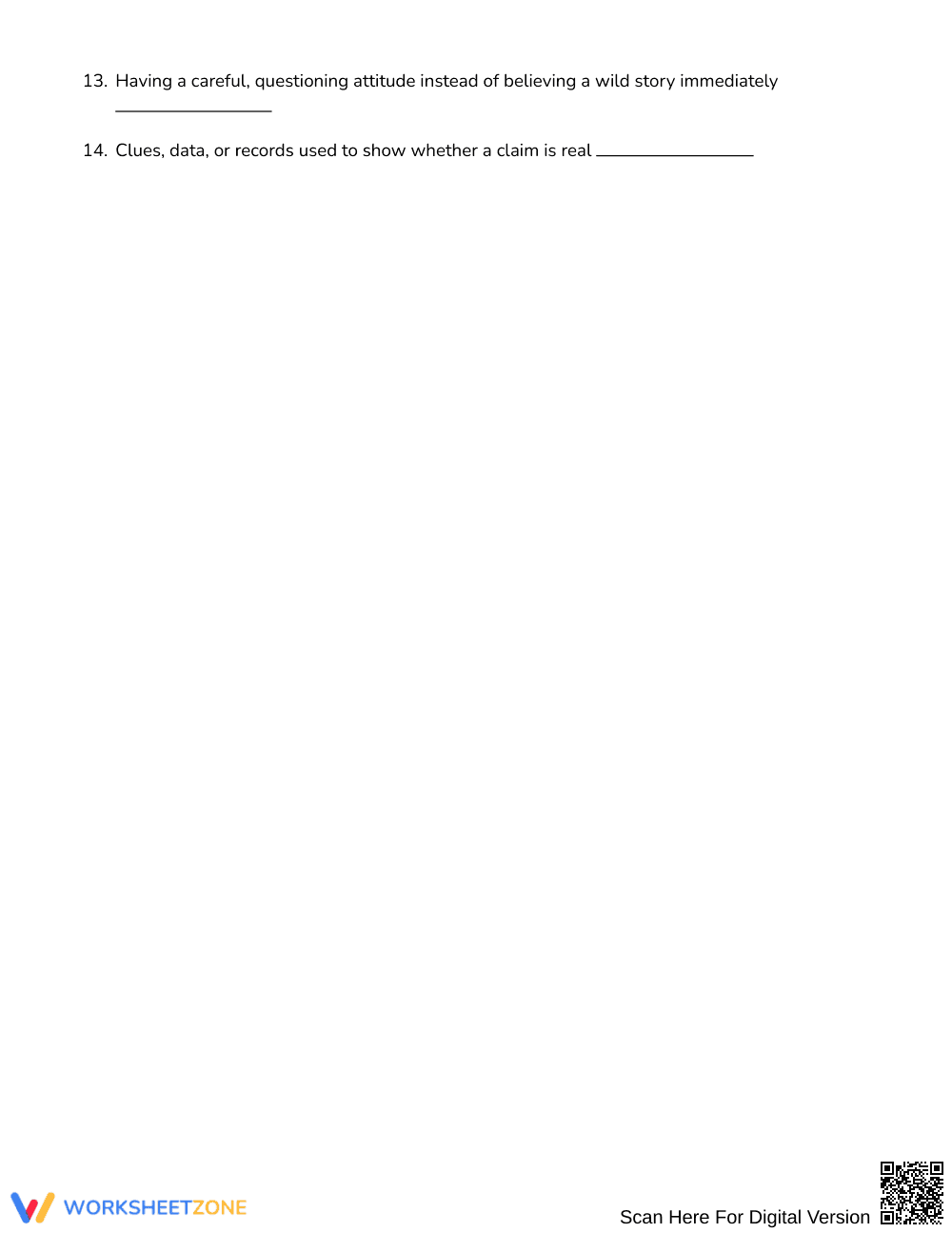
This 3-page printable activity features 14 words focused on analyzing claims and evaluating sources. Students read definitions for terms such as HOAX, EVIDENCE, VERIFY, SKEPTICAL, and CREDIBLE, then search for each word. The download includes student puzzle pages and a 3-page answer key with circled solutions.
How the Puzzle Works
This activity combines clue-solving with a focused word search format:
- Clue Detective Format: Students solve 14 sentence clues to identify each fact-checking term.
- 16 x 16 Grid: Words are hidden across a 16 x 16 letter grid.
- Word Directions: Terms run northeast (NE), east (E), southeast (SE), and south (S).
- Shuffled Word Bank: Words appear in shuffled order to prompt definitional thinking.
Standards Alignment
This resource provides targeted vocabulary enrichment and is not aligned to a specific standard. It develops foundational media literacy terminology that supports informational text comprehension and research across upper elementary instruction.
How to Use It
Use this word search before direct instruction to introduce key concepts during a media literacy unit or April Fools' lesson. Students can solve clues with a partner before evaluating deceptive texts. Alternatively, assign it after direct instruction to reinforce vocabulary mastery. During the 20 to 30 minutes of work time, observe whether students identify terms directly from clues or need support matching concepts.
Who It's For
This resource supports students in Grades 4–5 developing informational literacy. For emerging readers, underline clue keywords to assist decoding. For an extension, have learners use each term in an original sentence. Pair this activity with an informational article on hoaxes or a research anchor chart.
Vocabulary acquisition directly influences reading comprehension and critical analysis when students encounter unfamiliar informational texts. According to research by Fisher & Frey (2014), intentional exposure to domain-specific terminology through varied instructional tasks enables upper elementary learners to comprehend complex arguments and assess evidence effectively. This Grades 4–5 word search provides focused practice with 14 foundational media literacy terms, supporting students in fact-checking strange claims and evaluating text credibility without being tied to a single standard code. By pairing definitional clue solving with visual word location, the puzzle engages cognitive retrieval pathways that strengthen lexical automaticity. Educators utilizing this 3-page resource establish an accessible entry point for inquiry-based learning, ensuring students master the language required to verify sources, detect deceptive claims, and separate verified facts from rumors across both print and digital informational reading environments.


