





























0 Views
0 Downloads



0.0
0
Save
0 Likes
Share
Pet Store Math: Addition and Subtraction Practice
0 Views
0 Downloads

Paste this activity's link or code into your existing LMS (Google Classroom, Canvas, Teams, Schoology, Moodle, etc.).
Students can open and work on the activity right away, with no student login required.
You'll still be able to track student progress and results from your teacher account.
Information
Description
What It Is:
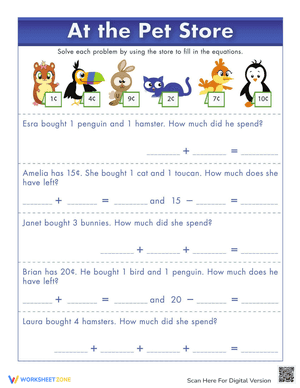
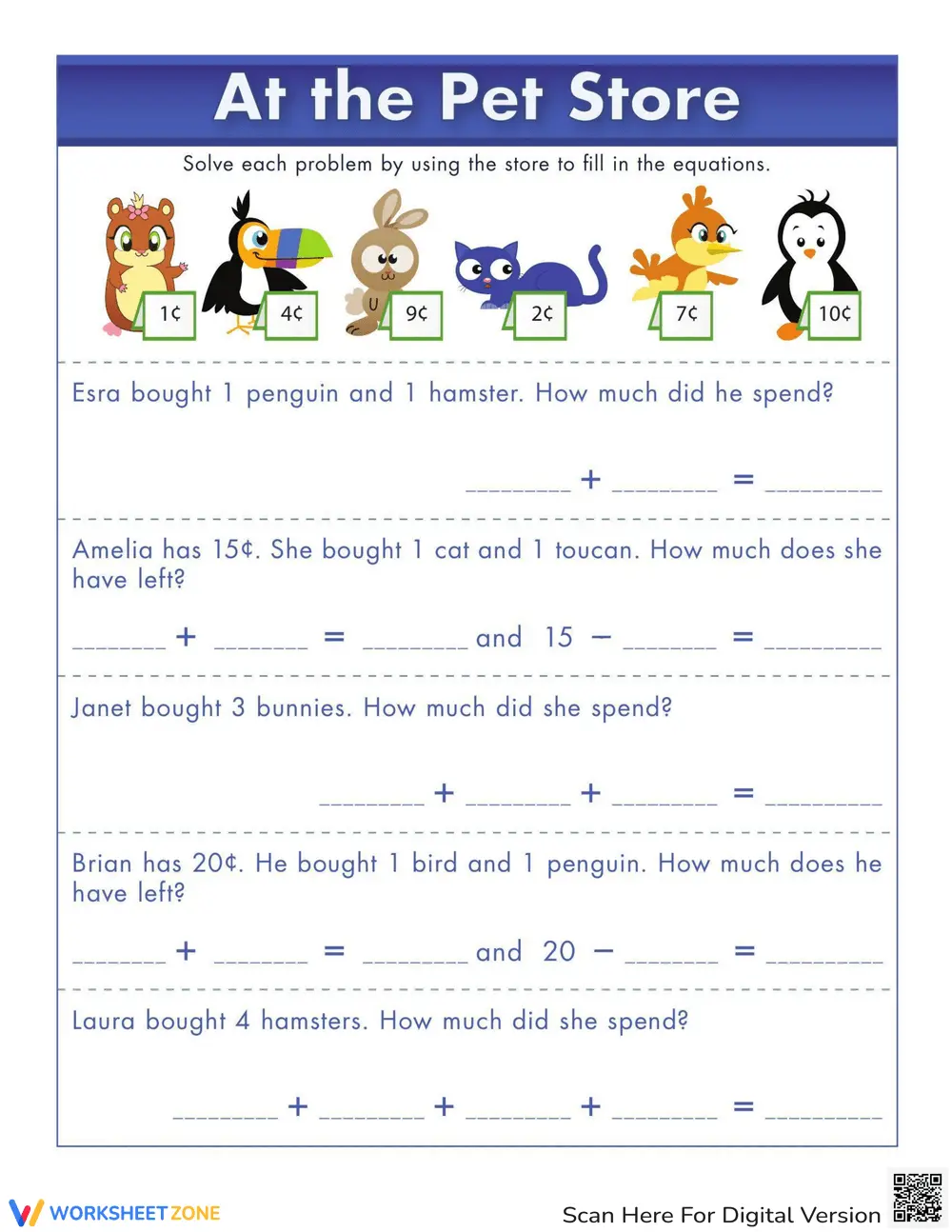
This is an educational worksheet titled 'At the Pet Store' designed to help students practice addition and subtraction. The worksheet presents word problems where students need to calculate the cost of items purchased at a pet store. Each animal is assigned a cent value: hamster (1¢), toucan (4¢), bunny (9¢), cat (2¢), bird (7¢), and penguin (10¢). Students fill in the blanks to complete the addition or subtraction equations to solve the problems.
Grade Level Suitability:
This worksheet is most suitable for 1st and 2nd grade students. The math problems involve simple addition and subtraction within 20, and the context of buying items at a pet store is relatable for this age group. The visual aids (pictures of animals with their prices) also make it appropriate for young learners.
Why Use It:
This worksheet helps students develop their problem-solving skills by applying addition and subtraction to real-world scenarios. It reinforces basic math facts and teaches students how to read and interpret word problems. The pet store theme can make learning math more engaging and enjoyable.
How to Use It:
First, explain the value of each animal to the students. Then, read each word problem aloud and have students identify the relevant information (which animals are being purchased and how many). Next, have them write the corresponding numbers in the provided blanks and solve the addition or subtraction problem. For subtraction problems, they need to perform addition first and then subtract the total from the initial amount.
Target Users:
The target users are 1st and 2nd grade students learning basic addition and subtraction. It is also helpful for students who need extra practice with word problems or those who benefit from visual aids in math instruction. It can be used by teachers in the classroom or by parents for homeschooling.


