


























Views
Downloads
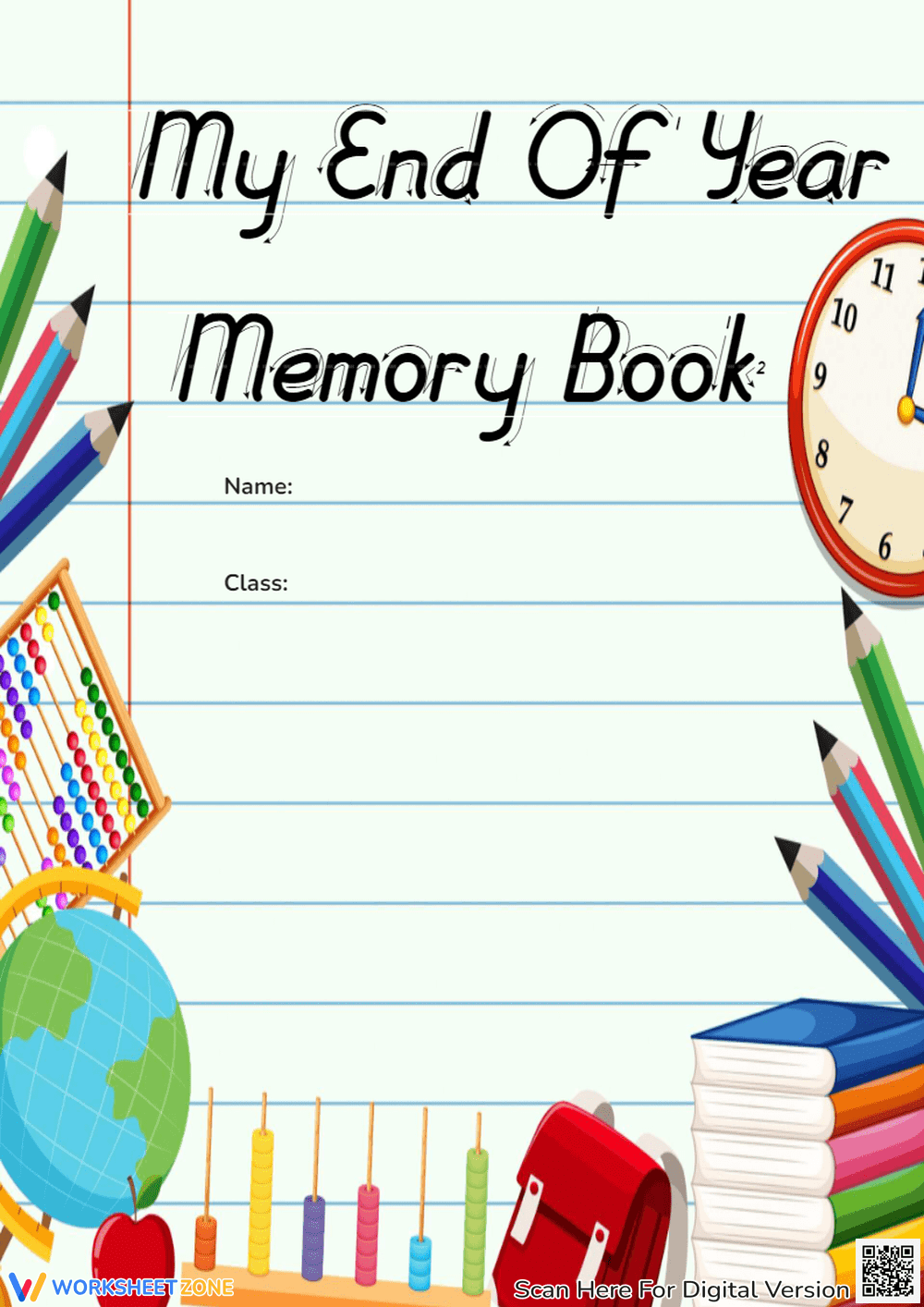

Printable End of Year Memory Book for Grades 1-3
Paste this activity's link or code into your existing LMS (Google Classroom, Canvas, Teams, Schoology, Moodle, etc.).
Students can open and work on the activity right away, with no student login required.
You'll still be able to track student progress and results from your teacher account.
Capture student memories and practice foundational writing skills with this engaging end-of-year activity. Students recall key school year events, trace title letters, and document personal growth. This resource helps young learners transition smoothly into summer while reflecting on their academic and social achievements.
At a Glance
- Grade: Grades 1–3 · Subject: Writing
- Standard:
CCSS.ELA-LITERACY.W.1.8— Recall information from experiences to answer questions- Skill Focus: Reflective writing and letter tracing
- Format: 5 pages · 5 prompts · Answer key not applicable · PDF
- Best For: End of school year reflection activity
- Time: 30–45 minutes
This memory book packet contains 5 structured pages designed for early elementary students. The cover page features large, clear tracing fonts to help students practice fine motor skills and letter formation. Subsequent pages include guided writing prompts, drawing boxes, and sentence frames that assist students in documenting their favorite subjects, classroom friendships, and goals for the upcoming year.
This resource features a simple three-step workflow to save teacher time during the busy final weeks of school. First, print the 5-page packet for your class, taking less than 2 minutes. Second, distribute the packets directly to students with no additional setup. Third, review the completed memory books during a group sharing session to celebrate progress. This self-explanatory layout makes it an ideal sub plan or independent morning work option.
Standards Alignment
This worksheet aligns directly with CCSS.ELA-LITERACY.W.1.8, which requires students to recall information from experiences. By writing about their school year, students practice structured recall and narrative composition. Additionally, the tracing elements support letter formation. Both standard codes can be copied directly into lesson plans, IEP goals, or district curriculum mapping tools.
How to Use It
Use this packet as a reflective writing activity during the final week of school. Introduce the memory book during direct instruction, then allow students to work independently over a 45-minute period. Teachers can use this time for formative assessment by observing letter stroke order and sentence structure. Completed books serve as a wonderful keepsake for families.
Who It's For
This resource is designed for students in Grade 1, Grade 2, and Grade 3. It offers scaffolding through tracing lines and sentence starters, making it accessible for English language learners and struggling writers. Pair this activity with a read-aloud book about the end of the school year to spark student reflection before writing.
This reflective writing resource supports early elementary literacy development by combining fine motor practice with cognitive recall. According to research from Fisher & Frey (2014), structured prompts and visual scaffolds like tracing lines help young writers organize their thoughts before transitioning to independent composition. By aligning with CCSS.ELA-LITERACY.W.1.8, this memory book encourages students to synthesize their personal experiences into written narratives, reinforcing the connection between spoken language and print. The 5-page layout provides a manageable framework for students in grades 1 through 3 to practice letter formation and sentence construction. Utilizing this structured reflection tool during the final weeks of the academic year helps solidify writing habits and supports retention of foundational ELA skills over the summer break. This approach ensures that students remain engaged while meeting core writing standards.


