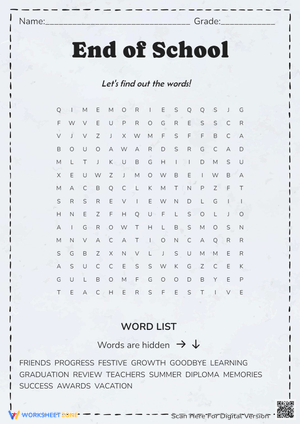
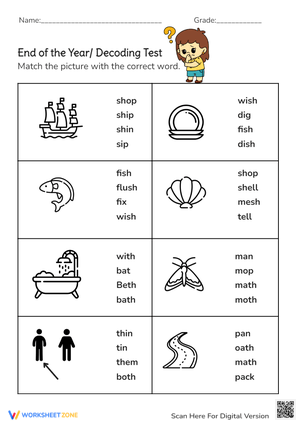
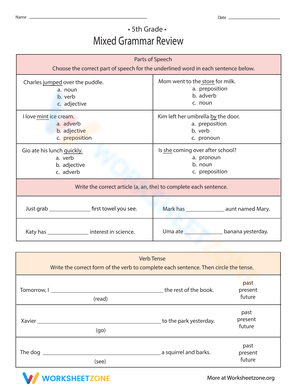
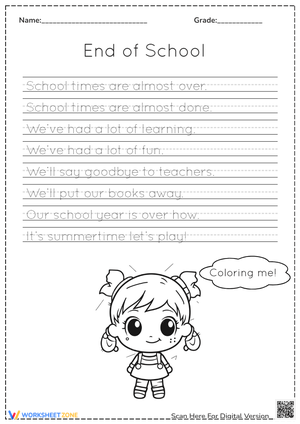
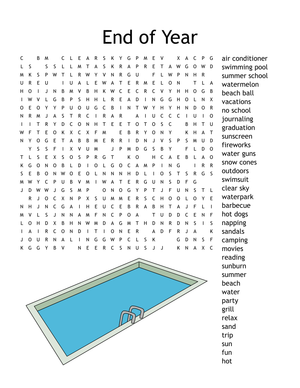
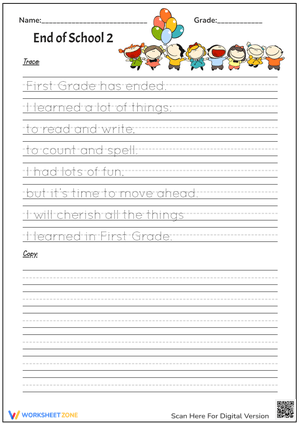
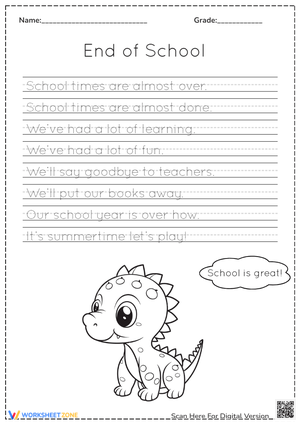
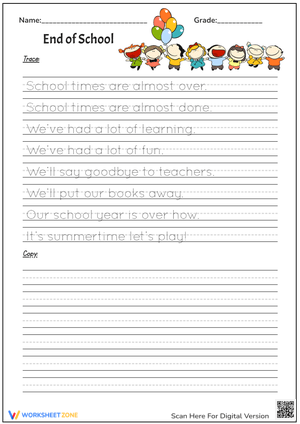
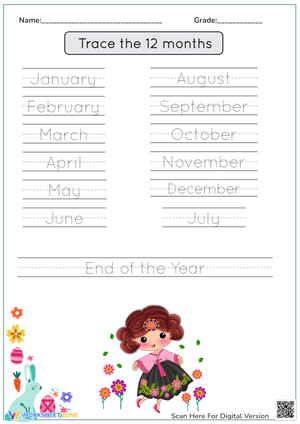
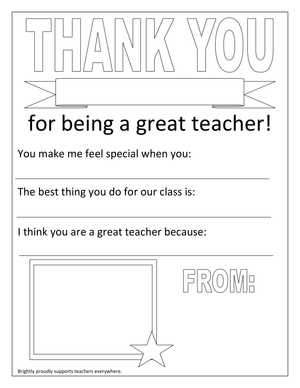
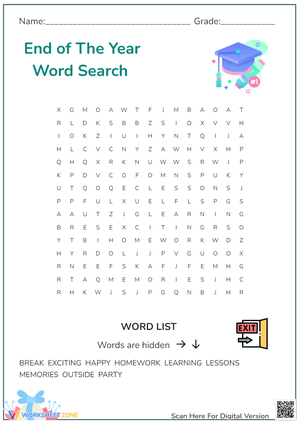
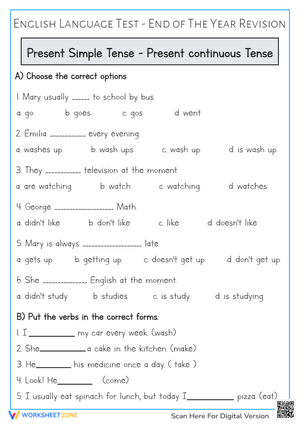
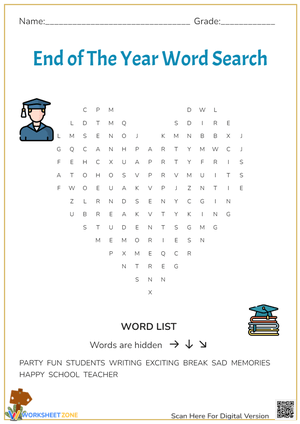
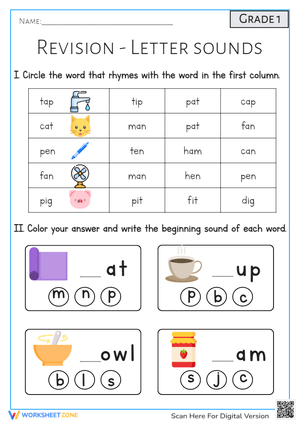
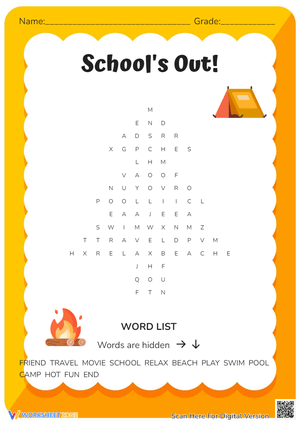
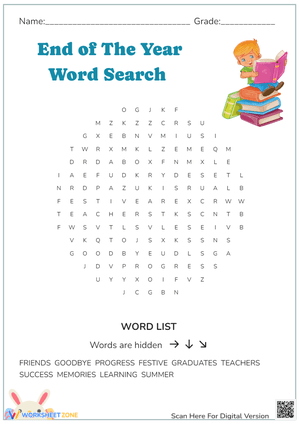
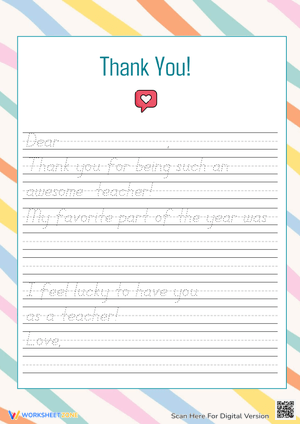
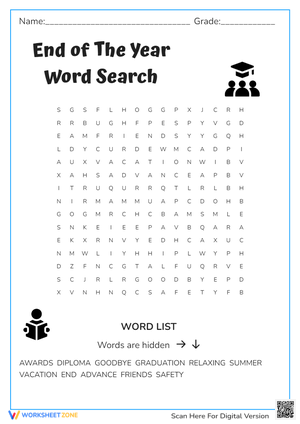
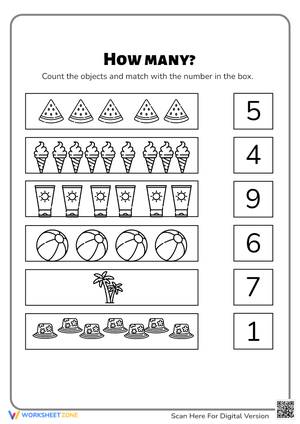
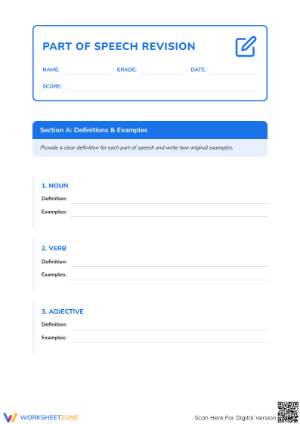
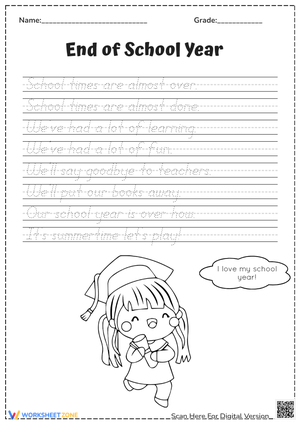
These end of the year printable worksheets give teachers a ready-made set of materials for the final two to three weeks of school — the stretch when state testing is done, report cards are closing out, and students are already mentally halfway to the neighborhood pool. The set covers memory book pages, cumulative review activities, goal-setting prompts, and peer appreciation writing tasks, giving teachers options for both quiet independent work time and more social, celebratory moments in the day.
What Each Worksheet Covers
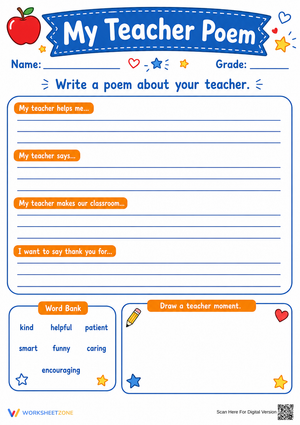
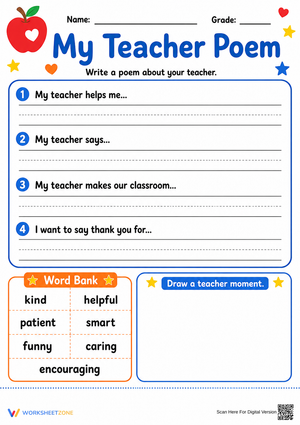
Memory book and reflection pages ask students to document their favorite subjects, a moment when something was genuinely hard, and what they are most proud of — not just highlights, but honest reckoning with growth. Cumulative review worksheets repackage ELA and math content as puzzle and trivia formats so students retrieve and apply concepts without the feel of a formal assessment. Goal-setting pages prompt students toward specific commitments: a title for a book they plan to read over summer, a skill they intend to practice, one habit worth keeping across the break. Advice letter worksheets direct students to write guidance for next year's incoming class, which requires them to think backward through the year with real purpose.
Why This Format Works When Academic Momentum Starts to Slip
Unstructured time in the last week of school creates predictable management problems — noise levels climb, students drift between tasks, and the teacher spends more energy redirecting than teaching. Structured reflection worksheets do not eliminate the celebratory mood; they give it a container. When students are emotionally activated — and June classrooms are emotionally activated — open-ended tasks with no defined endpoint tend to overwhelm rather than engage. A reflection prompt with a clear scope ("three sentences on what challenged you most, one paragraph on what you are proud of") lets students finish the task and feel the satisfaction of completing it.
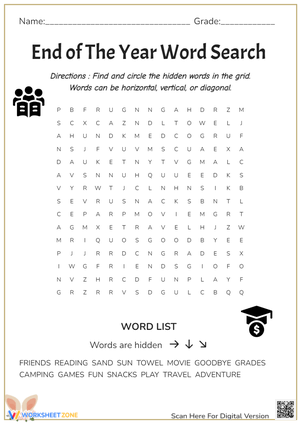
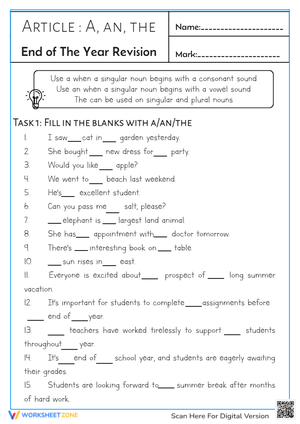
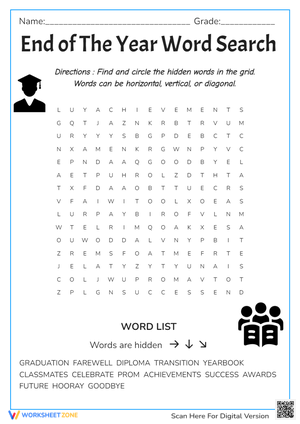
End of the year printable worksheets also handle the cumulative review function without the dread that comes with a formal test. Spaced retrieval is most effective when it is low-stakes and brief, so a ten-minute vocabulary puzzle or a math review crossword run daily in the final week accomplishes more genuine consolidation than a single all-day review session could.
What Actually Shows Up When Students Reflect
The most consistent problem with open-ended reflection writing is surface-level response. A third grader asked "What was your favorite memory this year?" writes "the field trip" and stops. A seventh grader asked the same question writes a slightly longer version of the same non-answer. These worksheets address that pattern by building specificity into the prompts: instead of "What did you learn?", the prompt asks "Describe one moment when something finally clicked — what were you doing right before it made sense?" That structural nudge consistently produces more honest and detailed responses than a general invitation to reflect ever does.
With advice letters, the failure mode runs in the other direction. Older students default to generic wisdom — "work hard, be nice, stay organized" — rather than anything their actual experience earned them. Before releasing students to write independently, it helps to model one specific piece of advice: something like, "In October I learned the hard way that waiting until Sunday night to start a project assigned on Monday is a guaranteed disaster." That level of specificity gives students permission to write from real experience rather than from what they think a good student is supposed to say.
How to Build These Worksheets Into Your Lesson Plans
The countdown packet approach is reliable. Pull a curated selection of worksheets, bind them for each student, and dedicate the first fifteen minutes of every class period to independent work in the packet across the final two weeks. This anchors the start of the day — especially useful on days that end with field day or an awards assembly, when the morning would otherwise be impossible to settle. That independent work window also gives the teacher time to finalize grades, return portfolios, and manage the administrative close-out that stacks up in June.
Station rotation works well for the last two days of school. Three stations run in twenty-minute blocks:
- Memory book assembly — students complete and decorate their reflection pages, which they take home as keepsakes
- Review puzzles — math or vocabulary challenges that pull directly from the year's core content
- Advice letter writing — structured drafting anchored by a brief teacher-modeled example shown before rotation begins
Students move physically between stations, which contains the end-of-year energy, and each station has a clear, tangible output so there is no ambiguity about what "done" looks like.
Tailoring the Set Across Grade Levels
In K-2 classrooms, reflection worksheets need generous drawing space alongside short sentence starters. For emergent writers, drawing is not decoration — it is part of the composing process. A first grader who draws a detailed picture of a class read-aloud before writing "we red books" has produced a richer reflection than the written sentence alone suggests, and the worksheet format should invite that kind of dual expression.
Grades 3-5 handle full paragraph responses and benefit from worksheets that ask them to compare across time: "How is the reader you are in June different from the reader you were in September?" In middle school, end of the year printable worksheets land best when they take students seriously — goal-setting sheets with measurable targets rather than vague intentions, and reflection prompts that acknowledge genuine difficulty rather than only cataloguing wins. Anything that reads like it belongs in a second-grade classroom will produce eye rolls and shallow work in a seventh-grade period. The visual design and prompt complexity both need to match the developmental level.
Standard Alignment
The reflection and advice letter worksheets align to CCSS.ELA-LITERACY.W.5.3 and its middle school counterparts W.6.3 and W.7.3, all of which ask students to establish a situation, apply narrative techniques such as dialogue and precise detail, and provide a sense of conclusion. Using end of the year printable worksheets to meet these standards places students in a writing context with genuine motivation — they are writing about their own experience, which eliminates the "but I don't know what to say" paralysis that narrative prompts about unfamiliar topics tend to trigger. Teachers who need to document standards coverage during the final weeks have a legitimate ELA narrative writing claim under these codes.
Frequently Asked Questions
Do these worksheets work across all grade levels, or do they need to be grade-specific?
The concept of reflection applies at every grade, but the worksheets themselves need to match the level. K-2 versions rely on sentence starters and drawing prompts. Upper elementary versions require full paragraph responses. Middle school versions ask students to evaluate their own growth, set measurable goals, and write structured advice with supporting details. Handing a third-grade memory page to a seventh grader produces disengagement; handing a middle school reflection essay to a second grader produces frustration. Grade-band specificity matters as much as the content of the prompts themselves.
How do I keep students engaged when they know grades are already finalized?
Framing matters more than any external incentive in the final days. Memory books and advice letters have obvious take-home value — students recognize they are building something they will actually keep or that will genuinely help someone else. That intrinsic purpose carries more weight in June than a grade ever could. Presenting these tasks as documentation of the year rather than as assessments shifts students' orientation from "what do I need to do?" to "what do I actually want to say?"
Can a brief daily review puzzle really make a difference before the summer break?
Each worksheet does not cover a full year of content, and that is not the point. What brief daily retrieval practice accomplishes is slowing the forgetting curve — pulling terms, concepts, and skills back into working memory before the summer gap sets in. One or two low-stakes retrieval sessions in the final week meaningfully reduces how much students lose over the summer, and a puzzle format keeps the tone appropriate for June while preserving the academic function entirely.












 Interactive Worksheet Maker
 Quiz Maker
 Word Search Maker
 Crossword Puzzle Maker
 Word Scramble Generator
 Sentence Scramble Generator
 Handwriting Worksheet Generator
 Name Tracing Generator
 Fill In The Blank Generator