


























Views
Downloads

Butterfly Life Cycle Worksheet | Grade 3 Printable
Paste this activity's link or code into your existing LMS (Google Classroom, Canvas, Teams, Schoology, Moodle, etc.).
Students can open and work on the activity right away, with no student login required.
You'll still be able to track student progress and results from your teacher account.
Students explore the fascinating process of metamorphosis with this interactive butterfly life cycle worksheet. By physically arranging the stages of growth, learners develop a concrete understanding of biological transitions. This activity ensures students can identify and sequence the four key stages of a butterfly's life, from egg to adult.
At a Glance
- Grade: 3 · Subject: Science
- Standard:
3-LS1-1— Develop models to describe that organisms have unique and diverse life cycles- Skill Focus: Sequencing metamorphosis stages
- Format: 1 page · 8 tasks · Answer key included · PDF
- Best For: Independent practice or science centers
- Time: 15–20 minutes
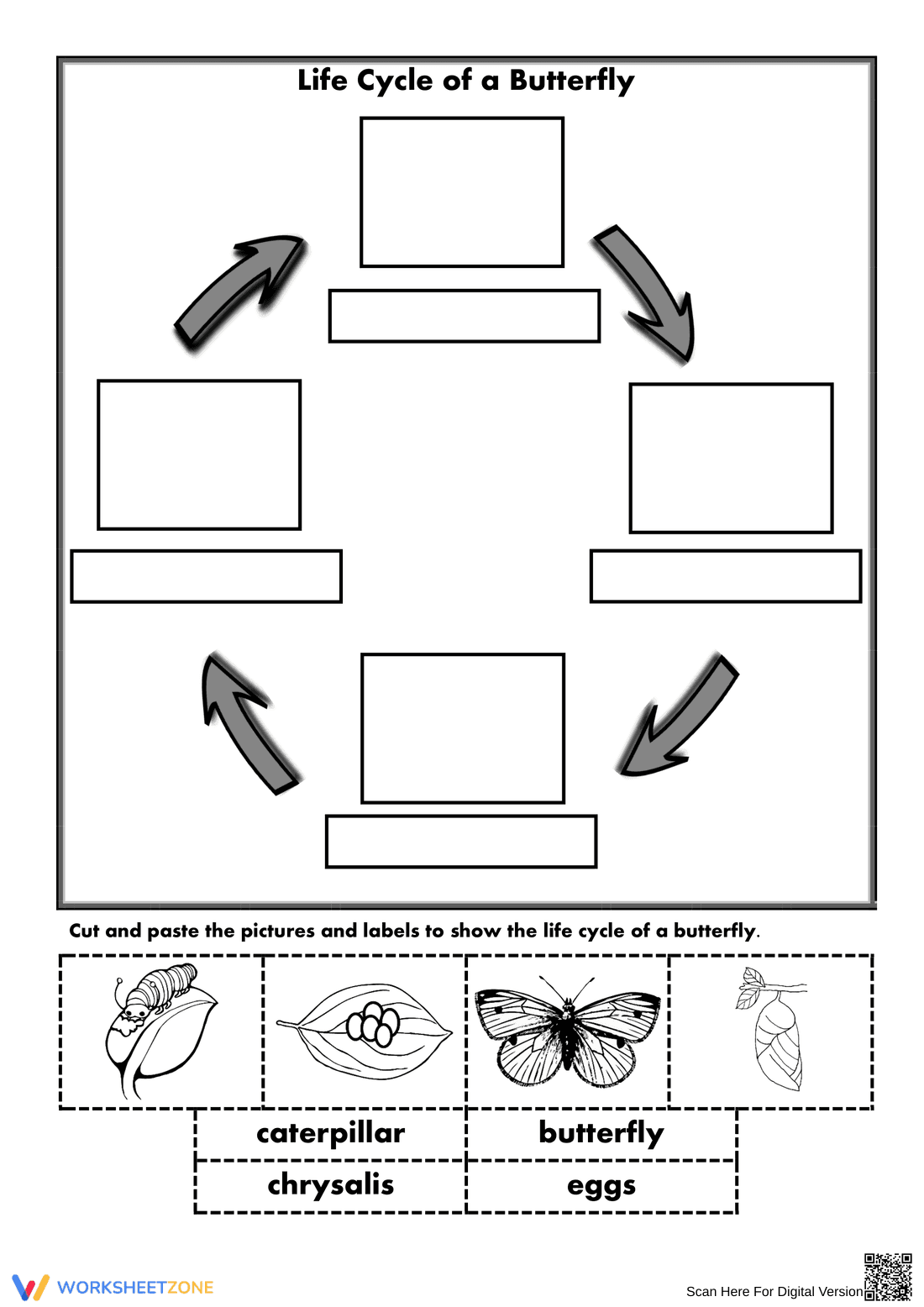
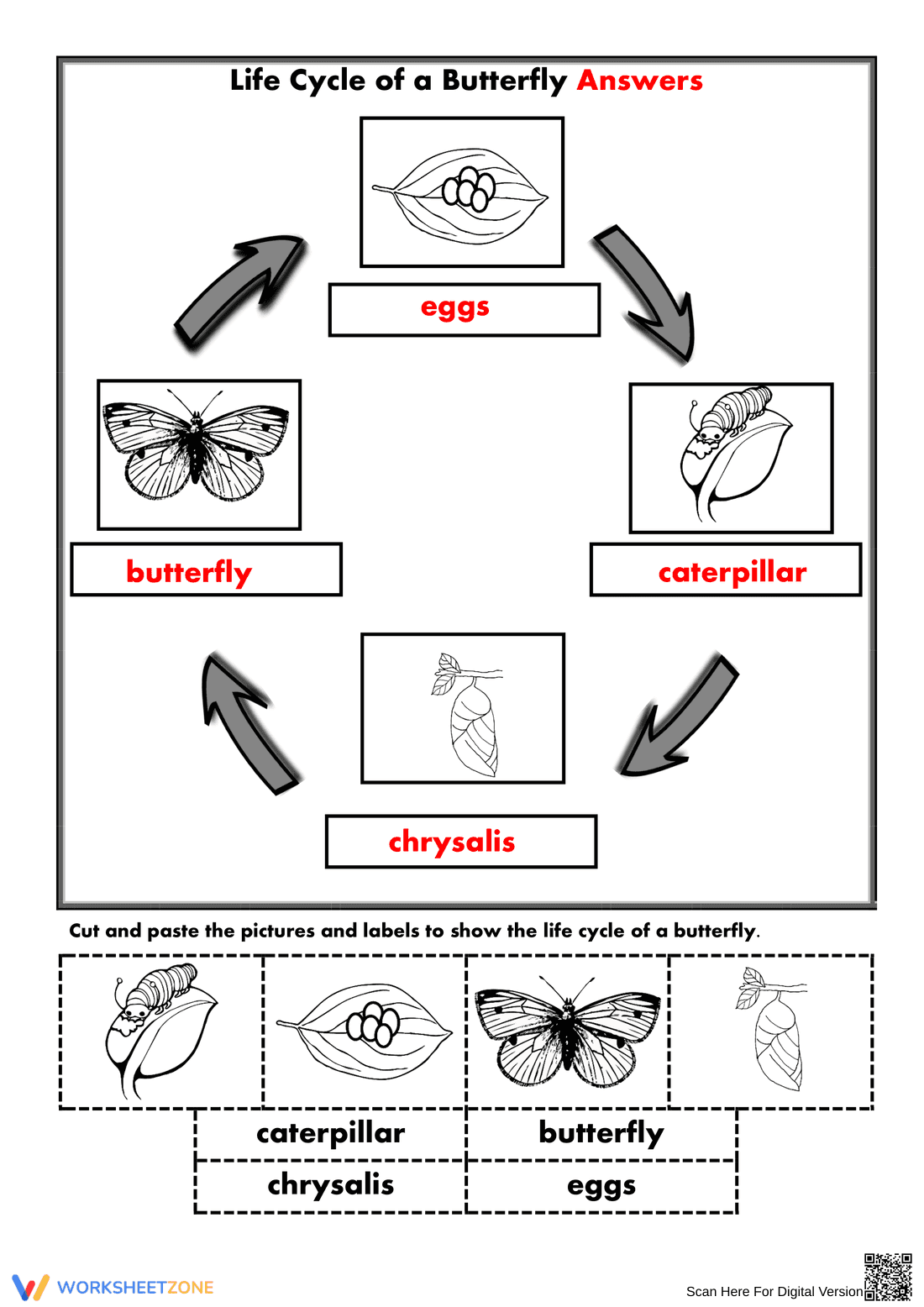
This single-page PDF features a circular flow diagram designed for tactile learning. It includes 4 high-quality illustrations representing the egg, caterpillar, chrysalis, and adult butterfly stages. Below the diagram, students find 4 corresponding text labels. A comprehensive answer key is provided to facilitate quick grading or student self-correction during independent work time.
This resource is designed for immediate classroom implementation. Teachers can print the worksheet in under 1 minute, distribute it to students with scissors and glue, and spend less than 2 minutes reviewing the final sequences using the included answer key. It serves as an ideal zero-prep activity for substitute folders or sudden schedule changes where high-quality science content is needed.
This activity aligns with `3-LS1-1`, requiring students to develop models to describe that organisms have unique and diverse life cycles. By constructing a visual model of metamorphosis, students demonstrate their understanding of growth and development. Both standard codes can be copied directly into lesson plans, IEP goals, or district curriculum mapping tools.
Use this worksheet during the elaborate phase of a science lesson after observing live specimens or reading a text. It also functions as a formative assessment to check for understanding of biological sequencing. Expect students to complete the cutting, matching, and pasting within a 15 to 20-minute window, making it perfect for a focused science block.
This worksheet is tailored for Grade 2 through Grade 5 students, particularly those who benefit from kinesthetic learning. It is an excellent pairing for literature-based science lessons or as a follow-up to a classroom butterfly kit observation. The clear visuals support English Language Learners as they acquire specific biological vocabulary.
According to the RAND AIRS 2024 report, tactile sequencing activities like this butterfly life cycle worksheet significantly improve retention of biological concepts in elementary learners. By engaging in the physical act of modeling through cut-and-paste tasks, students bridge the gap between abstract terminology and concrete biological stages. This resource specifically addresses the 3-LS1-1 standard, which emphasizes that while life cycles are diverse, they follow a predictable pattern of birth, growth, and reproduction. Research from Fisher & Frey (2014) supports the use of visual graphic organizers to help students internalize complex scientific processes. This 8-task activity provides the necessary scaffolding for students to master the vocabulary of metamorphosis, including terms like chrysalis and larva, ensuring they meet grade-level expectations for life science proficiency and scientific literacy.


