


























Views
Plays
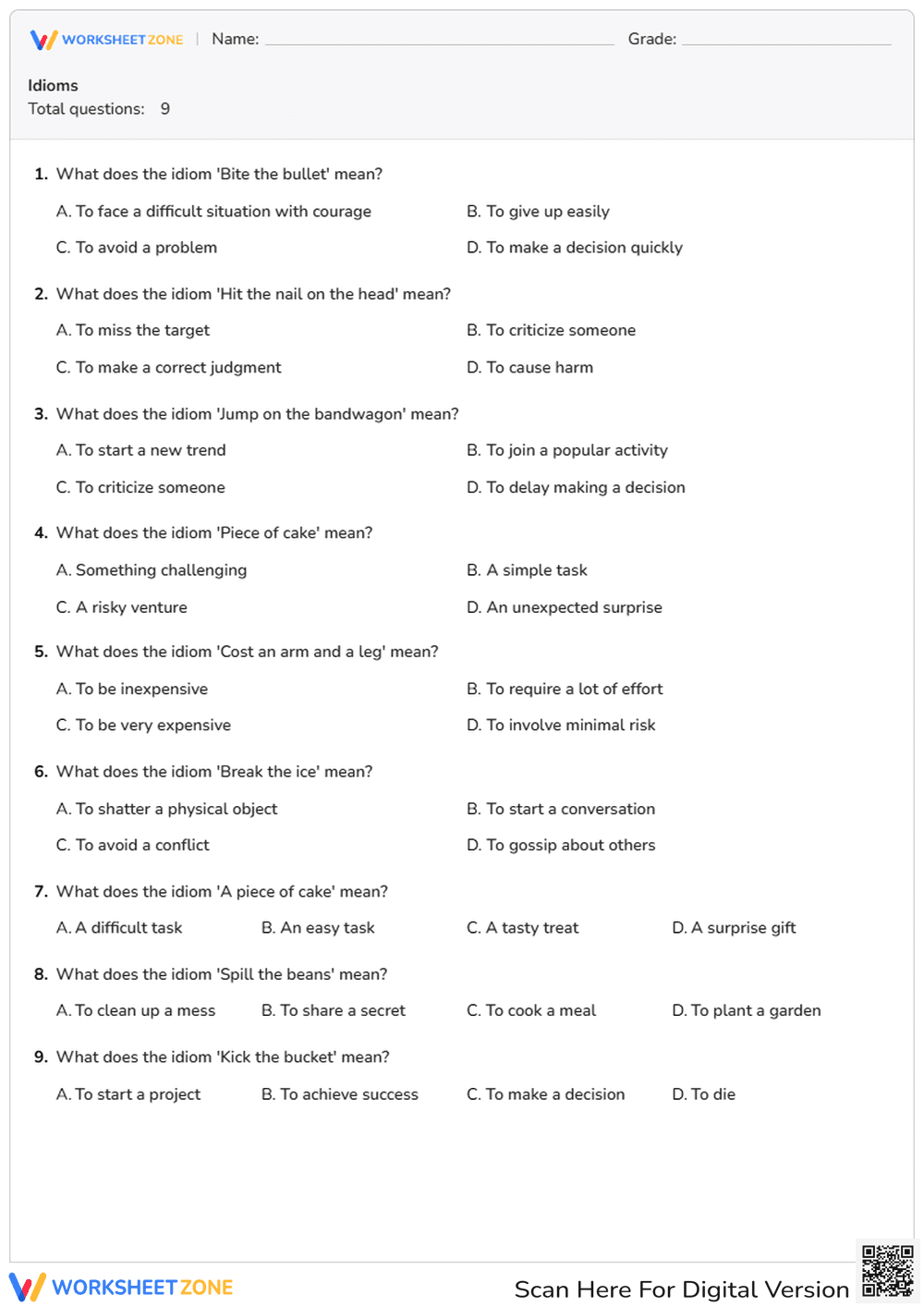

Idioms Multiple Choice Quiz | Grade 4 Printable
Paste this activity's link or code into your existing LMS (Google Classroom, Canvas, Teams, Schoology, Moodle, etc.).
Students can open and work on the activity right away, with no student login required.
You'll still be able to track student progress and results from your teacher account.
This printable idioms worksheet provides students with targeted practice in identifying figurative language. By completing this multiple-choice quiz, learners demonstrate their ability to determine the meaning of common expressions, moving beyond literal interpretations to grasp nuanced language used in everyday communication.
At a Glance
- Grade: 4 · Subject: ELA
- Standard:
CCSS.ELA-LITERACY.L.4.5.B— Recognize and explain the meaning of common idioms.- Skill Focus: Figurative Language
- Format: 1 page · 9 problems · Answer key included · PDF
- Best For: Formative assessment or independent practice
- Time: 10–15 minutes
Inside this resource, educators will find a single-page assessment featuring nine multiple-choice questions focused on common English idioms. Each task presents a well-known phrase, such as "bite the bullet," alongside four distinct answer choices. The straightforward layout minimizes distractions, allowing students to focus directly on figurative language concepts. A standard answer key is included to facilitate rapid grading.
This resource is designed for a highly efficient, zero-prep workflow. Print (1 minute): Simply send the single-page PDF to your copier. No special formatting or cutting is required. Distribute (1 minute): Hand the quiz out as a quick warm-up or exit ticket. Review (3 minutes): Use the included answer key to grade the nine problems instantly or review them aloud as a whole class. Total teacher prep time is under two minutes, making this an ideal, self-explanatory activity for emergency sub plans or unexpected schedule changes.
This worksheet is strictly aligned to CCSS.ELA-LITERACY.L.4.5.B: Recognize and explain the meaning of common idioms, adages, and proverbs. It also supports broader reading comprehension goals by encouraging students to use context clues to determine nonliteral meanings. Both standard codes can be copied directly into lesson plans, IEP goals, or district curriculum mapping tools.
Deploy this worksheet during your literacy block as a quick formative assessment after direct instruction on figurative language. Alternatively, assign it as independent morning work to activate prior knowledge before a reading comprehension lesson. As students work, observe whether they consistently select the literal interpretation of the phrases; this common misconception indicates a need for further explicit instruction on how idioms function. Expected completion time ranges from 10 to 15 minutes.
This activity is primarily designed for fourth-grade students, though it serves as excellent review material for fifth graders or targeted intervention for older English Language Learners (ELLs) who often struggle with nonliteral phrases. To support students who need accommodations, consider reading the options aloud or providing a visual anchor chart of common idioms. This worksheet pairs perfectly with a read-aloud of a text rich in figurative language, allowing students to see the phrases used in context.
Mastering figurative language is a critical component of reading comprehension and expressive communication. This resource targets CCSS.ELA-LITERACY.L.4.5.B, requiring students to recognize and explain the meaning of common idioms. According to Fisher & Frey (2014), explicit instruction and repeated exposure to nonliteral language significantly improve a student's ability to infer meaning from complex texts. When learners practice identifying idioms in a structured, multiple-choice format, they build the cognitive flexibility necessary to transition from literal decoding to advanced reading comprehension. This targeted practice helps close the vocabulary gap, particularly for students who may not encounter these specific cultural phrases in their home environments. By isolating this skill, educators can quickly identify misconceptions and adjust their instructional strategies to ensure all students develop robust language proficiency.


