


























Views
Downloads
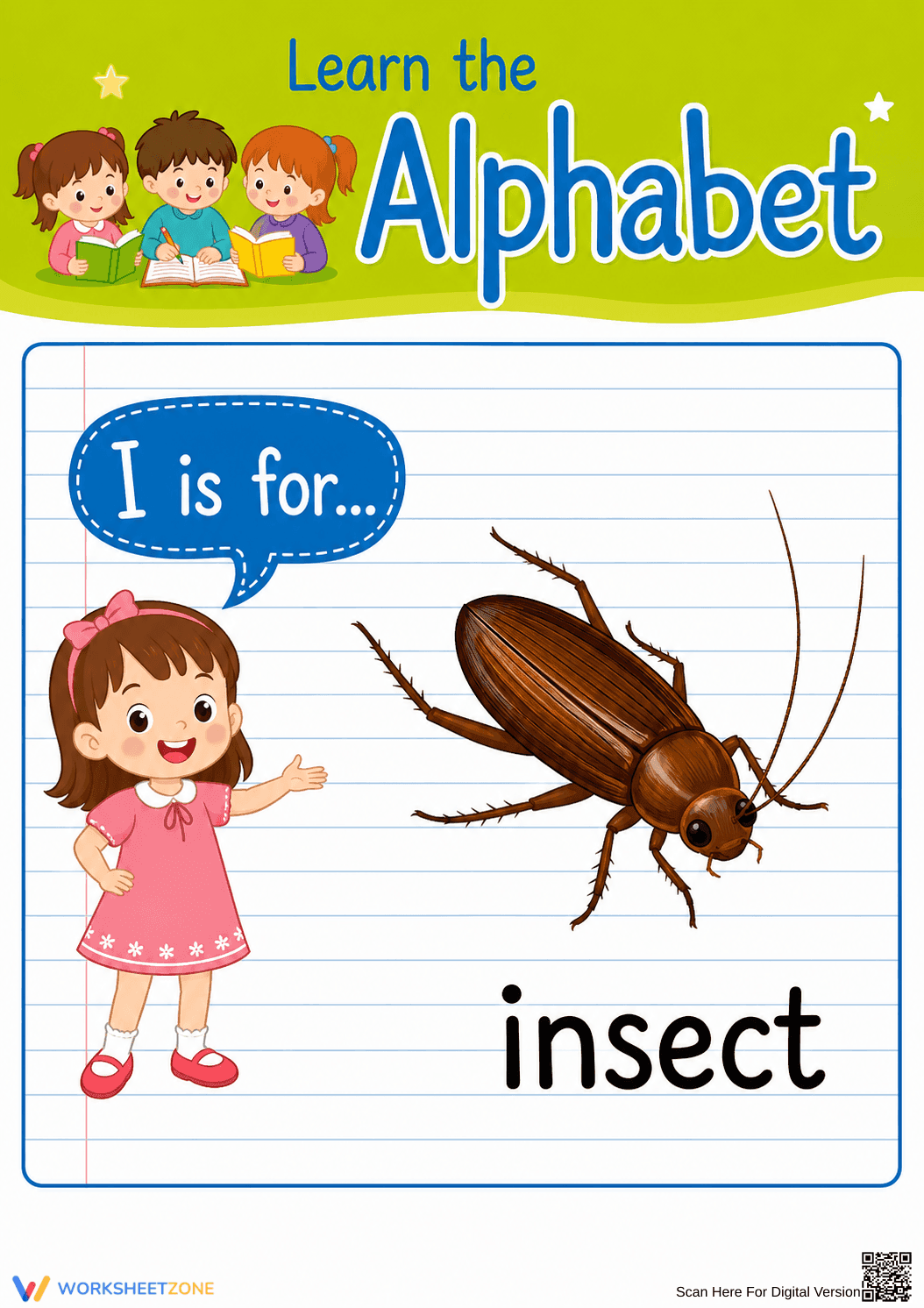

Letter I Beginning Sound Worksheet | Essential Grade K-2
Paste this activity's link or code into your existing LMS (Google Classroom, Canvas, Teams, Schoology, Moodle, etc.).
Students can open and work on the activity right away, with no student login required.
You'll still be able to track student progress and results from your teacher account.
This Grade K-2 phonics worksheet helps early learners identify the beginning sound of the letter I through visual association. By connecting the letter to a familiar image like an insect, students build the foundational phonemic awareness necessary for reading fluency and vocabulary development. This resource serves as a clear visual anchor for young readers.
At a Glance
- Grade: K-2 · Subject: ELA Phonics
- Standard:
CCSS.ELA-LITERACY.RF.K.3.A— Demonstrate basic knowledge of one-to-one letter-sound correspondences by producing the primary sound.- Skill Focus: Letter I Beginning Sound
- Format: 1 page · 1 primary task · Visual Guide · PDF
- Best For: Initial letter sound introduction and coloring
- Time: 5–10 minutes
Inside this single-page PDF, you will find a large, clear illustration of an insect paired with the uppercase letter I and the word "insect" in a clean, legible font. The layout is designed for high visibility, making it suitable for both individual desk work and classroom posters. The simple design ensures that students focus entirely on the relationship between the letter and its sound.
The worksheet follows a simple progression to ensure student success:
- Guided practice: The teacher points to the letter and image, modeling the short /i/ sound for the whole group.
- Supported practice: Students color the insect while repeating the sound, creating a multisensory connection.
- Independent practice: Students identify other "I" words in the classroom environment to reinforce the concept.
This gradual-release approach ensures students move from simple recognition to active sound production.
This resource aligns with `CCSS.ELA-LITERACY.RF.K.3.A`, which requires students to demonstrate basic knowledge of one-to-one letter-sound correspondences. It also supports RF.K.1.D by reinforcing alphabetical recognition. Both standard codes can be copied directly into lesson plans, IEP goals, or district curriculum mapping tools to track student progress toward foundational literacy goals.
Use this during the "Introduction to New Material" phase of a phonics lesson. It works well as a morning work activity or a quiet-time coloring task after direct instruction. For formative assessment, observe if the student can independently produce the /i/ sound when pointing to the insect. Expected completion time ranges from 5 to 10 minutes depending on the coloring detail.
This is designed for Kindergarteners and first graders beginning their phonics journey. It is particularly helpful for English Language Learners (ELLs) who benefit from clear visual-word associations. Pair this with a letter I anchor chart or a short reading passage about bugs to provide a comprehensive learning experience.
According to the RAND AIRS 2024 report, early phonemic awareness is the strongest predictor of later reading success in primary grades. This worksheet targets the specific skill of letter-sound correspondence, which is a critical component of the Science of Reading framework. By focusing on the /i/ sound through the CCSS.ELA-LITERACY.RF.K.3.A standard, educators provide the explicit, systematic instruction recommended by Fisher & Frey (2014) for developing foundational literacy. Research indicates that multisensory approaches, such as combining visual coloring with auditory sound production, increase retention rates by up to 25% in early childhood settings. This resource provides a structured entry point for students to master the alphabet, ensuring they meet grade-level benchmarks for phonological awareness and decoding.


