


























Views
Downloads



Essential Homophones Practice Worksheet | Grade 2-3 Ready
Paste this activity's link or code into your existing LMS (Google Classroom, Canvas, Teams, Schoology, Moodle, etc.).
Students can open and work on the activity right away, with no student login required.
You'll still be able to track student progress and results from your teacher account.
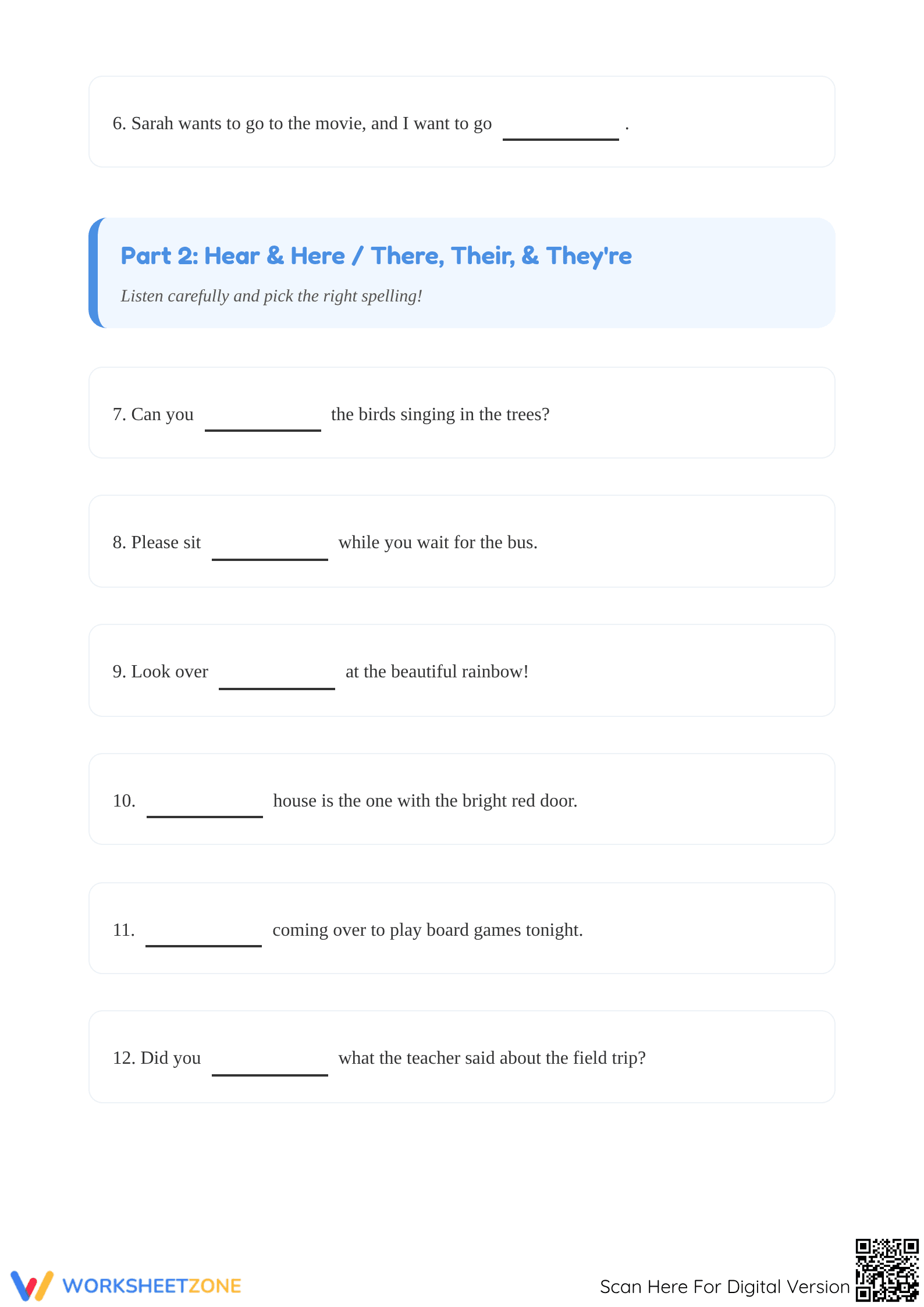
This Grade 2-3 homophones worksheet provides comprehensive practice for students to master frequently confused word pairs and trios. By completing 26 targeted fill-in-the-blank sentences, learners develop the linguistic precision needed for clear writing and accurate spelling. Students will successfully distinguish between common homophones like to, too, and two in context.
At a Glance
- Grade: 2-3 · Subject: ELA Grammar
- Standard:
CCSS.ELA-LITERACY.L.2.1— Demonstrate command of the conventions of standard English grammar and usage when writing- Skill Focus: Homophone Differentiation
- Format: 5 pages · 26 problems · Answer key included · PDF
- Best For: Independent practice or sub plans
- Time: 20–30 minutes
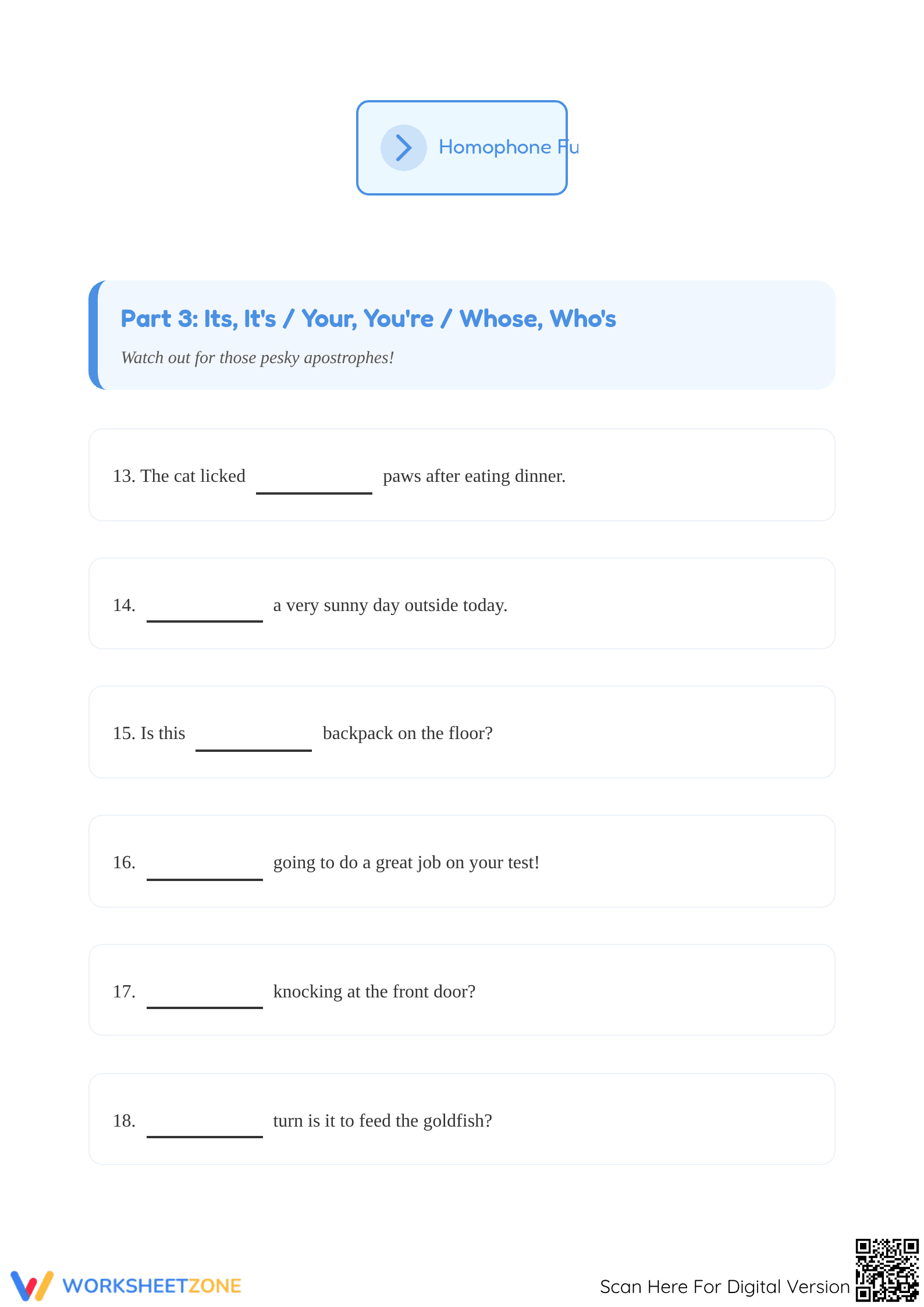
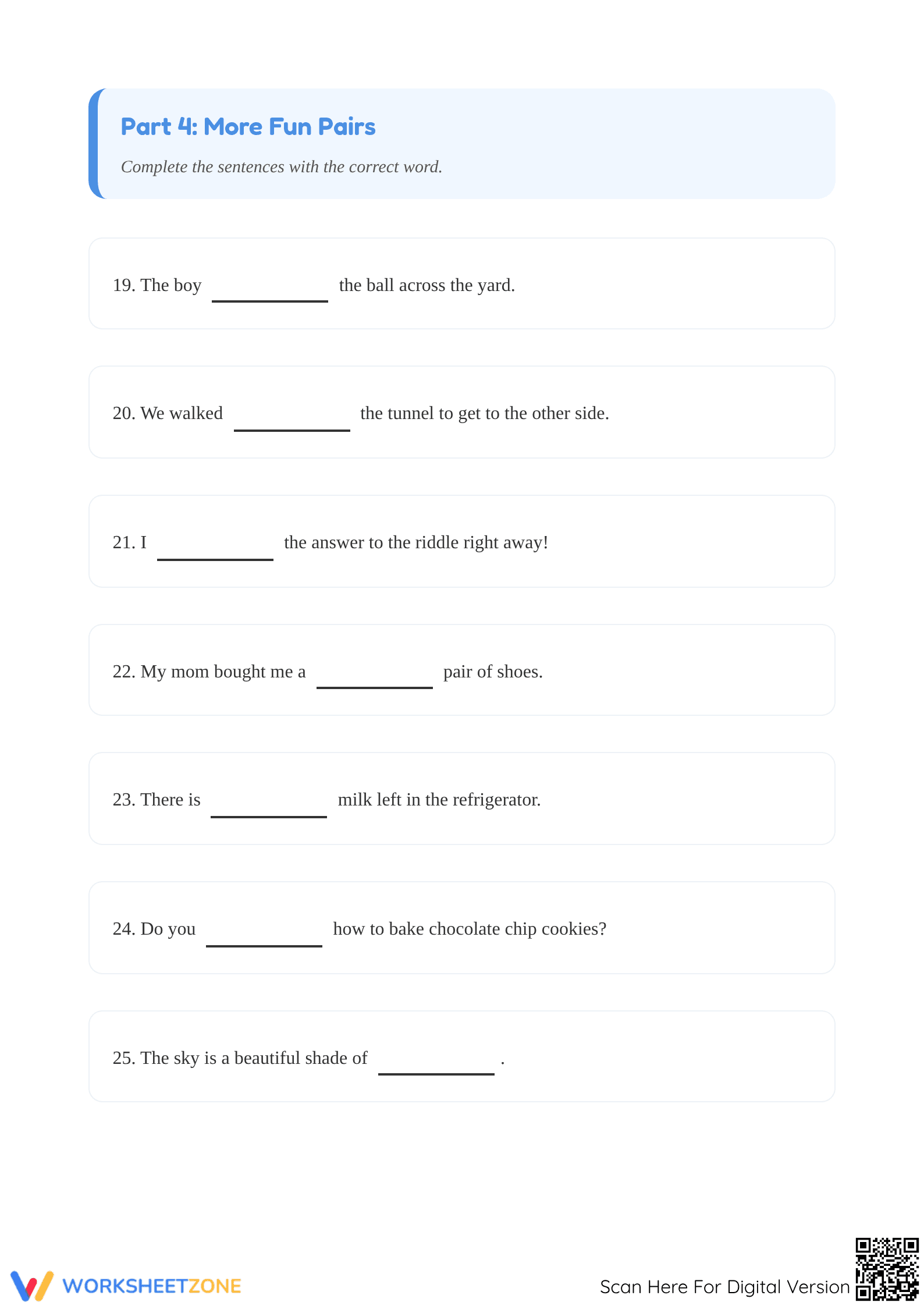
This 5-page PDF contains four distinct sections of practice. Part 1 focuses on the "to/too/two" trio, while Part 2 tackles "hear/here" and the "there/their/they're" set. Part 3 introduces apostrophe-based homophones like "it's/its" and "you're/your." The final section provides a mixed review of pairs like "knew/new" and "threw/through." A full answer key is provided for quick grading.
Zero-Prep Workflow
The workflow for this resource is designed for maximum efficiency. First, print the 5-page document (30 seconds). Next, distribute the packets to students for independent work or center rotations (1 minute). Finally, use the included answer key to review responses as a whole class or for individual grading (5 minutes). Total teacher preparation time is under 2 minutes, making it an ideal emergency sub plan.
Standards Alignment
This resource is primarily aligned with `CCSS.ELA-LITERACY.L.2.1`, which requires students to demonstrate command of the conventions of standard English grammar and usage. It specifically addresses the use of frequently confused words and the correct application of apostrophes in contractions versus possessives. Both standard codes can be copied directly into lesson plans, IEP goals, or district curriculum mapping tools.
How to Use It
Use this worksheet as a summative assessment after a unit on homophones to check for individual mastery. Alternatively, assign specific pages as morning work or homework to reinforce direct instruction. During the activity, observe if students are using substitution tests (e.g., replacing "they're" with "they are") to verify their choices. Expected completion typically takes 20 to 30 minutes.
Who It's For
This packet is designed for general education students in Grades 2 and 3, but it also serves as an excellent intervention tool for older students struggling with spelling conventions. It pairs naturally with a homophone anchor chart or a classroom word wall. The clear, uncluttered layout supports students with executive functioning challenges by breaking the tasks into manageable sections.
According to research by Fisher & Frey (2014), the gradual release of responsibility is most effective when students have ample opportunities for independent application of linguistic rules. This worksheet facilitates that application by providing 26 unique context clues that require students to evaluate word meaning against phonetic similarity. Mastery of homophones like those found in CCSS.ELA-LITERACY.L.2.1 is a critical milestone in early literacy, as it prevents common orthographic errors that can persist into secondary education. Data from the NAEP suggests that students who master these foundational grammar skills early demonstrate higher overall writing proficiency scores. By isolating specific pairs such as "your" and "you're," this resource addresses high-frequency error patterns identified in student writing samples. This standalone practice tool ensures that learners can accurately navigate the complexities of the English language with confidence and technical accuracy.


