


























Views
Downloads

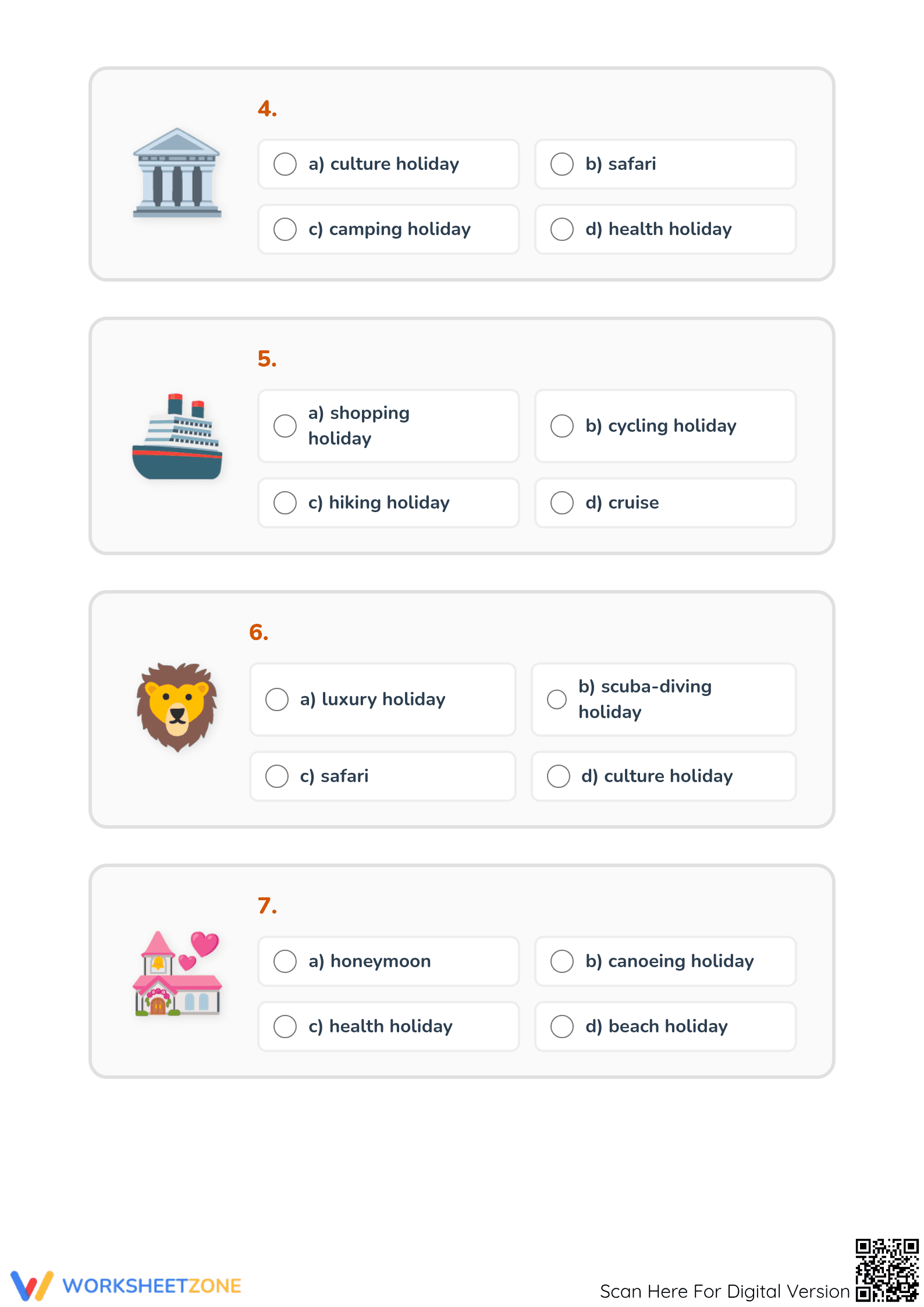
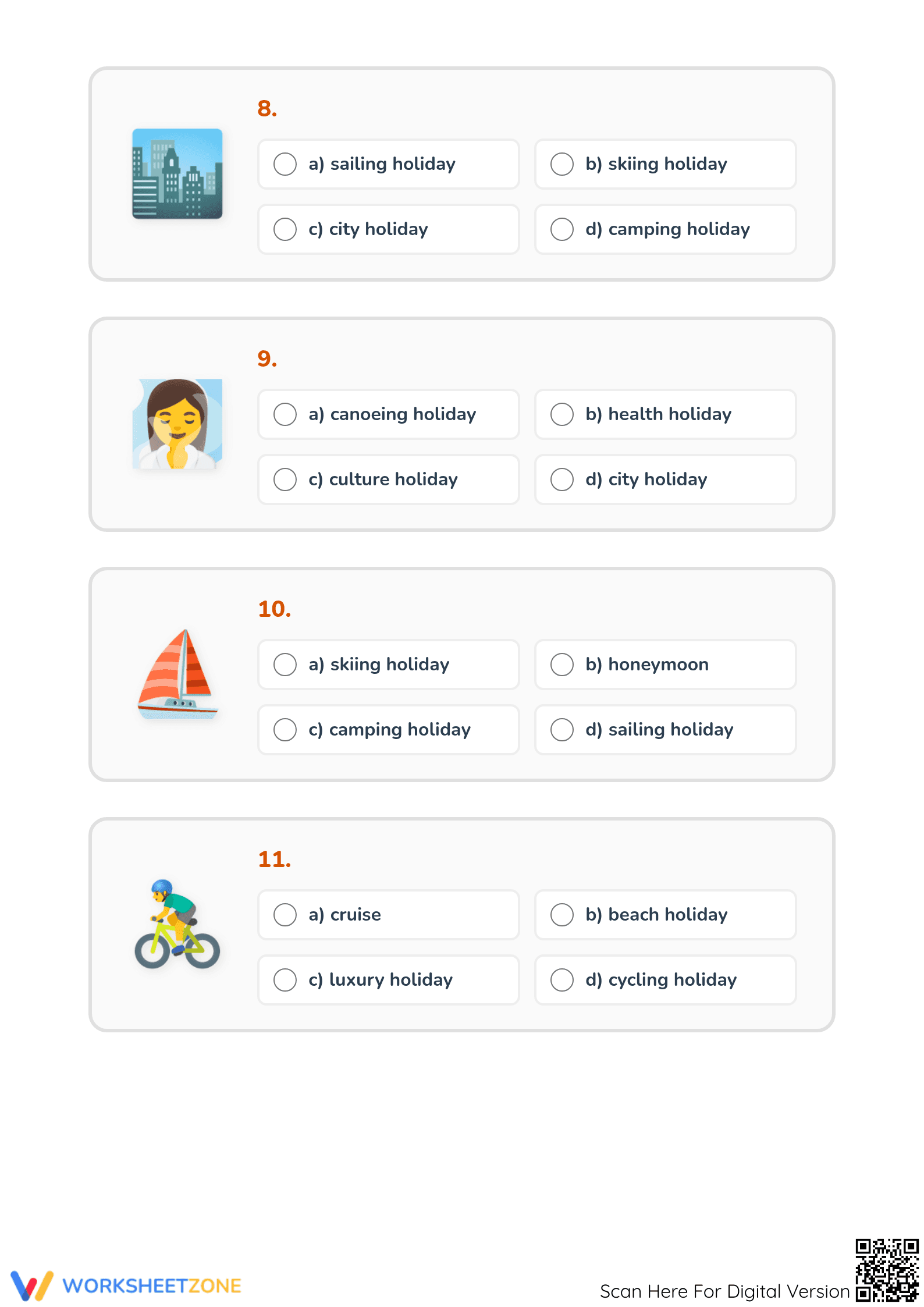
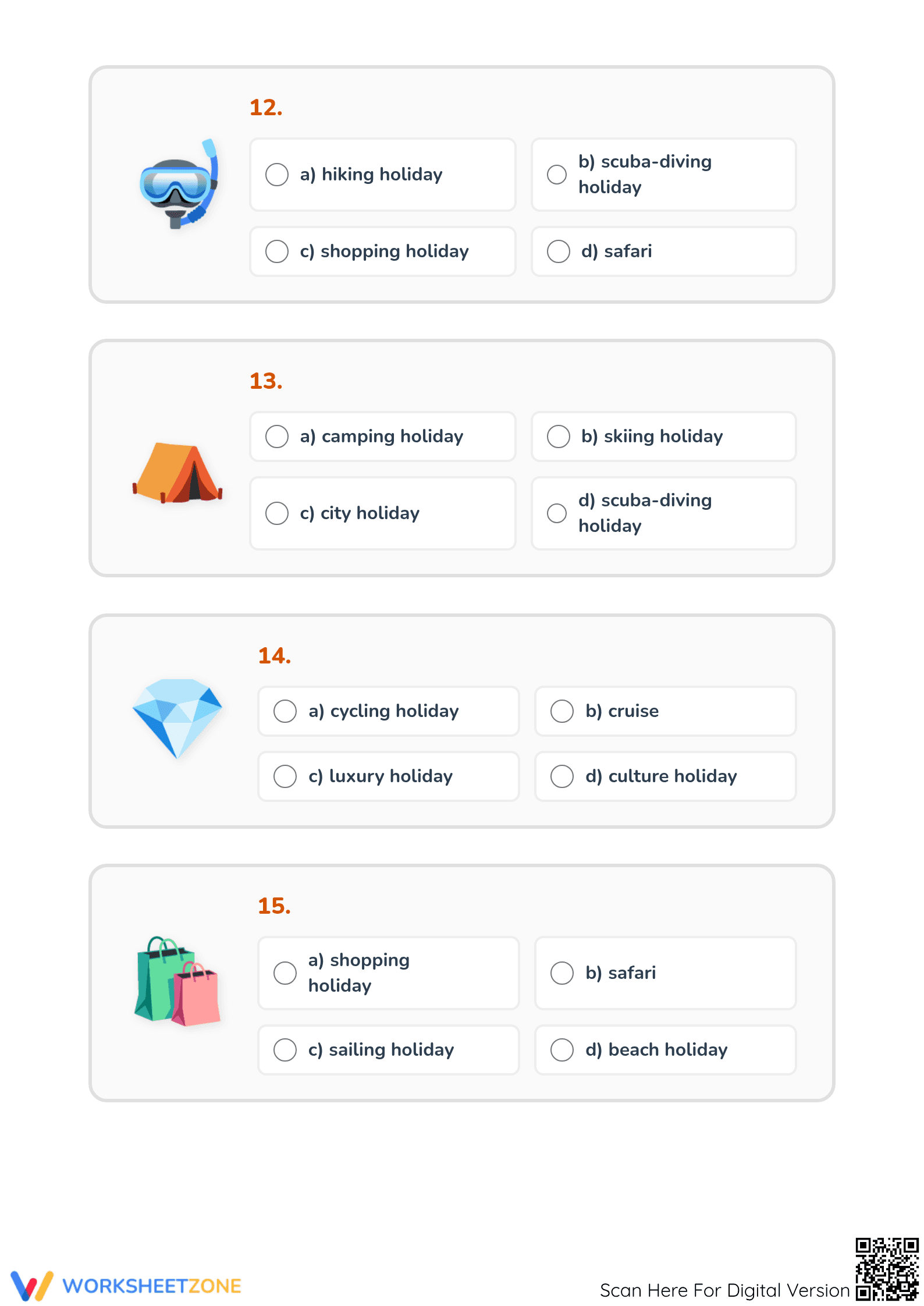
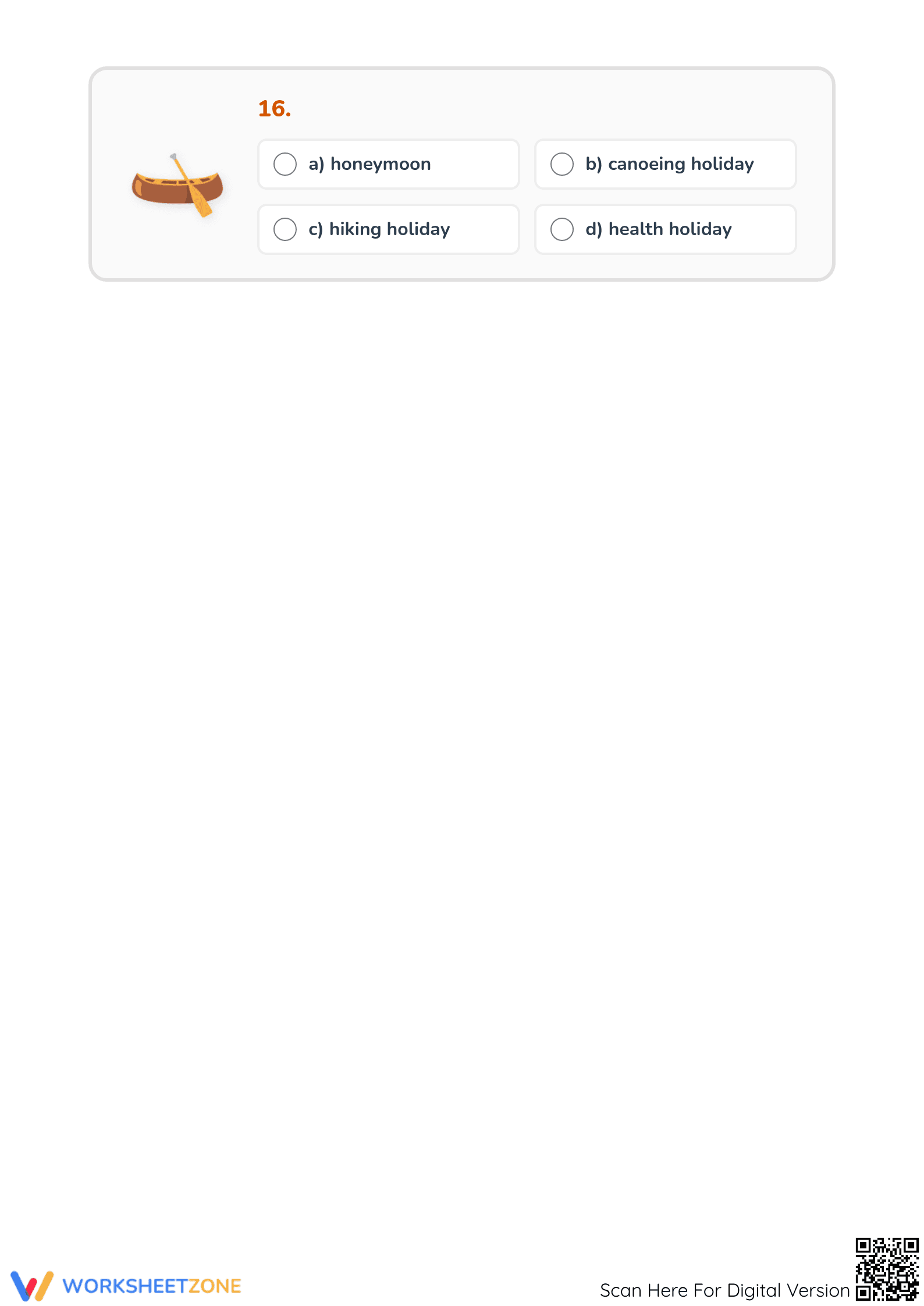

Holiday Vocabulary Worksheet | Grade 2 Printable
Paste this activity's link or code into your existing LMS (Google Classroom, Canvas, Teams, Schoology, Moodle, etc.).
Students can open and work on the activity right away, with no student login required.
You'll still be able to track student progress and results from your teacher account.
This vocabulary-building worksheet helps early elementary and ESL students master holiday terminology. By matching descriptive images to the correct words, learners strengthen visual word recognition and build confidence in using seasonal language. The clear layout ensures students remain focused on the target vocabulary.
At a Glance
- Grade: 2 · Subject: English
- Standard:
CCSS.ELA-LITERACY.L.2.5.A— Identify real-life connections between words and their use- Skill Focus: Holiday and vacation vocabulary
- Format: 5 pages · 16 problems · Answer key included · PDF
- Best For: Independent practice and ESL vocabulary building
- Time: 15–20 minutes
This resource features 16 visual multiple-choice questions across five pages. Each task presents a colorful illustration of a specific holiday type, such as a beach trip or safari. Students select the correct term from four options. A complete answer key is provided, allowing for quick grading or self-assessment.
Skill Progression
- Guided practice: Teachers model how to analyze visual clues in each picture, such as identifying snow for a skiing holiday.
- Supported practice: Students work in pairs to discuss the remaining images, using the options as a word bank to guide decisions.
- Independent practice: Learners complete the final pages alone, demonstrating their ability to connect visual representations with correct vocabulary.
This gradual-release approach ensures students build confidence as they move from teacher-led instruction to independent mastery.
Standards Alignment
This resource is aligned to CCSS.ELA-LITERACY.L.2.5.A, requiring students to identify real-life connections between words and their use. By matching specific vacation activities to corresponding terms, students practice applying words to real-world contexts. Both standard codes can be copied directly into lesson plans, IEP goals, or district curriculum mapping tools.
How to Use It
This worksheet serves as excellent independent practice following a direct instruction lesson on travel vocabulary. Teachers can distribute the five pages as a complete packet for a 20-minute review session. Alternatively, use single pages as daily warm-ups. As a formative assessment tip, observe which distractors students choose; selecting "camping" instead of "hiking" for boots may indicate a need to clarify specific terms.
Who It's For
This material is designed for second-grade students, though it is effective for first and third graders needing vocabulary reinforcement. It is particularly beneficial for English Language Learners who rely on visual supports. To differentiate for early finishers, ask them to write a descriptive sentence for each image. This pairs perfectly with a classroom anchor chart detailing types of travel.
Effective vocabulary instruction relies heavily on visual associations, particularly for early readers and English language learners. Aligning with CCSS.ELA-LITERACY.L.2.5.A to identify real-life connections between words and their use, this resource provides essential practice in linking concrete images to specific terminology. According to Fisher & Frey (2014), integrating visual scaffolds into vocabulary practice significantly improves retention and comprehension, allowing students to anchor abstract words to recognizable concepts. By presenting 16 distinct visual scenarios, this worksheet ensures learners actively process the meaning of each term rather than relying on rote memorization. The multiple-choice format further supports cognitive development by requiring students to evaluate and eliminate incorrect options carefully. This structured approach to vocabulary acquisition builds a stronger foundation for reading comprehension and expressive language skills across all academic subjects, ensuring long-term academic success.


