


























Views
Downloads

Printable Conflict in Stories Worksheet | Grade 3 Aligned
Paste this activity's link or code into your existing LMS (Google Classroom, Canvas, Teams, Schoology, Moodle, etc.).
Students can open and work on the activity right away, with no student login required.
You'll still be able to track student progress and results from your teacher account.
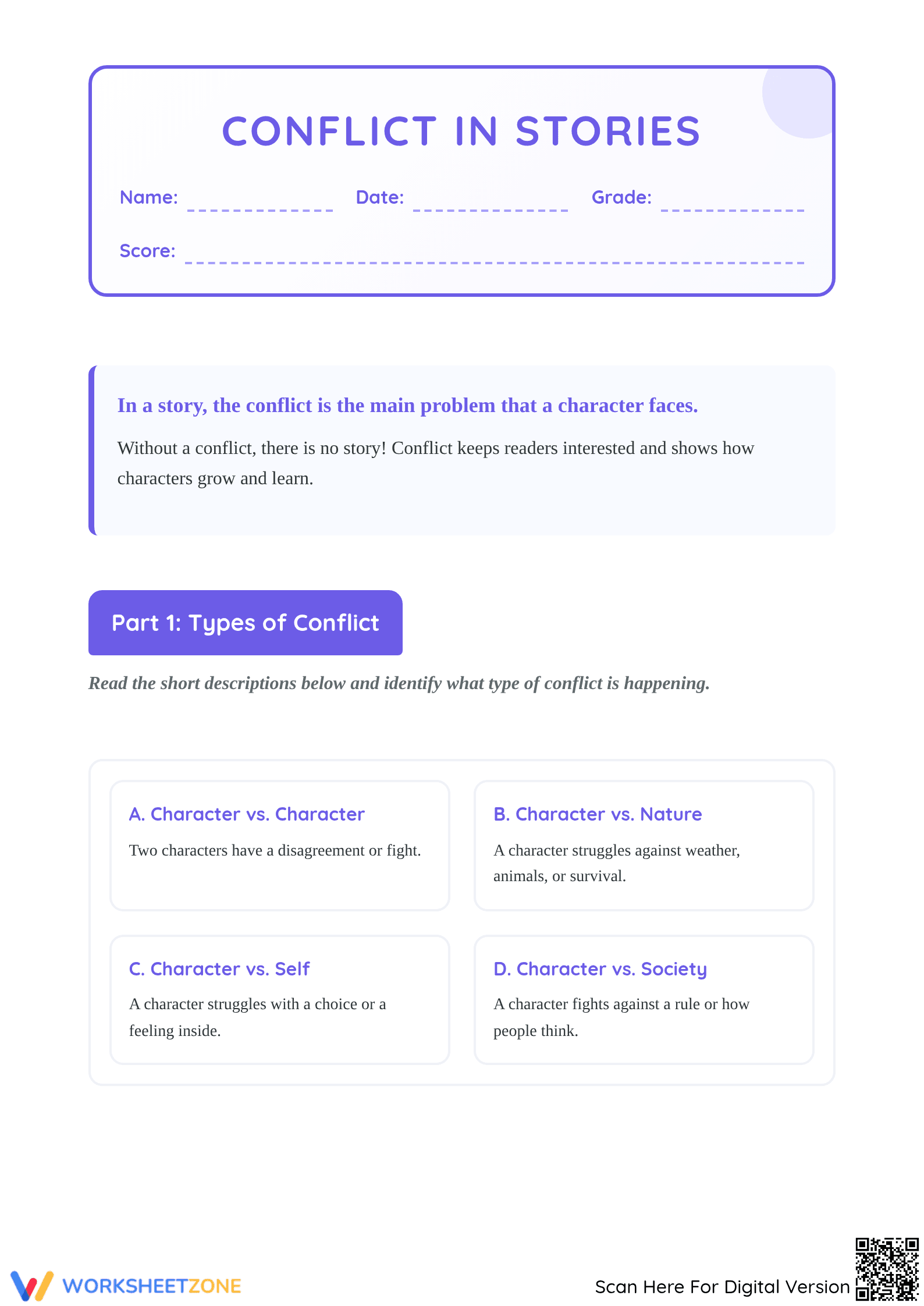
This Grade 3 reading worksheet helps students analyze story conflicts. By exploring character struggles, learners deepen their understanding of plot development and narrative structure. Students transition from defining four core types of conflict to applying their knowledge through creative writing and illustration.
At a Glance
- Grade: 3 · Subject: ELA
- Standard:
RL.3.1— Demonstrate understanding of a text by asking and answering questions about its key details- Skill Focus: Analyzing Story Conflict
- Format: 4 pages · 5 tasks · Answer key included · PDF
- Best For: Independent practice or book report support
- Time: 25–35 minutes
What's Inside
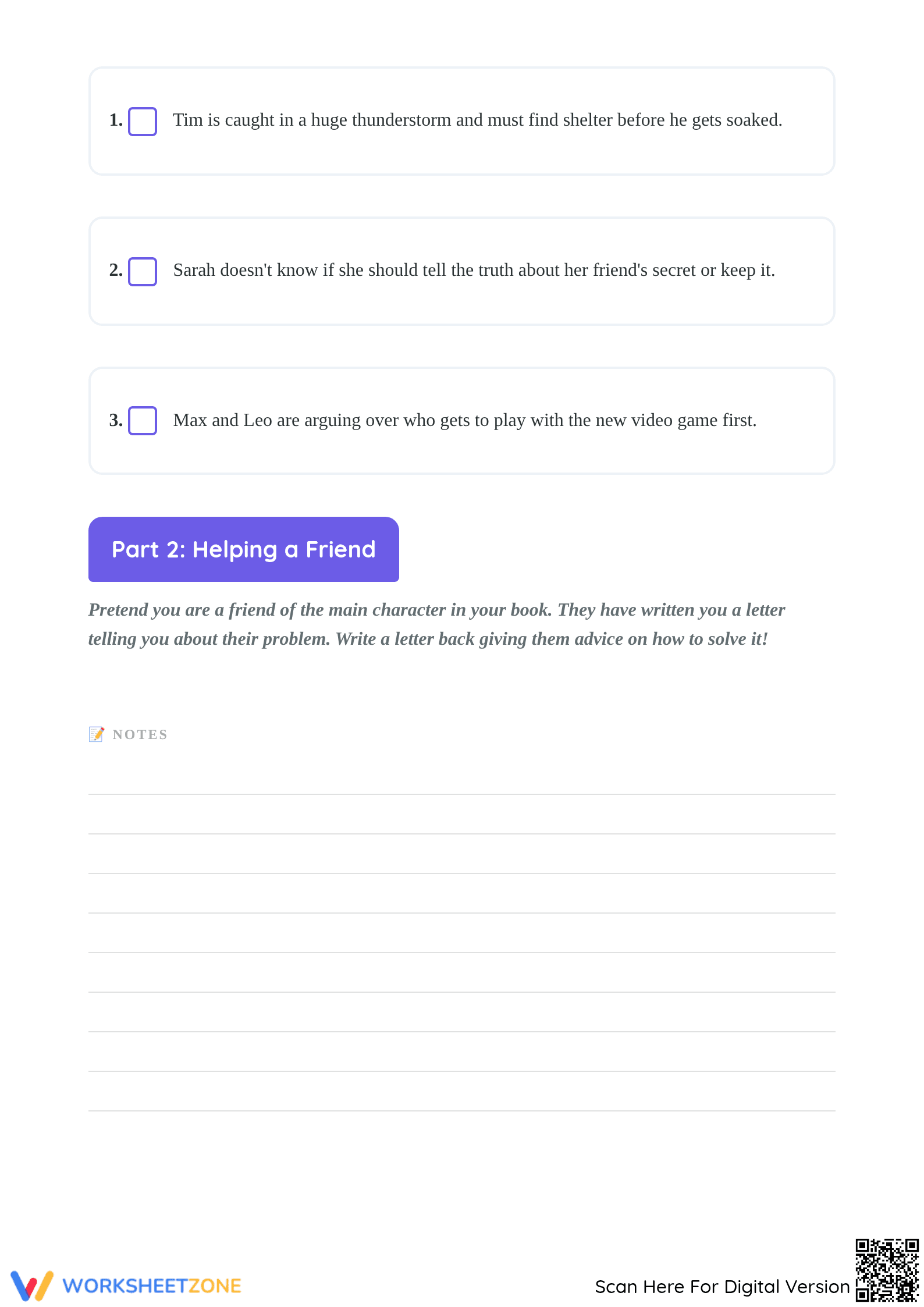
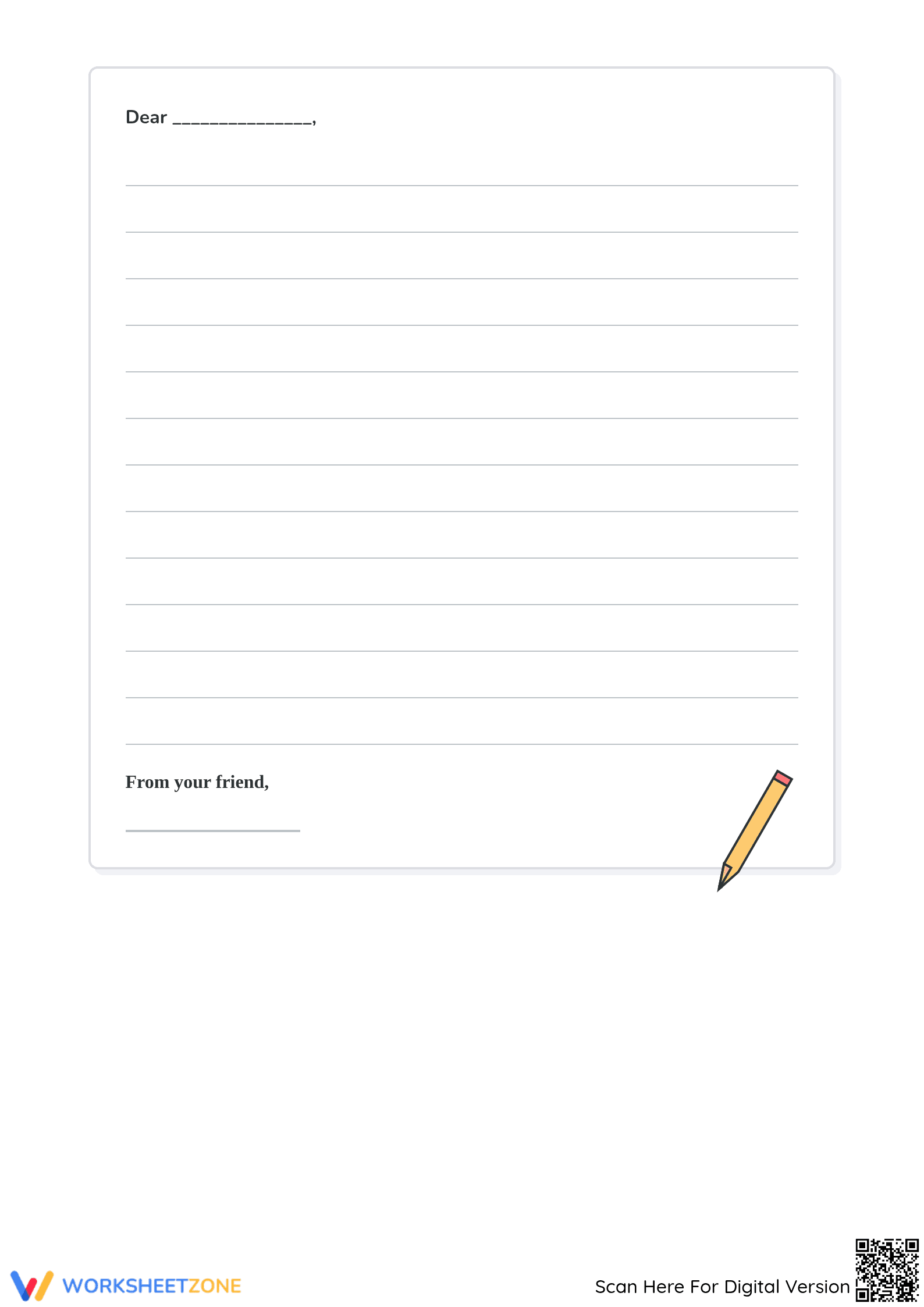
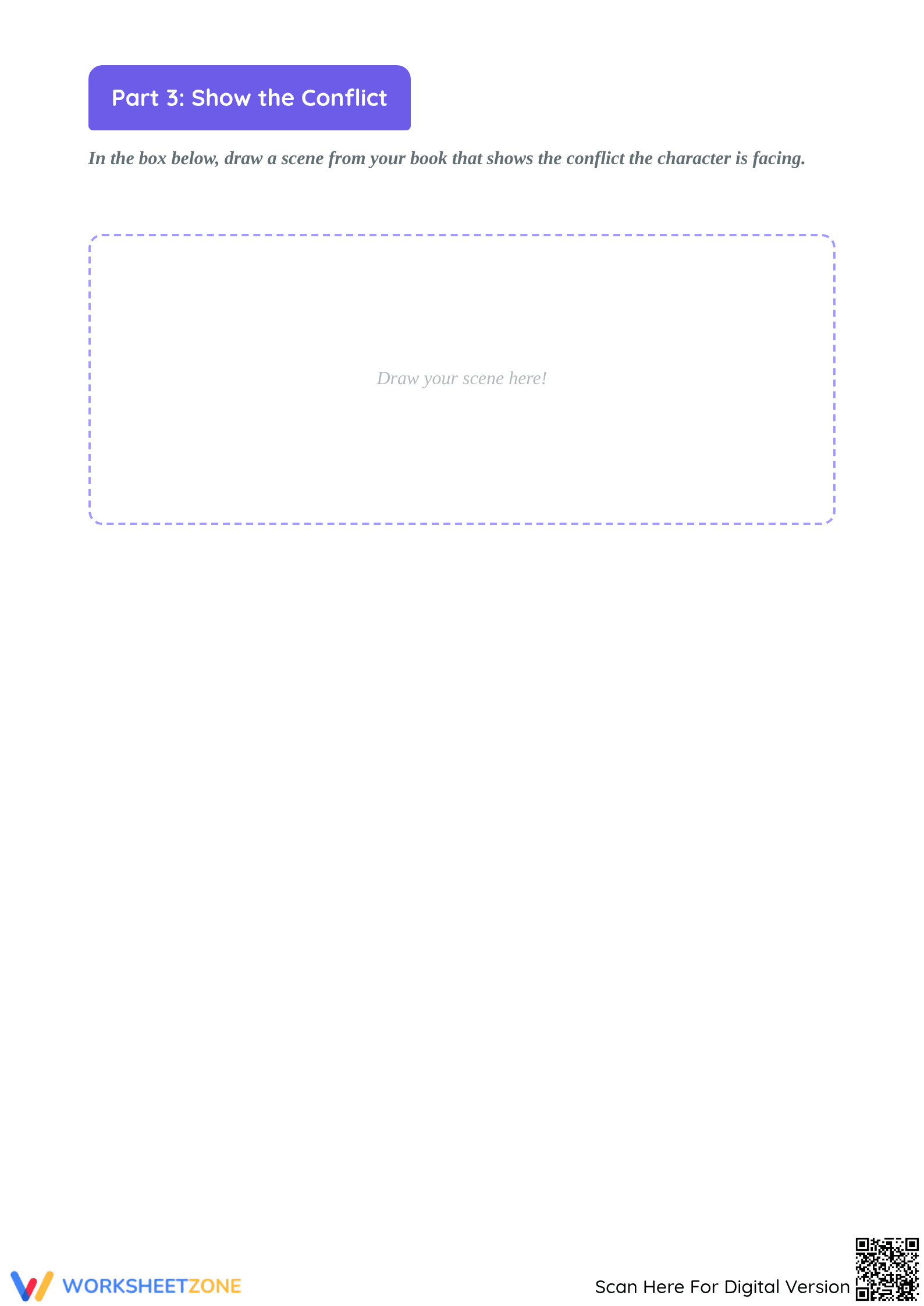
This four-page PDF includes a clear definition of conflict followed by three distinct sections. Part 1 introduces Character vs. Character, Nature, Self, and Society with definitions. Part 2 features identification scenarios and a structured letter-writing template. Part 3 allows visual learners to illustrate a specific conflict from their own reading material.
Zero-Prep Workflow
First, print the document for your class (30 seconds). Second, distribute during your reading block or as a book report aid (1 minute). Third, review the identification and writing responses in small groups or literature circles (10 minutes). Total teacher preparation time is under two minutes, making this ideal for sub plans.
Standards Alignment
Aligned to `RL.3.1`, students demonstrate understanding by answering questions about specific story problems and character struggles. It also supports `RL.3.3` regarding how character actions contribute to the plot. Both standard codes can be copied into lesson plans, IEP goals, or district curriculum mapping tools.
How to Use It
Use during independent practice to verify comprehension of character struggles. Assign it as a book report companion to help students move beyond summary and into deeper analysis. Observe if they can distinguish internal from external conflicts during small group discussions. Completion typically takes 30 minutes.
Who It's For
Designed for third-grade students, it also works for second-grade enrichment or fourth-grade remediation. The letter-writing component scaffolds perspective-taking and empathy for fictional characters. It pairs well with a story element anchor chart or a short-story passage used during direct instruction.
According to the RAND AIRS 2024 analysis of primary literacy instruction, identifying conflict is a foundational skill that allows third-grade readers to move from literal comprehension to inferential analysis. This worksheet targets CCSS.ELA-LITERACY.RL.3.1 by requiring students to identify the central struggle—be it character vs. self, nature, or society—and explain its impact on the narrative. Research by Fisher & Frey (2014) emphasizes that combining writing and drawing tasks, as seen in this five-part resource, supports multi-modal learning and enhances long-term retention of structural story elements. By explicitly naming conflict types and providing a structured letter-writing template, the worksheet reduces cognitive load while encouraging students to engage deeply with character motivations. Educators can utilize these outcomes to track student progress toward mastery in analyzing story structure and character development across various fictional genres and complexity levels.


