Zoo Coloring Pages: Printable Animal Sheets for Kids and Teens
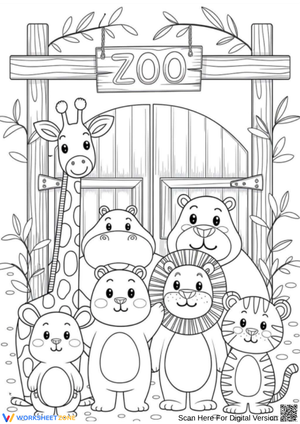
This zoo coloring pages collection covers more than 20 exhibit favorites, including elephants, giraffes, lions, penguins, monkeys, zebras, tigers, and sloths. Several sheets add a zookeeper filling a feed bucket, a striped entrance gate, or a glass aquarium tank so kids get a sense of a real visit, not just a single animal floating on a blank page. Backgrounds range from open savanna grass to jungle leaves and rocky habitat ledges, giving each printable its own scene instead of a repeated template. Bold black outlines keep every design ready for crayons, markers, or colored pencils.
Simple Outlines for Toddlers, Detailed Patterns for Teens
Toddlers and preschoolers do best with the thick-line elephant, lion, and giraffe pages, since wide open spaces are easy to fill without crossing lines. Kindergarten and early elementary kids can handle zebra stripes and tiger patterns that add light repetition without heavy fine detail. Older kids, teens, and adults get busier sheets: textured monkey fur, layered jungle leaves, or a full zoo scene with a dozen small elements. Picking a page that matches a child's current pencil control keeps the activity fun instead of frustrating within the first few minutes.
Printing and Coloring Tips That Save Ink and Time
Print these pages on standard 8.5x11 inch letter paper at default or high quality for crisp outlines. Black-and-white line art uses far less ink than shaded designs, so a set of 10 pages can print in under two minutes on most home printers. For fur and texture, layer colored pencils in short strokes rather than one flat color. Markers work well for bold zoo backgrounds like grass, sky, or an entrance gate. Finished pages make good car-ride activities, zoo-trip keepsakes, or simple flashcards for naming animals at home.
Frequently Asked Questions
1. What supplies work best for detailed animal fur?
Colored pencils layered in short, direction-following strokes give tiger stripes, zebra patterns, and monkey fur a more realistic look than flat coloring. Blending two similar shades, like tan and light brown, adds depth to elephant or giraffe skin. Markers work better for bold, flat zoo backgrounds such as grass, sky, or a striped entrance gate. Fine-tip pens can outline small details like whiskers or claws once the base color dries.
2. Can these pages fit a classroom or homeschool animal lesson?
Yes. Many families and teachers pair a printed zoo animal with a quick fact, like its habitat or diet, before coloring starts. A finished set can become simple flashcards for naming animals or matching them to continents. Zoo-scene pages with a zookeeper or feeding station work well for storytelling prompts, giving kids a reason to talk about the picture instead of just filling it in with color.
3. What is a surprising fact about common zoo animals?
Giraffes, a frequent coloring-page subject, have tongues that stretch close to 18 inches long and are dark bluish-purple, believed to help prevent sunburn while they strip leaves from trees. Elephants can weigh over 12,000 pounds yet walk almost silently thanks to thick padding on their feet. Small details like these give kids something to talk about while they finish coloring the page.