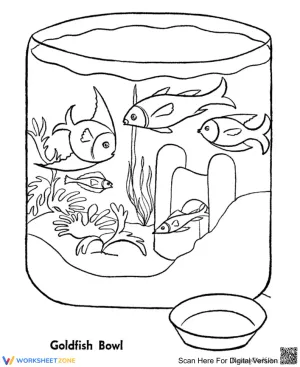
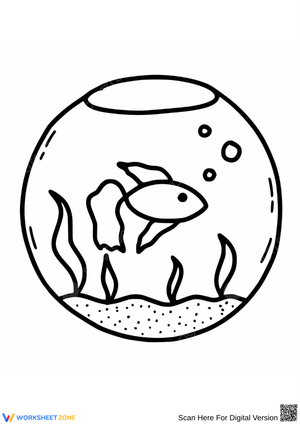
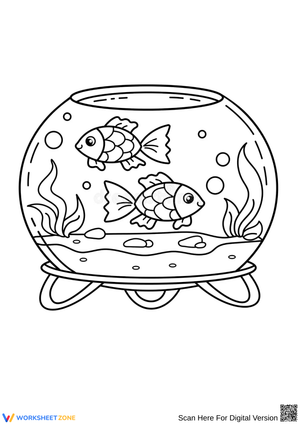
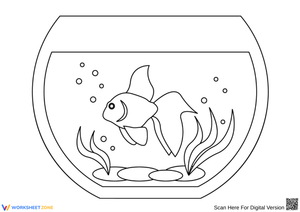
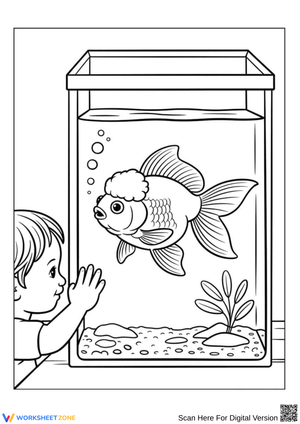
Most aquarium coloring pages set the action inside a glass tank, framed by bubble trails and wavy waterlines that give the scene depth. Expect tropical fish schools, a shark or two, a sea turtle gliding past coral, and a jellyfish drifting near the top. Coral reef backdrops add texture with branching shapes and fan patterns, while rock ledges and seaweed fill empty space. Some sheets zoom in on a single fish; others show a full tank with six or more creatures sharing one busy underwater view.
Finding The Right Skill Level
A strong aquarium coloring pages collection spans easy to advanced. Toddlers and preschoolers do best with bold, thick outlines: one fish, one tank shape, minimal background clutter. Grade-schoolers can handle a reef scene with three or four creatures and simple coral shapes. Teens and adults often prefer detailed sheets with scale patterns, spiny sea urchins, textured starfish arms, and layered coral that rewards colored pencils or fine-tip markers over crayons for cleaner line control.
Color Choices That Make A Tank Pop
Layer two or three blues and greens for the water itself, going darker toward the tank bottom to suggest depth, then lighter near the surface where light would filter in. Save warm oranges, pinks, and yellows for fish, coral, and starfish so they stand out against the cooler background. Octopuses are a fun wildcard: real ones can shift color and texture to blend into surroundings, so colorists can pick purple, red, or even patterned skin without breaking realism.
Frequently Asked Questions
1. What sea creatures show up most often?
A typical set covers tropical fish, sharks, sea turtles, jellyfish, octopuses, seahorses, crabs, and coral reef life, often mixed into one busy tank scene or split across single-creature sheets. Starfish and sea urchins appear often too, since their spiny and patterned surfaces give colorists extra texture to work with beyond plain fish shapes.
2. What paper and printer settings work best?
Most aquarium coloring pages print cleanly on standard 8.5x11 inch paper. Regular printer paper works fine for crayons, but slightly heavier cardstock holds up better under markers or watercolor pencils without bleeding through. Choosing a draft or ink-saving print setting keeps thin outline sheets crisp while using less ink, especially useful for printing several designs at once.
3. What is a surprising fact about real aquariums?
The largest aquarium tank on record sits at Chimelong Ocean Kingdom in Zhuhai, China, holding roughly 12.87 million gallons of seawater. That single fact explains why so many coloring designs show oversized tanks packed with sharks, turtles, and reef life. It's a fun detail to mention if a coloring page turns into a quick sea-life conversation at home.












 Interactive Worksheet Maker
 Quiz Maker
 Word Search Maker
 Crossword Puzzle Maker
 Word Scramble Generator
 Sentence Scramble Generator
 Handwriting Worksheet Generator
 Name Tracing Generator
 Fill In The Blank Generator